
- Release Year: 2022
- Platforms: Windows
- Publisher: Marsoft
- Developer: Marsoft
- Genre: Action
- Perspective: Behind view
- Game Mode: Single-player
- Gameplay: Shooter, Survival horror
- Setting: Fantasy
Description
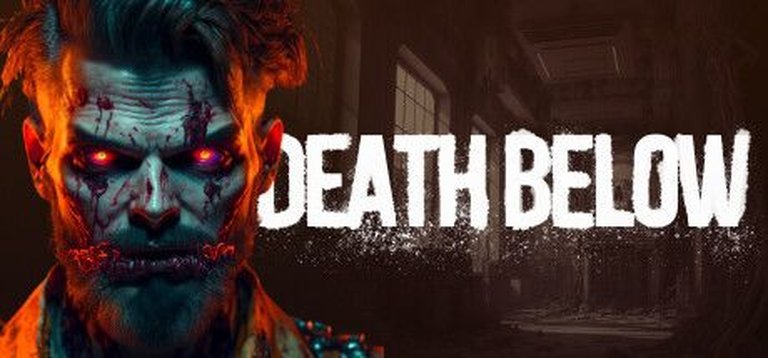
Death Below is a third-person action adventure survival horror game set in a dark world, drawing inspiration from the legendary Soviet sleep experiment of the 1940s. Players embark on an intense investigation, battling thousands of distraught enemies while switching between two playable characters: Steve, who is trapped with his team, and Rachel, who searches for them across different time periods.
Gameplay Videos
Where to Buy Death Below
PC
Death Below Free Download
Death Below Patches & Updates
Death Below Guides & Walkthroughs
Death Below: Review
Introduction: A Descent into Myth and Madness
Death Below arrives in 2022 as an ambitious, if flawed, fusion of third-person action, survival horror, and historical fiction. Drawing inspiration from the chilling urban legend of the Soviet “Russian experiment with sleep”—a tale of prolonged sleep deprivation and psychological collapse—the game plunges players into a claustrophobic, subterranean nightmare. Developed by Soft and published by the same studio, it promises a narrative-driven investigation set across two timelines, pitting players against hordes of “distraught people” while uncovering a dark conspiracy. Yet, despite its intriguing premise and atmospheric trappings, Death Below ultimately struggles to reconcile its lofty ambitions with technical and design inconsistencies. This review deconstructs its legacy as a cultish curiosity—a game whose historical framing and genre blending offer moments of genuine dread, even as its execution remains uneven and frustrating.
Development History & Context: Soviet Shadows and Unreal Ambition
Death Below emerged from the independent studio Soft, operating within a niche corner of the 2022 gaming landscape. While MobyGames lists the publisher as Marsoft, Steam credits both developer and publisher as “Soft,” suggesting either a regional naming discrepancy or a small-scale internal rebranding. The game leverages the robust Unreal Engine 4, a choice intended to deliver cinematic visuals and complex physics via the PhysX engine—a technical foundation promising modern graphical fidelity. However, this reliance came with inherent challenges: the title debuted on December 15, 2022, during a period saturated with AAA blockbusters and indie darlings. Its $9.99 price point aimed for accessibility, but its subject matter—a Soviet-era experiment predating even the Cold War’s peak—positioned it as a niche historical horror. The gaming climate of 2022 saw heightened demand for narrative depth and polished mechanics, placing pressure on smaller studios to deliver exceptional quality with limited resources. Death Below’s development reflects this tension: a passion project fueled by a compelling (if fictionalized) historical seed, constrained by the practical realities of indie game production.
Narrative & Thematic Deep Dive: Echoes of the Experiment
The narrative core of Death Below revolves around the infamous “Russian sleep experiment,” a 1940s Soviet legend involving subjects forced into continuous wakefulness until psychosis and death occurred. This grim real-world myth provides a potent foundation, framing the game as a speculative investigation into the experiment’s aftermath. Players alternate between two protagonists: Steve, a member of a contemporary team trapped within the underground facility during its initial collapse, and Rachel, a modern-day investigator seeking his missing group. This dual-timeline structure creates a compelling mystery, as Rachel’s journey into the past gradually reveals the catastrophic consequences of the experiment.
The plot eschews environmental storytelling in favor of direct exposition, as noted in the Steam store description: “You don’t have to study dozens of letters and notes to understand the plot.”* This approach prioritizes accessibility but sacrifices the atmospheric immersion typically associated with survival horror. Steve’s segments focus on desperate survival against overwhelming odds, while Rachel’s investigation slowly uncovers the facility’s horrors through scripted encounters and narrative beats.
Themes of psychological disintegration and the hubris of unchecked science permeate the narrative. The “distraught people” encountered are not zombies in the traditional sense but victims of the experiment’s prolonged trauma—their erratic movements and anguished screams embody the collapse of human sanity. The facility itself becomes a character, a labyrinthine tomb reflecting the fractured minds within. However, the dialogue and character development remain thinly sketched. Steve and Rachel serve more as narrative vessels than fully realized individuals, their motivations largely defined by the plot’s demands rather than personal depth. The central mystery, while intriguing, suffers from predictable twists and a resolution that feels rushed, leaving thematic threads like the legacy of Soviet-era science and the ethics of experimentation underexplored.
Gameplay Mechanics & Systems: A Flawed Descent
Death Below’s core gameplay attempts to blend third-person shooter mechanics with survival horror tension, yielding a mixed experience. Combat is central, emphasizing brutal, close-quarters engagements against relentless waves of enemies. The game bills itself as a “spectacle fighter” and “third-person shooter,” with a focus on dynamic, fast-paced action. Players wield firearms and melee weapons, though the latter feel particularly underdeveloped, lacking satisfying weight or impact. Enemy AI exhibits predictable patterns, relying on aggression over tactical intelligence, which can make prolonged encounters feel repetitive.
Character progression is minimal, primarily health and damage upgrades. There is no deep skill tree or meaningful customization, limiting long-term engagement. Resource management, a staple of survival horror, is present but rudimentary—ammunition and health pickups are plentiful, rarely forcing genuine scarcity or tough choices. The UI, while functional, is cluttered and utilitarian, lacking the intuitive design of contemporary titles.
The dual-character gimmick introduces slight variation—Steve’s segments are more focused on frantic survival, while Rachel’s lean towards exploration and puzzle-solving—but ultimately both play similarly. Technical flaws significantly hamper the experience: collision detection is unreliable, leading to frustrating deaths through environmental hazards or enemy exploits. Difficulty spikes are common, often exacerbated by checkpointing that forces players to replay lengthy sequences after failures. The game’s claim of “dynamic gameplay” holds partial truth, as relentless enemy pressure maintains tension, but the lack of mechanical depth prevents this from evolving into compelling gameplay loops. Survival horror elements feel tacked-on; while the threat is constant, the tools for overcoming it lack nuance, reducing strategic thinking to reflexes.
World-Building, Art & Sound: Claustrophobia and Despair
Death Below excels in crafting a distinctly oppressive atmosphere, leveraging its underground setting and historical inspiration to maximum effect. The game world is a confined network of decaying Soviet-era bunkers, research labs, and forgotten corridors, rendered in the UE4 engine with a focus on gritty realism. Textures are often muddy, but the environmental design effectively conveys decay: flickering fluorescent lights, peeling paint, rusted machinery, and blood-splattered walls all contribute to a palpable sense of dread. The claustrophobic camera, fixed behind the player, enhances this feeling, making exploration feel like navigating a tomb.
The art direction leans into dark fantasy, blending historical realism with supernatural horror elements. While specific character designs aren’t detailed in the sources, enemies are described as “distraught people,” implying gaunt, emaciated figures with erratic movements—likely inspired by the sleep deprivation legend’s physical and psychological toll. Lighting is crucial, with deep shadows hiding threats and sudden bursts of violence erupting into pools of light, creating moments of shock.
Sound design is arguably the game’s strongest suit. The Steam description promises “amazing atmosphere and sounds,” and the sources support this. Audio cues are used masterfully: the distant, echoing moans of enemies, the creak of stressed metal floors, the distorted radio transmissions hinting at the experiment’s history, and the oppressive silence punctuated by sudden bursts of gunfire or screams. An ambient soundtrack, likely minimal and unsettling, reinforces the isolation. However, the lack of critical reviews makes detailed sonic analysis impossible. The overall audio-visual package successfully immerses players in the game’s grim world, creating a consistent tone of paranoia and despair that carries even the weaker gameplay moments.
Reception & Legacy: A Niche Echo
Upon its December 2022 release, Death Below received mixed user reviews on Steam, with a 58% positive rating (36 out of 62 reviews) at the time of writing. Positive comments often highlight the effective atmosphere, intriguing premise, and relentless action. Negative reviews focus heavily on technical issues: buggy gameplay, poor optimization, inconsistent difficulty, and a narrative that feels unfulfilling. Critically, the game appears to have flown under the radar; Metacritic lists no critic reviews, and major gaming publications like Kotaku only mention it in passing within broader lists or metadata. This lack of critical attention underscores its status as a niche title.
Commercially, its $9.99 price point and limited marketing likely resulted in modest sales. Its legacy remains uncertain. Thematically, its blending of historical fiction (the Soviet experiment) with survival horror is unique, potentially influencing smaller developers interested in similar genre fusions. However, its technical flaws prevent it from being a benchmark. The game spawned a small family of similarly titled titles (“Evil Below,” “Below Level,” “Below Zero,” “From Below”), though these appear to be unrelated titles sharing a thematic keyword rather than direct sequels. Within the broader survival horror landscape, Death Below is remembered primarily by players who appreciated its grim tone and challenging combat, rather than for innovating within the genre. Its true legacy may lie as an example of passionate ambition colliding with execution limitations—a cautionary tale for indie developers tackling complex genres.
Conclusion: A Descent Worth Taking, Flaws and All
Death Below stands as a testament to the power of atmosphere and historical inspiration in gaming, even as it falters in execution. Its narrative framework, rooted in the chilling legend of the Soviet sleep experiment, provides a unique and compelling foundation for a survival horror experience. The dual-character structure offers narrative intrigue, and the relentless, claustrophobic atmosphere effectively immerses players in a world of psychological terror. The UE4-powered visuals and sound design, particularly the oppressive audio landscape, succeed in creating moments of genuine dread that linger long after play.
However, these strengths are significantly undermined by gameplay inconsistencies. The combat, while dynamic, lacks depth and polish, undermined by technical issues and uneven difficulty. The narrative, while intriguing, suffers from underdeveloped characters and a rushed conclusion. The game ultimately feels like a missed opportunity—a concept brimming with potential but constrained by the resources and experience of its small development team.
For historians of indie horror games, Death Below is a fascinating artifact—a snapshot of ambition in the crowded 2022 market. It represents a specific niche: the budget-priced survival horror title prioritizing mood over mechanics. While unlikely to be remembered as a classic, it deserves recognition for its bold historical framing and its ability to create a palpable sense of dread. For players seeking a challenging, atmospheric descent into a Soviet-inspired hellscape, it offers a flawed but memorable journey. In the annals of video game history, Death Below is less a landmark and more a curious footnote—a grimy, frustrating, yet undeniably compelling descent into myth and madness.