
- Release Year: 2021
- Platforms: Windows
- Publisher: Aligned Games
- Developer: Aligned Games
- Genre: Action
- Perspective: 1st-person
- Game Mode: Single-player
- Gameplay: Shooter
- Setting: Fantasy
- Average Score: 60/100
Description
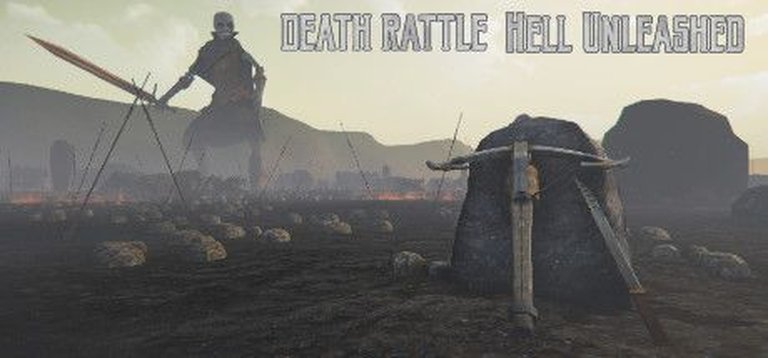
In ‘Death Rattle: Hell Unleashed’, players take on the role of the Death Rattle, humanity’s final defender against the infernal forces that have invaded Earth. After a catastrophic event where sinners were not sent to hell but instead hell came to them, the creator bestowed upon the Death Rattle extraordinary powers to combat the encroaching evil and save the remaining souls. This first-person shooter offers an intense, fantasy-driven experience with direct controls, promising a 7-10 hour campaign.
Gameplay Videos
Where to Buy Death Rattle: Hell Unleashed
PC
Death Rattle: Hell Unleashed Guides & Walkthroughs
Death Rattle: Hell Unleashed Reviews & Reception
store.steampowered.com (58/100): A first person shooter set in a medieval world ravaged by the ungodly forces of the hellion.
steambase.io (63/100): Death Rattle – Hell Unleashed has earned a Player Score of 63 / 100.
completionist.me (59/100): Game Rating: 59.68
Death Rattle: Hell Unleashed: Review
Introduction
“Death Rattle: Hell Unleashed” (2021) stands as a cautionary tale of indie ambition—a first-person shooter blending medieval fantasy, RPG mechanics, and divine warfare against hellish forces. Developed by solo creator Johannes Christiaan Nienaber under South African studio Aligned Games, the game seeks to merge the visceral chaos of “DOOM” with the loot-driven progression of action-RPGs. Yet, despite its lofty premise, Death Rattle exists in a liminal space between technical ambition and janky execution. This review examines how the game’s creative vision collides with the realities of solo development, delivering an experience that is equal parts intriguing and frustrating—a flawed but earnest artifact of indie passion.
Development History & Context
The One-Man Army Behind the Apocalypse
Aligned Games, founded by Nienaber in 2013, began as a small-scale venture before pivoting to more ambitious projects like Death Rattle. Built in Unity, the game reflects the challenges of solo development: limited budgets, iterative design, and the struggle to balance scope with polish. Released in June 2021 amid a saturated indie FPS market—hot on the heels of critical darlings like ULTRAKILL and Amid Evil—Death Rattle faced immediate comparisons to genre titans. Its blend of spellcasting and archery aimed to evoke a “medieval DOOM,” but technological constraints led to compromises in optimization and bug-testing, evident in its rocky launch.
The Unity Paradox
Unity’s accessibility empowered Nienaber to craft sprawling environments like the forested realm of Ulliadore and lava-choked battlefields of Hell. However, the engine’s notorious optimization pitfalls haunted the game, with players reporting inconsistent performance (e.g., framerate drops in tutorial levels, collision bugs in final boss arenas). The game’s destructible environments—a selling point—often exacerbated these issues, straining hardware and disrupting immersion.
Narrative & Thematic Deep Dive
A Redemptive Odyssey Marred by Cliché
You play as the Death Rattle, a divine warrior tasked with reclaiming Earth from Hell’s invasion. The narrative frames redemption as a dual struggle: humanity’s salvation and the protagonist’s personal atonement. Yet, the storytelling leans heavily on tropes—demonic hordes, a chosen-one archetype, and a creator deity’s lament—without subverting or deepening them. Dialogue is sparse and utilitarian, with lore relegated to environmental snippets (e.g., crumbling temples, skeleton-strewn crypts). Thematically, the game grapples with sin and divine intervention but lacks the nuance to elevate its ideas beyond surface-level edginess.
Characters as Cannon Fodder
Enemy designs borrow liberally from fantasy staples: Skeleton Warriors, Ghoulls, Spiderlings, and the towering Diabolus boss. While visually distinct, their AI oscillates between predictable and erratic, undermining tactical engagement. The Death Rattle himself remains a voiceless cipher, a blank slate that fails to capitalize on its mythic potential.
Gameplay Mechanics & Systems
Core Loop: Loot, Craft, Repeat
Death Rattle intertwines FPS combat with RPG-lite systems:
– Combat Arsenal: A crossbow with four ammo types (standard, explosive, etc.), four “divine spells” (e.g., life-steal, AoE explosions), and four grenade varieties. Each tool impacts enemy types differently, encouraging loadout experimentation.
– Progression: Killing enemies drops “spirits” used to upgrade spells, while XP unlocks abilities (e.g., health boosts, mana efficiency).
– Crafting: Scavenged materials craft ammo, potions, and gear, though menus are clunky and inventory management feels cumbersome.
Innovation Hamstrung by Execution
The promise of “build diversity” is undermined by unbalanced systems. Spells like Soul Leech trivialize combat when upgraded, while underpowered grenades gather dust. The much-touted destructibility—a nod to Red Faction—is inconsistently implemented; while wooden structures shatter satisfyingly, stone environments remain indestructible.
Technical Quirks and Player Frustrations
Steam Community threads highlight persistent issues:
– Bugs: Broken endgame portals (preventing completion), missing collision in key areas.
– Controls: No native rebinding or Y-axis inversion at launch, patched later after backlash.
– Difficulty Spikes: Enemy swarms in later zones (e.g., Hollow Edge Basalt) feel unfair without tuned scaling.
World-Building, Art & Sound
A Hellscape of Missed Aesthetic Opportunities
Ulliadore’s biomes—from the gothic Wish Wind Graveyard to the fiery Red Dusk Battlefield—are conceptually rich but artistically uneven. Textures range from serviceable (detailed armor sets) to placeholder (flat terrain in Black Falls Swamp). Lighting effects, particularly spellcasting, inject flashes of vibrancy, but low-poly models and repetitive assets dull the impact.
Sound Design: Atmosphere as an Afterthought
The soundtrack leans into generic orchestral swells, lacking a memorable leitmotif. Weapon sounds lack punch—crossbow bolts thud weakly, while explosions drown in reverb. Environmental ambience (howling winds, distant screams) hints at atmospheric potential but feels undercooked.
Reception & Legacy
A Mixed Baptism by Fire
At launch, Death Rattle garnered “Mixed” Steam reviews (58% positive from 17 reviews), praised for its ambitious scope but lambasted for bugs and performance. Players lamented its “good ideas buried under jank” (Steam user ApochWeiss), while others applauded its “old-school FPS charm” (Grand Game). The game’s price point—$9.99, often discounted to $2.99—framed it as a budget curiosity rather than a must-play.
Influence and Lessons
While Death Rattle left no seismic industry impact, it exemplifies the solo dev dilemma: passion versus polish. Its legacy lies in community-patched fixes (e.g., controller support added post-launch) and as a case study for aspiring creators. The game’s RPG-FPS hybrid vision echoes in titles like Witchfire, albeit without comparable refinement.
Conclusion
Death Rattle: Hell Unleashed is a flawed relic of ambition—a game that strains against its limitations but never quite breaks free. Nienaber’s vision of a divine warrior battling through hellish legions is compelling on paper, hamstrung by technical shortcomings and uneven design. For patient players, its 7–10 hour campaign offers moments of visceral satisfaction amid the chaos, but it remains a niche artifact rather than a hidden gem. In the pantheon of indie FPS, Death Rattle is less a triumphant roar and more a muted rattle—a testament to the perils and promise of solo development. 5/10 – A curiosity for genre completists only.