
- Release Year: 2018
- Platforms: iPhone, Nintendo Switch, PlayStation 3, PlayStation 4, PlayStation 5, PS Vita, Windows Apps, Windows, Xbox One, Xbox Series
- Publisher: DigitalDNA Games LLC
- Developer: DigitalDNA Games LLC
- Genre: Action
- Perspective: First-person
- Game Mode: Single-player
- Gameplay: Open World, Sandbox, Shooter
- Setting: Survival
Description
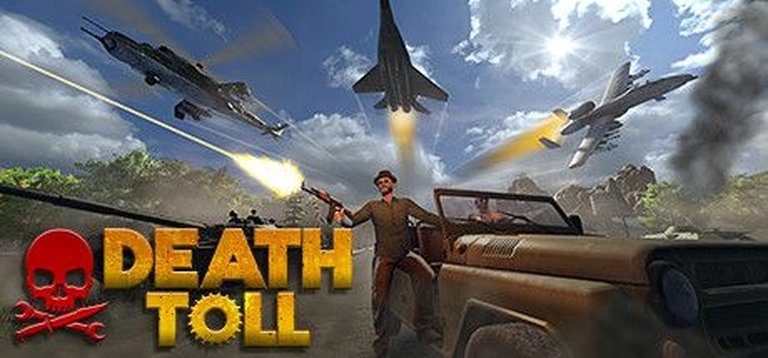
Death Toll is a first-person survival shooter that immerses players in a tense open-world sandbox environment where they must evade relentless pursuers while managing resources and protecting everything they’ve built. The game blends dynamic combat with strategic survival mechanics, creating a high-stakes experience where every decision impacts the fight for survival against persistent threats.
Where to Buy Death Toll
PC
Death Toll Patches & Updates
Death Toll Guides & Walkthroughs
Death Toll: Review
Introduction
The tension is thick. Your pursuers have caused you a lot of damage, and if they find you now, they’ll take everything you’ve worked for. From your vantage point in a second-floor window, you spot a deer cautiously emerging from a grove of trees—a potential source of food. You raise your weapon, crosshairs fixed on its heart, but just as you prepare to pull the trigger, the deer bolts. Panicking, you scan the horizon and spot the real threat: a posse of heavily armed players closing in. The Death Toll will be high today. This is the heart-pounding scenario Death Toll thrusts players into upon entry—a multiplayer open-world survival shooter that promised to merge the best elements of battle royale and objective-based modes into a unique, team-focused experience. Released in 2018 by indie studio DigitalDNA Games, Death Toll arrived during a period dominated by battle royale giants like PUBG and Fortnite. While it ultimately struggled to achieve mainstream success, its ambitious design—centered on cooperative escape, vehicle combat, and survival mechanics—warrants a deep dive into its legacy. This review posits that Death Toll was a flawed but daring experiment that carved a niche for itself through its emphasis on teamwork and resource management, even as technical shortcomings and an unstable player base limited its impact.
Development History & Context
DigitalDNA Games LLC, the developer behind Death Toll, was a small studio known for the CastleMiner series—voxel-based survival games with a focus on cooperative building and combat. The studio’s vision for Death Toll was explicitly to differentiate itself from the then-saturated battle royale market. Instead of the “last player standing” formula, they crafted a game where teams competed to repair aircraft and escape a hostile island, blending exploration, scavenging, and tactical combat. Built on the Unity engine, the game faced typical indie constraints: limited budget, a small team, and the challenge of optimizing for a wide range of hardware. The Steam store page’s system requirements reflect this—minimum specs (3.0 GHz CPU, 4GB RAM, DirectX 10 graphics) were accessible but not cutting-edge, while recommended specs (3.7 GHz+, 8GB RAM, DirectX 12) hinted at performance aspirations beyond its means.
The 2018 gaming landscape was defined by battle royale’s explosive growth, with major publishers scrambling to capitalize on the trend. Death Toll entered this crowded field as an underdog, positioning itself as a “Royale and Capture the Flag hybrid” with a stronger emphasis on team play. The studio actively engaged with players through Steam forums and Discord, seeking feedback and even hosting beta tests. This community-centric approach, while commendable, also exposed the game’s fragility: early performance issues (e.g., framerate drops) became recurring headaches, as documented in pinned developer posts. Ultimately, Death Toll was a product of its time—a scrappy indie title aiming to innovate within a genre it couldn’t outspend or out-scale.
Narrative & Thematic Deep Dive
Death Toll’s narrative is deliberately minimalistic, serving as a backdrop for its multiplayer sandbox. Players are not given backstory or character customization; they are anonymous captives on a sprawling island, united by a single, desperate goal: escape. The game’s ad blurb paints a vivid picture of tension and desperation, but beyond this, the narrative emerges organically through gameplay. The central premise—repairing aircraft to flee—evokes themes of survival against overwhelming odds. The island itself becomes a character, a prison where resources are scarce and danger lurks around every corner.
Themes of cooperation and betrayal permeate the experience. Teams must work together to scavenge weapons, repair vehicles, and defend against rivals, yet the pressure of imminent escape can fracture alliances. The absence of named characters or dialogue forces players to project their own narratives onto the conflict, fostering moments of emergent storytelling—e.g., a tense standoff over a helicopter repair kit or a last-minute betrayal during an escape attempt. Wildlife (deer, boar, foxes) adds a layer of ecological tension, reminding players that survival isn’t just about human conflict. The game’s title, Death Toll, underscores the brutal stakes: every decision carries lethal consequences, and failure isn’t just a respawn but a permanent setback. While the narrative lacks depth, its environmental storytelling and player-driven chaos create a compelling, albeit fleeting, sense of drama.
Gameplay Mechanics & Systems
Core Loop & Objectives
Death Toll’s gameplay revolves around two interconnected objectives: scavenging resources and escaping the island. Matches begin with players parachuting onto a large, diverse map. From here, the loop is one of risk versus reward: venture into dangerous areas to find high-value items (weapons, vehicle parts) or play defensively to survive. The win condition—repairing an aircraft and retrieving a briefcase—adds strategic layers beyond simple elimination. Teams must coordinate to secure critical repair components, which spawn in high-traffic zones, creating natural hotspots for conflict.
Combat & Progression
Combat is a straightforward first-person shooter experience, featuring modern weaponry (assault rifles, RPGs, grenades) and defensive items (camouflage, body armor). However, progression is limited to within-match upgrades; there’s no persistent leveling or unlocks. This keeps matches balanced but lacks depth for long-term engagement. A notable innovation is the repair system for vehicles—tanks, helicopters, and jets require scattered parts to function, turning them from power fantasies into high-risk/high-reward assets. Repairing a jet mid-air, for instance, offers immense tactical advantage but exposes players to fire.
Survival Mechanics
Hunger introduces a critical survival layer. Players must hunt wildlife or find canned food to avoid depletion, which weakens combat effectiveness. This adds urgency to exploration but can feel punitive, especially when interrupted by enemy players. The day-night cycle further complicates survival: nights offer stealth opportunities but reduce visibility, increasing reliance on flashlights or night vision.
Flaws & Innovations
The game’s strongest features—vehicle repair, team-based objectives, and survival mechanics—are undermined by execution issues. Performance problems plagued the game at launch, with players reporting framerate drops and long load times (addressed in developer patches but never fully resolved). The lack of bots meant matches relied on player population, which dwindled quickly. Despite this, Death Toll’s commitment to team strategy was ahead of its time, foreshadowing modes like Escape from Tarkov’s raids. Its sandbox design allowed for emergent play—e.g., using a repaired tank to ambush a rival team mid-repair—but these moments were too rare to sustain long-term interest.
World-Building, Art & Sound
Setting & Atmosphere
The island is a meticulously crafted open world, blending forests, fields, coastal cliffs, and abandoned settlements. Its scale is impressive for an indie title, encouraging exploration while feeling grounded. Day-night cycles and weather effects (implied via Steam screenshots) enhance immersion, with golden-hour sunrises and oppressive moonlit nights creating a palpable sense of isolation. The environment tells a story of abandonment—wrecked planes, rusted vehicles, and empty structures hint at a catastrophic event. While not visually stunning by AAA standards, the Unity engine’s versatility shines in moments like a repaired helicopter taking off at dawn, where lighting and particle effects evoke a sense of triumph.
Art Direction & Sound
The art style is realistic but generic, leaning into gritty military aesthetics without a distinct identity. Weapon and vehicle designs are functional but lack personality. Sound design is similarly functional—gunshots, engine roars, and animal calls are competent but unremarkable. The absence of a dynamic soundtrack or ambient audio for tension is a missed opportunity, though the mechanical whirs of repairing a tank or the crackle of a radio transmission add subtle texture. Overall, the world-building excels in its environmental storytelling but falters in audiovisual polish, leaving it feeling like a prototype for a grander vision.
Reception & Legacy
Launch & Player Feedback
Death Toll debuted on Steam in April 2018 to a “Mostly Positive” user rating (72% of 317 reviews). Players praised its unique escape objective and vehicle mechanics but criticized its performance and player population. Steam forum threads reveal a dedicated but frustrated community, with requests for bots, battle royale modes, and optimization patches. Developer DigitalDNA Games was attentive, releasing updates and engaging in discussions, but the game never gained traction. Kotaku featured it in a brief roundup of multiplayer shooters, noting its ambitious scope but limited impact. Metacritic lists no critic reviews, reflecting its niche status.
Long-Term Legacy
Death Toll’s legacy is one of unfulfilled potential. It predated trends like tactical extraction shooters (Escape from Tarkov, Hunt: Showdown) but failed to capitalize on them. Its emphasis on team-based objectives and resource management was ahead of its time, yet its technical shortcomings and lack of a clear identity relegated it to obscurity. The developer’s other projects, including the CastleMiner series, overshadow it. Still, it remains a cult curiosity for indie fans—evidence of a small studio’s ambition to innovate within a crowded genre. Its Steam community remains active sporadically, with players revisiting it for nostalgia or quick matches, but it never evolved beyond a footnote in multiplayer history.
Conclusion
Death Toll is a fascinating artifact of the late-2010s indie scene—a game that dared to be different but was undone by execution. Its blend of battle royale chaos, team-based objectives, and survival mechanics was a novel attempt to carve a niche in a genre dominated by last-player-stand formulas. The island’s vastness, the tension of vehicle repairs, and the desperation of escape created moments of brilliance, yet these were consistently undermined by performance issues, a volatile player base, and repetitive gameplay loops. As a historian, Death Toll stands as a testament to the risks of indie innovation: bold ideas can be stifled by technical limitations and market timing.
Ultimately, Death Toll is a flawed, ambitious experiment worth revisiting for its sheer audacity. It didn’t redefine the genre, but its DNA—team play, strategic scavenging, and emergent chaos—lives on in titles that followed. For players seeking a raw, unpolished multiplayer experience, it offers a glimpse into what might have been. For the industry, it’s a reminder that even in a crowded market, a unique vision can leave a mark, however faint. In the grand tapestry of gaming history, Death Toll may not be a masterpiece, but it’s a compelling, forgotten chapter worth rediscovering.