
Description
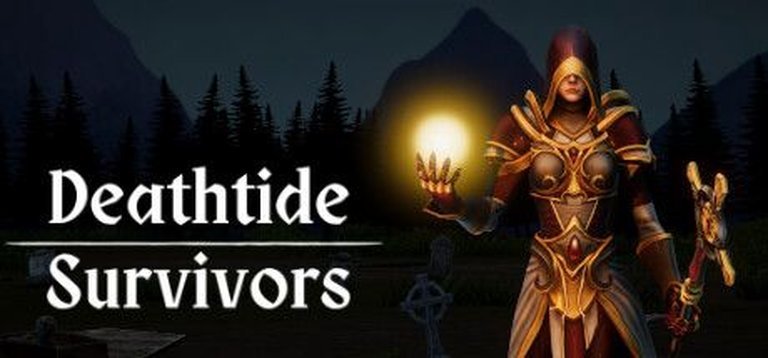
Deathtide Survivors is a top-down horde survival roguelite set in a dark fantasy world overrun by undead, where players directly control special abilities like Ultimates and Dashes to combat endless waves and powerful bosses. By unlocking ancient powers and crafting unique builds through spells, elemental synergies, and talents, players face adaptive Elite enemies with advanced AI, offering a polished experience that caters to both casual and hardcore gamers with deep customization and tactical gameplay.
Gameplay Videos
Deathtide Survivors Reviews & Reception
steamcommunity.com : tl;dr: The content is a bit light right now having just come out, but in a world overpopulated with horde survival clones, Deathtide Survivors is definitely worth checking out.
Deathtide Survivors: A Bullet-Hell Forged in Solitude – An In-Depth Analysis
Introduction: The Unlikely Contender in the Horde-Survival Gold Rush
The year 2022 witnessed an seismic event in indie gaming with the explosion of the “survivors-like” subgenre, catalyzed by the runaway success of Vampire Survivors. Overnight, a flood of imitators and aspirants flooded Steam Storefronts, each vying to capture that magic formula of auto-attacks, screen-filling hordes, and addictive build-crafting. Into this crowded arena, in January 2023, stepped Deathtide Survivors, a title that, from its very name and marketing, aimed not just to join the trend but to redefine it. Developed singularly by Luiz Pascoto—with “unconditional assistance” from his wife—Deathtide arrived as a curious, ambitious, and deeply polarizing proposition. Its official blurb declared a “Horde Survival Reimagined,” promising a game where you are “in Charge,” controlling a hero with manual abilities amidst an auto-casting frenzy. This review posits that Deathtide Survivors is a fascinating, deeply flawed, yet profoundly important case study in solo development under immense pressure, a game whose true legacy may be less in its current player count and more in the raw, public blueprint it provides for iterative design in the Early Access crucible. It is a testament toVision constrained by scope, a bullet-hell roguelite that often shoots itself in the foot but, through sheer force of will and community dialogue, demonstrates a path toward redemption.
Development History & Context: The Solo Developer’s Gauntlet
To understand Deathtide Survivors, one must first understand its creator. MobyGames credits Luiz Pascoto as the sole developer, publisher, and, by all accounts, the project’s primary visionary. This immediately establishes the game’s foundational context: it is a passion project of monumental scale, undertaken by an individual against the odds of a saturated market and the technical demands of a complex, simulation-heavy genre.
The game’s release on January 26, 2023, for Windows and Linux was not a polished 1.0 launch but an Early Access gambit. The developer’s stated goal was explicit: to use community feedback as the primary development compass. However, the initial reception and subsequent development timeline reveal a tumultuous journey. The patch notes from Steam tell a story of radical reinvention. The most pivotal moment was the “Back to the drawing board” announcement in Development Update #1 (July 10, 2023). Pascoto acknowledged that feedback necessitated a “massive gameplay overhaul,” postponing planned content (like Act II) to rebuild core systems. This culminated in Patch 2.0b – Rebirth (April 10, 2023), a comprehensive overhaul that touched “every single menu,” upgraded graphics, reworked combat feedback, and, most critically, shifted the progression from spell-leveling to a loot-based exploration system.
This was followed by the even more ambitious Beta 3 release (November 21, 2023), which introduced a completely new controllable move set (Primary/Secondary/Ultimate/Dash), an artifact/equipment/consumable system inspired by Risk of Rain, and merged endless/adventure modes into a risk-vs-reward portal system. The development log’s granular progress bars ([Implemented], [WIP], [Prototype]) are a rare, transparent window into a solo dev’s workflow, showing a codebase 80% complete for character abilities but content only 33% done. The planned console ports via a publisher partnership, mentioned in Update #1, hint at aspirations beyond the PC niche, though their status is now uncertain given the passage of time.
Technologically, the game runs on what appears to be a custom engine or a highly modified framework, targeting modest specs (2.5Ghz, 4GB RAM). The constant patching of resolution bugs (especially for Steam Deck), PhysX interaction issues, and save file sync problems underscores the immense challenge of supporting a complex, physics-influenced game across platforms as a one-person team. Deathtide exists, therefore, not as a finished product but as a living document of its own creation—a game being actively rewritten in response to its player base.
Narrative & Thematic Deep Dive: The Deathslayer’s Lonesome Crusade
Narratively, Deathtide Survivors is archetypal and functional rather than revelatory. The player assumes the role of a “Deathslayer,” a “righteous Justicar fighting against Death itself during the End Times.” This frames the horde-survival gameplay as a apocalyptic last stand. The world is a “dead world torn by the ravages of time and conflict,” a classic post-fantasy wasteland. The storytelling method is environmental and item-based: “pieces of history scattered throughout the maps,” and crucially, lore embedded in spell descriptions and character dialogues. This is a common, efficient tactic in roguelites (see Hades), allowing for incremental world-building without interrupting gameplay flow.
The thematic core is straightforward: defiance against inevitable annihilation. The player becomes “an epic bullet-hell Final Boss,” flipping the script on the horde. The “Ever Evolving story” promise—with each major update bringing a new “Act,” a new map, and the next story chapter—suggests an episodic, Darkest Dungeon-esque structure where each biome reveals more of the world’s downfall. The naming of the first major boss, the “Plaguebringer,” fits a classic corruption archetype. However, the source material provides almost no concrete narrative details, character arcs, or philosophical weight. The lore is a scaffold, not a destination, designed to contextualize the violence rather than interrogate it. It serves the gameplay loop of “fight, loot, repeat” by adding a faint cosmetic layer of consequence. In a genre often criticized for its lack of plot, Deathtide‘s approach is standard: enough to give actions weight, but never to slow them down.
Gameplay Mechanics & Systems: The Grand (And Rocky) Experiment
Here lies Deathtide’s defining ambition and its most frequent source of strife. The core innovation is a deliberate rejection of the genre’s “auto-cast” staple. While “autocast Spells are fundamental to Hordelike gameplay,” Deathtide insists on full player control. This is not a minor tweak; it is a philosophical wedge that splits the game from its peers and creates its most unique—and problematic—experiences.
Core Loop & Progression: The loop, as finalized in Beta 3, is: Select Hero & Attunement -> Enter Map (Act I, etc.) -> Explore destructible clutter (urns, barrels) for Keys and Currency -> Defeat Elite enemies (carrying chests) and Bosses -> Use Keys on Chests for Artifacts/Equipment -> After ~10 minutes, find Portal -> Choose to cash out loot (safe) or risk next map for greater rewards (lose 50% on death). Character leveling provides minor stat boosts; true power comes from the loot. This “loot-based progression” replaces the old spell-leveling system, emphasizing map knowledge and risk assessment. The “Nightmare+” (later “Deathtide”) difficulty adds escalating random enemy modifiers per portal jump, catering to hardcore theorycrafters.
Combat & Control Systems: This is where the game’s soul and its sores are exposed.
* The Hero Move Set (Beta 3): Each of the three classes (Warrior, Assassin, Priestess) has a unique Passive. All share: Primary Attack (LMB, no cooldown), Secondary Attack (RMB, short cooldown), Dash (Shift, temporary i-frames), Ultimate (R, long cooldown), and one Attunement (a mutually exclusive, build-defining perk, e.g., “50% Dash cooldown reduction”).
* The Elemental Stacking System: Every spell has an element (Fire, Frost, Lightning, etc.). Hitting enemies builds a stack; at a threshold (e.g., 5 Lightning), it triggers a powerful secondary effect. This is Deathtide’s most promising systemic depth, creating clear synergy opportunities and encouraging elemental diversity in builds.
* Items: Three types:
1. Artifacts (Q): Active, ultimate-like powers with unique mechanics (e.g., Bloodthirsty Blade requires a kill every 3 seconds or it damages you).
2. Equipment: Passive stat modifiers or ability changes (ARPG-style).
3. Consumables (E): Potions/scrolls on a shared 15s cooldown, selected from a wheel.
* AI Design: The game proudly advertises “advanced Artificial Intelligence.” Enemies like the Necromancer (heals/resurrects), Mage (predictive spells, retreats to guards), and Champion (intercepts movement) are designed to work as a team, creating tactical pressure. The Goblin Looter—a non-undead thief that steals XP—is a genius design touch that adds a frustrating, high-priority objective.
The Control Conundrum (The Dryskle Critique): The seminal Steam user review by Dryskle crystallizes the central tension. The reviewer’s initial fury, later tempered, highlights critical flaws:
* Aiming Limitations: Spells that aren’t auto-targeted only fire in the 8 directions of movement (WASD), not with mouse aim. This makes “aimed spells” feel “pretty underwhelming” in tight spaces, as you cannot aim independently of movement—a severe constraint in a bullet-hell game.
* Dodge Mechanics: The dash does not allow phasing through enemies. In a game with “perfect tracking” melee enemies and dense swarms, this often shoves you into more damage. The reviewer found the “50% dodge cooldown reduction” Attunement “mandatory” for playability, creating a single dominant must-pick option that undermines build diversity.
* Boss Design Flaws: The first boss, Plaguebringer, was initially a “awful experience”—stationary on a narrow platform, spamming overlapping poison gas (barely visible) and fast, durable bats. The fight was a slog of unavoidable damage due to space constraints and attack patterns. The developer’s swift hotfix (brighter gas, removed obstructing lectern) proves the critique was valid and demonstrates the crucial role of player feedback in this Early Access cycle.
These issues paint a picture of a combat system with aspirations toward skill-expression (manual aiming, dodging) but execution hamstrung by technical and design choices that frequently funnel players into damage. The “controllable” promise is noble but, in its initial form, often felt like a liability compared to the mindless power fantasy of auto-attack clones.
World-Building, Art & Sound: Atmospheric Aspirations
The game’s presentation has evolved significantly through patches. The “Graphics Overhaul” in 2.0b and subsequent updates upgraded enemy models, particles, and added volumetric fog. The top-down perspective frames a desolate, low-poly apocalypse. The color grading was specifically noted as moving away from “washed-out” to a more defined palette. The map design for Act I was “reworked… adding lots of interesting and dynamic zones” with “colliders that block enemy pathing, create choke zones.” This is critical—world-building in horde-survivors is primarily about play-space architecture. The map is a playground for kiting and positioning, and these updates show a focus on creating meaningful tactical geometry rather than pure aesthetics.
Sound design receives less detailed documentation but is implied to be part of the “Sound Overhaul.” The store page mentions a “Bumpin’ Music” tag on Steam, suggesting a deliberate lo-fi or synth-driven soundtrack meant to keep energy high during long runs. The combat feedback update—making “enemy attacks feel more brutal and getting hit feel more painful”—points to impactful audio cues. However, the sources lack specifics on a cohesive audio identity or a memorable score. The atmosphere is built more on visual density (enemies, spells, effects) and the tension of survival than on a rich soundscape.
The lore delivery—spell descriptions and environmental clutter—is the primary narrative tool. Finding a “healing fountain” or reading a spell’s flavor text are the world-building moments. This is minimalist but effective for the genre’s pace. It’s a world told through its weapons and wounds, not cutscenes.
Reception & Legacy: A Modest Echo in a Loud Crowd
Commercially and critically, Deathtide Survivors occupies a quiet corner of the survivors-like landscape.
* Player Count: SteamDB and GameCharts data paint a grim picture of obscurity. Peak concurrent players rarely topped 2-3 in 2023, with long stretches at zero. As of the latest data, it sits near 0 CCU. The MobyGames entry shows only 1 collector. This is not a breakout hit.
* User Reviews: The Steam user review score is Mixed (67% positive from 68 reviews). The reviews are few but fiercely engaged. Dryskle’s review is telling: it begins as a scathing critique of core mechanics (aiming, dodge, boss design) but is edited to a “Recommended” after the developer’s immediate responsiveness and the reviewer’s own adaptation (using a specific Attunement). This encapsulates the Early Access dynamic: frustration mitigated by visible developer care and the discovery of a viable playstyle.
* Critical Reception: There are no critic reviews on MobyGames or Metacritic. It exists outside the traditional review ecosystem, a pure word-of-mouth and community-driven project.
* Position in the Genre: On the “Survivors-likes” similarity scale, Deathtide is a outlier. Its insistence on manual control, dash, and aiming (however limited) puts it at a negative score in categories like “Move Only,” “No Dash,” and “No Aiming.” Its strengths are in “Build Crafting,” “Elites & Bosses” (multi-phase fights), and “Difficulty Modifiers.” It is less a “Zen” experience like Vampire Survivors and more a “Panic” one, demanding active attention. This niche is clear in its tags: “Bullet Hell,” “Difficult,” “Class-Based,” “Action Roguelike.”
Its legacy, thus, is twofold:
1. As a cautionary tale: It demonstrates the risks of launching a horde-survivor with a control scheme that actively fights the player’s desire for effortless power fantasy. The initial negative feedback was rooted in legitimate control friction.
2. As a template for responsiveness: The developer’s transparent patch notes, rapid hotfixes (within 24 hours of key complaints), and willingness to overhaul major systems (2.0b, Beta 3) is a masterclass in community-informed Early Access management. The game in November 2023 is fundamentally different—and likely more coherent—than the game of January 2023.
Conclusion: An Unfinished Symphony Worth Monitoring
Deathtide Survivors is not a great game yet. It may never be a broadly popular one. Its world is thin, its initial control scheme antithetical to genre comfort, and its player base minuscule. Yet, to dismiss it is to overlook a remarkable exercise in design tenacity. It is a game that asks more of its players—requiring deliberate aiming, tactical dashes, and intimate knowledge of elite AI behaviors—and in doing so, offers a different, more intense kind of power fantasy: one of earned mastery rather than passive accumulation.
The “Rebirth” and “Beta 3” updates represent a monumental course correction. The new controllable move set, while still limited by the 8-directional aiming constraint (a architectural choice, not a bug), aligns the game’s identity with its marketing. The loot-based exploration loop and risk-vs-reward portal system add compelling strategic depth. The elemental stacking and unique artifact designs (Bloodthirsty Blade) show a creator thinking beyond simple stat boosts.
However, fundamental questions remain. Can the aiming system be made more flexible without breaking combat balance? Will the Attunement system ever achieve true diversity, or will the “dodge cooldown” option remain the king? Can a solo dev ever finish the promised Acts, characters, and content at a pace that sustains a community? The Steam page’s note—”The last update made by the developers was over 2 years ago”—is a sobering counterpoint to the vibrant update history. Has development stalled?
For the historian, Deathtide Survivors is a vital artifact of the 2023 “survivors-like” maturation phase. It represents the genre’s first major internal schism: should these games be idle experiences or action games? Deathtide chose action, and the journey has been messy, public, and instructive. Its ultimate verdict will not be found in sales charts but in whether it can attract and retain the hardcore players who crave its particular, demanding flavor of catharsis. It stands today as a promising but perilous experiment—a testament to the fact that in the crowded arena of horde survival, the most dangerous enemy is not the horde itself, but the mismatch between a game’s ambition and its execution. For those willing to grapple with its difficulties, it offers a glimpse of a more skill-based horizon for the genre; for everyone else, it remains a fascinating, unfinished what-if.