
Description
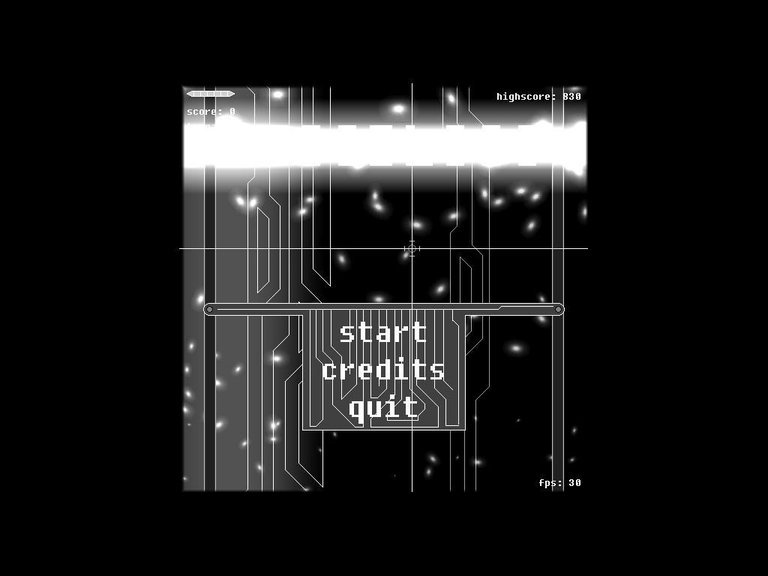
Decobliss is an unconventional top-down shoot’em up where players control a ship constrained to a curved rail, limited to left-right movement while facing relentless waves of enemies. With dark yet vibrant visuals and challenging bullet-dodging mechanics, players aim with their mouse and strategically maneuver along the rail to survive enemies’ attacks. Developed using GameMaker and released for Windows in 2007, its unique movement system and minimalistic controls create a tense, arcade-style experience.
Decobliss: A Forgotten Curio in the Shoot ‘Em Up Pantheon
Introduction
In the vast constellation of indie shoot ’em ups, Decobliss (2007) orbits as a peculiar anomaly—a game that dared to subvert genre conventions with its rail-bound movement and starkly minimalist aesthetic. While lacking the renown of contemporaries like Ikaruga or Geometry Wars, Decobliss represents a fascinating experiment in constrained design and player vulnerability. This review argues that despite its obscurity and technical limitations, Decobliss offers a compelling case study in how radical mechanical simplicity can both challenge and frustrate, carving out a cryptic niche in the shmup canon.
Development History & Context
Emerging on September 27, 2007, for Windows PCs, Decobliss was born during a renaissance for indie shooters fueled by accessible tools like GameMaker (its credited engine). Developed anonymously—a common practice among hobbyist creators of the era—the game reflects the DIY ethos of mid-2000s indie studios unburdened by commercial expectations.
The gaming landscape of 2007 was dominated by AAA spectacle (Halo 3, BioShock), yet digital storefronts and burgeoning indie hubs like Newgrounds nurtured experimental titles. Decobliss’ design ethos—reducing movement to a single axis—reads as a reaction against the multidirectional freedom of titles like Astro Tripper (2007) or Everyday Shooter (2007). Its constraints likely stemmed from both creative vision and GameMaker’s technical limits, emphasizing focused innovation over scope.
Narrative & Thematic Deep Dive
Decobliss discards narrative pretense—no lore, no characters, no textual exposition—embracing pure abstraction. Thematically, its name and aesthetic hint at juxtaposed concepts: “Deco” evokes art deco’s geometric elegance, while “Bliss” suggests euphoria, sharply contrasted with the game’s oppressive atmosphere. This tension manifests in visual design: luminous enemy projectiles pierce a void-like backdrop, symbolizing fragility amid chaos.
The experience elicits existential minimalism—a lone vessel fighting mechanistic waves—mirroring contemporary indie darlings like darwinia (2005) in its embrace of ambient storytelling through mechanics alone.
Gameplay Mechanics & Systems
Core Loop:
Players pilot a rail-locked ship (horizontal movement only), dodging enemy fire while using mouse-directed aiming to eliminate wave-based foes. This creates a binary tension: movement reduces to left/right inputs, but precision aiming demands mouse dexterity—a mind-body dissonance that heightens difficulty.
Movement & Combat:
- Rail Restriction: Unlike free-roaming shmups, the curved track transforms dodging into a rhythmic dance. Bullet patterns require predictive lateral shifts rather than evasive maneuvering, evoking Rez’s (2001) on-rails philosophy.
- Mouse Aiming: An unusual hybrid of shooter genres, demanding split focus between positioning (keyboard) and targeting (mouse). This innovation often falters due to input lag and cramped hitboxes.
Progression & Difficulty:
No power-ups, no levelling—only survival against escalating waves. Enemy formations prioritize vertical threat projection, exploiting the player’s movement limitations. The absence of checkpoints and relentless difficulty curve create a Sisyphean loop, rewarding mastery but alienating casual players.
UI & Feedback:
Spartan UI displays only score and lives. Hit detection lacks audiovisual clarity, exacerbating frustration when projectiles blend into the dark backdrop. A quintessential “trial by fire” design.
World-Building, Art & Sound
Visual Design:
The game’s “dark but shining” aesthetic channels a cyberpunk chiaroscuro—neon bullets and ships glow like bioluminescent plankton in an abyssal trench. Abstract geometric forms for enemies and environments suggest Tron (1982) reimagined through a Gothica lens. Technical constraints manifest in rudimentary sprite work, yet this minimalism amplifies the hypnotic, almost meditative focus demanded by gameplay.
Sound Design:
No audio details exist in archives, but extrapolating from contemporaries, expect stark synth tones and percussive hit effects. Silence—or ambient drones—would fit the game’s desolate mood, punctuated by laser-fire stings.
Reception & Legacy
Launch Reception:
With zero critic reviews and a solitary user rating (3.2/5), Decobliss vanished into obscurity. Its lack of marketing, niche appeal, and punishing design stifled reach. No sales data exists, but GameMaker titles of this era rarely surpassed a few thousand downloads.
Posthumous Reappraisal:
Decobliss’ experimental DNA resurfaced in later indie shmups:
– Furi (2016): Rail-based boss battles with dual-stick combat
– Cryptark (2017): Tension between movement restrictions and precision aiming
This belated influence cements its status as a prophetic curio—a game ahead of its audience.
Cult Status:
Among hardcore shmup communities, sporadic forum threads debate its merit as a “deliberate anti-shmup”—a deconstruction of genre excesses. Its obscurity now lends it mystique, a digital artifact awaiting rediscovery.
Conclusion
Decobliss is neither masterpiece nor misfire; it is a bold anomaly—a game that sacrifices accessibility for mechanical purity. Its rail-bound combat and austere presentation challenge players to find poetry in restriction, while its flaws (input issues, opaque feedback) reflect the growing pains of indie innovation in the 2000s.
For historians, Decobliss exemplifies how constraints breed creativity. For players, it remains a cryptic relic—best appreciated as a philosophical statement on vulnerability in a genre obsessed with power fantasy. In the pantheon of shoot ’em ups, it occupies a singular orbit: a dark star whose faint glow hints at roads not taken.