
Description
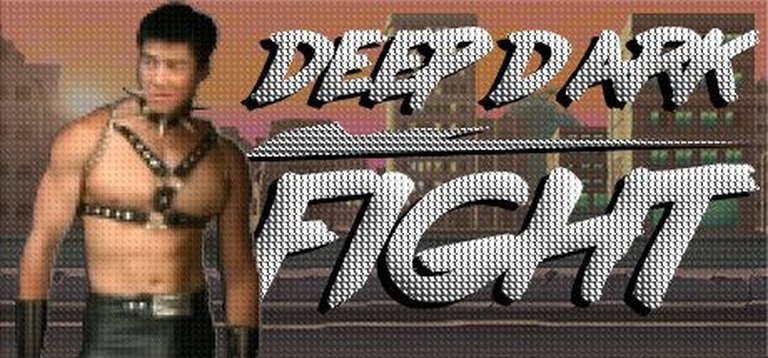
Deep Dark Fight is a 2.5D side-scrolling platformer set in a dark, hellish world where players take on the role of Van Darkholme, a character tasked with saving humanity by defeating a tyrannical gym boss. With pixelated old-school graphics and hardcore arcade gameplay, the game challenges players to navigate traps, battle enemies, and overcome bosses. Infused with meme culture and mature themes, it blends absurd humor with psychological horror across various levels and power-ups.
Where to Buy Deep Dark Fight
PC
Deep Dark Fight Cracks & Fixes
Deep Dark Fight Reviews & Reception
opencritic.com (10/100): Van Darkholme deserves better than his portrayal in Deep Dark Fight. This is a sloppy excuse for a game, and the broken physics will make you curse more than Van himself.
Deep Dark Fight: Review
Introduction
♂ “The mighty master Van Darkholme is awakening!” ♂ With this cryptic battle cry, Deep Dark Fight burst onto Steam in December 2017 as one of gaming’s most bewildering cult oddities. Developer EncoderX’s 2.5D platformer is less a traditional game and more a surreal tribute to Gachimuchi—a Japanese meme subculture blending homoerotic wrestling, absurdist humor, and electronic music. As a digital artifact of internet ephemera given interactive form, Deep Dark Fight defies conventional critique. Its legacy lies not in polished mechanics or narrative finesse, but as a defiantly strange, flawed shrine to esoteric fandom. For Van Darkholme—an American pornographic actor turned unwitting meme deity—presides over a dystopian gauntlet where retro platforming collides with BDSM aesthetics, psychological horror flair, and irreverent chaos.
Development History & Context
Studio & Vision:
EncoderX, a shadowy entity with no prior released titles, positioned Deep Dark Fight as a self-aware ode to 8-16-bit “hardcore arcade platformers.” Built on Unreal Engine 4, the choice was paradoxical for a pixel-art sidescroller but hinted at ambitious scope. The developers’ vision melded “old school traditions” with internet-age absurdism, embedding niche LGBTQ+ iconography and Gachimuchi references into its DNA.
Technological Constraints & Era:
Released in late 2017, the game entered a saturated indie market dominated by polished retro revivals like Hollow Knight and Cuphead. Its “2.5D” presentation—2D gameplay with 3D depth effects—aimed to evoke nostalgia while modernizing aesthetics but struggled with inconsistent physics and hit detection, betraying its indie budget. At $2.99 (often discounted to $1.49), Deep Dark Fight targeted impulse buyers drawn to meme culture rather than genre purists.
Cultural Landscape:
The game thrived in an era of ironic humor and alt-right pipeline tension. Its embrace of queer-coded, muscular homoeroticism—epitomized by Van Darkholme’s leather-clad avatar—resonated with LGBTQ+ communities reclaiming meme culture while alienating conventional players. EncoderX leveraged Steam’s permissive tagging system (“Nudity,” “Mature,” “Psychological Horror”) to court controversy and curiosity in equal measure.
Narrative & Thematic Deep Dive
Plot & Characters:
Van Darkholme’s quest—to “save mankind from extinction” by battling his gym’s “great boss” through hell—is a fragmented fever dream stitched from meme lore. Levels unfold like Dante’s Inferno reimagined by 4Chan: distorted industrial labyrinths populated by leather-masked warriors, occult symbols, and sudden spikes in existential dread. There is no coherent arc, only recursive trials symbolizing meme culture’s cyclical consumption of identity.
Van himself is a cipher, stripped of humanity and rendered as an archetype of hypermasculine camp. His opponents, including the enigmatic “Thug Boss,” evoke internet folklore’s fixation on adversarial brotherhood and power dynamics. Dialogue is sparse but laden with innuendo (“I’ll show you who’s the boss!”), parodying gaming’s machismo tropes while celebrating queer resistance.
Underlying Themes:
– Masculinity Deconstructed: Van’s journey—punishing yet absurd—mirrors meme culture’s deconstruction of male bravado.
– Descent into Digital Hades: Hell symbolizes the internet’s subconscious: a place where niche fetishes and inside jokes fester.
– Survival as Irony: Saving mankind becomes a Sisyphean joke, reflecting meme culture’s detachment from consequence.
Gameplay Mechanics & Systems
Core Loop:
A side-scrolling platformer with Castlevania-inspired hazards (spikes, traps) and Mega Man-style boss rushes. Players navigate procedurally generated chambers, collecting “power-UPS,” battling wave-based enemies, and surviving incoherent physics that veer between punishing and broken.
Combat & Progression:
– Janky Melee System: Basic punches/kicks suffer delayed hit detection; collision boxes are erratic, turning fights into chaotic flailing.
– Power-UPS & “Improvements”: Temporary buffs like “Leather Aura” (damage boost) and “Gachimuchi Rage” (screen-clearing special) offer fleeting relief but lack balancing.
– Character Progression: Nonexistent. No skill trees or permanent upgrades; progress relies on trial-and-error suffering.
UI & Technical Flaws:
Minimalist menus clash with garish aesthetic overload. Achievements (five total) reward masochistic feats (e.g., “♂Fisting Champion♂” for 100 deaths). The PC version’s stability varies wildly—some players report smooth runs; others encounter crashes tied to DirectX 10 dependencies.
World-Building, Art & Sound
Visual Design:
Deep Dark Fight oscillates between 8-bit homage and grotesque surrealism. Pixel-art sprites in bondage gear clash with hellish 3D backdrops lit in sickly greens and bloody reds. “Old school” claims falter amid messy art direction: environments blur into repetitive corridors, while Van’s animations feel stiff and lifeless.
Yet deliberate ugliness emerges as a stylistic weapon. The “Illuminati” and “Mystery Dungeon” tags manifest in cryptic sigils and sudden shifts into Lynchian horror—walls writhing with fleshy textures, bosses emerging from static voids. This chaotic maximalism mirrors the sensory assault of scrolling meme feeds.
Sound Design:
Electro-thumping tracks sample Gachimuchi’s iconic Eurobeat remixes, looping aggressively into delirium. Sound effects—bone crunches, leather squeaks—are jarringly loud, amplifying discomfort. Silence in “Psychological Horror” segments highlights the game’s tonal whiplash.
Reception & Legacy
Critical Response:
The game polarized critics and players:
– Steam Reviews: “Mostly Positive” (109/152 reviews), praising humor and meme fidelity: “Perfect for a cursed game night. Won’t play again, but laughed for hours.”
– Professional Critics: OpenCritic’s sole review (Gamers Heroes) scored it 1/10, blasting “sloppy physics” and “broken” design.
– Cultural Divide: LGBTQ+ players embraced its unapologetic camp; others dismissed it as “shock-value trash.”
Enduring Influence:
Deep Dark Fight birthed an ironic microgenre—meme platformers—exemplified by successors like Dark and Deep (2024). It presaged Steam’s influx of absurdist, low-effort titles weaponizing internet humor for profit. Yet its deeper legacy lies in queering game spaces: Van’s journey, however flawed, normalized LGBTQ+ iconography in hostile digital arenas.
Conclusion
Deep Dark Fight is neither “good” nor “bad” in traditional terms. It is a cultural detonation—a collision of meme epistemology, retro aesthetics, and queer defiance. EncoderX’s technical incompetence (buggy physics, unfinished systems) undermines its potential as a playable experience, but as a time capsule of 2010s internet surrealism, it fascinates. Like an unearthed cult film, its value lies not in craft but in audacity, screaming into the void: ♂ “We are the masters of this gym!” ♂
For historians, it’s a pivotal artifact of gaming’s alt-canon. For players? A $1.49 curiosity best enjoyed ironically, with friends, and a strong tolerance for jank.