
- Release Year: 2005
- Platforms: Windows
- Publisher: 1C Company, eGames, Inc., GMX Media
- Developer: Pixel after Pixel
- Genre: Strategy, Tactics
- Perspective: 3rd-person
- Game Mode: Single-player
- Gameplay: Business simulation, Managerial
- Setting: Aquatic, Underwater
- Average Score: 62/100
Description
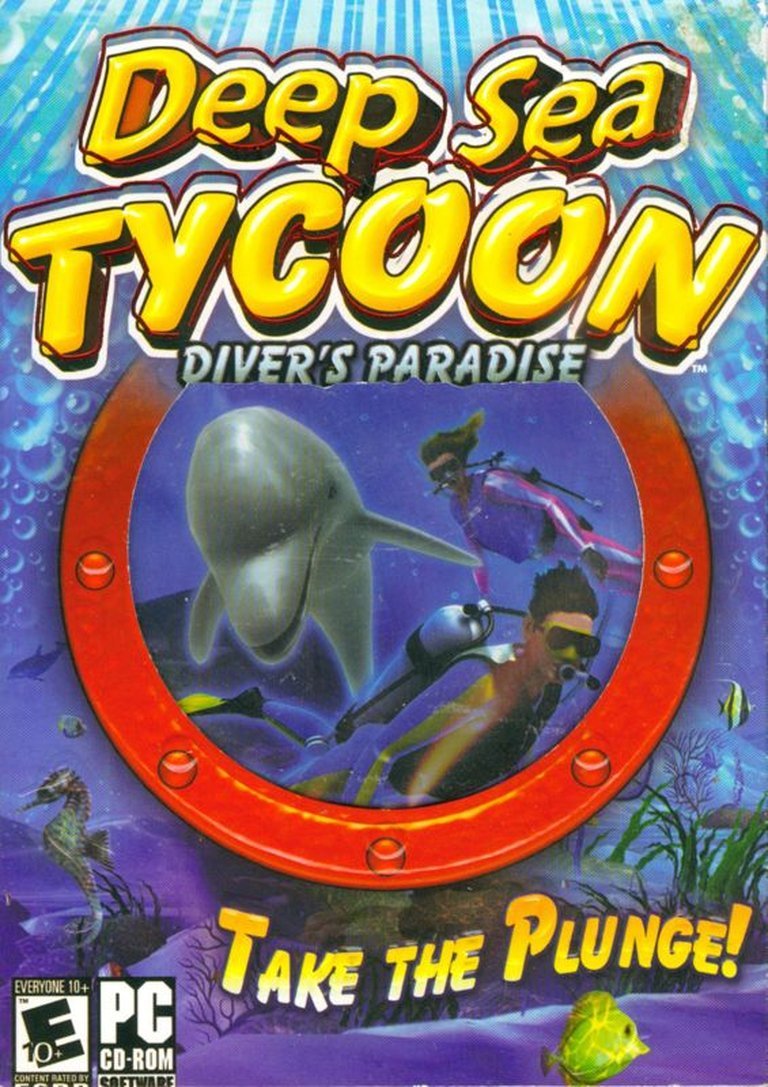
Deep Sea Tycoon: Diver’s Paradise is a beginner-friendly tycoon game where players construct and manage an underwater park, starting with an empty map and gradually expanding by adding buildings, attractions, and infrastructure to attract visitors. The game features 30 missions with specific objectives, a free-building mode unlocked through progress, and a unique camera system that allows players to view the park from the perspective of visitors or fish. Designed as a sequel to Atlantis Underwater Tycoon, it offers a relaxed, catastrophe-free experience focused on aquatic park management.
Gameplay Videos
Where to Buy Deep Sea Tycoon: Diver’s Paradise
PC
Deep Sea Tycoon: Diver’s Paradise Free Download
Deep Sea Tycoon: Diver’s Paradise Guides & Walkthroughs
Deep Sea Tycoon: Diver’s Paradise Reviews & Reception
mobygames.com (43/100): A tycoon game where the player constructs and manages an underwater park, aimed at beginners.
myabandonware.com (64/100): A strategy game, set in a managerial and real-time themes.
retro-replay.com : A beginner-friendly sequel to Atlantis Underwater Tycoon, offering a relaxing yet rewarding experience.
sockscap64.com (80/100): A tycoon game where the player constructs and manages an underwater park, aimed at beginners.
Deep Sea Tycoon: Diver’s Paradise: A Relaxing Yet Flawed Dive into Underwater Management
Introduction
Deep Sea Tycoon: Diver’s Paradise (2005) is a curious artifact of the mid-2000s tycoon game boom—a title that promised the thrill of underwater entrepreneurship but delivered a experience as tranquil as a coral reef at dusk. Developed by Pixel after Pixel and published by GMX Media, 1C Company, and eGames, Inc., this sequel to Atlantis Underwater Tycoon (2003) positioned itself as a beginner-friendly entry into the managerial simulation genre. Yet, beneath its vibrant, bubble-filled surface lies a game that critics and players alike struggled to fully embrace. Was it a misunderstood gem, or a shallow imitation of greater tycoon titles? This review dives deep into its development, mechanics, reception, and legacy to uncover the truth.
Development History & Context
The early 2000s were a golden age for tycoon games. Titles like RollerCoaster Tycoon (1999), Zoo Tycoon (2001), and Railroad Tycoon II (1998) had cemented the genre’s appeal, blending strategic depth with creative freedom. Into this crowded marketplace arrived Deep Sea Tycoon: Diver’s Paradise, developed by the small Croatian studio Pixel after Pixel. The team, led by producers Alex Jamieson, Zvonimir Miksic, and Tim Whitehurst, sought to carve a niche by transporting the tycoon formula beneath the waves.
Technologically, the game was constrained by the hardware of its era. Running on DirectX 9 and requiring a mere 8MB video card, it was designed to be accessible to a broad audience—particularly younger players and families. The studio’s vision was clear: create a stress-free, visually appealing underwater park simulator that emphasized creativity over complexity. However, this focus on accessibility came at a cost. The game lacked the depth and challenge that defined its contemporaries, a decision that would later draw criticism.
The gaming landscape in 2005 was dominated by more ambitious titles. The Sims 2 (2004) had redefined life simulation, while Civilization IV (2005) set new standards for strategy games. In this context, Diver’s Paradise felt like a relic—a throwback to simpler times when tycoon games were more about relaxation than rigorous management. Its ESRB rating of “Everyone 10+” further underscored its target audience, though some critics argued it could have easily been rated “E” for its complete lack of objectionable content.
Narrative & Thematic Deep Dive
Deep Sea Tycoon: Diver’s Paradise eschews traditional storytelling in favor of a modular, mission-driven structure. There is no overarching plot, no memorable characters, and no dramatic twists. Instead, the game unfolds through 30 missions, each presenting a simple objective: breed a certain number of seahorses, generate a specific revenue threshold, or attract a set number of divers. These missions serve as a loose framework for progression, unlocking new maps and free-build scenarios as players succeed.
Thematically, the game is a celebration of marine life and underwater exploration. Each mission is framed as a new venture—restoring a reef, launching a dolphin exhibit, or saving endangered species. While these premises are thin, they contribute to an overarching sense of environmental stewardship. The game’s underwater setting is its strongest narrative device, with sunken shipwrecks, coral caverns, and bioluminescent caves hinting at a world ripe for discovery.
Yet, the absence of conflict or consequence undermines any potential drama. There are no natural disasters, no disgruntled customers, and no ecological crises. The game’s world is a utopian fantasy where humans and marine life coexist in perfect harmony. While this serene atmosphere is part of its charm, it also renders the experience emotionally flat. Players are left to craft their own narratives, interpreting the interactions between divers and sea creatures as miniature vignettes of underwater life.
The game’s dialogue, such as it is, consists of brief mission descriptions and occasional visitor chatter. There is no voice acting, and the text is functional rather than evocative. The lack of educational content—such as information about marine species—is a missed opportunity, especially given the game’s target audience. Critics, including 1UP, noted that the game could have been a valuable edutainment tool but instead settled for being a “sleepy, nonviolent diversion.”
Gameplay Mechanics & Systems
At its core, Deep Sea Tycoon: Diver’s Paradise is a straightforward management simulator. Players begin with an empty seabed and a modest budget, tasked with constructing an underwater park from scratch. The gameplay loop is simple: purchase buildings (such as fish farms, feeding stations, and viewing domes), attract visitors, and reinvest profits to expand. The drag-and-drop interface is intuitive, making it easy for newcomers to grasp the basics.
The game’s 30 missions provide a guided progression system, introducing new mechanics and challenges at a leisurely pace. Early missions focus on basic tasks like breeding fish or placing feeding stations, while later scenarios require balancing multiple attractions and managing larger parks. However, the difficulty curve is almost nonexistent. Even the final missions pose little challenge, making the experience feel more like a tutorial than a true test of managerial skill.
One of the game’s most innovative features is the “pinned camera” mode, which allows players to attach their viewpoint to a visitor or fish. This first-person perspective offers a unique way to explore the park, watching as divers interact with attractions or schools of fish dart through coral tunnels. It’s a charming touch that adds personality to an otherwise mechanical experience. However, the lack of deeper systems—such as guest satisfaction meters, environmental hazards, or dynamic events—limits the game’s replayability.
The economic model is similarly simplistic. There are no loans, no market fluctuations, and no competition. Players earn money passively as visitors enjoy their attractions, with no risk of bankruptcy or failure. This lack of tension makes Diver’s Paradise a relaxing experience but also a forgettable one. Veterans of the tycoon genre will find little to engage them beyond the initial novelty of the underwater setting.
The UI is functional but unremarkable. Menus are clear and easy to navigate, though the manual camera controls can feel awkward. The game’s lack of a fast-forward option is a notable oversight, forcing players to wait in real-time as their parks generate income. This design choice, while perhaps intended to encourage patience, often leads to tedium.
World-Building, Art & Sound
Visually, Deep Sea Tycoon: Diver’s Paradise is a mixed bag. The game’s art style is bright and cartoonish, with vibrant colors and exaggerated marine life. Coral reefs pulse with life, schools of fish swirl in hypnotic patterns, and sunlight filters through the water in dappled rays. The underwater environment is convincing, if not groundbreaking, and the game runs smoothly even on lower-end hardware.
However, the visuals suffer from repetition. Many fish species are mere palette swaps of the same model, and background scenery loops predictably on larger maps. The animations, while smooth, are limited—fish swim in simple patterns, and divers perform a handful of repetitive actions. The game’s small playable area further exacerbates this issue, making parks feel cramped rather than expansive.
The sound design is equally unambitious. The soundtrack, composed by Björn Fogelberg, Björn Lynne, and Matthew Oates, consists of gentle, ambient tunes that evoke the tranquility of the ocean. While pleasant, the music lacks memorability, fading into the background rather than enhancing the experience. Sound effects are minimal—a bubble-popping noise accompanies mouse clicks, and the occasional splash or diver’s chatter punctuates the silence. There is no voice acting, and the absence of dynamic audio cues (such as changing music based on park success) makes the world feel static.
Despite these limitations, the game’s atmosphere is its strongest suit. The combination of soft visuals, gentle music, and the absence of stress creates a zen-like experience. Players who approach Diver’s Paradise as a digital aquarium rather than a rigorous simulator will find it a soothing escape. The game’s charm lies in its simplicity, offering a brief respite from the complexities of modern life.
Reception & Legacy
Deep Sea Tycoon: Diver’s Paradise was met with lukewarm reviews upon its release. Critics praised its accessibility and relaxing atmosphere but criticized its lack of depth and challenge. The game’s average critic score of 43% on MobyGames reflects this divided reception. German outlet GameStar dismissed it as a “gurke” (cucumber, slang for something boring), while PC Action noted that even preschoolers could complete most missions without difficulty.
Players were similarly unimpressed. The game’s average player score of 2.6 out of 5 suggests that even its target audience found it underwhelming. Many reviewers, such as Looki and GBase, described it as little more than an interactive screensaver—a pretty but shallow experience with little lasting appeal. The game’s lack of educational content, despite its marine theme, was a frequent point of criticism.
Commercially, Diver’s Paradise failed to make a significant splash. It was bundled in collections like Best Games Collection Ever (2006) and Tycoon Collection (2010), but these compilations did little to elevate its profile. The game’s legacy is one of obscurity, remembered primarily by retro gaming enthusiasts and collectors.
Yet, Diver’s Paradise is not without its defenders. Some players, particularly younger audiences and casual gamers, appreciated its stress-free gameplay and colorful presentation. The game’s lack of pressure and punishment made it an ideal introduction to the tycoon genre for novices. In this sense, it succeeded in its stated goal of being a beginner-friendly title.
The game’s influence on subsequent titles is minimal. While it shares DNA with other tycoon games, its simplistic design and lack of innovation mean it is rarely cited as an inspiration. Later underwater management games, such as Subnautica (2018) and Abzû (2016), focused on exploration and survival rather than park management, leaving Diver’s Paradise as a curious footnote in gaming history.
Conclusion
Deep Sea Tycoon: Diver’s Paradise is a game of contradictions. It is charming yet shallow, relaxing yet repetitive, accessible yet forgettable. Its greatest strength—its stress-free, beginner-friendly design—is also its greatest weakness. By stripping away the complexity and challenge that define the tycoon genre, the game sacrifices depth for accessibility, leaving little to engage players beyond its initial novelty.
For its target audience—young children and casual gamers—Diver’s Paradise offers a gentle introduction to management simulations. Its vibrant visuals, soothing soundtrack, and simple mechanics create a pleasant, if fleeting, diversion. However, for anyone seeking a rigorous or rewarding tycoon experience, the game falls short. Its lack of meaningful progression, dynamic events, and educational content relegates it to the realm of digital curiosities.
In the grand tapestry of video game history, Deep Sea Tycoon: Diver’s Paradise is a minor thread—a brief, colorful detour in the evolution of the tycoon genre. It is neither a masterpiece nor a disaster but a quiet, unassuming title that serves as a time capsule of early 2000s gaming. For those willing to approach it with modest expectations, it remains a charming, if flawed, dive into an underwater world of imagination.
Final Verdict: 5.5/10 – A relaxing but shallow underwater tycoon experience best suited for young or casual players.