
- Release Year: 2024
- Platforms: Windows
- Developer: Monu
- Genre: Action, RPG, Shooter
- Perspective: Top-down
- Game Mode: Single-player
- Gameplay: Harvesting, Power-ups, RPG elements, Shooter, Space flight, Upgrades
- Setting: Futuristic, Sci-fi
Description
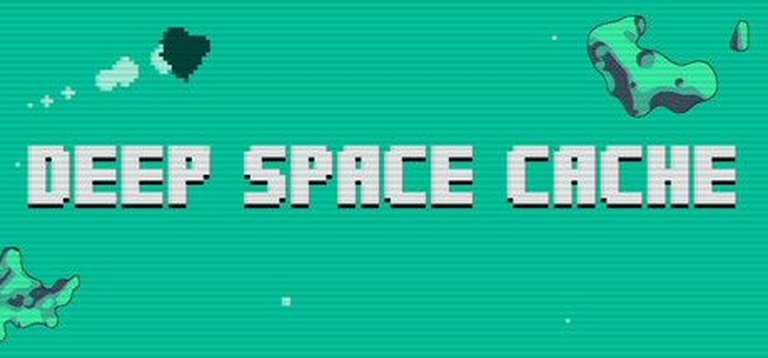
Deep Space Cache is a top-down 2D scrolling sci-fi action game where players pilot a space vessel to destroy asteroids and harvest resources within limited energy constraints. Featuring multiple weapons like basic shooters, rotating bullets, and lasers, players must target increasingly difficult color-coded asteroids for resources and white asteroids for power-ups such as double damage or increased speed. After depleting energy, players restart or return to base to upgrade generators using collected bits, enhancing ship capabilities across categories like attack power, energy efficiency, and spawn rate for future harvesting runs.
Gameplay Videos
Where to Buy Deep Space Cache
PC
Deep Space Cache Guides & Walkthroughs
Deep Space Cache Reviews & Reception
steamcommunity.com : I feel like this game has a lot of potential if you wish to work on it or make a sequel.
wasdland.com : For the price, it’s definitely worth it if you’re looking for something to help you unwind.
Deep Space Cache: Review
Introduction
In the ever-expanding cosmos of indie gaming, where pixelated asteroids drift alongside digital ambitions, Deep Space Cache emerges as a curious celestial body—a minimalist meditation on resource extraction wrapped in the trappings of a top-down shooter. Released on November 15, 2024, by solo developer Monu, this $0.99 Steam title quickly carved a niche for itself as a “semi-idle bullet heaven” experience, blending the cathartic chaos of bullet-hell shooters with the contemplative grind of incremental games. Though Deep Space Cache lacks the sprawling narratives of AAA epics or the mechanical depth of roguelikes, its deceptively simple loop—harvesting asteroids to fuel a labyrinthine upgrade tree—has resonated with hundreds of players, earning a “Very Positive” 91% approval rating on Steam. This review dissects Deep Space Cache not just as a game, but as a cultural artifact of the indie boom, exploring its design philosophy, execution, and place in the pantheon of incremental experiences. The thesis is clear: Deep Space Cache excels as a meditative, low-stakes power fantasy but stumbles under the weight of its own simplicity, revealing the fine line between accessibility and repetition in modern indie design.
Development History & Context
Deep Space Cache is a product of both restraint and ambition. Developed entirely by Monu over a mere two months while attending university, the game embodies the ethos of the solo indie developer—crafting a focused experience without the bloat of larger studios. Built on the Godot engine—a choice that underscores its indie credentials and accessibility—the project was conceived as a “small and simple” endeavor, explicitly designed to be playable in a single evening. This brevity is reflected in its microtransaction model: a fixed $0.99 price point with no DLC, aligning with Monu’s stated goal of creating a casual experience without financial gatekeeping.
The context of its release is equally telling. Launched in November 2024, Deep Space Cache arrived during a period of saturation for incremental and idle games, where titles like Space Rock Breaker and Nodebuster dominated the genre. Yet Monu’s distinct vision set it apart: an emphasis on “semi-idle” mechanics, where active play is rewarded but idling remains viable. This hybrid approach was a direct response to player fatigue with pure idle games, aiming to capture the dopamine rush of action shooters while retaining the low-pressure appeal of progression.
Notably, the game’s development was community-driven from inception. Monu actively engaged with players on Reddit and Steam, soliciting feedback that directly influenced post-launch patches. Early criticisms about the “grind” led to rebalancing of asteroid health, energy duration, and skill-tree costs, demonstrating a rare commitment to iterative improvement in a small-scale project. However, the 2-month development window also imposed constraints; the absence of narrative lore, enemy variety, or complex systems like randomization was a deliberate choice to maintain scope. As Monu bluntly stated, “I wanted to create something small and simple,” rejecting the sprawling complexity of competitors to deliver a “linear” experience focused solely on incremental satisfaction.
Narrative & Thematic Deep Dive
Deep Space Cache eschews traditional narrative in favor of environmental storytelling and implicit themes. The player assumes the role of a faceless deep-space probe, a silent harvester adrift in a minimalist cosmos. There are no characters, no dialogue, and no overarching plot—only the cold, mechanical imperative to “collect resources, upgrade, reach the end.” This absence of human elements is intentional, framing the game as a metaphor for industrial capitalism in microcosm: a cycle of extraction, consumption, and growth with no moral consequence or emotional weight.
The thematic core revolves around progress as purpose. The game’s “generators”—passive resource producers that transform harvested materials into “bits”—symbolize the dehumanizing efficiency of automation. Each upgrade to a generator feels less like a technological leap and more like a cog in an endless machine, where the player’s agency is reduced to resource management. This is underscored by the skill tree’s structure: four linear paths (Attack, Speed, Energy, Spawn) with no meaningful choices, mirroring the homogenizing effect of unchecked optimization. The final upgrades—costing 10,000 bits each—serve as the ultimate expression of this theme: the “endgame” is not escape but total domination, where the player’s ship becomes a cosmic vacuum cleaner capable of annihilating entire screens of asteroids with a single click.
White “power-up” asteroids introduce fleeting moments of chaos, offering temporary buffs like double damage or increased speed. These ephemeral gifts heighten the game’s bullet-heaven aesthetics but remain thematically disconnected—random rewards in a system otherwise defined by rigid causality. Ultimately, Deep Space Cache narrativizes the futility of growth for growth’s sake, a silent critique of infinite progression in an economy of finite resources.
Gameplay Mechanics & Systems
The gameplay loop of Deep Space Cache is a masterclass in distilled mechanics, yet its simplicity becomes both its strength and its weakness. The core cycle revolves around two phases: Harvesting and Upgrading.
Harvesting Phase: Players pilot a ship in a top-down 2D space, armed with progressively more powerful weapons (basic shooters, rotating bullets, lasers). Each run is governed by a finite energy meter, depleting as the player shoots asteroids. Asteroids are color-coded to denote resource type and difficulty—green for common, red for rarer, and so on—while white asteroids grant temporary power-ups. The challenge lies in optimizing runs: balancing speed to find high-value asteroids, managing energy to avoid premature termination, and leveraging power-ups to maximize yield. Yet this phase suffers from early-game monotony; as one player noted, “you could fly for 10 seconds following the indicator and find no asteroid,” leading to frustratingly low returns. Late-game, the loop reverses: with maxed upgrades, the screen empties instantly as the player “one-shots everything,” revealing a pacing flaw where challenge evaporates before mastery is achieved.
Upgrading Phase: Between runs, players allocate resources to upgrade “generators”—machines that passively produce “bits” per minute. Bits fuel a sprawling, four-category skill tree:
– Attack Power: Increases weapon damage.
– Attack Speed: Reduces fire rate cooldown.
– Energy Usage: Slows energy depletion.
– Asteroid Spawn Rate: Increases asteroid frequency.
Each branch includes special nodes (e.g., rotating bullets or extended capture range), but the tree’s linearity undermines replayability. As critic Phlogisticated observed, spending on early damage upgrades yields “zero progress” until unlocking “extra shot” nodes, creating a “useless” grind. Monu acknowledged this flaw, admitting the damage system was “not the best” and promising refinements in future patches.
The game’s “semi-idle” design blurs the line between active and passive play. Generators accumulate bits offline, but the lack of meaningful risk—no enemies, no collisions, no failure states beyond energy depletion—reduces active play to a rote exercise. One Steam reviewer aptly dubbed it “a meditative lo-fi support tool” rather than a game, emphasizing its role as background noise over interactive challenge.
World-Building, Art & Sound
Deep Space Cache constructs a world of elegant minimalism. The setting is a nebula of abstract possibility—a void defined only by the player’s ship, asteroids, and UI elements. This emptiness serves a dual purpose: it underscores the game’s theme of cosmic isolation while highlighting the player’s role as a solitary agent in a vast, indifferent universe. The absence of traditional lore (e.g., factions, backstories) reinforces the game’s focus on mechanics over narrative, creating a “pure” space where only numbers matter.
Visually, Deep Space Cache leans into retro futurism. The 2D scrolling graphics use pixel art and a limited color palette—deep blues for space, vibrant hues for asteroids—to evoke the classic arcade feel of Asteroids (1980) filtered through a modern lens. Asteroids are rendered as jagged, crystalline shapes with subtle shader effects (courtesy of collaborator Deep-Fold), while the player’s ship remains a humble, geometric vessel. Power-ups explode in bursts of white light, and the UI—clean, monochromatic, and unobtrusive—prioritizes clarity over flair. This minimalist aesthetic creates a hypnotic rhythm: the click of shooting, the shatter of asteroids, and the ping of resources collected form a visual symphony of destruction and creation.
Sound design amplifies the meditative tone. Props’ soundtrack is a lo-fi ambient masterpiece, blending synth pads with subtle electronic beats, perfect for background play. Sound effects are understated yet satisfying: the hum of the ship, the thud of shots, and the chime of resource collection all reinforce a loop of gentle productivity. Together, art and sound cultivate a “chill” atmosphere, positioning Deep Space Cache as a digital zen garden where tension is optional and progression is inevitable.
Reception & Legacy
Deep Space Cache’s reception is a study in contrasts. Commercially, it was a sleeper hit, selling over 832 copies on Steam with 91% positive reviews. Players praised its “addictive” progression and “lo-fi relaxation,” with one reviewer calling it “the essence of what makes Vampire Survivor good without the excess.” The game’s price point and accessibility were key drivers of success, as noted by Higher Plain Games: “it does have that incremental addictive nature” while being “a third of the price of its main competitor.”
Yet criticism was equally vocal. Early complaints centered on the “grind,” particularly in the late game, where players reported waiting hours for 10k-bit upgrades. The Steam discussion threads became a crucible for feedback, with user HaaYaargh summarizing the core issue: “it’s not difficult, just frustrating.” Monu’s responsive patches—including buffing asteroid health and adding late-game rarer asteroids—mitigated but didn’t eliminate these concerns. Another common gripe was the skill tree’s lack of meaningful choices, with duck lamenting, “there’s little in the way of choice in a game.” This static design limited replayability, a crucial flaw in the incremental genre.
Legacy-wise, Deep Space Cache occupies a unique niche. It exemplifies the rise of “micro-indies”—small, focused games that thrive on accessibility and community engagement. Its use of Godot also highlights the engine’s growing legitimacy in the indie space. While unlikely to influence mainstream design, it resonated with players seeking low-commitment escapism, carving a legacy as the “comfort food” of incremental gaming. As one Steam user quipped, “it’s less of a ‘game’ and more of a meditative lo-fi support tool”—a verdict that encapsulates both its appeal and its limitations.
Conclusion
Deep Space Cache is a paradox: a game of profound simplicity that delivers complex satisfaction, yet one whose simplicity ultimately constrains its potential. As a meditation on incrementalism, it excels—its loop of harvesting, upgrading, and idling is a masterclass in dopamine-driven design, wrapped in a charming retro aesthetic. Monu’s vision of a “small and simple” experience is realized, offering a 2–3-hour power fantasy that respects the player’s time and wallet.
Yet the game’s greatest strength—its simplicity—is also its greatest weakness. The lack of player agency, the early-game grind, and the late-game emptiness reveal a fundamental tension in Deep Space Cache: it wants to be both an active shooter and a passive idle game, achieving neither fully. Its legacy will be as a niche curiosity, a footnote in the incremental genre that dared to be minimalist but stumbled in execution.
For $0.99, however, Deep Space Cache is an undeniable success. It doesn’t redefine gaming, but it perfects a specific kind of comfort—a cosmic lullaby for the idle mind. In a gaming landscape obsessed with scale and spectacle, its quiet ambition to be “just enough” is, in itself, revolutionary. Verdict: A flawed but fascinating meditation on growth, worth its weight in bits.