
- Release Year: 2020
- Platforms: Windows
- Publisher: FuocoFatuo
- Developer: FuocoFatuo
- Genre: Adventure
- Perspective: Diagonal-down
- Game Mode: Single-player
- Gameplay: Puzzle elements
- Setting: Horror
- Average Score: 77/100
Description
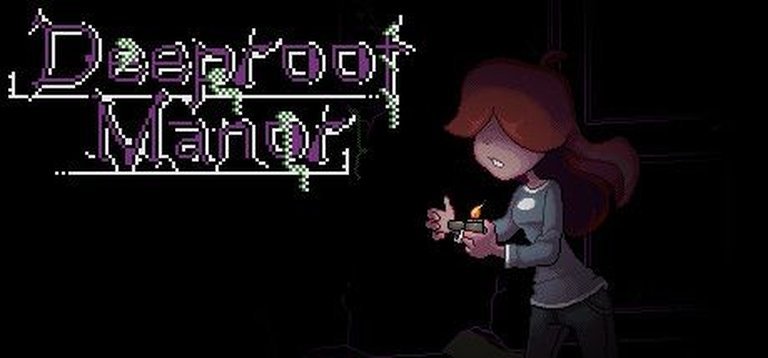
Deeproot Manor is a puzzle-oriented horror adventure game developed with RPG Maker, where players control Emily as she ventures into a creepy, abandoned mansion in the woods to find her missing younger brother Richard, lured by school rumors. Inside, the eerie setting unfolds with a massive tree erupting through the courtyard, dark secrets, item-based puzzles, interactive exploration via a diary map, tense monster chases, and a retro 2D diagonal-down perspective filled with atmospheric horror.
Gameplay Videos
Where to Buy Deeproot Manor
PC
Deeproot Manor Guides & Walkthroughs
Deeproot Manor Reviews & Reception
metacritic.com (70/100): While Deeproot Manor’s extremely dark aesthetic and retro-styled atmosphere may not be for everyone, the game creates an exciting and memorable horror gaming experience, building something new and fun out of a host of old ideas.
adventuregamers.com : I really enjoyed my time wandering Deeproot Manor. The puzzles are all very logical but truly challenging.
steambase.io (92/100): Deeproot Manor has earned a Player Score of 92 / 100. This score is calculated from 25 total reviews which give it a rating of Positive.
Deeproot Manor: Review
Introduction
In the shadowed eaves of indie horror gaming, where pixelated dread meets meticulous puzzle-craft, Deeproot Manor emerges as a chilling testament to the enduring power of the haunted house trope. Released in 2020 amid a surge of RPG Maker horrors, this solo-dev passion project by FuocoFatuo conjures the spectral essence of classics like Maniac Mansion and early SNES-era adventures, but infuses them with a grotesque botanical curse that twists familiarity into nightmare. As a game historian, I’ve pored over its labyrinthine manor, uncovering layers of lore, logic-defying puzzles, and multiple endings that reward persistence with profound tragedy. My thesis: Deeproot Manor is a triumph of atmospheric restraint and intellectual rigor, a modern heir to retro horror that, despite visibility hurdles and abrupt deaths, carves an indelible niche in indie adventure history for its ability to make silence scream.
Development History & Context
Deeproot Manor was conceived and largely executed by Italian developer FuocoFatuo as a “mostly single-handed love letter to independent horror games,” utilizing RPG Maker MV—a freeware engine synonymous with accessible, top-down horror titles like Yume Nikki and Ib since the early 2000s. FuocoFatuo handled design, development, story, dialogues, graphics, additional music, and sounds, embodying the indie ethos of bootstrapped creativity amid 2020’s pandemic lockdowns. Collaborators included Skipper (dialogue sprites, CGs, additional art, Russian translation), Lerri Punk (core music), and translators for Italian, Brazilian Portuguese, and French, with plugins from Yanfly, Galv, and others enhancing functionality like Steamworks integration.
Technological constraints were deliberate: RPG Maker’s 2D scrolling limits yielded a diagonal-down perspective with direct control (WASD/arrow keys or gamepad), eschewing point-and-click for keyboard interactions and mouse-based puzzles. This evoked 16-bit era limitations—low-res pixel art, manual saving at crucifixes—while dynamic lighting amplified darkness as a mechanic. Released May 22, 2020, on Steam ($7.99, now ~$1.79), it landed in a post-Ib RPG Maker renaissance, amid OMORI hype and retro revivals like Celeste. The landscape favored bite-sized horrors (Ao Oni clones) over narrative depth, but Deeproot‘s 7-hour runtime, multiple endings, and unlockables positioned it as a thoughtful counterpoint, prioritizing exploration over jumpscare spam.
FuocoFatuo’s vision—exploration rewarding discovery, puzzles teasing intellect, danger lurking—shone through sparse trailers hiding spoilers. Playtesting refined chases and puzzles, with an official walkthrough (by Skipper/Little Skull Kid) ensuring accessibility without hand-holding.
Narrative & Thematic Deep Dive
At its core, Deeproot Manor weaves a tale of sibling devotion amid eldritch overgrowth. Emily, a determined young girl, infiltrates the titular estate after her brother Richard vanishes, chasing schoolyard rumors of a woodland mansion. Breaking in via vines, she confronts a colossal tree erupting through the courtyard—a parasitic entity corrupting inhabitants into plant-hybrids. The plot unfolds non-linearly: diary as map tracks progress, notes/diaries reveal the manor’s history of a hunter’s hubris, unleashing the tree’s curse.
Characters are archetypal yet nuanced:
– Emily: Brave protagonist, her internal monologues (unvoiced, text-heavy) mix shock, resolve, and love—”I’ll go to great lengths for my brother.”
– Richard: Scared but playful younger sibling, trapped and mutating; his relief at reunion humanizes the horror.
– The Doll: Sassy wooden puppet, carved by the Witch; rude banter (“kinda rude and sassy”) provides levity, hints at mushrooms/Witch.
– The Monster: Roaring plant-human brute, chases enforce tension; dumb yet relentless antagonist.
– The Witch: Stoic ally, hiding from the curse; empowers tools, reveals rituals.
Themes probe sacrifice, nature’s vengeance, and blurred humanity. The tree symbolizes unchecked growth devouring civilization—roots block paths, mutate Richard. Endings escalate:
– End C: Rush escape; Richard transforms, kills Emily (gory pixelation).
– End B: Poison/burn tree; Richard dies post-escape.
– End A: Soul-transfer ritual (blue flower, red knife); Emily sacrifices body, Richard inhabits it.
– End J (post-A new game): Joke via “Ankle Chain” ritual, reveals birthday prank with doppelganger “Evil Emily.”
Dialogue, laden with ellipses (“…oh.” “…I see…”), mimics natural hesitation but risks verbosity. Backstory scraps (diaries, occult tomes) layer psychological horror: “Space Dislocation” hides the Witch’s bedroom. Themes echo Little Nightmares familial bonds amid decay, culminating in ambiguous catharsis—salvation as pyrrhic loss.
Gameplay Mechanics & Systems
Deeproot Manor thrives on classic adventure loops: explore (manor floors via diary-map), inventory items (examine/use), solve puzzles, evade threats. Core progression: Collect keys/tools amid locked doors/roots/darkness; manual saves at crucifixes mitigate deaths.
Puzzles shine—logical, multi-clue, fair yet brain-melting:
– Library: Rearrange books (6/6 for hypothetical doubles/triples).
– Piano: Black keys sequence from family photo, timed to metronome arms.
– Generator: Voltage waves to 130V, baiting auto-adds.
– Fireplace: Hunter poem dictates tile order (wolf-deer-rabbit, empties for walks).
– Others: Calendar codes, butterfly patterns, blueprint pipes.
Innovations: Mouse puzzles (e.g., generator), chases requiring hides/escapes (monster faster, but routes exist). Combat? None—survival via wits (hide in wardrobes, blue lighter vs. Doll/tree).
Progression/UI: Inventory (X/Esc), diary auto-notes puzzles/locks. Flaws: Low visibility (dynamic fade-to-black), unavoidable chases post-puzzle (5-10min reloads), no quicksave. Replayability via endings/unlockables (10 photo pieces for art/music/costumes in secret room).
Pacing masterfully bottlenecks (basement lights), opens freeform (post-generator). ~7 hours yields 3/4 endings via reloads; full secrets demand multiples.
World-Building, Art & Sound
The manor—a dilapidated Gothic pile overrun by roots—is a character unto itself: Foyer clock, library vines, cellar barrels evoke lived decay. Dynamic lighting (glow near lamps, fade afar) mandates dark-room play, heightening isolation. Purple-black palette, 16-color pixels mimic 1980s EGA, blurring details (examine “blobs”) for paranoia—key items pop (white/yellow).
Art: Stylized 2D sprites (FuocoFatuo/Skipper), CG cutscenes for revelations. Sound: Sparse—creaking floors, irregular footsteps unsettle; minimal synth tracks (Lerri Punk, classics like Tchaikovsky) amplify silence. Headphones essential: distant growls prelude chases, jumpscares land viscerally. Ambient groans, flushing valves immerse; music swells for tension.
Collectively, they forge oppressively eerie atmosphere—retro constraints enhance dread, evoking Maniac Mansion‘s thrill amid frustration.
Reception & Legacy
Launch reception was positive but niche: Adventure Gamers (70%, 3.5/5) lauded puzzles/atmosphere, critiqued visibility/chases/dialogue (“long-winded ellipses”). Steam: 90% positive (22 reviews), praising horror/puzzles; MobyGames echoes 70% (1 critic). Commercial: Modest sales (~$1.79), befitting indie; 8 achievements, multilingual support broadened appeal.
Reputation evolved: Steam Deck verified (2025), cult following via guides/wikis (RPG Maker Fandom details endings). Influence: Reinforces RPG Maker’s puzzle-horror viability, inspiring Botany Manor-esque plant themes; evokes Maniac Mansion nostalgia in modern indies (In Stars and Time shares credits). No mainstream ripple, but preserves retro adventure DNA amid action-horror dominance.
Conclusion
Deeproot Manor masterfully distills haunted house essence into 7 hours of cerebral terror: ingenious puzzles elicit “aha!” euphoria, suffocating visuals/ambience weaponize darkness, branching narratives probe sacrifice’s cost. Flaws—murky pixels, punishing chases, prolix text—test patience, demanding optimal conditions (darkness, headphones). Yet, FuocoFatuo’s vision endures: a nostalgic gem blending old-school rigor with fresh mutations.
Verdict: Essential for retro horror aficionados, a mid-tier indie masterpiece securing RPG Maker’s legacy. Score: 8.5/10—a deceptively simple manor hiding profound depths, worthy of historical annotation beside Ib and Maniac Mansion. Play it, perish in its roots, and emerge transformed.