
- Release Year: 2016
- Platforms: Android, Blacknut, iPad, iPhone, Macintosh, Windows
- Publisher: GameHouse, Inc., Real Networks, Inc.
- Developer: GameHouse S.L
- Genre: Action
- Perspective: Diagonal-down
- Game Mode: Single-player
- Gameplay: Time management
- Setting: Contemporary
- Average Score: 93/100
Description
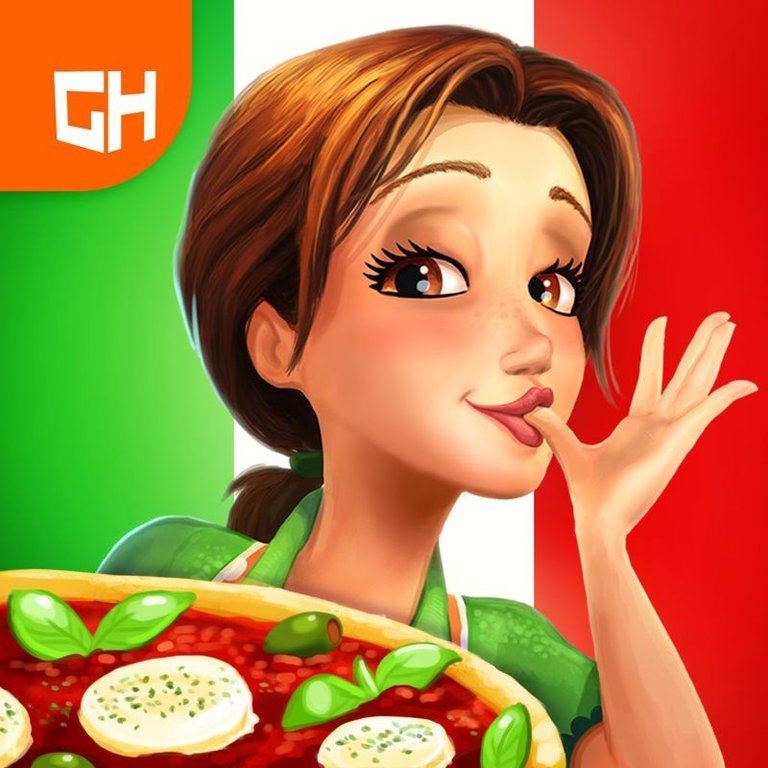
In ‘Delicious: Emily’s Message in a Bottle’ (the thirteenth installment in the series), Emily embarks on a heartfelt journey to Italy with her extended Napoli family after receiving surprising news: her long-lost grandfather, Vitto, might still be alive. Amidst beautiful Italian settings like vineyards and coastal markets, Emily must use her proven time management skills, taking charge of renovations and running various family businesses to bring the estranged family back together.
Gameplay Videos
Delicious: Emily’s Message in a Bottle Guides & Walkthroughs
Delicious: Emily’s Message in a Bottle Reviews & Reception
play.google.com (92/100): It’s a cute game with won
Delicious: Emily’s Message in a Bottle: Review
Introduction
In the ever-expanding pantheon of cozy gaming experiences, few franchises embody the intersection of narrative warmth and satisfying gameplay quite like the Delicious series. As the thirteenth installment, Delicious: Emily’s Message in a Bottle (2016) arrives not merely as a time-management exercise, but as a heartfelt odyssey through decades of family history, Italian heritage, and the enduring power of love. This review posits that while the game adheres to the series’ winning formula, its masterful blend of intergenerational storytelling, mechanical refinement, and emotional depth elevates it to a standout entry—one that transforms the act of serving pizza into a profound metaphor for reconciliation and belonging. By tracing Emily’s quest to reunite her fractured Napoli family, the game crafts an experience as nourishing as the 200+ Italian dishes players prepare, proving that even the most familiar recipes can yield new, unforgettable flavors.
Development History & Context
Crafted by GameHouse S.L in Barcelona, Message in a Bottle emerged from a studio deeply embedded in the casual gaming landscape, with a legacy stretching back to the earliest Delicious titles. The developers, led by studio director Maximiliano Bevilacqua and a team of 85 credited individuals, envisioned a game that would push the series’ narrative boundaries while retaining its signature accessibility. Released across PC, Mac, iOS, and Android on August 4–11, 2016, the game capitalized on the mature smartphone market, leveraging cross-platform synchronization—a forward-thinking move for the era. Technologically, it remained faithful to series conventions: fixed/flip-screen visuals, point-and-click interfaces, and real-time pacing. This approach wasn’t a limitation but a deliberate choice, ensuring instant accessibility across casual gamers. The 2016 gaming landscape saw casual games dominating mobile markets, with Delicious standing as a flagship for narrative-driven time management. Against competitors like Diner Dash, GameHouse doubled down on emotional storytelling, positioning Message in a Bottle as a “cozy epic” where cooking became a vessel for catharsis.
Narrative & Thematic Deep Dive
The narrative unfolds across two timelines, weaving a tapestry of memory and reunion. In 1982 Napoli, 3-year-old Emily witnesses her grandfather Vittorio’s abrupt departure after a bitter family dispute over his “secret to success”—a dollar coin given to each son to forge their own path. The present-day story begins in Snuggford, where Paige’s recovery from fever sets the stage for a bombshell: Vittorio is alive, living in exile on an island. Emily’s father, Edward, is overwhelmed, estranged from his brothers (Marco, Gino, Vinicio) for 30 years. What follows is a pilgrimage across Italy to mend these rifts, culminating in a family reunion dinner.
The plot excels in its emotional granularity. Key scenes—like Edward’s depressive spiral after financial ruin or Gino’s grumpy transformation after a well rescue—feel earned, driven by nuanced dialogue and character motivations. The eponymous “message in a bottle” serves as a powerful symbol: young Emily’s letter to her departed grandmother becomes a literal catalyst for Vittorio’s return, underscoring themes of communication transcending time. The game’s title isn’t mere whimsy; it’s a thesis: love, like messages in bottles, persists against storms and separations. Subtler threads, like the contrast between the Napoli brothers’ bitterness (Marco’s stubbornness, Gino’s isolation) and Emily’s unifying grace, add layers. Even the challenge levels reflect this—e.g., “Jet Lagged” mirrors familial exhaustion, “No Vineyard For Old Men” critiques generational divides. By journey’s end, the “secret ingredient” isn’t culinary but relational: family, forgiveness, and shared history.
Gameplay Mechanics & Systems
At its core, the game refines the Delicious template into a symphony of multitasking. Players serve customers across 65 story levels and 26 challenge levels across 8 unique restaurants, each introducing new mechanics. The loop is deceptively simple: take orders, prepare dishes (e.g., pizza-making with dough-sauce-cheese-pepperoni sequences), serve, and clean tables. Yet, escalating complexity creates intense rhythm. For instance, at Marco’s Fish Market, players must grill fish, feed hungry fountain fish, and manage boat customers who “cast off” before returning. At Gino’s Farm, animal care—collecting eggs from chickens, milking cows, and saving Truffles the pig—adds tactile resource management.
Innovations elevate the experience:
– Multi-character Management: Later levels task players with switching between Emily, Edward, Marco, and others, each with specialized stations (e.g., Edward making pizza dough while Emily serves).
– Dynamic Challenges: Levels like “Risk Prevention” force players to use a pizza peel to avoid burns, while “Zen Moment” demands idleness—a meta-comment on modern hustle.
– Upgrade Systems: Coins buy oven upgrades (preventing burns) and menu unlocks (e.g., patience-boosting items), while diamonds invite family members to the reunion.
– Hidden Object Elements: Finding mice in every level and capturing “memorable photo moments” during cutscenes rewards completionists.
The UI, though simple, is brilliantly efficient. Stacked tasks, tray management, and combo chains (serving multiple customers back-to-back) turn chaos into strategy. Challenges like “Mediterranean Diet” (no duplicate orders) or “Leaf Tray” (a degrading serving platter) test mastery without feeling punitive. This isn’t just cooking; it’s emotional choreography.
World-Building, Art & Sound
The game’s world-building is a love letter to Italy, each restaurant a meticulously crafted microcosm. Emilia’s Place (1982) evokes nostalgia with cobblestones and a rustic pizza oven, while Hippie Island (Vittorio’s exile) trades Italy’s vibrancy for bohemian tranquility—hammocks, ukuleles, and a volcano that disrupts trays. The diversity is staggering: Marco’s Fish Market brims with seagulls and boat docks; Vinicio’s Vineyard offers rolling hills and wine barrels; Gino’s Farm overflows with truffle-hunting pigs. Even Snuggford’s Emily’s Garden, with its birthday setup, grounds the story in cozy familiarity.
Artistically, the game radiates warmth. Characters are rendered with expressive, oversized features—Paige’s wide-eyed wonder, Edward’s weary resilience—enhanced by vibrant palettes that shift with location (golden hues for vineyards, cool blues for the coast). Backgrounds are rich with detail: the “Emilia’s” sign weathered by time, the cluttered chaos of Gino’s farm. Sound design amplifies immersion: lapping waves at the fish market, clucking chickens on the farm, and the gentle strum of a ukulele on Hippie Island. Music shifts from playful melodies (Paige’s birthday) to poignant piano during Vittorio’s memories, turning cooking into a sensory feast. Even the satisfying ding of a cash register reinforces a cycle of reward.
Reception & Legacy
Upon release, Message in a Bottle was hailed as a series high point. Critics lauded its storytelling—Gamezebo awarded it 9/10, calling it “warm and fuzzy.” Steam’s “Very Positive” rating (93% from 133 reviews) reflected player adoration, with one fan declaring, “I always say that when a new one comes out,” underscoring the series’ consistency. Fans praised the emotional weight, with reviews highlighting Edward’s arc and the tearful reunion as peak moments. Commercially, it thrived as a premium title on Steam ($15.99) and a free ad-supported mobile app, appealing to both dedicated players and newcomers.
Its legacy endures in three key ways:
1. Narrative Ambition: It expanded the Delicious universe by delving into Emily’s Italian roots, setting the stage for后续 family-centric stories like Christmas Carol and Miracle of Life.
2. Mechanical Innovation: Multi-character management and challenge levels redefined series pacing, influencing later titles to integrate deeper systems.
3. Emotional Resonance: The message-in-a-bottle theme became a franchise touchstone, symbolizing how games can explore universal themes—loss, memory, reconciliation—with grace.
Even today, it’s cited as a benchmark for “cozy gaming,” proving that casual experiences can harbor profound emotional complexity.
Conclusion
Delicious: Emily’s Message in a Bottle is more than a game; it’s a culinary journey through the heart. By masterfully blending time-management gameplay with a multigenerational saga of family, it transcends its genre to become a meditation on love’s persistence. The narrative—balancing nostalgia with hope—feels lived-in, while the gameplay evolves from simple tasks to intricate emotional choreography. Its Italian locales, vibrant art, and evocative sound create a world that’s both inviting and immersive. Though some challenge levels may frustrate, and the formula remains familiar, the game’s emotional payoff—a fractured family whole again—justifies every click. In the annals of gaming history, Message in a Bottle stands as a testament to the power of comfort: it reminds us that even in the busiest kitchens, there’s always time for what truly matters. For fans and newcomers alike, this isn’t just another Delicious entry—it’s a masterpiece of the genre.