
- Release Year: 2009
- Platforms: Windows
- Publisher: Stardock Entertainment, Inc.
- Developer: Gas Powered Games
- Genre: Action, RTS
- Perspective: Third-person
- Game Mode: LAN, Online Co-op, Single-player
- Gameplay: Base building, Combat, Real-time strategy
- Setting: Fantasy
- Average Score: 73/100
Description
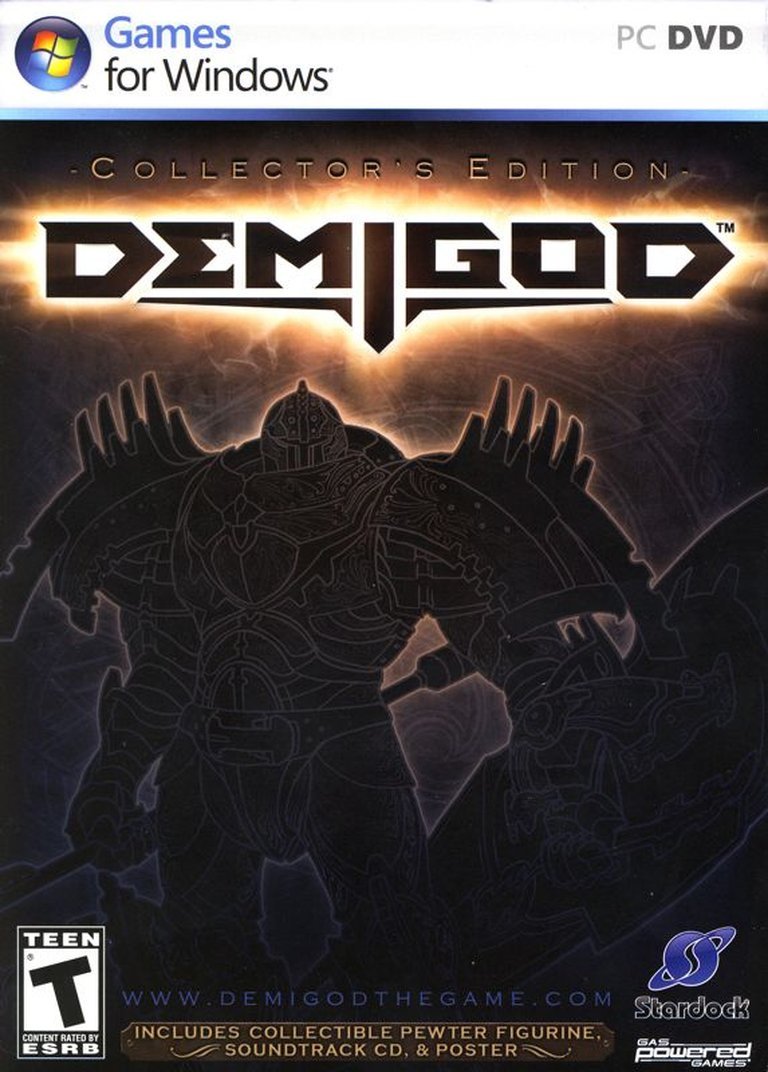
Demigod (Collector’s Edition) is a multiplayer online battle arena (MOBA) game where players take control of powerful demigods, divided into two distinct types: Assassins, who excel in direct combat, and Generals, who command minions to dominate the battlefield. Set in a mythological arena, the game emphasizes competitive multiplayer battles but also includes single-player skirmishes against AI. The Collector’s Edition enhances the experience with a pewter figurine of ‘The Rook,’ an official soundtrack, and a poster, offering fans additional collectibles alongside the core game. Despite initial multiplayer connectivity issues at launch, the game delivers strategic depth and epic clashes for fans of the genre.
Demigod (Collector’s Edition) Cracks & Fixes
Demigod (Collector’s Edition) Mods
Demigod (Collector’s Edition) Guides & Walkthroughs
Demigod (Collector’s Edition) Reviews & Reception
ign.com (75/100): There’s a great multiplayer game here… when it works.
metacritic.com (76/100): Demigod is one of those games which surprised the hell out of me in many ways.
en.wikipedia.org (65/100): The game received “generally favorable” reviews.
mobygames.com (78/100): Average score: 78% (based on 2 ratings)
Demigod (Collector’s Edition) Cheats & Codes
PC
Modify /My Documents/My Games/Gas Powered Games/Demigod/game.prefs to enable debug facilities (add ‘debug = { enable_debug_facilities = true }’ above ‘profile = {‘). Set file to read-only. Enter codes during gameplay.
| Code | Effect |
|---|---|
| CTRL+ALT+B | 999,999 gold |
| CTRL+SHIFT+C | Copy unit/structure |
| – (Minus key) | Decrease game speed |
| ALT+N | God mode |
| + (Plus key) | Increase game speed |
| ALT+F | Instant level up to 20 |
| CTRL+K | Kill selected unit |
| CTRL+SHIFT+V | Paste unit/structure |
| CTRL+ALT+Z | Reveal map |
| ALT+F2 | Spawn any unit |
| ALT+T | Teleport selected unit |
| ALT+A | Toggle opponent AI |
| ALT+V | Wireframe mode |
Demigod (Collector’s Edition): Review
A Divine Ambition Marred by Mortal Frailties in Gas Powered Games’ MOBA Experiment
Introduction
In the pantheon of multiplayer online battle arena (MOBA) pioneers, Demigod (Collector’s Edition) stands as a fractured monument to ambition. Released in 2009 by Gas Powered Games (Supreme Commander) and Stardock, this ill-fated titan sought to elevate the nascent MOBA genre—then dominated by Defense of the Ancients (DotA)—into a full-fledged commercial venture. Though crippled by catastrophic technical failures at launch, Demigod remains a fascinating artifact of design ingenuity and hubris. This review argues that while its Collector’s Edition offered tangible value, the base game’s flawed execution and neglected potential underscore a pivotal “what if” in MOBA history.
Development History & Context
The Visionaries and Their Crucible
Gas Powered Games, led by Chris Taylor, aimed to translate DotA’s grassroots success into a polished standalone title. Partnering with Stardock (known for Galactic Civilizations), they envisioned a mythic battleground where players controlled godlike beings in tactical warfare. The late 2000s were a transitional period for MOBAs: DotA’s popularity surged, but no major studio had yet capitalized on the formula. Demigod’s ambition was clear—to marry DotA’s core mechanics with AAA production values.
Technological and Commercial Missteps
Demigod’s development was plagued by constraints. The team opted for peer-to-peer (P2P) networking instead of dedicated servers, a fateful decision that destabilized multiplayer. Compounding this, retailer GameStop broke street dates, selling copies pre-launch. Servers weren’t live, and pirated versions flooded torrent sites, overwhelming Stardock’s infrastructure. CEO Brad Wardell later called it a “nightmare,” with patchwork fixes arriving weeks post-launch.
The Collector’s Edition, bundling a “Rook” pewter figurine, Howard Mostrom’s soundtrack, and a poster, released alongside the standard version—a gesture toward fans, yet overshadowed by the base game’s dysfunction.
Narrative & Thematic Deep Dive
Paper-Thin Mythos, Archetypal Depth
Demigod’s narrative exists only as scaffolding. A “Progenitor” god’s demise triggers a tournament among demigod offspring vying for ascension. Each of the eight playable characters—split into Assassins (combat specialists) and Generals (minion-summoners)—boasts archetypal lore:
– The Rook: A mobile fortress evoking Norse mythology.
– Sedna: A healer whose design courted controversy for sexualized tropes.
– Lord Erebus: A vampiric rogue draining foes’ vitality.
Lore is delivered via sparse pre-match taunts and post-tournament blurbs, typical for MOBAs of the era. Thematic cohesion lies in divine hubris—players wield godlike powers yet remain vulnerable to strategic missteps, mirroring the game’s own fraught development.
Gameplay Mechanics & Systems
Core Loop: Tactical Divinity
Matches pit two teams (1v1 to 5v5) across eight arenas with objectives like Conquest (destroy the enemy citadel) or Slaughter (kill X demigods). Key systems:
– Character Progression: Leveling allows skill-tree customization—e.g., Sedna can spec into AoE healing or silencing enemies.
– Economy: Gold earned from kills/flags buys gear (swords, potions) or citadel upgrades (reinforced minions).
– Flag Domination: Capturing control points grants buffs (mana regen, XP bonuses).
Innovation and Flaws
Demigod innovated with Generals, whose minion-spawning added RTS-lite strategy absent in DotA. However, critical flaws eroded its potential:
– Visibility Issues: Cluttered visuals, poor color contrast, and oversized characters (e.g., The Rook obstructing the screen) made unit tracking chaotic.
– Pathfinding Bugs: Units frequently stuck on geometry, immobilizing mid-combat.
– No Tutorial: New players faced a steep learning curve with opaque mechanics.
– Netcode Catastrophes: P2P networking caused desyncs, lag, and dropped games—IGN noted multiplayer was “a crapshoot.”
Single-Player Limbo
Skirmishes vs. AI and a “Tournament” mode offered respite but lacked depth. AI behavior was predictable, and the absence of a campaign relegated solo play to practice fodder.
World-Building, Art & Sound
Aesthetic Splendor, Functional Failings
Demigod’s art direction melded high-fantasy grandeur with a muted palette. Arenas like The Cataract (a floating fortress) and Temple of the Gods showcased Gas Powered’s knack for scale, but design choices hampered playability:
– Visual Clutter: Particle effects (spells, blood) often obscured crucial action.
– Color Confusion: Ally/enemy unit differentiation suffered from similar hues.
– Zoom Function: While allowing Supreme Commander-esque tactical views, it couldn’t compensate for on-ground chaos.
Sonic Identity
Mostrom’s orchestral score—included in the Collector’s Edition—imbued battles with mythic weight. A Christopher Lee-esque announcer boomed “FIRST BLOOD!”—a nod to Unreal Tournament’s gravitas. Yet sound failed to alleviate the UI’s inadequacies; players couldn’t reliably locate their demigod amid auditory overload.
Reception & Legacy
Launch: A House Divided
Critics praised Demigod’s ambitions but savaged its execution:
– Metacritic: 76 (PC)—”Generally favorable” but discordant.
– IGN (7.5/10): “A great multiplayer experience… when it works.”
– GameSpot (6.5/10): “Broken by networking issues.”
– Player Reviews: Mixed (3.4/5 on MobyGames), citing unbalanced heroes and dead multiplayer.
The Collector’s Edition fared better; Hooked Gamers (80%) called its extras “worth it for the soundtrack alone.”
Post-Launch Redemption… and Obscurity
Patches stabilized multiplayer by June 2009, but the player base never recovered. Stardock added two post-launch demigods, yet support waned as League of Legends (2009) and Dota 2 (2013) monopolized the genre.
Industry Impact
Demigod’s legacy is twofold:
1. Technical Cautionary Tale: Its P2P missteps influenced later MOBAs to prioritize dedicated servers.
2. Design Innovations: Concepts like General-class heroes and persistent upgrades (Pantheon mode) presaged trends in Heroes of the Storm and Smite.
Included in 1001 Video Games You Must Play Before You Die, it endures as a cult curiosity.
Conclusion
Demigod (Collector’s Edition) is a bittersweet relic. Its pewter figurine and soundtrack symbolize what could have been—a divine ascent stymied by mortal flaws. Gas Powered Games’ vision of a tactical, god-slaying MOBA was groundbreaking but undone by network instability and usability oversights. For historians, it remains a critical mirror to the genre’s evolution; for players, a flawed yet fascinating time capsule. While overshadowed by titans like Dota 2, Demigod’s ambitious DNA lingers in the pantheon of gaming’s “noble failures.”
Final Verdict: A flawed deity, worthy of study but not worship.