
- Release Year: 2017
- Platforms: Macintosh, Windows, Xbox One
- Publisher: BigMoon Entertainment, Ltd.
- Developer: BigMoon Entertainment, Ltd.
- Genre: Action
- Perspective: Diagonal-down
- Game Mode: Single-player
- Gameplay: Tactical RPG
- Setting: Fantasy
Description
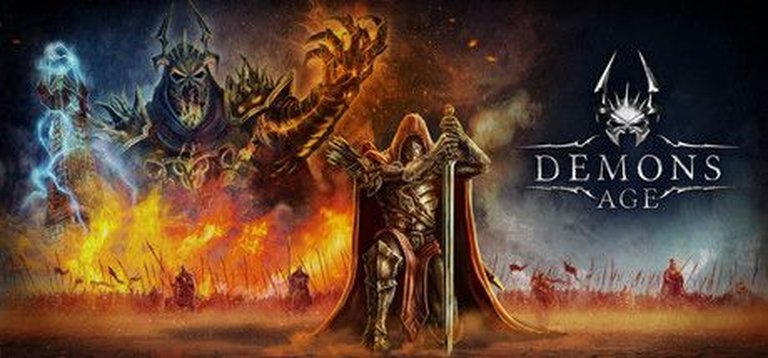
Demons Age is a turn-based tactical RPG set in the fantasy peninsula of Moragon, where ancient evil resurfaces as demons invade the land. Drawing inspiration from classics like Baldur’s Gate, players begin as a shipwrecked prisoner and must assemble a diverse party to battle the demon lord Vazuhr and his warlord Zogalon, amidst political turmoil and a rich world inhabited by elves, dwarves, halflings, and humans.
Gameplay Videos
Demons Age: Review
Introduction: A Phantom of the cRPG Renaissance
In the mid-2010s, the landscape of PC role-playing games underwent a quiet revolution. Buoyed by the critical and commercial success of Pillars of Eternity (2015) and Divinity: Original Sin (2014), a wave of nostalgia-driven projects sought to resurrect the isometric, party-based, tactical RPGs of the late 1990s—the legacy of Baldur’s Gate and Icewind Dale. Into this crowded field stepped Demons Age, developed by Portuguese studio BigMoon Entertainment (later Saber Porto). Announced with the confident pitch of being a “modern successor” to those sacred texts, the game promised a dark fantasy world, deep tactical combat, and a narrative of political intrigue and demonic invasion. Yet, almost immediately, the project became mired in problems: protracted development, visible technical shortcomings, and, most damningly, a legal claim that it used unlicensed assets from another game. The result was a title that vanished from digital storefronts and into obscurity, remembered primarily as a cautionary tale. This review will dissect Demons Age not as a playable experience—its availability and functional integrity are severely compromised—but as a historical artifact, a window into the ambitions and perils of indie game development in the Kickstarter-inspired era. Its thesis is clear: Demons Age is a game whose vision was consistently undermined by execution, culminating in a commercial and cultural erasure that renders it a ghost in the machine of the modern RPG revival.
Development History & Context: Ambition in the Shadows of giants
The Studio and the Vision:
BigMoon Entertainment, a small team based in Porto, Portugal, conceived Demons Age as a passion project squarely aimed at the “classic cRPG” audience. The developers explicitly cited BioWare’s Baldur’s Gate series and Troika Games’ The Temple of Elemental Evil as primary inspirations. This was a conscious, retrograde design philosophy—rejecting the action-oriented trends of the time in favor of turn-based tactics, isometric perspectives, and deep party management. The official description from the developer’s website states: “‘Demons Age’ is a classical Role-playing game, designed to be a modern successor of great classic videogames such as ‘Baldur’s gate’ and ‘The Temple of Elemental Evil’.” This positioning placed it in direct competition with other contemporaneous projects like Pillars of Eternity (Obsidian, 2015) and Torment: Tides of Numenera (inXile, 2017), which had far larger teams, established reputations, and significantly more resources.
Technological Constraints and Engine Choice:
The team chose the Unity engine, a common and accessible tool for indies but one with a mixed reputation for handling complex, data-heavy isometric RPGs. While Unity could render modern graphics, its out-of-the-box systems for isometric cameras, large grid-based maps, and intricate AI pathfinding required significant customization. A preview build from August 2016, analyzed by Gamesear, already highlighted severe camera issues: “the walls don’t become transparent when the camera is sitting right on top of them… I constantly got a very, very detailed look at the nearby walls.” This suggests the team struggled with the most fundamental technical hurdle of the genre—camera control—a problem that plagues many Unity-based isometric titles. The choice of a hexagonal grid for combat (a feature listed on MobyGames) further complicates pathfinding and UI readability compared to the orthogonal grids of the classics.
The Gaming Landscape and a Troubled Timeline:
Demons Age was first announced in September 2015, with a projected Q1 2016 release for PC, PS4, and Xbox One. This timeline was wildly optimistic. The preview from Gamesear in August 2016 was conducted on an “alpha” build, noting “unfinished in so many ways” and listing critical flaws in writing, combat balance, and UI. The game finally saw a digital release on December 7, 2017—over a year and a half late. This delay, common in indie development, often signals scope creep or fundamental technical hurdles. By late 2017, the “cRPG renaissance” had matured, and player expectations for polish, writing quality, and system depth had been raised by the successes of Divinity: Original Sin II (released September 2017). Demons Age entered a market that was no longer impressed by mere imitation of the classics; it demanded iteration and excellence.
The DMCA Shadow: A Fatal Legal Blow
The most defining moment in Demons Age‘s history came almost immediately after launch. A Steam community announcement from the Community Manager on February 13, 2022, states: “As you might have already noticed, Demons Age’s store page has been removed from Steam due to a DMCA claim. The claim has been made by a company unbeknownst to us, stating that ‘Demons Age’ uses assets from ‘Chaos Chronicles’.” This is a catastrophic event for any game. A DMCA takedown indicates a credible allegation of copyright infringement. “Chaos Chronicles” was an unreleased, vaporware MMO from the now-defunct studio Acclaim, infamous for its long development hell and numerous asset controversies. The claim suggests that Demons Age may have utilized placeholder or stolen assets from leaked or shared material related to Chaos Chronicles, a practice that would instantly poison its reputation and legal standing. This allegation, whether true or a strategic attack by a competitor, was never publicly resolved in BigMoon’s favor. The game was effectively erased from the primary PC marketplace, a fate from which it has not returned. This legal cloud overshadows all other aspects of its development, casting doubt on the studio’s practices and the originality of its entire project.
Narrative & Thematic Deep Dive: A Familiar Tale Told Awkwardly
Plot Synopsis and Structural Ambition:
The narrative of Demons Age is a standard, albeit epic, high fantasy template. The world is Moragon, a peninsula originally settled by classic Tolkien-esque races—Elves, Dwarves, Halflings—who lived in isolation. The arrival of Humans brought trade and a period of prosperity, which inevitably curdled into “greed and thirsty for power.” This weakness allowed the ancient evil, Vazuhr, the Lord of Darkness, to manipulate a human warlord, Zogalon, into opening portals to Hell. A grand alliance of the races defeated Zogalon a century prior, sealing the portals with magical Monoliths guarded by knights. The story proper begins after this “century of peace,” as the Monoliths are sabotaged by a mysterious sect, the “Order of Enlightenment,” led by the “High Emissary.” Demons return, the King (Konrad Lijak) goes mad and disappears after consulting his mage (Kaldulor), and his children, Princess Pellora and Prince Karan, are left to hold the crumbling kingdom together.
The player character is an amnesiac prisoner who washes ashore after a shipwreck, a classic “blank slate” origin. The hook is compelling: a land in chaos, a resurgence of an ancient evil, a secret society, and royal intrigue. The lore, as detailed in press releases and the developer’s site, is dense with names and events, suggesting an attempt at a deep, sprawling history akin to theForgotten Realms.
Dialogue and Prose: A Critical Failure Point
Where the narrative utterly collapses, according to the only available professional preview, is in its execution. The Gamesear review states: “the overall message behind each dialogue and lore book is extremely solid… but the sentences are poorly paced and so awkwardly constructed that not even the good voice acting can salvage it.” This is a devastating critique for an RPG, a genre where text is the primary vehicle for world-building, character development, and player agency. The premise may be “fine,” but the actual writing—the grammar, sentence structure, and flow—is described as fundamentally broken. The reviewer speculates that the project would require a full editorial pass, a massive undertaking for a completed game. This suggests either a non-native English writing team without proper editorial oversight or a severe rush-to-market that bypassed essential localization and proofreading. For a game aiming to stand alongside Baldur’s Gate, famed for itswriting (by veterans like Lukas Kristjanson), this flaw is fatal. It transforms potentially interesting lore and quests into a chore to read, breaking immersion and undermining the entire narrative experience.
Themes and Their Realization:
Thematically, the game explores classic D&D motifs: the fragility of peace, the cyclical nature of evil, the corruption of power, and the burden of legacy (the abandoned Monoliths). The concept of hired adventurers with “their own agenda” who may betray the player is a promising mechanic meant to inject moral ambiguity and tension into party management. However, there is no evidence in the source material that this idea was implemented with any nuance. It risks being a binary “loyalty check” rather than a sophisticated narrative system. The “Order of Enlightenment” as antagonistic force introduces a Gnostic or anti-establishment theme—a sect seeking “enlightenment” through unleashing demons—which could have been fascinating, but again, the writing quality likely reduces it to a generic “evil cult.”
Gameplay Mechanics & Systems: Foundations Cracking Under Pressure
Core Loops and Structure:
Demons Age adheres to the classic CRPG template: create a character, form a party, explore a world map with random encounters, enter discrete locations (dungeons, towns, ruins), complete quests from notice boards or NPCs, loot containers, solve environmental puzzles, engage in turn-based combat, and return for rewards. The developer’s “Key Features” list highlights this loop verbatim. The preview confirms the presence of a day/night cycle affecting random encounters and the ability to rest at inns or campsites— staples of the genre. The world map travel is mentioned, but whether it’s truly open or a node-based system is unclear from the sources.
Combat Systems: Hexes and Hesitation
The combat is turn-based on a hexagonal grid—a deliberate callback to The Temple of Elemental Evil and some D&D 3.5e adaptations. The Gamesear preview provides the most granular analysis, and it is scathing. The balance is described as “broken” in two extreme ways:
1. Wizards are Pathetic Offensively: Spell damage is so low (“a measly 1 point of damage” from a “giant BALL OF ACID”) that a Wizard is often better off equipping a sword and attempting a physical attack, which has a low chance to hit. This inverts the classic power fantasy of the spellcaster.
2. Wizards are Overpowered with Crowd Control: Conversely, crowd control (CC) spells like blindness and fear are “stupidly overpowered,” allowing the player to “cruise through” a difficult boss fight by incapacitating enemies. This creates a binary, un-fun meta where the optimal strategy is either “ignore your mage” or “spam CC and win.”
This suggests a complete failure in mathematical tuning—spell damage scales poorly, while CC effects have no meaningful saving throws or action economy costs. The preview notes “bugs and glitchy animations” in the alpha build, implying the combat system was not only unbalanced but also technically unstable. fixing this would require a sweeping redesign of the entire spell and class system, a monumental task post-launch.
Character Progression & Party Management:
Players select from “16 convicts from different races and classes” per the Steam description. Class list includes standard fantasy archetypes: Wizards, Fighters, Clerics, Rangers, Rogues. Leveling up unlocks “better skills and/or spells.” The hiring of companions from Inns is a key feature, and the promise that they have “background story and their own agenda” and “may betray you” is an excellent idea on paper, evoking the paranoia of games like Vampire: The Masquerade – Bloodlines or Dragon Age: Origins. However, the sources provide zero detail on how this betrayal mechanic is implemented. Is it scripted? RNG-based? Based on alignment choices? The silence suggests it was either poorly implemented, a cut feature, or so minor as to be irrelevant. This gap between promised depth and realized systems is a recurring theme.
UI and Interface:
The interface is called “perfectly fine, albeit a bit basic” by the preview, but the writing is the core flaw. Camera control is repeatedly called out as problematic. There is no mention of a “highlight interactive objects” hotkey, leading to the complaint that loot “tends to blend in with the background which means a whole lot of mouse wiggling is required.” This is a major usability issue in an item-heavy loot-based RPG, directly hampering the core pleasure of exploration and collection.
World-Building, Art & Sound: A World That Looks the Part, Fails to Feel It
Setting and Atmosphere:
The world of Moragon is competently constructed on paper. It has a history of racial conflict, a clear antagonist with mythological weight (Vazuhr), and a political power vacuum. The premise of a post-war society grown complacent, with ancient guardians abandoned, is classic and effective. The “scattered rumors” and “mysterious sect” provide a clear narrative engine. However, the atmosphere is entirely dependent on the execution of art, sound, and writing. With the writing crippled by awkward prose, the world’s lore fails to breathe. There is no discussion in the sources of environmental storytelling—details in level design, readable notes, or ambient NPC chatter—that might have compensated.
Visual Presentation:
Built in Unity, Demons Age uses a modern (for 2017) but stylistically generic fantasy art direction. Screenshots from MobyGames and the Steam page (when it was live) show a game with a muted color palette, detailed but not distinctive models, and environmental layouts that are functional but lack iconic flair. The preview praises the “huge” maps and “multi-level layout” of the sewer starting area, noting the potential for non-linear exploration. However, this is undercut by the camera issues, which so often obscure the very spaces the designers worked hard to build. The graphics are described as “modern” in contrast to the classics, but by 2017, they were already Mid-tier. They would not stand out against Divinity: Original Sin II or even Pillars of Eternity.
Audio Design:
The developer’s site mentions “original voice acting.” The preview notes the voice acting is “good,” which is a rare positive note, but it is powerless to save the poorly written dialogue. There is no mention of a musical score or sound effects quality. Given the low budget and technical issues, it is safe to assume the sound design was functional but unmemorable—a missed opportunity to build atmosphere in a world where the visual and textual elements were failing.
Reception & Legacy: Erasure and a Cautionary Footnote
Critical and Commercial Performance:
Demons Age did not receive a single critic review on Metacritic. Its “Moby Score” is listed as “n/a” on MobyGames, indicating a complete absence of professional coverage. This is itself a significant data point: a game announced with press releases and preview builds failed to attract the attention of any major outlet at launch. The commercial performance was disastrous. Its Steam store page was removed due to the DMCA claim, making it impossible to purchase legally on the dominant PC platform. While it was also released for Macintosh and Xbox One (per MobyGames release data), there is no evidence these versions sold meaningfully or evaded the legal issues. The Steambase aggregate, based on the 20 reviews that existed before the takedown, shows a Player Score of 40/100 (“Mixed”) with 12 negative and only 8 positive reviews. Common complaints in the Steam discussions (visible in the cached community page) include the price being “too high” ($30, compared to more polished competitors on sale), questions about missing features (full character creation), and a general sense of disappointment.
Post-Release Legacy and Influence:
Demons Age has no discernible legacy. It did not influence any subsequent games, spawn a sequel, or cultivate a modding community. It is not cited in discussions about the cRPG renaissance. Its primary historical function is as a case study in the pitfalls of ambitious indie development:
1. The Asset Risk: The DMCA claim is the ultimate lesson. Using unlicensed or improperly cleared assets, even from obscure or “dead” projects, can legally annihilate a game’s commercial viability and permanently stain its reputation.
2. The Polish Gap: The gap between aspiration and execution was vast. Core systems (combat balance, camera control) and basic craftsmanship (writing, UI) were unfinished or broken at launch. In a niche genre built on deep, systemic gameplay, this is fatal.
3. The Competition Problem: Entering a space revitalized by well-funded studios with legendary pedigree (Obsidian, inXile, Larian) required not just nostalgia, but meaningful innovation or extreme polish. Demons Age offered neither.
4. The Visibility Death Spiral: The DMCA takedown removed its primary storefront, dooming it to instant obscurity. Without players, there are no communities, no word-of-mouth, no legacy.
It exists now as a phantom entry on databases like MobyGames and GOG’s “Dreamlist” (where users can vote for games they wish to be re-released, with Demons Age at 26 votes—a tiny number). It is a game that, for most intents and purposes, never existed in the cultural consciousness.
Conclusion: A Well-Intentioned Ghost
Demons Age is not a bad game in the traditional sense; it is an incomplete and legally compromised artifact that never had a fair chance to be judged on its (flawed) merits. Its world of Moragon shows a spark of classic fantasy world-building. Its core gameplay loop—hex-based tactical combat, party management, exploration—was conceptually sound and borrowed from beloved sources. But from the ground up, it was beset by crippling problems: an engine struggling with fundamental isometric presentation, prose so awkward it broke narrative immersion, combat balance so erratic it invalidated class choices, and a production process that culminated in a DMCA takedown alleging asset theft.
In the grand history of video games, Demons Age occupies a tiny, sad footnote. It represents the moment when the “cRPG revival” bubble began to burst for the smallest players, where ambition without capital, legal prudence, or rigorous editing led not to a cult classic, but to digital oblivion. Its only lasting value is as a sobering lesson for indie developers: passion is not enough. Legal due diligence is non-negotiable. Polish is not optional. And in a genre defined by its depth of systems and text, a failure of writing is a failure of everything. For historians and archivists, it is a reminder of the thousands of projects that dissolve into the ether, their stories lost, their code forgotten. Demons Age is not a game to be played today; it is a ghost to be studied, a warning inscribed in the annals of a medium that often forgets how many dreams are lost to its machinery. Its definitive verdict is not a score, but an epitaph: Here lies a promising idea, felled by its own execution and the long arm of the law.