
- Release Year: 2016
- Platforms: Blacknut, Linux, Macintosh, Nintendo Switch, PlayStation 4, Windows, Xbox One
- Publisher: BadLand Games Publishing, S.L., BadLandGames S.L.
- Developer: Byte4Games, StarCruiser Studio S.L.
- Genre: Action
- Perspective: Diagonal-down
- Game Mode: Co-op, Single-player
- Gameplay: Boss fights, Leveling system, Power-ups, Shooter, Twin-stick shooter
- Setting: Fantasy
- Average Score: 68/100
Description
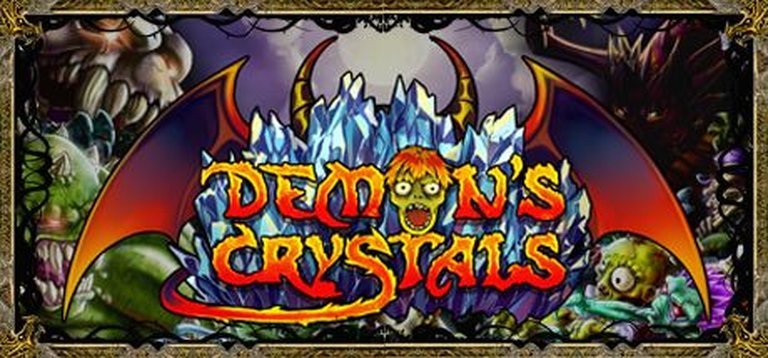
Demon’s Crystals is a twin-stick shooter set in a fantasy world where players control one of four powerful female Urican demons—Adora, Anara, Dryad, or Taur—who sit atop the food chain until astral demons invade and corrupt the planet’s population into aggressive foes. Featuring arena-based levels across three distinct worlds with unique enemies and hazards, the game challenges players to complete missions, defeat bosses like Ghoros, Ornak, and Sarkon, and level up permanently while utilizing dynamic power-ups in arcade, survival, and competitive multiplayer modes.
Gameplay Videos
Where to Buy Demon’s Crystals
PC
Demon’s Crystals Guides & Walkthroughs
Demon’s Crystals Reviews & Reception
opencritic.com (67/100): A nice game, accessible and very addictive and fun to play.
metacritic.com (70/100): Demon’s Crystals is a very fun game that does not bring anything original to the genre and ends up being something repetitive. But the game has a lot of personality.
the-gamers-lounge.com : a fun and frantic arcade-style shooting extravaganza, but some of those layers of paint are a little flaky.
monstercritic.com (69/100): Demon’s Crystals may be one of the simplest twin-stick shooters that you’ll ever play but that’s what makes it so enjoyable.
Demon’s Crystals: Review
Introduction
In the mid-2010s indie boom, when twin-stick shooters like The Binding of Isaac: Rebirth and Nuclear Throne were redefining roguelike chaos for a new generation, Demon’s Crystals emerged as a no-frills arcade throwback—unapologetically simple, frenetically violent, and tailor-made for couch co-op brawls. Released in April 2016 on PC via Steam Greenlight, this budget title from Spanish developer Byte4Games (with StarCruiser Studio) pits players as scantily clad demon women reclaiming their world from astral invaders. It’s the kind of game that evokes 90s arcade cabinets like Smash TV, but with anime flair and permanent progression. At its core, Demon’s Crystals delivers bite-sized bullet-hell mayhem that’s addictive in short bursts, especially with friends, but its repetitive loops and barebones presentation reveal its indie constraints. This review argues that while it shines as a value-packed local multiplayer party game, it falters as a solo endeavor, cementing its place as a cult curiosity rather than a genre-defining gem.
Development History & Context
Demon’s Crystals was born from a tiny Spanish indie team, led by director Francisco Mollá Gandía, with just 11 credited contributors—primarily coders (Marc Machi, Miguel Rivera, Juan Manuel Martín Fernández), artists (Vicente Molina Pardo, Guillermo Soto, Iyokani, David Montoro, Karim Neira), and animator Santos Vega—plus special thanks to Julián Soria Pérez. Byte4Games and StarCruiser Studio S.L. handled development, while BadLand Games Publishing ported it across platforms. Launched on Steam in April 2016 for Windows, Mac, and Linux at a humble $2.99-$4.99 price point, it quickly expanded: PlayStation 4 and Xbox One in May 2017, Blacknut streaming in 2018, and Nintendo Switch later that year. Mobile versions (Android/iOS) followed in 2016 via Akaoni Studio, though free-with-ads.
The era was ripe for twin-stick shooters amid the post-Hotline Miami indie renaissance and roguelite surge, but Demon’s Crystals leaned into arcade purity rather than procedural depth. Technological constraints were minimal—running on DX9 hardware with 1GB RAM—but the small team prioritized content volume (three worlds, multiple modes) over polish. Steam Greenlight success reflected its appeal as a “Steam Trading Cards” and “Local Co-Op” darling, fitting the 2010s trend of cheap, controller-friendly indies for living-room gaming. No major patches are noted beyond a 1.0.7 update for Mac/Linux bug fixes, underscoring its “ship and iterate minimally” ethos. In Spain’s burgeoning indie scene (alongside titles like Dead Synchronicity), it represented accessible fantasy action, but global competition from polished peers like Enter the Gungeon (2016) highlighted its rough edges.
Narrative & Thematic Deep Dive
Storytelling in Demon’s Crystals is minimalist, serving as a thin pretext for carnage rather than a narrative driver—a common trait in arcade shooters, but here it’s almost comically sparse. Players control one of four Uricans (Adora, Anara, Dryad, Taur), voluptuous female demons with horns, wings, and color-coded outfits (yellow, red, blue, green), who reign atop the food chain in a fantasy world sustained by lifeforce crystals. Enter three astral demons—bosses Ghoros, Ornak, and Sarkon—who corrupt the planet’s inhabitants into aggressive hordes, inverting the power dynamic. The Uricans must reclaim crystals, slay foes, and topple the invaders across three themed worlds.
Thematically, it’s a power fantasy reversal: apex predators humbled, fighting for survival in a chaotic ecosystem. Crystals symbolize vitality, dropped by enemies and collected in hoards, evoking greed-driven resource runs amid bullet storms. Characters differ visually (e.g., Adora’s fiery aesthetic) but play identically, undermining any personality—critics noted this as “nondescript” or “anime cat girls with horns.” Dialogue is absent; exposition is a brief intro cutscene and mission prompts like “Horde 1/3” or “ALL CRYSTALS COLLECTED.” Translation issues plague UI (e.g., confusing “DONE” icons, vague objectives), fostering bewilderment over immersion. No deeper lore explores the astral demons’ motives or Urican society, leaving themes of predation and restoration surface-level. It’s empowering for fans of female protagonists in shooters (a la Ultratron), but lacks the mythic weight of Demon’s Souls (unrelated) or satirical bite of Binding of Isaac. Ultimately, narrative fuels replay via leveling but evaporates under scrutiny, prioritizing action over allegory.
Gameplay Mechanics & Systems
Demon’s Crystals distills twin-stick shooting to its essence: left stick moves, right aims/shoots independently in diagonal-down 2D arenas teeming with obstacles, destructible buildings, and hazards. Arcade mode spans three worlds (e.g., vibrant graveyard start), each with escalating levels blending 2-3 missions: slay X enemies, collect Y crystals (shaped like hearts/pumpkins), or mini-bosses. Health carries over, levels have time limits (extendable pickups), and failure restarts the stage—no checkpoints amplify tension.
Core loop thrives on endless enemy spawns yielding XP for permanent per-character leveling (up to 60 for achievements), boosting stats subtly—though reviewers decry it as “useless” or grindy, as low-level chars die instantly sans power-ups. Unlockable demon weapons (bullet patterns, freeze rays, missiles) spawn level-tied, alongside shields, health, companions, bullet time, speed boots, giant mushroom (invincible crush mode, no shooting), and runes (screen-clearing energy/fire/ice blasts). Anti-power-ups like control-reversing potions or time-drains add chaos. UI is cluttered: objectives unclear (skull/crystal icons say “DONE” prematurely), no tutorial, health bar subtle sans feedback.
Multiplayer elevates it—local co-op (1-4 players) in Arcade/Survival (global leaderboards post-unlock), competitive modes (Deathmatch, Capture the Great Crystal/CTF variant, Crystal Attack/Quest, Kill the Enemies w/gnome score-resets, last-man Survival). Colors distinguish player fire, but screen chaos (vibrant bullets/enemies) overwhelms solo; co-op frenzy shines, per Video Chums’ praise. Three difficulties scale enemy patterns, but repetition bites: similar foes across worlds, crystal vacuuming feels fiddly. Achievements (28 Steam) reward grinding (e.g., max levels, full clears). Flaws abound—arbitrary revives, no online, progression flat—but at ~5 hours for a run (dozens for mastery), it’s tight, replayable budget design.
World-Building, Art & Sound
Environments evoke cartoonish fantasy apocalypse: busy arenas divided into rooms, littered with blow-up huts/gravestones, glowing hazards. Worlds shift thematically—graveyard zombies to later biomes (implied fiery/icy via bosses)—but repetition reigns, with 90s-style vibrant palettes (rainbow graveyards) creating “visual busy-ness” that hinders readability. Art is hand-drawn 2D scrolling, anime-inspired protagonists pop on select screens but blur in action; enemies (zombies, skeletons, monsters) are cute-yet-menacing, patterns predictable post-learning.
Atmosphere thrives on frenzy: power-up glows amid bullet hell foster panic, destructibles add interactivity. Sound design is arcade-pure—no voice acting, just growls/grunts/howls, weapon zaps, explosive SFX, and upbeat anime-flavored BGM (no soundtrack release). Feedback lacks (no hit rumble/visuals), but audio layers chaos effectively. Collectively, it crafts disposable, high-energy vibes—fun for co-op “release adrenaline,” per IGN Spain—but solo play suffers from color overload and clutter, diluting immersion versus peers like Geometry Wars.
Reception & Legacy
Launch reception was solidly middling: MobyGames 70% critics (Video Chums 71%, Brash Games 70%), Steam “Mostly Positive” (71% of 56-69 reviews), Metacritic 70 “Mixed/Average” (Xbox One/PS4). Praises: “simple/enjoyable” co-op (Video Chums), value at $5 (“solid addition for genre fans,” TheXboxHub), addictive frenzy (PS4Blog.net 80/100). Critiques: repetitive (“boring after a while,” Family Gamer Review), no tutorial/UI woes (“confused,” Games Freezer “Melting”), shallow story/leveling (“useless,” Gamer’s Lounge), solo unappealing (Sirus Gaming 40/100). OpenCritic 67 (36% recommend), player scores ~3.5/5.
Commercially modest—collected by ~12 MobyGames users, low visibility—it endures as budget Steam/Switch staple, influencing no majors but echoing in local-multi indies (Colt Canyon). Legacy: emblematic 2010s “pocket change arcade” (Gamer’s Lounge), grindy plat-friendly (trophy hunters love it), but forgotten amid giants. Ports extended life, yet no sequels/revivals; it persists for co-op nostalgia, a footnote in twin-stick history.
Conclusion
Demon’s Crystals is a chaotic, unpretentious twin-stick triumph for local multiplayer marathons, delivering hours of bullet-dodging glee at arcade prices, bolstered by persistent progression and mode variety. Yet its repetitive arenas, opaque UI, negligible narrative, and solo shortcomings cap its ambition, marking it as competent indie filler rather than essential. In video game history, it slots as a 2010s budget beacon—fun for friends, forgettable alone—worthy of a 7/10 for genre faithful seeking Smash TV vibes on a dime. Grab it on sale for couch chaos; skip for depth.