
- Release Year: 2014
- Platforms: iPad, iPhone, Windows
- Publisher: Biart Company LLC
- Developer: Biart Company LLC
- Genre: Sports
- Perspective: First-person
- Game Mode: Single-player
- Gameplay: Fishing, Hunting, Photography, Shooter, Spearfishing, Treasure hunting
- Setting: Aquatic, Tropical, Underwater
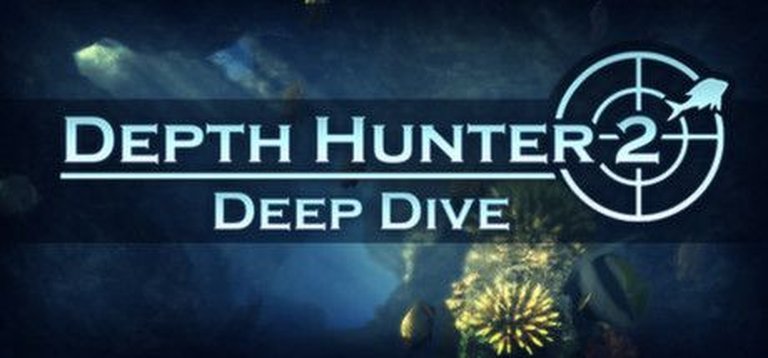
Description
Depth Hunter 2: Deep Dive is a 3D first-person diving simulator set in tropical underwater environments. As a sequel to Depth Hunter: The Spearfishing Simulator, it features three expansive locations to explore, with players undertaking 25 varied missions including breath-hold spearfishing, sunken treasure hunting, photography, and targeted fish hunting. Mission rewards enable the purchase of equipment upgrades such as enhanced spearguns, fins, oxygen tanks, and cameras to improve diving and hunting capabilities.
Gameplay Videos
Where to Buy Depth Hunter 2: Deep Dive
Depth Hunter 2: Deep Dive Mods
Depth Hunter 2: Deep Dive Guides & Walkthroughs
Depth Hunter 2: Deep Dive: Review
Introduction: A Niche Submerged
In the vast, often-overlooked archipelago of simulation games, few titles chart waters as specific as Depth Hunter 2: Deep Dive. Released in 2014 by the obscure Russian studio Biart Company LLC, this game is not a mainstream blockbuster but a dedicated, almost obsessively focused, digital dive into the ancient sport of breath-hold spearfishing. It represents a fascinating confluence of niche passion, technical ambition, and commercial obscurity. As a sequel to the 2012 Depth Hunter: The Spearfishing Simulator, it promised an expanded, polished experience. This review will argue that while Depth Hunter 2 is a technically competent and thematically unique simulation, its extremely narrow appeal, repetitive core loop, and lack of significant narrative or systemic innovation ultimately relegate it to the status of a curious footnote—a well-executed but ultimately minor artifact of the indie simulation boom of the early 2010s. Its legacy is not one of influence, but of pure, unadulterated specificity.
Development History & Context: The Small Studio, Big Ocean
Depth Hunter 2: Deep Dive emerged from Biart Company LLC, a small Russian developer with a focused portfolio. The studio’s history, as gleaned from credit overlaps, shows a team recycling core personnel and technology across projects like Deep Black (a shooter) and the original Depth Hunter. The game’s development was clearly constrained by a modest budget and a small team—the credits list only 20 individuals for the Windows version, with key roles like Game Producer and Designer combined under Konstantin Popov.
Technologically, the game utilized the Cappasity Engine, a lesser-known 3D engine licensed from Cappasity Inc., with NVIDIA PhysX for physics and FMOD for audio. The use of Lua for scripting points to a flexible but not cutting-edge development environment. The year 2014 was a period of transition for PC gaming, with Steam’s Greenlight program (to which this game belongs) democratizing publishing but also flooding the market with niche titles. Biart’s vision was clear: to create a hyper-realistic simulation of a real-world sport with almost no competition. The gaming landscape had no direct mainstream competitors for a dedicated spearfishing sim, placing it in a category of one. Its simultaneous release on Windows, iPhone, and iPad demonstrates a mobile-first or cross-platform strategy common for small studios seeking wider reach, though the PC version was the primary and most feature-complete iteration.
Narrative & Thematic Deep Dive: The Silence of the Deep
Depth Hunter 2 possesses no traditional narrative. There are no characters with arcs, no dialogue-driven plot, and no cutscenes. Its “story” is implicitly the player’s own progression from novice to master spearfisher. Thematically, the game is a meditation on apnea diving—the practice of holding one’s breath while hunting. The official description meticulously educates the player on the ancient, global nature of spearfishing, framing it as a “sports activity” requiring “energy coordination” and tactical patience.
This thematic focus on human limitation and primal skill against nature is the game’s most sophisticated layer. The core tension isn’t about firepower against enemies, but about managing a single, depleting resource: oxygen. Every dive becomes a tactical exercise in budgeting time, positioning, and breath. The missions—hunting specific fish, finding treasure, photography—are not plot points but manifestations of this core theme. The “lively underwater worlds” filled with fish, sharks, and treasures serve not as a backdrop for a story, but as an interactive ecosystem that is the gameplay. The game’s quiet, pressure-filled aesthetic reinforces this: there is no music in the gameplay (only ambient sounds), no vocal encouragement, only the sound of bubbles and the drum of one’s own heartbeat (simulated through the oxygen meter). It’s a narrative of pure, solitary skill acquisition.
Gameplay Mechanics & Systems: The Loop and the Gauge
The gameplay is built on a deceptively simple core loop:
1. Select a mission from a menu (e.g., “Hunt 3 Amberjacks”).
2. Equip appropriate gear from your inventory (speargun, fins, wetsuit).
3. Dive from a boat into one of three “huge locations” (tropical reef, wreck site, open water).
4. Navigate underwater, hunt fish with the speargun (requiring leading shots and range management), find treasure chests, or take photos.
5. Return to the boat before your oxygen depletes (or manually surface).
6. Earn in-game currency, buy upgrades, repeat.
Innovation lies in its Single-Risk Resource System. The oxygen meter is an unyielding, central mechanic. It governs everything: depth (deeper dives drain oxygen faster), exertion (swimming faster uses more), and time. This transforms the underwater environment from a sandbox into a dynamic puzzle. A mission to photograph a shy turtle becomes a race against the clock; a hunt for a fast shark requires efficient movement and a quick shot. The upgrade system—new fins for speed/endurance, better spearguns for power/accuracy, larger oxygen tanks, upgraded cameras—feels directly consequential. A better oxygen tank literally changes the strategic calculus of every mission, allowing for deeper, longer forays.
However, the flaws are inherent to the loop’s narrowness. The 25 missions, while varied in objective type, are fundamentally repetitive in execution. The “worlds,” while large, are sparsely populated with interactivity beyond fish and fixed treasure locations. The hunting mechanics, while requiring skill, lack depth—there is no fish behavior AI to speak of; they follow predictable patterns. The “exploration mode” is just the same maps without mission objectives, highlighting the emptiness. The user interface is functional but basic, and the game offers no multiplayer beyond a mysterious “Multiplayer” tag in Steam user tags (likely a remnant or mis-tag, as no source confirms a functional MP mode). The game simulates the activity masterfully but not the ecosystem.
World-Building, Art & Sound: A Gorgeous, Empty Aquarium
The game’s greatest strength is its visual recreation of underwater environments. Using the Cappasity Engine, Biart created three distinct, expansive tropical locations bathed in beautiful, shimmering light shafts. The coral reefs are colorful and bustling with fish life (parrotfish, angelfish, groupers, sharks), and the wreck sites offer haunting, Barnacle-encrusted structures. The water physics and caustic light effects are surprisingly convincing for a mid-2014 indie title on a modest engine. It successfully captures the breathtaking beauty that draws real divers to these locations.
The sound design is equally focused and effective. The audio is dominated by a immersive underwater soundscape: the muffled roar of surface waves, the click and whirr of the speargun, the rush of bubbles from your regulator, and the sudden, tense silence when a large predator like a shark approaches. Bjørn Lynne and Simone Cicconi’s soundtrack is used sparingly, mostly in menu screens, which correctly prioritizes diegetic sound for immersion. The lack of a driving musical score during dives reinforces the solitary, tense atmosphere.
The weakness here is artificial life and interactivity. The fish are plentiful but behave like animated sprites in a fixed patrol path. There is no sense of a true food chain or dynamic ecosystem. The “lively” world feels staged, a beautiful but static aquarium. The treasures are always in the same crate. This reinforces the feeling of a mission-based playground rather than a living ocean, which undercuts the thematic potential for true exploration and discovery.
Reception & Legacy: A Silent Splash
Depth Hunter 2’s reception is a study in obscurity and niche appeal. Commercial performance was minimal. It flew under the radar on Steam, never achieving significant visibility. Its current player count is negligible (SteamDB shows 2 in-game as of early 2026). Critical reception is virtually non-existent. Metacritic lists “no critic reviews” for the PC version. This is the fate of most ultra-niche sims.
User reception is mixed but leaning positive among its tiny audience. Steam shows a “Mostly Positive” rating (74% of 197 reviews), with players who enjoy it praising its realism, relaxing atmosphere, and satisfying progression. Common negative themes in the (256) negative reviews likely cite repetitiveness, lack of content, and janky controls—the common pitfalls of small-scale simulation. MobyGames’ player scores are even lower (2.4/5 from 3 ratings), suggesting a polarizing experience even among those who sought it out.
Its legacy is almost exclusively within its own series. It spawned three DLCs—Ocean Mysteries, Scuba Kids – Hidden Treasures (a more child-friendly variant), and Treasure Hunter—extending its content but not its scope. It did not spawn imitators; no major studio has attempted a dedicated spearfishing sim since. Its influence is cultural nil. Instead, it serves as a benchmark for extreme simulation specificity. It proves that a game can be built around the precise mechanics of a single, obscure real-world activity. For scholars of game design, it’s a case study in “simulation purity”—prioritizing the fidelity of one core experience (breath-hold hunting) over breadth, narrative, or polish. It sits alongside other obscure sims like Farming Simulator‘s early mods or Truck Simulator titles as an example of a genre built not on mass appeal, but on serving a dedicated, real-world practitioner community.
Conclusion: A Valiant Dive into Obscurity
Depth Hunter 2: Deep Dive is an impeccably focused simulation trapped in a cycle of repetition. It succeeds brilliantly at what it sets out to do: replicate the tense, beautiful, and solitary experience of breath-hold spearfishing. Its mechanics are intelligently designed around its central oxygen management, and its underwater world, while static, is undeniably pretty and atmospheric. For the player who has ever wondered what it feels like to hunt fish with a spear while holding their breath, this is likely the only game that will ever answer that question.
However, as a video game, it is found wanting. The lack of a dynamic ecosystem, the repetitive mission structure, the absence of any narrative or higher purpose, and the sheer narrowness of its appeal make it a difficult recommendation beyond the most dedicated sim enthusiasts. It is not a bad game, but it is an immensely limited one. Its place in history is not that of a classic or an innovator, but of a curio—a meticulously crafted and deeply sincere digital artifact of a specific human pursuit. It reminds us that the power of games lies not just in broad fantasy, but in the precise simulation of lived experiences, no matter how niche. Its legacy is a silent, beautiful, and ultimately isolated deep dive, appreciated by few and forgotten by many, but undeniably genuine in its execution.
Final Verdict: 6.5/10 – A masterclass in narrow simulation design that ultimately proves too repetitive and insular for all but the most curious and dedicated players.