
- Release Year: 1995
- Platforms: PC-FX, SNES, Wii, Windows
- Publisher: Konami Corporation, NCS Corporation, NEC Home Electronics, Ltd., Unbalance Corporation
- Developer: Crosstalk Inc., NCS Corporation
- Genre: Role-playing (RPG), Strategy, Tactics
- Perspective: Top-down
- Game Mode: Single-player
- Gameplay: Turn-based
- Setting: Fantasy
- Average Score: 80/100
Description
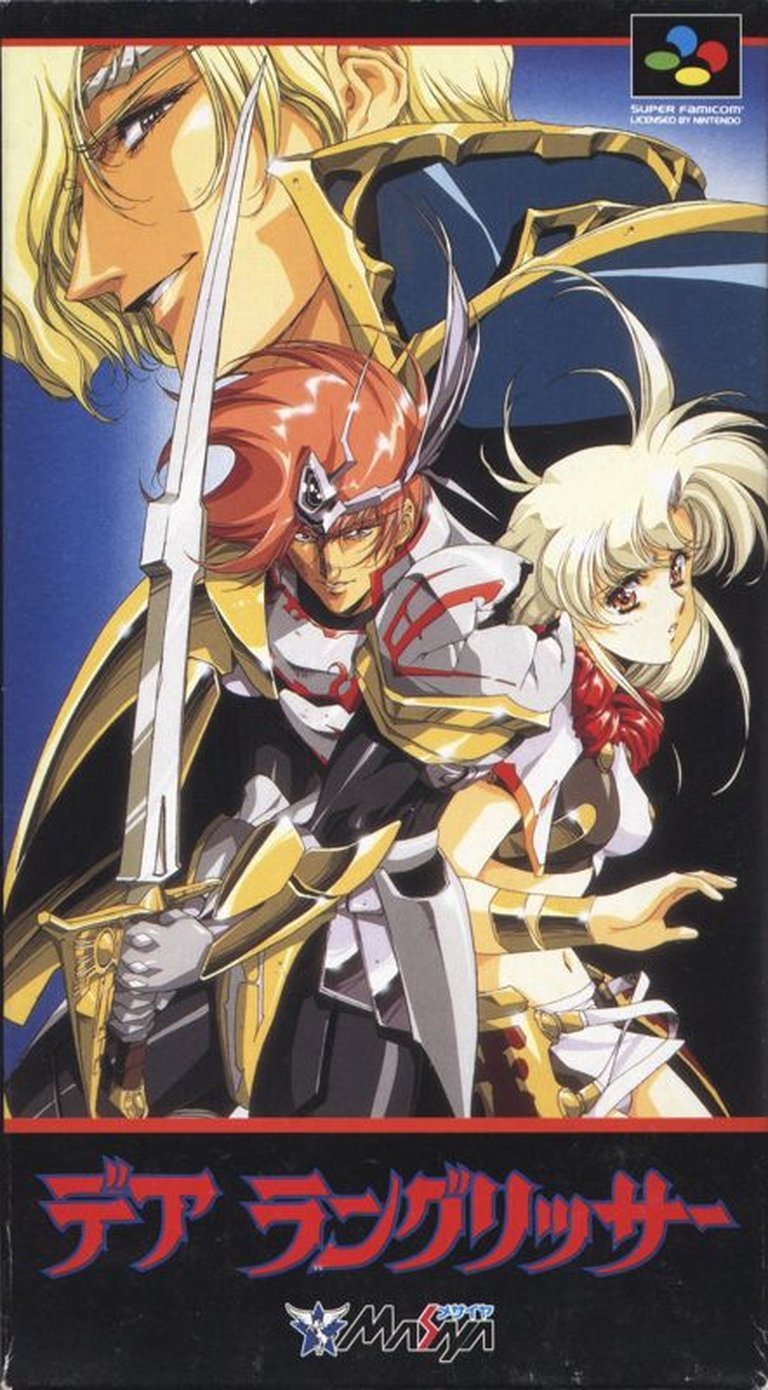
Der Langrisser is a fantasy turn-based strategy RPG and enhanced port of Langrisser II, set in a world of light and darkness where protagonist Elwin initially fights for the Descendants of Light against the invading Rayguard Empire. The core innovation lies in player-driven moral decisions that branch the narrative, allowing Elwin to ally with the Empire, betray it for the Demon Tribe, stay loyal to the light, or form an independent faction, complemented by improved graphics and lowered difficulty.
Gameplay Videos
Der Langrisser Patches & Updates
Der Langrisser Mods
Der Langrisser Guides & Walkthroughs
Der Langrisser Reviews & Reception
honestgamers.com : Making this switch can be particularly satisfying
archive.rpgamer.com (90/100): To any RPGamer interested in a superb tactical title with massive replay value, Der Langrisser will be very worthwhile.
Der Langrisser Cheats & Codes
Super Nintendo (SNES)
Enter the button sequences at the specified locations in the game.
| Code | Effect |
|---|---|
| Down, Left, Up, Right, A, Left, Up, B, Down, Right, A, B, Down, Right, A | Control Enemy Units (highlight an empty square during battle) |
| Left, Right, Select, A | Multimedia Test (Load menu, highlight occupied save slot) |
| Up, Down, Up, Down, Left, Right, Select, A | Scenario Select (Load menu, highlight occupied save slot) |
| Left, Right, Right, Down, Right, Up, A | Special Shop (highlight the “Buy” command) |
| Left, Up, Right, Down, Right, Up, Left, Select, Down, Right, Left, Select, A | Shop 2 / Super Secret Shop (highlight the “Buy” command) |
Der Langrisser: Review
Introduction
In the pantheon of tactical RPGs, few titles evoke the epic scale of clashing armies, moral quandaries, and divine machinations quite like Der Langrisser. Released in 1995 as an enhanced remake of the Mega Drive’s Langrisser II, this Super Famicom gem thrusts players into the role of Elwin, a swordsman whose choices can forge alliances with light, empire, chaos, or independence—each path reshaping a continent-spanning war. As a cornerstone of the Langrisser series, born from the ashes of NCS’s earlier strategy titles like Elthlead, Der Langrisser transcends its origins to deliver over 75 scenarios, multiple endings, and a narrative that dares to question heroism itself. My thesis: Der Langrisser is not merely a refinement of its predecessor but a revolutionary pivot in tactical RPG design, introducing branching morality and grand-scale strategy that influenced the genre’s evolution, even as technical constraints and Japan-only release confined it to cult status.
Development History & Context
Der Langrisser emerged from NCS Corporation (Nippon Computer Systems), with development support from Crosstalk Inc., during the twilight of the 16-bit era. Executive producer Michio Shibuya oversaw a compact team of 28 credited individuals, including main programmer Kazuhisa Mitani, planner and scenario writer Fūma Yatō, and graphics leads Masayuki Suzuki and Shūichi Furuno. Character designs came from Satoshi Urushihara, renowned for his anime work on Plastic Little and Megazone 23, infusing the game with distinctive ’90s fantasy cheesecake aesthetics. Noriyuki Iwadare, future composer of Grandia, handled music composition and programming, blending orchestral swells with rock-infused battle themes.
As a direct evolution of Langrisser II (1994, Mega Drive), Der Langrisser addressed fan feedback on the original’s punishing difficulty while fulfilling NCS/Masaya Games’ vision for deeper player agency. The series traces roots to precursor titles like Elthlead (1987, PC-8801) and Gaia no Monshō (1988, PC Engine), which established the fantasy-Germanic world of El Sallia, ditheistic gods (Lushiris of light vs. Chaos), and sword avatars (Langrisser vs. Alhazard). By 1995, the Super Famicom competed fiercely with Sega’s Saturn, which would soon host Langrisser III. Technological constraints—SNES’s Mode 7 limitations and sprite scaling—necessitated top-down perspectives and smaller unit sprites for massive battles (over 100 units per map), contrasting the Genesis’s raw power but enabling smoother scrolling and refined animations.
The gaming landscape was ripe for tactical RPGs: Fire Emblem series dominated Nintendo, Shining Force bridged Sega-Nintendo gaps, and Ogre Battle experimented with real-time strategy. NCS positioned Der Langrisser as a hybrid—strategic army clashes like Advance Wars precursors meets RPG progression—targeting Japan’s SRPG boom. Publishers NCS and later NEC (PC-FX port) prioritized Saturn exclusivity for future entries, dooming Western localization; only Warsong (Langrisser I) reached Genesis in 1991, flopping due to name changes and diluted fantasy tone. Ports followed: PC-FX (1996, enhanced visuals), Windows (1998), Wii VC (2009), but fan translations unlocked global access.
Narrative & Thematic Deep Dive
Der Langrisser‘s narrative deepens Langrisser II‘s linear tale into a morally gray epic, framed by El Sallia’s eternal god-war. Elwin (Erwin in some translations), bound to Langrisser via a personality quiz determining his starting class/gear, begins protecting Princess Riana (Liana) alongside plucky Hein from the Rayguard Empire’s conquests. Allied with Descendants of Light—led by priestess Sherry, wizard Jessica (Lushiris’ avatar), and knights like Keith—they reclaim the sword from Böser/Bozel (Chaos’ avatar, a damned soul wielding Alhazard).
The genius lies in branching paths, unlocked mid-game:
- Light Path: Canonical heroism; unite against Empire/Demons. Bittersweet, with Fridge Horror over Demon Tribe genocide.
- Imperial Path: Join noble Kaiser loyalist Leon (conflicted conqueror seeking unified peace) and generals like Imelda, Vargas, Egbert. Betray former allies; gray morality questions if order justifies tyranny.
- Chaos Path: Backstab Empire for Böser’s Demon Tribe revival. Villain protagonist Elwin embraces power; brainwashed allies like Liana revel in darkness.
- Independent Path: Ultimate betrayal—fight all factions, slay gods Lushiris/Chaos. Übermensch Elwin forges utopia, but at personal cost (losing love, killing heroes).
Over 75 scenarios vary dramatically: Imperial recruits green-armored troops; Chaos yields red demonic units. Dialogue, penned by Fūma Yatō with support from Hiroaki Hori and Yoh Haduki, shines in moral pivots—Leon’s “peace through strength” speeches humanize the Empire, while Sherry’s pleas underscore Light’s racism toward monsters. Themes probe black-and-gray morality (no pure good/evil), order vs. chaos, free will vs. divine manipulation, and utopia’s cost (body counts for peace). Chronic backstabbing (Heel–Face Revolving Door) shifts Elwin’s personality instantly, critiquing absolutism. Multiple endings—bittersweet Light salvation, tragic Independent triumph—reward replays, elevating it beyond JRPG linearity.
Characters embody tropes with nuance: Hein’s “Beware the Nice Ones” arc (Magic Knight wizardry); Sonia/Est/Ost as sympathetic Demons; Hero Antagonists like Leon as worthy foes. TV Tropes notes ’80s Hair (Sonia), Did You Just Punch Cthulhu? (god-slaying), and Colour-Coded Armies (blue heroes, green Imperials, red Chaos).
Gameplay Mechanics & Systems
Core loop: Prep (hire troops, equip), deploy commanders on grid maps, execute turn-based battles, earn EXP/gold/items. Up to 8 commanders (vs. 10 in II) lead 1-6 homogeneous troops (e.g., phalanxes for anti-cavalry). Innovation: Affinity system rivals wargames—cavalry > infantry > pikemen > cavalry (rock-paper-scissors); archers shred fliers; holy > demons; naval dominate water. Terrain bonuses (walls, forests) amplify strategy.
Combat deconstructs via side-view animations revealing troop formations (e.g., moat defenses). Command range auras boost nearby troops’ ATK/DEF; isolated units crumple. Commanders heal self (3 HP/2 MP, no-move) or troops (adjacency regen). Spells immobilize casters. Permadeath absent—defeated commanders retreat, troops die.
Progression: Lv10 class changes (infantry/flier/cavalry/naval trees) via Fire Emblem-inspired branches (e.g., priest > general for tank-healer). Quiz customizes Elwin; recruits like Rohga (mercenary siblings) add variety. UI: Scrollable prep maps improve on II, but troop hiring/equipping feels clunky (sequential swaps). Flaws: Reduced difficulty (coward AI ignores vulnerabilities); troops refund partial gold on survival, disincentivizing fodder tactics.
Innovations shine: Massive scale (30+ player vs. scores of foes), replay via paths (unique recruits/missions). Pacing: Epic 1-2 hour scenarios demand logistics. Fan sites praise troop charts/manual utility.
| Unit Type | Strengths | Weaknesses |
|---|---|---|
| Cavalry | Infantry, speed | Pikemen, indoors |
| Archers | Fliers (ranged) | Melee close-up |
| Holy | Demons/Undead | Humans |
| Naval | Water combat | Land |
World-Building, Art & Sound
El Sallia pulses with lore: Post-Langrisser I, Baltia vanishes, Rayguard rises amid Lushiris-Chaos proxy wars. Sieghart’s soul binds Langrisser; Böser haunts as recurring foe. Ties to Elthlead trilogy (Gaia power struggles) and future Gaiflame mechs enrich cosmology.
Visuals: Anime/manga style—Urushihara’s portraits mix hit (expressive heroes) and miss (exaggerated features). Improved SNES sprites > Genesis; vibrant maps (castles, seas) with Mode 7 scrolls. Color-coded auras (blue player, red enemy, green neutral) aid chaos.
Sound: Iwadare’s score—rocking battles, serene overworlds—immerses, though SNES chip muddies some tracks vs. Genesis. SFX: Messy troop deaths, unobtrusive spells. Atmosphere: Grandiose, tense; paths shift tones (Imperial anthems heroic, Chaos ominous).
Reception & Legacy
Launch reception: Japan acclaim as “one of the best T-RPGs on Super Famicom” (Legendra, 80%; MobyGames 7.1/10, #351 SNES). Players averaged 3.5/5 (11 ratings), praising branching but noting easiness. Commercially solid via NCS, but Sega focus (III–V on Saturn) starved ports.
Reputation evolved: Fan translations (Clouds of El Sallia) globalized it; cult hit alongside Growlanser (Career Soft successor). Influence: Pioneered SRPG non-linearity (75+ scenarios, 4 paths), inspiring Ogre Battle, Fire Emblem choices, dating sim elements (III). Series revival (Langrisser Mobile 2019, I & II remakes) nods to it. HonestGamers/ RPGamer retroviews laud replay (50+ hours), though criticize AI/difficulty drop.
Conclusion
Der Langrisser masterfully expands Langrisser II into a tactical odyssey of betrayal and ambition, blending massive battles, deep progression, and philosophical depth. Its flaws—tamed challenge, clunky UI—pale against innovations in morality and scale, securing its place as a genre trailblazer. Amid 16-bit titans, it endures as essential: a definitive verdict of 9/10, eternally replayable for SRPG historians and strategists alike. Seek a fan-patched ROM; its legacy demands it.