
- Release Year: 2018
- Platforms: Windows
- Publisher: HypeTrain Digital, LLC
- Developer: Nearga
- Genre: Action
- Perspective: 1st-person
- Game Mode: Co-op, Single-player
- Gameplay: Puzzle elements, Survival horror
- Average Score: 77/100
Description
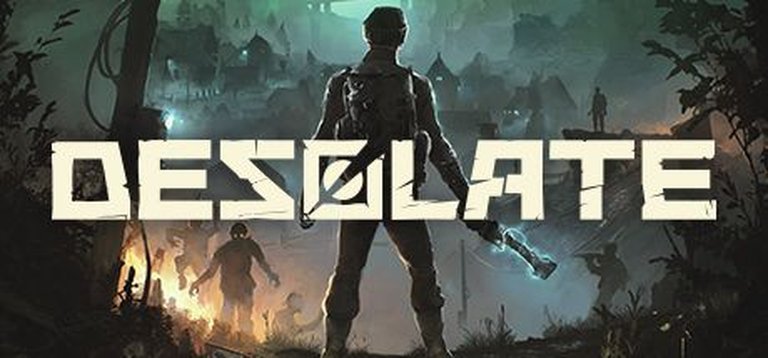
Desolate is a survival horror game set on the fictional island of Granichny, where secret experiments have caused catastrophic mutations. Players take on the role of a Volunteer tasked with investigating paranormal activities, gathering intel, and completing perilous missions. The game features an open-world environment with a dynamic day-night cycle, first-person perspective, and a mix of combat, exploration, and puzzle elements. It supports both single-player and four-player co-op multiplayer, with a focus on melee combat due to scarce ammunition.
Gameplay Videos
Where to Buy Desolate
PC
Desolate Free Download
Desolate Patches & Updates
Desolate Mods
Desolate Guides & Walkthroughs
Desolate Reviews & Reception
metacritic.com (68/100): Desolate definitely has some mega aspirations for such a short game. The developers are clearly acting under the influence of some major titles that have dominated the genre and for a game at a $19.99 price point, it delivers … for now.
web.phenixxgaming.com (85/100): Desolate is a full-on game meant to be played from start to finish for closure. Its cohesive story is a pretty standard affair, and it might be easy to get lost in the mix if you’re in a 4-stack.
biogamergirl.com (80/100): Desolate is a fun game to play online with friends. There is a ton of replayability and exploring the dark world around you adds an exciting level of immersion.
Desolate: A Haunting Journey Through the Ruins of a Shattered Mind
Introduction
Desolate is a game that lingers in the mind long after the credits roll—a survival horror experience that blends the eerie isolation of S.T.A.L.K.E.R. with the psychological torment of Silent Hill. Developed by Nearga and published by HypeTrain Digital, Desolate thrusts players into the nightmarish landscape of Granichny Island, a Soviet-era research hub transformed into a hellscape of mutants, anomalies, and existential dread. Released in 2019 after a year in Early Access, the game is a testament to the power of atmosphere, narrative ambiguity, and the fragility of the human psyche.
At its core, Desolate is a game about survival—not just against the horrors of the island, but against the unraveling of reality itself. It challenges players to question what is real, what is illusion, and whether their actions have any meaning in a world that may be nothing more than a fractured mind’s desperate attempt to atone for unspeakable sins. This review will dissect Desolate in exhaustive detail, exploring its development, narrative depth, gameplay mechanics, and the indelible mark it leaves on those who dare to venture into its desolation.
Development History & Context
From Beyond Despair to Desolate: A Phoenix Rising from Ashes
Desolate is a game born from failure and rebirth. Its origins trace back to Beyond Despair, a 2017 survival horror title developed by Pixelmate. Despite its ambitions, Beyond Despair was a commercial flop, leading to the studio’s closure. However, a core team of developers, undeterred by this setback, regrouped under the banner of Nearga. With financial backing from HypeTrain Digital, they set out to refine and expand Beyond Despair’s mechanics, incorporating fan feedback and adding new content. The result was Desolate, a game that retained the soul of its predecessor while evolving into something far more ambitious.
The transition from Beyond Despair to Desolate was not merely a rebranding—it was a complete overhaul. Nearga leveraged the power of Unreal Engine 4 to craft a more immersive and visually striking world, while also introducing a deeper narrative and more polished gameplay systems. The developers’ commitment to listening to their community was evident in the game’s Early Access phase, which began in February 2018. During this period, Nearga actively engaged with players, tweaking mechanics, balancing difficulty, and expanding the game’s scope based on feedback. This iterative process culminated in the full release in January 2019, a testament to the studio’s dedication to delivering a refined experience.
The Gaming Landscape: A Crowded but Underserved Niche
Desolate emerged during a period when survival horror was experiencing a renaissance. Games like Resident Evil 7 and The Evil Within 2 had reinvigorated the genre, while indie titles such as Outlast and Amnesia proved that atmospheric horror could thrive without AAA budgets. However, Desolate carved out its own niche by blending survival mechanics with a deeply psychological narrative, drawing comparisons to S.T.A.L.K.E.R. for its open-world exploration and Silent Hill for its existential horror.
The game’s Soviet-era setting was another distinguishing factor. While post-apocalyptic and zombie-infested worlds were commonplace, Desolate’s Cold War aesthetic—complete with decaying military bases, abandoned research facilities, and the ever-present specter of government conspiracy—offered a fresh backdrop for horror. This setting, combined with the game’s emphasis on melee combat and scarcity of resources, set it apart from the more action-oriented survival horror titles of the time.
Technological Constraints and Creative Solutions
Developing Desolate on Unreal Engine 4 allowed Nearga to create a visually impressive world, but it also presented challenges. The game’s open-world design required careful optimization to ensure smooth performance, particularly given the dynamic day-night cycle and the sheer number of environmental hazards. The developers had to strike a balance between graphical fidelity and gameplay fluidity, a task that proved difficult in the game’s early stages.
One of the most notable technical achievements was the game’s sanity system, which altered the player’s perception of the world as their mental state deteriorated. This mechanic, inspired by Eternal Darkness, required intricate scripting to ensure that hallucinations and environmental changes felt organic rather than scripted. The result was a system that dynamically adjusted the game’s atmosphere, making the player’s descent into madness feel personal and unsettling.
Narrative & Thematic Deep Dive
The Plot: A Descent into Madness
Desolate’s narrative is a labyrinth of deception, guilt, and existential horror. The game begins with a prologue set two years before the main events, following Victor Ognin, the founder of the New Light Conglomerate, as he sabotages his own company’s research on Granichny Island. This act, known as “Day X,” unleashes a wave of mutations and paranormal phenomena across the world, transforming the island into a nightmarish wasteland. Victor, wracked with guilt, goes into hiding, leaving behind a world irrevocably altered by his actions.
The main game follows a Volunteer, an agent of New Light sent to Granichny to investigate the island’s anomalies and uncover a way to reverse the damage caused by Day X. As the Volunteer explores the island, they encounter a cast of morally ambiguous characters, including 400, a handler whose loyalty to New Light wavers after discovering the conglomerate’s horrific experiments on his family, and Eleanora, the leader of Pravda, a resistance group seeking to expose New Light’s crimes.
The narrative takes a surreal turn as the Volunteer begins to experience hallucinations and hears a mocking voice in their head—one that claims to be the Volunteer themselves. This voice, later revealed to be Victor Ognin, manipulates the Volunteer’s perception of reality, culminating in a confrontation where Ognin reveals that Granichny Island is a construct of his fractured mind. The Volunteer, along with every other character and creature on the island, is a manifestation of Ognin’s guilt and desperation to undo his sins.
Themes: Guilt, Atonement, and the Illusion of Free Will
Desolate is a game steeped in themes of guilt and atonement. Victor Ognin’s actions on Day X are driven by a desire to correct his past mistakes, but his attempts to do so only result in further destruction. The Volunteer, as a manifestation of Ognin’s conscience, represents the futile struggle to escape one’s own sins. The game’s ending, where the Volunteer is compelled to shoot themselves only to awaken in an endless loop, underscores the inescapability of guilt and the cyclical nature of suffering.
The game also explores the illusion of free will. Throughout the narrative, the Volunteer believes they are making meaningful choices, only to discover that their entire existence is a fabrication. This revelation forces players to question the nature of their own agency within the game, blurring the line between player and character. The Volunteer’s journey is not one of heroism but of inevitability—a predetermined path toward self-destruction.
Characters: Reflections of a Broken Mind
The characters in Desolate are not merely individuals but fragments of Victor Ognin’s psyche. Each one represents a different aspect of his guilt, fear, or desire for redemption:
- 400: A former New Light operative who defects after learning of the conglomerate’s experiments on his wife and daughter. His betrayal mirrors Ognin’s own guilt over the suffering he has caused.
- Eleanora: The leader of Pravda, whose quest for truth reflects Ognin’s desire to expose his own crimes. Her execution at the hands of the Soviet secret police symbolizes the futility of seeking justice in a world built on lies.
- Lily: The ghost of 400’s daughter, who haunts the Volunteer throughout the game. Her presence is a constant reminder of the innocent lives lost due to Ognin’s actions.
- Alice Ognin: Victor’s daughter, who turned herself into an anomaly in a desperate attempt to stop her father’s experiments. Her plea for the Volunteer to end her suffering highlights the tragic consequences of Ognin’s obsession.
The Ending: A Philosophical Nightmare
The climax of Desolate is a masterclass in psychological horror. As the Volunteer confronts Victor Ognin, they discover that he has transformed into a massive anomaly—a physical manifestation of his guilt. Ognin reveals that the Volunteer is not a real person but a construct of his mind, a “conscience” created to atone for his sins. The world of Granichny Island is a simulation, a desperate attempt by Ognin to rewrite reality and undo the damage he has caused.
The Volunteer’s subsequent suicide, followed by their awakening in a safe house, suggests that they are trapped in an endless loop—a Groundhog Day of suffering where each cycle brings no closer to redemption. The game’s final message, a philosophical musing on the nature of existence and the futility of escape, leaves players with a sense of existential dread. It is a ending that lingers, forcing players to confront the idea that their actions, like those of the Volunteer, may have been meaningless all along.
Gameplay Mechanics & Systems
Core Gameplay Loop: Survival in a Hostile World
Desolate’s gameplay is a blend of survival mechanics, exploration, and combat, all set within an open-world environment. Players must manage five key survival elements: health, hunger, thirst, cold, and stress. Each of these systems interacts with the others, creating a delicate balance that players must maintain to survive. For example, low hunger and thirst reduce combat effectiveness, while high stress levels trigger hallucinations and sanity effects.
The game’s day-night cycle adds another layer of complexity. Nighttime is pitch-black, forcing players to rely on their flashlight (which, mercifully, never runs out of battery) while also making them more vulnerable to attacks. The dynamic weather system further complicates survival, with rain and snow affecting visibility and temperature.
Combat: A Brutal Dance of Melee and Scarcity
Combat in Desolate is deliberately punishing. Firearms and ammunition are rare, forcing players to rely on melee weapons for most encounters. This design choice reinforces the game’s survival horror themes, as players must carefully consider each engagement. Stealth is often the best approach, with backstabs and silent takedowns providing critical advantages.
The game’s enemy variety ensures that combat remains tense and unpredictable. Mutants like the Grutch (a mutated bear) and the Wanogah (a teleporting, vomiting humanoid) pose significant threats, while human enemies such as Marauders and New Light soldiers add a layer of tactical depth. The inclusion of “Boss in Mook’s Clothing” enemies—rare but deadly foes that can appear unexpectedly—keeps players on edge.
Crafting and Progression: The Slow Path to Power
Desolate features a robust crafting system that allows players to create weapons, armor, and consumables from scavenged materials. Blueprints for new items can be found throughout the island, encouraging exploration and experimentation. The game’s skill tree, divided into crafting, fighting, and survival branches, offers meaningful progression, with each skill point spent providing tangible benefits.
However, the game’s progression is deliberately slow. Experience points are earned through completing quests and defeating enemies, but the rate at which players gain new abilities is measured. This pacing ensures that players never feel overpowered, maintaining the game’s sense of vulnerability and danger.
UI and Inventory Management: A Test of Patience
The game’s UI is functional but unremarkable, with a focus on practicality over aesthetics. Inventory management is a constant challenge, as players must balance the weight of their gear with the need to carry essential supplies. The lack of a fast-travel system further emphasizes the game’s survivalist ethos, forcing players to carefully plan their journeys across the island.
One of the game’s most frustrating mechanics is the loss of money upon death. Players drop all accumulated currency when they die, with no way to retrieve it. While a high-level perk offers a 15% chance to retain funds, this mechanic can feel punitive, especially in the game’s early stages.
Multiplayer: Strength in Numbers
Desolate supports up to four-player cooperative multiplayer, a feature that significantly alters the game’s dynamics. Playing with friends makes survival more manageable, as players can share resources, revive fallen comrades, and tackle challenges together. However, the game’s difficulty scaling in multiplayer is uneven, with some encounters feeling trivialized by numbers while others remain overwhelming.
The multiplayer experience is at its best when players coordinate their actions, using stealth and strategy to overcome obstacles. However, the lack of a seamless join-in-progress system means that players who disconnect or lag behind can find themselves stranded, forcing them to navigate the island alone—a daunting prospect given the game’s difficulty.
World-Building, Art & Sound
The Island of Granichny: A Character in Its Own Right
Granichny Island is more than just a setting—it is a character, a living entity that shapes the player’s experience. The island’s design is a masterclass in environmental storytelling, with each location offering clues to the events of Day X and the horrors that followed. From the decaying military bases to the eerie research facilities, every corner of Granichny feels steeped in history and dread.
The island’s layout encourages exploration, with hidden paths, underground tunnels, and remote outposts waiting to be discovered. The dynamic weather system and day-night cycle further enhance the sense of immersion, making the island feel like a living, breathing entity. The inclusion of anomalies—paranormal phenomena that warp reality—adds a layer of unpredictability, ensuring that no two playthroughs are alike.
Visual Design: A Bleak and Beautiful Nightmare
Desolate’s visual design is a stark, haunting portrayal of a world on the brink of collapse. The game’s use of Unreal Engine 4 allows for detailed environments, from the rusted metal of abandoned buildings to the eerie glow of anomalies. The color palette is dominated by muted tones, with occasional bursts of color—such as the green moss that grows on the island’s mutants—serving as stark reminders of the unnatural forces at play.
The character models, while not as polished as those in AAA titles, are effective in conveying the game’s themes of decay and mutation. The mutants, in particular, are grotesque and unsettling, with designs that blend human and animal traits in disturbing ways. The game’s use of lighting is also noteworthy, with shadows and flickering lights creating an atmosphere of constant tension.
Sound Design: The Symphony of Dread
The sound design in Desolate is a masterclass in building tension. The game’s ambient soundtrack, composed of eerie drones and dissonant melodies, sets the tone for the player’s journey. The absence of music during exploration heightens the sense of isolation, with only the sounds of the wind, distant growls, and the occasional whisper of the island’s ghosts to keep players company.
The game’s use of dynamic audio is particularly effective. The sanity system, for example, alters the soundscape as the player’s mental state deteriorates. Hallucinations manifest as distorted whispers, distant screams, and the unnerving sound of whales swimming through the sky—a surreal touch that reinforces the game’s themes of fractured reality.
Reception & Legacy
Critical Reception: A Divided Response
Desolate’s reception was mixed, with critics praising its atmosphere and narrative ambition while criticizing its technical shortcomings. The game’s Metacritic score reflects this divide, with a lack of consensus among professional reviewers. Some, like Phenixx Gaming, lauded the game’s co-op experience and survival mechanics, while others, such as The Mad Welshman, found the world lacking in depth and the gameplay repetitive.
Player reception was similarly polarized. On Steam, the game’s reviews are a mix of glowing praise and scathing criticism. Those who appreciated the game’s slow-burn horror and psychological depth hailed it as an underrated gem, while others dismissed it as buggy, unbalanced, and overly punishing. The game’s difficulty, particularly in single-player mode, was a common point of contention, with many players finding the survival mechanics frustrating rather than engaging.
Commercial Performance: A Niche Success
Despite its mixed reception, Desolate found a dedicated audience among fans of survival horror and psychological narratives. The game’s unique blend of S.T.A.L.K.E.R.-inspired exploration and Silent Hill-style horror resonated with players seeking something different from the mainstream. While it never achieved blockbuster status, Desolate carved out a niche for itself, becoming a cult favorite among those who appreciated its ambition and atmosphere.
Influence and Legacy: A Blueprint for Psychological Horror
Desolate’s legacy lies in its willingness to take risks. The game’s narrative ambiguity, existential themes, and uncompromising difficulty set it apart from its peers, influencing subsequent indie horror titles. Its use of a fractured reality as a narrative device has been echoed in games like The Medium and Signalis, while its emphasis on melee combat and resource scarcity has inspired other survival horror developers to explore similar mechanics.
Perhaps Desolate’s greatest contribution to the genre is its unflinching exploration of guilt and atonement. By forcing players to confront the idea that their actions may be meaningless, the game challenges the conventional notions of agency and heroism in video games. This philosophical depth, combined with its haunting atmosphere, ensures that Desolate remains a memorable—if divisive—entry in the survival horror canon.
Conclusion: A Flawed but Unforgettable Journey
Desolate is not a game for everyone. Its punishing difficulty, deliberate pacing, and narrative ambiguity will frustrate those seeking a more conventional survival horror experience. However, for those willing to embrace its challenges, Desolate offers a journey unlike any other—a descent into a world where reality is fluid, guilt is inescapable, and redemption is an illusion.
The game’s strengths lie in its atmosphere, its psychological depth, and its uncompromising vision. Granichny Island is a masterfully crafted nightmare, a place where every shadow hides a secret and every sound could be a harbinger of doom. The narrative, while confusing at times, is a haunting exploration of the human psyche, forcing players to question the nature of their own existence within the game.
Yet, Desolate is not without its flaws. The combat can feel clunky, the survival mechanics punitive, and the multiplayer experience uneven. The game’s technical issues, while improved since its Early Access days, still occasionally mar the experience. However, these shortcomings do not detract from the game’s overall impact. Desolate is a game that lingers in the mind, a testament to the power of atmosphere and narrative in video games.
In the end, Desolate is a game about the futility of escape. Like the Volunteer, players are trapped in a cycle of suffering, their actions ultimately meaningless in the grand scheme of things. Yet, it is this very futility that makes Desolate so compelling. The game forces players to confront the idea that their struggles may be in vain, that their quest for redemption may be nothing more than a desperate illusion. And in doing so, it creates an experience that is as profound as it is unsettling.
For those who dare to venture into its desolation, Desolate offers a journey that is as rewarding as it is harrowing—a journey that will leave them questioning the nature of reality long after the credits roll.
Final Verdict: 8.5/10 – A haunting, flawed masterpiece that transcends its shortcomings to deliver an unforgettable psychological horror experience.