
- Release Year: 2022
- Platforms: Linux, Macintosh, Nintendo Switch, PlayStation 4, PlayStation 5, Windows Apps, Windows, Xbox One, Xbox Series
- Publisher: tinyBuild LLC
- Genre: Compilation
- Average Score: 73/100
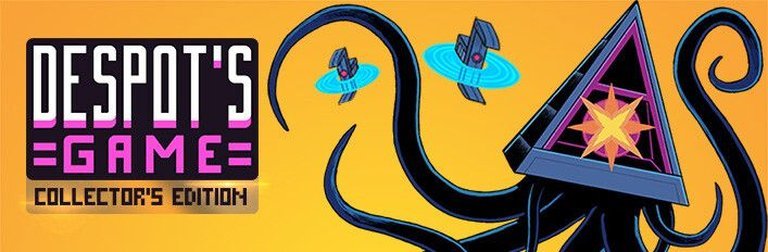
Description
Despot’s Game: Collector’s Edition is a roguelike autobattler where players act as a despot commanding hordes of naked humans through procedurally generated labyrinths, equipping them with crazy costumes, abilities, and loot to survive indirect battles against zombies, mechas, cerberus, and other foes in a pixel-art strategy setting. This compilation includes the base game, the Challenges DLC, and a digital soundtrack, offering expanded content and replayability across multiple platforms.
Despot’s Game: Collector’s Edition Cracks & Fixes
Despot’s Game: Collector’s Edition Mods
Despot’s Game: Collector’s Edition Guides & Walkthroughs
Despot’s Game: Collector’s Edition Reviews & Reception
metacritic.com (73/100): Even with the issues present, I adore Despot’s Game.
moviesgamesandtech.com : I loved its unfair nature.
eshopperreviews.com : Unfortunately, there are numerous problems with this.
Despot’s Game: Collector’s Edition: Review
Introduction
In a gaming landscape saturated with roguelikes that punish players with permadeath and procedural cruelty, Despot’s Game: Collector’s Edition emerges as a gleefully sadistic twist on the formula, casting you as an omnipotent overseer herding disposable hordes of naked humans through an endless, AI-orchestrated labyrinth of doom. Developed by the indie studio Konfa Games and published by tinyBuild, this 2022 release (with its Collector’s Edition bundling the base game, Challenges DLC, and digital soundtrack) builds on the dystopian army-building vibes of its spiritual predecessor Despotism 3k (2018), but carves its niche as a roguelite auto-battler where strategy meets RNG-fueled chaos. Its legacy, though still nascent as a modern indie gem, lies in its unapologetic embrace of indirect control—watching your pixelated pawns slaughter and be slaughtered in automated arenas—evoking the voyeuristic brutality of classics like Smash TV fused with auto-chess mechanics. My thesis: Despot’s Game: Collector’s Edition is a compulsively replayable experiment in emergent mayhem, innovative in its horde management and mutation madness, yet hampered by punishing randomness and shallow progression that may alienate all but the most masochistic tacticians.
Development History & Context
Konfa Games, a small indie outfit hailing from Saint Petersburg, Russia, helmed Despot’s Game as their breakout title following Despotism 3k. Led by a visionary team passionate about blending roguelike permadeath with auto-battler strategy—evident in the game’s core loop of indirect combat—the studio drew inspiration from pixel-art dungeon crawlers and dystopian simulators, aiming to subvert traditional hero-led adventures by demoting players to the role of a tyrannical puppet-master. Publisher tinyBuild Games (known for quirky indies like Hello Neighbor and Potion Craft) scooped up the project during its Steam Early Access phase in October 2021, providing polish, porting support, and marketing muscle that propelled it to full release on September 29, 2022, for PC (Windows, Mac, Linux), Xbox One/Series X|S, and Windows Apps.
The development era was marked by the post-Hades roguelite boom and the rise of auto-battlers like Teamfight Tactics and Dota Underlords, where indirect control and team synergies dominated esports and mobile charts. Konfa navigated technological constraints typical of indie pixel-art projects: lightweight Unity engine builds ensured cross-platform viability (Nintendo Switch, PS4/5 ports arrived May 2023), but controller optimization proved tricky, leading to reported UI glitches on consoles. The gaming landscape in 2022 was flooded with procedural generators (Cult of the Lamb, Returnal), yet Despot’s Game stood out by leaning into “gratuitous violence” and absurd items (stale pretzels as weapons?), a deliberate counterpoint to polished AAA narratives. The Collector’s Edition (September 22, 2022, onward) addressed post-launch feedback with the Challenges DLC—adding hardcore modifiers—and a soundtrack, reflecting tinyBuild’s commitment to extending replayability amid Early Access iteration. Constraints like Russia’s geopolitical tensions (post-2022 invasion) likely influenced Konfa’s remote workflow, but the result was a lean, 1.5 GB download emphasizing depth over spectacle.
Narrative & Thematic Deep Dive
Despot’s Game dispenses with verbose storytelling for a pitch-black, meta-fictional frame: you awaken as the plaything of d’Spot, a smug evil AI overlord who narrates with dripping sarcasm (“sincerely, with disrespect for puny humans, your local evil AI”). The “plot” unfolds in a post-apocalyptic labyrinth where faceless, amnesiac humans—starting utterly naked—scramble for survival against zombies, mechs, cerberus, cannibal cabbages, necromancers, and skeleton hordes. Dialogue is sparse but razor-sharp: d’Spot’s taunts (“Pray to RNGesus!”) mock your failures, while unlockable lore snippets reveal a dystopian experiment blending Battle Royale cruelty with The Matrix-esque simulation horror. No deep character arcs exist—humans are disposable “newbies,” mutating into classes like Cultists, Eggheads, Fencers, Fighters, Healers, Mages, Tanks, Throwers, Tricksters, or Shooters—but emergent narratives arise from your choices: sacrificing troops for food, dooming mages to frontline meat shields, or engineering freakish synergies (Topochlorians in blood for poison immunity, Crocodile Skin for tankiness).
Thematically, it’s a savage satire on free will, capitalism, and gaming itself. Humans as “puny” commodities echo exploitative labor (buy ’em, arm ’em, feed ’em pretzels or watch them starve), while roguelite restarts parody Sisyphean grind. Themes of gratuitous violence and bodily horror shine through mutations (coffins for undead revival) and cannibalism mechanics, critiquing desensitization in games like DOOM Eternal. The Challenges DLC amplifies this with modifiers like permadeath escalations, turning d’Spot’s game into a philosophical torture chamber: are you liberator or despot? Subtle nods to pop culture (eastern eggs in mutations) and multiplayer’s secret “King of the Hill” (unlocked post-completion) add layers, framing competition as Darwinian spectacle. Ultimately, the narrative’s brilliance lies in its economy of words—d’Spot’s voice embodies emergent tragedy, making every wipeout a punchline on human fragility.
Gameplay Mechanics & Systems
At its core, Despot’s Game loops through roguelite procedural mazes: explore rooms (shops, arenas, specials), manage resources (gold for gear/recruits, food to prevent starvation), position your horde, and unleash auto-battles. Combat is the star—real-time, hands-off chaos where units autonomously pathfind, melee rush, or ranged poke based on class/items. Strategic depth emerges in pre-fight prep: drag-and-drop formations (tanks front, mages rear), equip wild weapons (swords, crossbows, pretzel hurlers, magic rabbit hats), apply mutations (Crocodile Skin boosts defense, revives via coffins), and specialize via level-ups. Synergies shine—Fighters with Throwers for poke lines, Healers sustaining Cultists’ self-damage—or flop via RNG (bad spawns snowball losses). Progression unlocks perks for future runs (added to pools), but lacks meta-currency depth, fueling criticism of “unsatisfying” repeats.
Innovations abound: food/cannibalism forces triage (sacrifice weaklings?), exploration yields abilities (room clears grant buffs), and Challenges DLC adds modifiers (e.g., no healers). UI is intuitive on PC (drag-sell-swap), but console ports suffer unresponsive cursors and stat opacity (no melee/ranged labels, vague comparisons). Flaws mar the loop: opaque enemy previews, snowballing defeats (formation breakers overwhelm), short campaigns (few hours to “beat”), and multiplayer’s post-game unlock gatekeep King of the Hill’s competitive hills. Yet, the auto-battler thrill—watching pretzel volleys melt mechs—delivers addictive highs, tempered by roguelite patience demands.
World-Building, Art & Sound
The labyrinth is a claustrophobic post-apocalyptic hellscape: procedurally generated top-down arenas with bland, repetitive pixel-art tilesets (dank corridors, boss vaults) evoking Smash TV‘s arenas but dialed to dystopian grit. Atmosphere thrives on contrast—naked humans mutate into freakshows amid hordes of grotesque foes (cabbages with teeth, robot swarms), fostering voyeuristic dread as your army dissolves in blood sprays. Pixel art is serviceable: crisp sprites for 10+ classes/items, fluid auto-animations (hat-rabbits exploding, pretzels flinging), but backgrounds lack variety, amplifying repetition.
Sound design elevates the madness: a synthesized, chilled-out soundtrack (included digitally) juxtaposes eerie synths with crunching combat SFX—gore squelches, mutation hums—creating ironic detachment amid carnage. d’Spot’s snarky voiceover punctuates runs, while vibration (PS5 DualSense) pulses heartbeats in defeat. These elements coalesce into a hypnotic tension: visuals/sound underscore themes of disposability, making triumphs euphoric and failures hilariously bleak.
Reception & Legacy
Launch reception was mixed: Metacritic’s 73/100 (PC) hailed humor/addictiveness (GameCritics: 80/100, “crazy army combos”; COGconnected: 75/100, “snappy writing”), but critiqued roguelite frustrations (XboxEra: 68/100, “flawed strategy”). PS Store averages 4.06/5 (139 ratings), Switch ports drew UI ire (eShopperReviews: D+, “disastrous controls”). Commercial success was modest—Steam wishlists surged via Game Pass, sales buoyed by £3.59-£17.99 pricing—but no MobyGames score reflects niche appeal. User voices praise depth (teksturki: 9/10, “incredibly addictive”) yet lament shortness/RNG (AngrySir: 5/10, “good buried under problems”).
Legacy evolves as an influential auto-roguelite hybrid, predating Soulstone Survivors blends and inspiring horde sims. tinyBuild ports cemented multiplat staying power, Challenges DLC extended life, but limited innovation tempers impact—more cult hit than genre-definer, influencing indies on RNG-strategy balance amid 2022’s roguelite glut.
Conclusion
Despot’s Game: Collector’s Edition masterfully fuses auto-battler strategy, roguelite cruelty, and dystopian satire into a pixelated gauntlet of emergent hilarity and horror, bolstered by Konfa’s vision and tinyBuild’s extras. Its highs—mutation synergies, voyeuristic battles, thematic bite—clash with RNG snowballs, UI woes, and thin progression, yielding a polarizing gem for roguelite diehards. In video game history, it claims a quirky footnote: a bold reminder that sometimes, the best games let you fail spectacularly. Verdict: 7.5/10 – Buy for masochistic strategists; try via Game Pass.