
- Release Year: 2017
- Platforms: Windows
- Publisher: CuriosityStream LLC
- Developer: Skyworks Digital
- Genre: Educational, Simulation
- Perspective: 1st-person
- Game Mode: Single-player
- Gameplay: Motion control
- Setting: Science
- Average Score: 59/100
- VR Support: Yes
Description
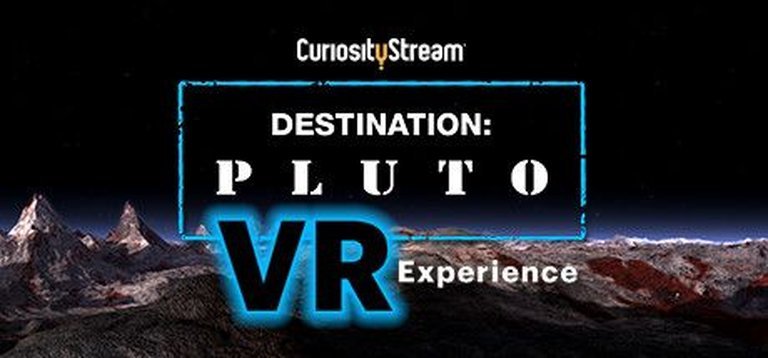
Destination: Pluto – The VR Experience is an immersive virtual reality simulation that allows players to explore the surface of Pluto using real imagery and topographical data from NASA’s New Horizons mission. Players can tour three distinct locations, including the dark canyons of Krun Macula, the glacier spillways of Sputnik Planum, and the pitted high plains, all while experiencing Pluto’s unique gravity. The game offers a self-guided tour from a personal space pod or the freedom to fly and interact with the environment, complete with descriptive placards highlighting key geological features.
Where to Buy Destination: Pluto – The VR Experience
PC
Destination: Pluto – The VR Experience Guides & Walkthroughs
Destination: Pluto – The VR Experience Reviews & Reception
steambase.io (60/100): A Mixed rating with a Player Score of 60 / 100.
store.steampowered.com (59/100): Mixed reviews with 59% of the 42 user reviews being positive.
Destination: Pluto – The VR Experience: A Cosmic Journey Through Virtual Reality
Introduction: A Voyage to the Edge of the Solar System
In the annals of video game history, few titles dare to blend education, exploration, and immersive technology as boldly as Destination: Pluto – The VR Experience. Released in January 2017, this virtual reality simulation transcends traditional gaming by offering players an unprecedented opportunity: to stand on the surface of Pluto, a celestial body so distant that its light takes over five hours to reach Earth. Developed by SkyWorks Digital and Home Run Pictures, and published by CuriosityStream, this title is not merely a game but a digital monument to one of humanity’s greatest achievements in space exploration—the New Horizons mission.
At its core, Destination: Pluto is a love letter to scientific curiosity, leveraging the power of VR to transform raw data from NASA’s New Horizons probe into an interactive, first-person odyssey. It invites players to traverse the frozen, alien landscapes of Pluto, from the dark canyons of Krun Macula to the glacier-laden shores of Sputnik Planum, all while experiencing the eerie, low-gravity physics of a world 3 billion miles from home. Yet, beneath its educational veneer lies a deeper question: Can a game that prioritizes factual accuracy and meditative exploration over traditional gameplay mechanics still captivate an audience? This review seeks to unpack the ambitions, achievements, and limitations of Destination: Pluto, examining its place in both the VR landscape and the broader tapestry of video game history.
Development History & Context: The Confluence of Science and Virtual Reality
The Studio and the Vision
Destination: Pluto – The VR Experience was born from a collaboration between two studios: SkyWorks Digital, a developer with a focus on immersive media and interactive experiences, and Home Run Pictures, known for its work in documentary filmmaking and educational content. This partnership was no accident. CuriosityStream, the publisher behind the project, is a streaming service dedicated to documentary and non-fiction programming, with a mission to make scientific discovery accessible to the masses. The game was conceived as a companion piece to Destination: Pluto, a documentary series on the platform, creating a symbiotic relationship between passive viewing and active exploration.
The vision was clear: to democratize the experience of standing on Pluto. The New Horizons mission, launched in 2006, had spent nearly a decade hurtling through space before its historic flyby of Pluto in July 2015. The data it beamed back—high-resolution images, topographical maps, and spectral analyses—revealed a world far more dynamic and geologically complex than scientists had imagined. Destination: Pluto sought to translate this data into a tangible, first-person experience, allowing players to “visit” a planet they would otherwise never see in their lifetimes.
Technological Constraints and the VR Landscape of 2017
The game’s development coincided with a pivotal moment in VR history. The HTC Vive, released in April 2016, and the Oculus Rift, launched a month earlier, had just begun to gain traction among consumers. These headsets offered room-scale tracking and motion controllers, enabling players to physically move within virtual spaces—a feature Destination: Pluto fully embraced. However, the technology was still in its infancy. The Vive’s resolution (1080×1200 per eye) and the Rift’s (1080×1200 per eye) were far from the crisp visuals of modern VR, and the hardware requirements were steep, limiting the potential audience to those with high-end PCs.
The game was built using the Unity engine, a popular choice for VR development due to its flexibility and robust support for VR platforms. Yet, even with Unity’s tools, the developers faced significant challenges. Pluto’s surface, as captured by New Horizons, was a patchwork of high-resolution images and lower-resolution topographical data. Stitching these together into a seamless, explorable environment required not only technical prowess but also artistic interpretation. The team had to extrapolate details where data was sparse, ensuring the experience remained visually coherent without straying from scientific accuracy.
The Gaming Landscape: Educational VR in a Sea of Experiments
In 2017, the VR gaming market was a wild frontier. Developers were experimenting with everything from short cinematic experiences (The Blu) to full-fledged games (Arizona Sunshine). Educational VR, however, was still a niche within a niche. Titles like Tilt Brush (2016) and Google Earth VR (2016) had demonstrated the potential of VR as a tool for learning and exploration, but Destination: Pluto was among the first to focus exclusively on a real-world scientific mission.
The game’s release also coincided with a broader cultural fascination with space exploration. The success of films like The Martian (2015) and Interstellar (2014) had reignited public interest in the cosmos, while NASA’s ongoing missions—from the Curiosity rover on Mars to the Juno probe orbiting Jupiter—kept space in the headlines. Destination: Pluto tapped into this zeitgeist, offering a uniquely intimate way to engage with the wonders of the solar system.
Narrative & Thematic Deep Dive: The Story of a Silent World
Plot and Structure: A Self-Guided Tour of the Unknown
Destination: Pluto is not a game in the traditional sense. There is no overarching narrative, no characters to meet, and no quests to complete. Instead, it is a self-guided tour, a digital museum exhibit where the player is both visitor and explorer. The “story,” such as it is, is the story of Pluto itself—a tale told through the landscape, the placards scattered across the terrain, and the silent, awe-inspiring vastness of the environment.
The experience is divided into three distinct locations, each chosen for its geological significance:
- Krun Macula: A dark, cratered region in Pluto’s southern hemisphere, characterized by its rugged canyons and towering cliffs. This area is believed to be rich in tholins, complex organic compounds that give Pluto’s surface its reddish hue.
- Sputnik Planum’s North Shore (al-Idrisi Mountains): A vast, icy plain bordered by towering mountains of water ice. This region is home to Pluto’s famous “heart,” a glacier-spillway system that hints at recent geological activity.
- Central Sputnik Planum: A high-altitude plain dotted with mysterious pits and troughs, possibly formed by sublimation or cryovolcanic processes.
Each location is introduced with a brief textual description, providing context for the geological features on display. The player is then free to explore at their leisure, either from the safety of a personal space pod or by venturing out on foot (or rather, in low gravity).
Themes: Isolation, Discovery, and the Sublime
Destination: Pluto is a game about isolation. Pluto is not just distant; it is lonely. The New Horizons probe, which spent nine and a half years traveling to its destination, passed by Pluto in a matter of hours, capturing as much data as it could before vanishing into the Kuiper Belt. The game replicates this sense of fleeting contact. There are no other humans, no signs of life, no sound except for the ambient hum of your space pod. The player is utterly alone, a solitary figure standing on the edge of the known universe.
This isolation is tempered by a profound sense of discovery. Pluto, once considered a barren rock at the solar system’s fringe, is revealed to be a world of surprising complexity. The game’s placards highlight features like glacial flows, cryovolcanoes, and nitrogen ice plains, each a testament to the dynamic processes shaping this distant world. The experience is akin to standing in a natural history museum, where every exhibit is a piece of a larger puzzle—one that scientists are still trying to solve.
Perhaps the most striking theme is that of the sublime—the overwhelming awe inspired by nature’s grandeur. Pluto’s landscapes are alien yet familiar, evoking comparisons to Earth’s polar regions or the badlands of the American Southwest. The low gravity, which allows players to leap great distances or toss boulders with ease, reinforces the otherworldly nature of the environment. There is a quiet majesty to the experience, a reminder of how small we are in the face of the cosmos.
Dialogue and Presentation: The Silence of Space
Destination: Pluto is a largely wordless experience. There are no voiceovers, no characters to interact with, and no scripted events. Information is conveyed through text-based placards, which appear when the player approaches points of interest. These placards are concise, scientific, and occasionally poetic, offering insights into Pluto’s geology, atmosphere, and the New Horizons mission itself.
The absence of dialogue is a deliberate choice. Space is silent, and Pluto—with its thin, tenuous atmosphere—is no exception. The game’s sound design (discussed in detail later) reinforces this silence, creating an atmosphere of contemplative solitude. The player is left to absorb the environment at their own pace, free from the distractions of narrative or gameplay objectives.
Gameplay Mechanics & Systems: Exploration Without Boundaries
Core Gameplay Loop: The Freedom to Wander
Destination: Pluto defies conventional gameplay structures. There are no objectives, no fail states, and no progression systems. The core loop is simple: explore, observe, and interact. Players begin each session in a space pod, a small, enclosed vehicle that serves as a mobile base. From here, they can:
- Exit the pod and walk (or float) across the surface.
- Use a jetpack to traverse larger distances, taking advantage of Pluto’s low gravity (approximately 6% of Earth’s).
- Pick up and manipulate objects, such as boulders or ice chunks, to experience the physics of Pluto’s weak gravitational pull.
- Read placards to learn about geological features, mission details, and scientific discoveries.
- Visit the New Horizons probe, which appears as a distant, floating artifact—a reminder of humanity’s brief encounter with this distant world.
The lack of traditional gameplay mechanics is both the game’s greatest strength and its most glaring weakness. For players seeking a meditative, educational experience, the freedom to explore without constraints is liberating. For those expecting interactivity, challenge, or replayability, the experience may feel shallow.
Movement and Physics: The Joy of Low Gravity
The game’s most innovative mechanic is its physics system, which simulates Pluto’s low gravity with surprising accuracy. Players can:
- Leap great distances with a single jump, soaring over canyons and craters.
- Toss boulders with ease, watching as they arc slowly through the air before landing with a gentle thud.
- Float gracefully when using the jetpack, which provides a sense of weightlessness akin to swimming.
These mechanics are not just fun—they are educational. By calibrating the physics to match Pluto’s gravitational pull (0.063g), the game gives players an intuitive understanding of how different celestial bodies behave. It’s one thing to read that Pluto’s gravity is 1/16th of Earth’s; it’s another to experience it firsthand by hurling a rock and watching it drift lazily into the distance.
User Interface and Controls: Simplicity in the Void
The UI is minimalist, designed to avoid breaking immersion. Key elements include:
- A radial menu accessed via motion controllers, allowing players to switch between walking, jetpacking, and returning to the pod.
- Placards that appear as floating text panels when the player approaches a point of interest.
- A compass-like indicator pointing toward the space pod, ensuring players can always find their way back.
Controls are straightforward, relying on the HTC Vive’s tracked motion controllers (though the game also supports other SteamVR-compatible headsets). Movement is handled via teleportation or smooth locomotion, depending on player preference—a necessary concession to VR comfort.
Innovations and Flaws: A Double-Edged Sword
Destination: Pluto’s greatest innovation is its commitment to scientific accuracy. The environments are not artist’s renditions but direct translations of NASA data, with textures and topographical features derived from New Horizons’ imagery. This fidelity to reality sets it apart from other space exploration games, which often prioritize spectacle over authenticity.
However, this commitment comes at a cost. The game’s limited interactivity and lack of structured gameplay make it feel more like a tech demo than a fully realized experience. The three locations, while visually distinct, are small and can be explored exhaustively in under an hour. There are no puzzles to solve, no secrets to uncover, and no reason to return once the initial novelty wears off.
The graphical fidelity is another point of contention. While the environments are scientifically accurate, they are not particularly detailed. Textures are often muddy, and the draw distance is limited, creating a sense of artificial confinement. This is likely due to the technological constraints of 2017 VR hardware, which struggled to render large, open environments without performance issues.
World-Building, Art & Sound: Crafting an Alien Landscape
Setting and Atmosphere: The Beauty of the Unknown
Pluto is a world of contrasts. It is cold (surface temperatures hover around -375°F), dark (receiving only 1/1600th the sunlight of Earth), and geologically active (with evidence of cryovolcanism and glacial movement). Destination: Pluto captures these contrasts through its environmental design.
- Krun Macula is a land of shadows, with deep canyons and jagged cliffs casting long, inky silhouettes. The reddish-brown hues of tholin-rich ice create a stark, almost Martian landscape.
- Sputnik Planum is a study in whites and blues, its icy plains stretching toward the horizon like a frozen ocean. The al-Idrisi Mountains loom in the distance, their peaks catching the dim sunlight.
- Central Sputnik Planum is a maze of pits and troughs, a testament to Pluto’s dynamic surface. The terrain here is more varied, with patches of smooth ice interrupted by sudden depressions.
The game’s art direction is realistic but not hyper-detailed. The developers prioritized scientific accuracy over visual polish, resulting in environments that feel authentic but lack the “wow” factor of more stylized VR experiences. This is a deliberate choice—Destination: Pluto is not fantasy; it is a digital reconstruction of a real place.
Sound Design: The Silence of the Void
Sound is perhaps the most underrated aspect of Destination: Pluto. In a game with no dialogue, no music, and no traditional sound effects, the ambient audio carries the weight of immersion.
- The space pod emits a soft, mechanical hum, a reassuring reminder of technology in an otherwise silent world.
- Footsteps are muted, the crunch of ice barely audible in Pluto’s thin atmosphere.
- The jetpack produces a low, steady hiss, like air escaping from a balloon.
- The wind—or rather, the faint movement of Pluto’s tenuous nitrogen atmosphere—creates a barely perceptible whisper, more felt than heard.
The sound design is minimalist but effective, reinforcing the game’s themes of isolation and solitude. There are no alien creature cries, no dramatic orchestral scores—just the quiet, eerie stillness of a world untouched by human hands.
Visual Direction: The Challenge of Rendering the Unknown
Rendering Pluto presented a unique challenge. Unlike Mars or the Moon, which have been extensively photographed and mapped, Pluto was a mystery until New Horizons’ flyby. The data returned by the probe was a mix of high-resolution images (for certain regions) and lower-resolution topographical scans (for others). The developers had to extrapolate where data was missing, filling in gaps with educated guesses based on geological models.
The result is a world that feels both real and alien. The textures are grainy, the lighting flat, and the draw distance limited, but these limitations serve a purpose. They remind the player that this is not a fantasy—it is a reconstruction, a best guess based on the data we have. The game does not attempt to hide its seams; instead, it embraces them as part of the experience.
Reception & Legacy: A Mixed Response to a Pioneering Experience
Critical and Commercial Reception: A Niche Within a Niche
Destination: Pluto – The VR Experience received a mixed response upon release. On Steam, it holds a 60/100 player score based on 42 reviews, with 59% of users recommending it. The reception can be broadly divided into two camps:
-
Praise for its educational value and immersion:
- Players who approached the game as a virtual field trip praised its scientific accuracy, the thrill of exploring Pluto firsthand, and the meditative quality of the experience.
- Many appreciated the low-gravity physics, which added a layer of interactivity to what could have been a passive experience.
- The free-to-play model (the game is available at no cost on Steam) was also a point in its favor, lowering the barrier to entry for curious players.
-
Criticism for its lack of depth and polish:
- Players expecting a traditional game were disappointed by the absence of objectives, progression, or replayability.
- The limited scope—only three small locations—left some feeling that the experience was more of a tech demo than a full-fledged title.
- Graphical limitations, such as muddy textures and short draw distances, were frequently cited as detracting from the immersion.
The game’s lack of critical reviews (Metacritic lists no professional critiques) suggests it was largely overlooked by mainstream gaming media. This is not surprising—Destination: Pluto is not a blockbuster title, nor does it fit neatly into established genres. It is, instead, a hybrid of simulation, education, and VR experimentation.
Evolution of Reputation: From Novelty to Historical Artifact
In the years since its release, Destination: Pluto has taken on a new significance. As VR technology has advanced, the game’s technical limitations have become more apparent. Modern VR titles like No Man’s Sky VR (2019) or Microsoft Flight Simulator (2020) offer vastly more detailed and interactive worlds. Yet, Destination: Pluto remains a pioneering effort—one of the first games to use real scientific data to create a explorable VR environment.
Its reputation has also benefited from the growing interest in “slow games”—titles that prioritize relaxation, exploration, and contemplation over action and competition. Games like A Short Hike (2019) and The Longing (2020) have shown that there is an audience for experiences that eschew traditional gameplay in favor of atmosphere and discovery. In this context, Destination: Pluto can be seen as an early example of a meditative VR experience, a genre that has since flourished.
Influence on Subsequent Games and the Industry
While Destination: Pluto did not spawn direct sequels or imitators, its approach to blending education and VR has had a subtle but lasting impact. Later titles, such as:
- Mission: ISS (2018), a VR simulation of life aboard the International Space Station.
- Apollo 11 VR (2016), which recreates the historic moon landing.
- Mars 2030 (2017), a VR experience set on a future Martian colony.
All owe a debt to Destination: Pluto’s commitment to scientific accuracy and its use of real-world data to create immersive environments. The game also contributed to the broader trend of VR as an educational tool, paving the way for experiences like Google Earth VR and Tilt Brush to be adopted in classrooms and museums.
Conclusion: A Flawed but Historic Voyage
Destination: Pluto – The VR Experience is a game of contradictions. It is ambitious yet limited, educational yet shallow, immersive yet technically crude. It does not excel in the ways we typically measure video games—it has no compelling narrative, no challenging gameplay, no replayability. And yet, it achieves something far rarer: it transports the player to another world, not through fantasy, but through scientific fidelity and quiet contemplation.
In the grand tapestry of video game history, Destination: Pluto occupies a unique niche. It is not a masterpiece, nor is it a commercial juggernaut. Instead, it is a time capsule—a snapshot of a moment when VR was still finding its footing, when the data from a historic space mission was fresh, and when the idea of standing on Pluto was nothing short of magical. For those willing to embrace its slow pace and meditative tone, it offers a glimpse of the future of education and exploration in virtual reality.
Final Verdict: 7/10 – A Pioneering but Flawed VR Landmark
Destination: Pluto – The VR Experience is not for everyone. It lacks the polish and depth of modern VR titles, and its appeal is narrowly focused on those with a passion for space exploration or a tolerance for minimalist gameplay. Yet, its historical significance, scientific accuracy, and bold vision make it a title worth experiencing—if only to remind us of the vast, silent wonders that lie beyond our world.
For the curious, the patient, and the dreamers, Pluto awaits.