
- Release Year: 2019
- Platforms: Blacknut, Linux, Macintosh, Windows
- Publisher: Falkenbrew
- Developer: Falkenbrew
- Genre: Action
- Perspective: Diagonal-down
- Game Mode: Single-player
- Gameplay: Shooter
- Setting: Futuristic, Sci-fi
- Average Score: 94/100
Description
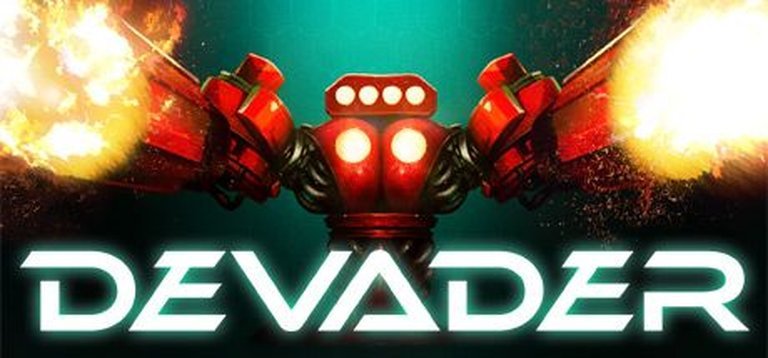
Devader is a fast-paced 2D scrolling shooter set in a futuristic sci-fi universe, where players engage in intense action gameplay from a diagonal-down perspective. Developed by Falkenbrew, the game challenges players to defend against relentless waves of enemies using direct control mechanics and a variety of weapons, all while navigating dynamic, visually immersive environments. Its retro-inspired visuals and explosive combat cater to fans of classic arcade shooters with a modern twist.
Gameplay Videos
Where to Buy Devader
PC
Devader Reviews & Reception
steambase.io (95/100): A triumphant return to form for the series.
store.steampowered.com (93/100): An intense 90’s-style twin-stick shooter with powerful strategic abilities.
indiedb.com : Reviews are scarce but positive.
Devader: Review
Introduction
In the saturated landscape of twin-stick shooters, Devader stands as a defiant homage to 90s arcade intensity fused with modern strategic depth. Released on September 2, 2019, by Swiss solo developer Marc Breuer (Falkenbrew), this bullet-hell odyssey pits players against waves of alien horrors while demanding tactical mastery of upgrades, defenses, and split-second decisions. Though commercially understated—selling fewer than 200 copies at launch—Devader has since cultivated a fervent cult following drawn to its punishing gameplay, deterministic progression, and kaleidoscopic retro aesthetic. This review dissects how Devader revitalizes the twin-stick genre by marrying old-school chaos with innovative design choices that reject contemporary roguelike tropes.
Development History & Context
Devader was born from Breuer’s frustration with modern gaming’s dependency on randomness. A freelance programmer based in Baar, Switzerland, he began developing the game in December 2015 using a custom HTML5/WebGL/JavaScript engine—an unconventional choice that prioritized accessibility (via browser compatibility) but challenged optimization. Breuer’s philosophy was clear: “I don’t like luck-based frustration. Players deserve control.” This ethos manifested in Devader’s deterministic upgrade system, where choices directly shape difficulty and enemy spawns, contrasting sharply with the era’s roguelike dominance (Binding of Isaac, Dead Cells).
The late 2010s indie scene was a double-edged sword. While digital distribution lowered entry barriers, discoverability became a hurdle. Devader gained traction at events like Gamescom 2017, winning the Indie Prize in Geneva, yet its 2019 Steam release faced muted visibility. Breuer’s post-launch confession—”sales have been terrible”—underscored the disconnect between critical acclaim (93% positive Steam reviews) and commercial reach. Technically, the HTML5 foundation posed hurdles: alpha blending and particle effects strained performance, especially in non-Chrome browsers. Still, Devader’s DNA as a “passion project” resonated; it was a game built not for algorithms, but for arcade purists.
Narrative & Thematic Deep Dive
Devader’s narrative is minimalist yet thematically potent. Humanity’s last bastion—a hexagonal-core fortress on a Mars-like wasteland—is besieged by the Krin, a ravenous alien swarm. As the titular Devader, a lone guardian mech, players embody desperation and defiance. The story unfolds environmentally: crumbling structures and eerie boss designs whisper of a civilization’s twilight, while upgrade lore hints at sacrificed worlds and failed technologies. This scarcity of exposition feeds the game’s central theme: isolation against overwhelming odds.
The Krin are more than fodder—they are cosmic entropy incarnate. Their designs fuse organic grotesquery (tentacles, pulsating cysts) with biomechanical horror, evoking Half-Life’s Xen creatures or Starship Troopers’ Arachnids. Each boss—25 in total—feels like a nihilistic force of nature, from lightning-spewing leviathans to fractal-dimensional predators. The 17 endings, unlocked via strategic choices, explore existential stakes: victory might mean pyrrhic survival or unraveling time itself. Devader asks players: How much will you compromise to endure?
Gameplay Mechanics & Systems
Devader’s brilliance lies in its fusion of twin-stick shooting and tactical resource management. Players defend a central core across 100+ waves, juggling offensive prowess (guns, missiles, lasers) with defensive utilities (turrets, shields, drones). The game rejects roguelike randomness—upgrades are predictable, enabling calculated strategies. Choose the flamethrower, and ensuing waves adapt with flame-resistant foes; invest in turrets, and bosses deploy EMP blasts.
Core Systems:
– Combat Loop: Movement is fluid, with mouse/keyboard or gamepad controls enabling precise dodging amidst bullet hellscapes. The Krin employ swarm tactics, kamikaze rushes, and screen-filling lasers, demanding spatial mastery.
– Boss Battles: Each boss is a multi-phase spectacle. The “Tentacle Behemoth” requires dismantling limb segments, while the “Nova Crawler” demands reflective shield timing. These fights evoke Contra’s memorization challenges fused with Touhou’s bullet density.
– Upgrade Paths: Progression is deterministic. Unlocking the “Plasma Nuke” or “Drone Swarm” alters not just loadouts but enemy behavior, creating a meta-game of risk/reward foresight.
Innovations & Flaws:
– Co-op Chaos: Local multiplayer (1–5 players) transforms Devader into a couch-op frenzy. Friends can join mid-game, though balancing issues arise with multiple Devaders trivializing bosses.
– Technical Quirks: Early builds suffered frame drops during heavy particle effects, and controller support occasionally glitched (e.g., phantom right-stick inputs). Post-launch patches smoothed rough edges.
– Learning Curve: The “God Mode” difficulty borders on masochistic, deterring casual players but rewarding genre veterans.
World-Building, Art & Sound
Devader’s audiovisual identity is a masterclass in retro-futurism. The art style merges 16-bit sprites with procedural particle explosions—think Geometry Wars meets Alien Soldier. The Krin’s designs are hauntingly diverse: skittering insectoids, gelatinous blobs lit by internal bioluminescence, and fractal bosses that warp the screen. Environments, though limited to a single arena, evolve dynamically; lava cracks widen, and hexagonal pillars crumble as the core’s health dwindles.
Sound design amplifies the apocalyptic tone. Composer Mathias Binder’s score oscillates between haunting synth melodies and thunderous electronic beats, escalating tension during boss fights. Weapon SFX are visceral—the railgun’s crack, the flamethrower’s roar—though the robotic upgrade narrator drew criticism for muffled delivery. Together, audiovisuals sustain a oppressive atmosphere of dread and exhilaration.
Reception & Legacy
Devader launched to critical praise but commercial obscurity. Steam reviews (93% positive from 32 users) lauded its depth and challenge, while outlets like Film Stories highlighted its “stunning” art and strategic nuance. Yet, Breuer’s post-mortem revealed sobering sales—”barely 200 copies”—a fate he attributed to poor discoverability, not quality.
Enduring Influence:
– Deterministic Design: Devader’s anti-roguelike stance presaged later titles like Halls of Torment, emphasizing player agency over RNG.
– Couch Co-op Revival: Its local-multiplayer focus tapped into a nostalgia wave, inspiring indies like Nex Machina to prioritize shared-screen experiences.
– Solo-Dev Inspiration: Breuer’s tenacity—polishing Devader for years post-release—became a beacon for indie perseverance.
While Devader never achieved mainstream recognition, its cult following ensures a legacy among genre connoisseurs.
Conclusion
Devader is a flawed masterpiece—a game that channels 90s arcade soul through a lens of modern strategic depth. Its deterministic systems reward mastery, its bosses demand respect, and its audiovisual presentation thrills even as it terrifies. Though technical hiccups and a steep learning curve may deter casual players, those who endure will find a game that echoes the ethos of Contra, Robotron, and Ikaruga while carving its own identity.
For twin-stick devotees, Devader is essential: a love letter to a genre’s past and a bold step toward its future. Marc Breuer’s opus may not have conquered sales charts, but in the annals of indie gaming, Devader stands as a testament to what one visionary creator can achieve against all odds.
Final Verdict: A diamond in the rough—Devader is a relentless, inventive triumph that deserves its place among twin-stick royalty.