
- Release Year: 2024
- Platforms: Windows
- Publisher: Shigatake Games
- Developer: Shigatake Games
- Genre: Action
- Perspective: Top-down
- Gameplay: Arcade, Shooter
- Setting: Futuristic, Sci-fi
Description
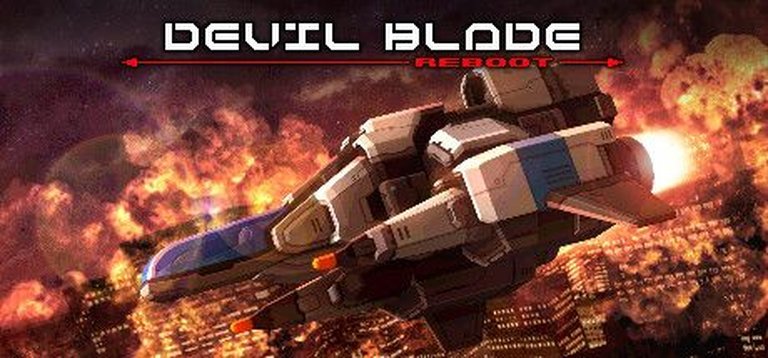
Devil Blade Reboot is a sci-fi themed, top-down 2D scrolling shoot ’em up that reboots the original game with frantic arcade action. Players pilot a spaceship through five stages filled with mid-bosses and final bosses, employing two switchable shot types and assist ships to master proximity-based scoring via a Berserk mode, all across four difficulty levels from accessible to infernal.
Gameplay Videos
Where to Buy Devil Blade Reboot
PC
Devil Blade Reboot Mods
Devil Blade Reboot Guides & Walkthroughs
Devil Blade Reboot Reviews & Reception
steamcommunity.com : This game is an S tier shmup its absolutely amazing.
timeextension.com : Devil Blade Reboot is a legitimate shmup masterpiece and one of the best examples of the genre we’ve experienced in quite some time.
Devil Blade Reboot: A Masterclass in Modern Retro Shmup Design
Introduction: The Phoenix of a Lost Classic
In the vast, often-overlooked archives of video game history, certain titles exist as mere whispers—cult classics confined to a single region, known only to dedicated enthusiasts. Devil Blade, a 1996 vertical scrolling shooter (shmup) created by Takehiro Shiga (known as Shigatake) for the PlayStation 1’s Dezaemon PLUS game-making kit, was one such title. Released exclusively in Japan on a compilation disc, it was a fascinating footnote, a proof-of-concept from an artist who would later help define the visual style of modern indie darling Vanillaware. Nearly three decades later, that whisper has returned as a thunderous roar. Devil Blade Reboot is not merely a remake; it is a radical reimagining, a meticulous reconstruction that respects its origins while forging a new identity through the “Berserk” risk-reward system and breathtaking pseudo-3D pixel art. This review argues that Devil Blade Reboot stands as a landmark achievement in the shmup genre—a game that successfully bridges the accessibility demanded by modern audiences with the uncompromising mechanical depth that defines its greatest predecessors. It is a masterclass in design philosophy, proving that a 28-year-old concept, in the right hands, can feel not just relevant, but revolutionary.
Development History & Context: From Dezaemon Garage to Steam Global Stage
The story of Devil Blade Reboot is intrinsically tied to the singular vision of its creator, Shigatake. In the mid-1990s, the PlayStation 1 was home to a vibrant, if niche, scene of user-generated content, primarily facilitated by tools like Dezaemon PLUS. This software allowed amateur and professional developers alike to create their own vertical shooters within strict technical constraints. It was within this creative sandbox that Shigatake crafted the original Devil Blade, a game that, while rough around the edges, showcased a distinctive artistic flair and a solid, if conventional, shmup foundation. The original game was trapped on the Dezaemon Kids! compilation’s Dezaemon Select 100 disc, a Japan-only release that cemented its status as a regional curiosity.
Shigatake’s subsequent career is crucial to understanding Reboot’s pedigree. He became a core artist at Vanillaware, contributing to the lush, exaggerated, and famously jiggly aesthetics of titans like Dragon’s Crown and Unicorn Overlord. This experience in crafting dense, animated, and visually opulent 2D sprites directly informs the aesthetic ambition of Devil Blade Reboot. The project itself gestated for years. Initially known as Devil Blade Prototype around 2017, it evolved slowly, with Shigatake working on it between other projects. This protracted development cycle, far from being a sign of neglect, speaks to an obsessive, uncompromising attention to detail—a theme consistently echoed in player feedback calling the game “unlikely” and made with “zero regard for cost performance.”
Technologically, the shift from Dezaemon PLUS to the dedicated shmup engine STGBuilder was seismic. The original was bound by the PS1’s limitations: primitive scaling, blocky sprites, and limited parallax. Reboot, while still rendered at a native 320×240 resolution to capture that classic feel, leverages modern PC power to implement multiple parallax scrolling layers, smooth sprite rotation and scaling (creating the “pseudo-3D” effect), and spectacular, layered explosion effects. The game’s context within the 2024 landscape is also telling. It arrived in a golden age for the niche shmup market, with titles like Cotton Reboot! and Mushihimesama finding new audiences. Devil Blade Reboot didn’t just enter this market; it reasserted the possibility of a solo or small-team developer creating a AAA-feeling experience through pure artistic and mechanical craft, rather than budget or scale.
Narrative & Thematic Deep Dive: A Symphony of War, God, and Defiance
The narrative of Devil Blade is delivered with the efficient, mythic shorthand of classic arcade games, yet Reboot enriches it with fully voiced boss banter and new cutscenes, elevating the stakes. The conflict is between the nation of Eminence and the artificial planet Zork, a war that sees Eminence launching its cutting-edge fighter, the Shining, as a final desperate act of resistance.
Thematically, the game operates on two primary levels: the Last Stand and the Divine Challenge. The five standard stages depict Eminence’s Shining pilot fighting through a relentless Zorkian offensive. Stage 5, “Last Stop,” is explicitly framed as the Zork military’s final, furious stand on their homeworld—a Load-Bearing Boss scenario where destroying the stage’s core triggers Planet Zork’s catastrophic destabilization.
This leads directly to the second, more potent theme: Authority and Defiance. The Zorkian commanders are imbued with a quasi-religious fervor. The Stage 1 mid-boss declares, “God does not abide by your existence.” The Stage 4 boss, “Mother,” prays, “O Divine One, bless our Holy Empire.” This sets the stage for the final antagonist, the titular Devil Blade. He is not merely a military leader; he is a Religious Bruiser who genuinely believes himself to be a deity. His boss banter is a crescendo of A God Am I rhetoric: “Worship me! Behold, I am no mere mere man!” culminating in the infamous, taunting declaration, “I. AM. GOD!”
The player’s victory is thus not just a military triumph but a profound act of Defiant to the End. Devil Blade’s final words are not of surrender but of vengeful rage: “You have taken everything from me! I will make you suffer!” His self-destruct attempt (“I’ll take you straight to Hell!”) frames the conflict as a battle against cosmic arrogance. The Bittersweet Ending perfectly encapsulates this duality. Planet Zork is destroyed, Devil Blade is dead, but Eminence is left in ruins. The Shining is critically damaged, its pilot’s fate Uncertain Doom as they broadcast a message of hope. The final line, delivered over images of a broken civilization, is a pledge of resilience: “The glorious Empire will never be destroyed!”—a defiant echo of the Zorkian boast now reclaimed for the survivors. It’s a thematically rich conclusion that subverts the typical “save the world” jubilation, leaving a somber, weightyaftertaste.
Gameplay Mechanics & Systems: The Elegant Cruelty of the Berserk
At its surface, Devil Blade Reboot appears disarmingly simple. This is a deliberate, “back-to-basics” design ethos. You have two shot types—Wide Vulcan and Narrow Shot—switchable on the fly. The Narrow Shot is more powerful but slows your ship’s movement, creating a core tactical trade-off between offensive potency and defensive mobility. There are no power-ups to collect; your arsenal is fixed. You have bombs for screen-clearing and, on Easy/Normal, a single-use shield. This minimalist toolkit is where the genius of the Berserk System transforms the game from pleasant diversion into an obsessive compulsion.
The Berserk gauge is the game’s beating heart. It fills bydestroying enemies. When it exceeds 100%, Berserk Mode activates. This is not a simple “get hit to lose it” state. Berserk is a conscious, high-stakes Super Mode you must manage. Its effects are profound:
* Multiplier Multiplication: Normal proximity multipliers are x1-x4. Berserk multiplies these by 5, raising the potential ceiling to a staggering x20.
* Dynamic Rank: Enemies gain more health and more攻击 patterns. The game dynamically Hardens based on your aggression. Playing safely keeps the rank low; playing for score makes the screen a lethal dance of bullets.
* Risk Engagement: To maintain the high-score state, you must continually fill the gauge by destroying enemies up close. Stalling causes it to drain, and you must rebuild it from scratch.
This creates the game’s central, exquisite tension: “no pain, no gain.” The highest score bonuses come from boss encounters, where a percentage-based “Shot Down Bonus” is awarded based on how much of the boss’s health was depleted while at max multiplier. Stalling to build Berserk before a boss fight, then maintaining it throughout the entire encounter, is the key to legendary scores. This was so dominant that the developers implemented a version 1.1.0 “Obvious Rule Patch”—a significant time-based bonus for defeating bosses quickly—to discourage stalling and encourage continuous, dangerous combat.
The difficulty spectrum is brilliantly calibrated to serve the Berserk philosophy:
* Easy: Starts with a shield, auto-bombs on damage. Bombing restores shields. Boost (holding bomb) grants invincibility. Berserk is optional.
* Normal: Bombing restores shields; Boost grants shield. The intended starting point for learning mechanics without being cruel.
* Hard: Bombing does not restore shields. Risk is markedly higher; shields become precious.
* Inferno: The true masochistic masterpiece. Bombs, shields, and Boost are disabled. Both assist planes drop only blue crystals. Rank is permanently maxed. And a “Deadline” mechanic is active: if the Berserk gauge fills without reaching 100% first, you die instantly. This forces you to constantly engage, constantly risk, or face automatic failure.
The assist ship system is another subtle layer. One drops bomb capsules, the other shield/blue crystal capsules. Destroying a blue capsule while shielded yields bonus crystals. In Inferno, since shields are gone, the blue capsules always become crystals, feeding the score attack directly.
The result is a gameplay loop that is instantly understandable (“shoot close for more points”) but with an ocean of depth beneath. It gracefully scales from a soothing “dodge and shoot” experience on Easy to a frantic, brain-burning exercise in millisecond risk assessment on Inferno.
World-Building, Art & Sound: Pixel Art’s Pinnacle and a Metal Anthem
Visually, Devil Blade Reboot justifies its subtitle. It is a “pseudo-3D experience that pushes the limits of pixel art.” Rendered at 320×240 but employing modern techniques, the game achieves a staggering sense of depth and scale. Backgrounds utilize multiple parallax scrolling layers that move at different speeds, creating a profound 3D corridor effect, especially in stages like the “Lunar Base” and the final descent into Planet Zork’s core. Sprite scaling and rotation are used masterfully—enemy formations bank and turn, bosses loom with imposing, rotating 3D-model-inspired sprites, and the infamous “Laser Hallway” in Stage 5 uses the camera’s perspective to create a dizzying, on-rails flight through grids of light. Explosions are not simple blobs but cascading, multi-layered detonations of pixel fire and debris that can fill the screen without obscuring gameplay. The art direction, pure Shigatake, is a fusion of sharp, mechanical sci-fi (the Zorkian designs have an Arms and Armor theme) and organic, almost biological elements, all delivered with the crisp, detailed linework honed at Vanillaware. The claim that “from the tips of the toes to the ends of the hair” attention was paid is not hyperbolic; every sprite, every background element feels considered and potent.
The soundtrack, composed by hasu (Tatsuya Nabeta), is a phenomenal, driving metal/industrial score that perfectly complements the game’s intensity. It’s full of crunchy guitar riffs, pounding drums, and tense synth pads that elevate the action to cinematic heights. It stands in stark, effective contrast to the likely more subdued, FM-synth style of the 1996 original, giving Reboot its own fiercely modern and aggressive identity. The only minor critical note, per reviews, is the boss voice acting—often flat or comically over-the-top—but this is easily toggled off and does little to diminish the overall audio impact.
The world-building is accomplished primarily through environmental storytelling and brief interstitials. The transition from the sleek, white mechanical interiors of Eminence’s Shining to the grimy, industrial, and religiously decorated Zorkian fortresses tells the story of two warring cultures: one of sterile technology, the other of fervent, mechanized faith. The final stage, as Planet Zork tears itself apart, is a masterpiece of audio-visual storytelling, with the rock soundtrack clashing against the visuals of a dying world.
Reception & Legacy: An Uncontested Modern Classic
The critical and player reception to Devil Blade Reboot has been nothing short of euphoric. Upon its May 23, 2024 release on Steam (priced at a modest $15.99), it rapidly accumulated “Overwhelmingly Positive” reviews, maintaining a 98% positive rating across over 760 reviews as of early 2026. The praise is remarkably consistent across sources:
* Visuals: Universally hailed as “jaw-dropping,” “wickedly awesome,” and “unbelievable” for 2D. The pseudo-3D effect is constantly singled out as a technical marvel.
* Gameplay: The Berserk system is celebrated as “innovative,” “thrilling,” and the perfect risk-reward loop. Its accessibility is frequently noted; beginners can enjoy the catharsis of “dodge, shoot, destroy” on Easy, while veterans are drawn to Inferno’s supreme challenge.
* Soundtrack: Described as “one of the best I’ve heard… in videogames in general,” “energizing and catchy.”
* Polish & Depth: Reviews repeatedly mention the “obsessive level of detail,” “heavily customizable settings,” and the inclusion of the original Devil Blade in Retro Mode as a value-add that deepens its historical significance.
Japanese social media response was similarly rapturous, with tweets praising the “thorough attention to detail” and the sheer joy of the core loop. The game has been favorably compared to the golden age of Treasure shooters (Radiant Silvergun, Ikaruga) and the mid-90s Sega Saturn shmup library, feeling like a lost classic that never was.
Its legacy is being written in real-time. Devil Blade Reboot serves as a powerful case study for:
1. The Viability of the Solo/Small-Team Auteur: It proves that a single visionary with a clear design philosophy and artistic skill can compete with larger studios.
2. Modernizing Classic Genres: It respects the core tenets of arcade shmups (tight controls, score attack, learnable patterns) while thoughtfully reintroducing them with modern quality-of-life features (unlockables, stage select, multilingual support handled by fans, Streamer-Friendly Mode).
3. The Power of a Single, Brilliant Mechanic: The Berserk system is so central and elegant that it defines the entire game’s identity, making it instantly memorable and academically interesting.
4. Preservation Through Enhancement: By including the 1996 original with its Berserk system grafted on (Retro Mode), it creates a living museum piece, allowing players to directly contrast the evolution of Shigatake’s craft from Dezaemon limitations to STGBuilder mastery.
Conclusion: A Shmup for the Ages
Devil Blade Reboot is far more than the sum of its parts. It is the crystallization of a creator’s decades-long journey, from the constrained DIY spirit of Dezaemon PLUS to the polished modern masterpiece delivered via Steam. It takes the simple, fundamental joy of a vertical shooter—dodging, shooting, the cathartic pop of an enemy explosion—and layers atop it a scoring mechanism of breathtaking depth and consequence. The Berserk system doesn’t just add points; it adds philosophy, transforming every millisecond of gameplay into a calculated risk, a dance on the knife-edge between multiplier and mortality.
Visually, it sets a new benchmark for 2D pixel art, achieving a 3D illusion that feels both nostalgic and magically new. Sonically, its metal soundtrack is an adrenaline injection. Structurally, its four difficulties (especially Inferno) and dual modes (Reboot and Retro) offer a staggering range of experiences from accessible to brutally esoteric.
In the pantheon of shoot ‘em ups, Devil Blade Reboot has immediately claimed a seat beside the immortals. It is not the longest game—six stages is standard for the genre—but its density of ideas, its flawless controls, and its unwavering commitment to a single, brilliant design vision make every minute essential. It is a game that understands the core DNA of the shmup: the dance of life and death, the pursuit of the perfect run, the sheer tactile feeling of mastery. For newcomers, it is the most welcoming gateway into hardcore score-chasing. For veterans, it is a fresh, fierce, and profoundly rewarding challenge.
With 98% positive Steam reviews, comparisons to Treasure’s best, and a wave of passionate word-of-mouth, Devil Blade Reboot has already transcended its “ cult remake” origins. It is not just a triumphant return for a lost game; it is a landmark release that redefines what an indie shmup can be in 2024. It is, without hyperbole, a shmup masterpiece. To ignore it is to miss one of the most perfectly calibrated and artistically triumphant action games of the decade. Devil Blade has not just been rebooted; it has been resurrected, perfected, and given a new, immortal legacy.