
- Release Year: 2008
- Platforms: PlayStation 3, Windows, Xbox 360
- Publisher: 1C Company, ak tronic Software & Services GmbH, Capcom Co., Ltd.
- Developer: Capcom Production Studio 1
- Genre: Action
- Perspective: Behind view
- Game Mode: Single-player
- Gameplay: Hack and Slash
- Setting: Fantasy
- Average Score: 81/100
- Adult Content: Yes
Description
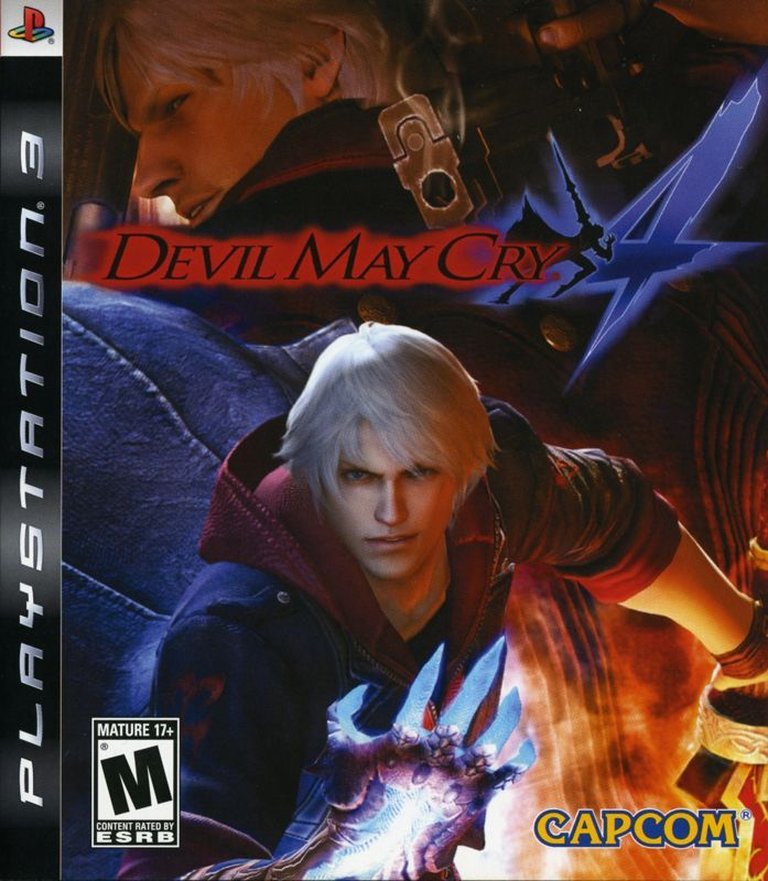
Devil May Cry 4 is a hack-and-slash action game set in a fantasy world where players take on the roles of Nero, a member of the Order of the Sword, and Dante, the series’ iconic protagonist. The story begins with Nero witnessing Dante assassinate the Order’s leader, Sanctus, sparking a mission of vengeance that unfolds across gothic castles, icy mountains, and ancient ruins. Nero wields the Red Queen sword, the Blue Rose revolver, and his Devil Bringer arm, which grants unique abilities like pulling enemies and rapid movement, while Dante retains his signature combat styles. The game blends fast-paced combat with stylish action, though its narrative is split unevenly between the two characters, with Nero’s campaign being more expansive and Dante’s feeling rushed.
Gameplay Videos
Where to Buy Devil May Cry 4
PC
Devil May Cry 4 Free Download
Devil May Cry 4 Cracks & Fixes
Devil May Cry 4 Patches & Updates
Devil May Cry 4 Mods
Devil May Cry 4 Guides & Walkthroughs
Devil May Cry 4 Reviews & Reception
metacritic.com (84/100): A triumphant return to form for the series.
cnet.com (80/100): The newest entry in the revered series features plenty of awesome action, a great new character … and a bit of repetition.
monstercritic.com (79/100): Devil May Cry 4 is a great capstone to the trilogy, and the PC port takes exceptional advantage of the graphical potential of many gamers’ PCs, while leaving the top-notch console gameplay untouched.
Devil May Cry 4: A Flawed Masterpiece of Stylish Action
Introduction
Devil May Cry 4 (2008) is a paradox—a game that simultaneously represents the pinnacle of its genre and a cautionary tale about the pitfalls of iterative design. Released at the dawn of the seventh console generation, it was Capcom’s attempt to modernize the Devil May Cry franchise while retaining the core mechanics that had defined its predecessors. The result is a title that dazzles with its combat depth, visual spectacle, and audacious style, yet stumbles due to structural imbalances, repetitive design, and a narrative that struggles to justify its existence. This review will dissect Devil May Cry 4 in exhaustive detail, examining its development, narrative, gameplay, aesthetics, reception, and legacy to determine its place in gaming history.
Development History & Context
The Birth of a Next-Gen Demon Hunter
Devil May Cry 4 emerged from a period of transition for Capcom. Following the critical and commercial success of Devil May Cry 3: Dante’s Awakening (2005), the development team, led by director Hideaki Itsuno and producer Hiroyuki Kobayashi, faced the daunting task of innovating within a series that had already perfected its core formula. The decision to shift to next-gen hardware—the PlayStation 3 and Xbox 360—provided both an opportunity and a challenge. The MT Framework engine, Capcom’s proprietary technology, promised to deliver unprecedented visual fidelity and performance, but the team’s unfamiliarity with the new consoles’ capabilities led to early struggles.
The most controversial decision was the introduction of Nero, a new protagonist, as the primary playable character. This choice was inspired by a desire to attract new players while avoiding the backlash that had plagued Metal Gear Solid 2: Sons of Liberty (2001) when it replaced Solid Snake with Raiden. Nero’s design and abilities were crafted to feel distinct yet familiar, with his Devil Bringer arm serving as a mechanical and narrative focal point. Johnny Yong Bosch, who provided both voice and motion capture for Nero, brought a youthful intensity to the character, contrasting with Reuben Langdon’s more mature portrayal of Dante.
A Rush to Release
Despite the ambitious scope, Devil May Cry 4 suffered from a compressed development cycle. The game’s initial teasers, shown at E3 2005 and the Tokyo Game Show 2005, featured elements that were ultimately cut, hinting at a project in flux. The team’s inexperience with the MT Framework and the pressures of a multi-platform release led to compromises, particularly in the game’s latter half. The PC version, developed concurrently but released months later, included exclusive features like Turbo Mode and Legendary Dark Knight Mode, which amplified the game’s chaotic combat but also highlighted the console versions’ limitations.
Narrative & Thematic Deep Dive
A Tale of Two Heroes
Devil May Cry 4’s story is a convoluted affair, blending gothic horror, religious allegory, and over-the-top anime tropes. The game follows Nero, a member of the Order of the Sword, as he pursues Dante after the latter assassinates the Order’s leader, Sanctus. The narrative unfolds across two distinct campaigns: Nero’s journey of self-discovery and Dante’s more traditional demon-hunting escapade.
Nero’s arc is the more compelling of the two, exploring themes of identity, power, and sacrifice. His relationship with Kyrie, a damsel in distress whose sole purpose is to motivate Nero, is underdeveloped but serves as the emotional core of his story. The revelation that Nero is a descendant of Sparda, the legendary demon knight, and the subsequent awakening of his Devil Trigger abilities provide a satisfying character progression. However, the game’s pacing suffers from its abrupt shift to Dante’s perspective halfway through, which feels rushed and lacks the same narrative weight.
Dante’s campaign, while mechanically satisfying, is narratively redundant. It retreads many of Nero’s missions, offering little in the way of new story beats or character development. The game’s villains—Sanctus, Agnus, and Credo—are forgettable, serving primarily as obstacles rather than compelling antagonists. The story’s resolution, which involves a giant demonic statue named the Savior, is emblematic of the game’s tendency to prioritize spectacle over substance.
Themes and Symbolism
Devil May Cry 4 grapples with themes of faith, corruption, and the duality of human nature. The Order of the Sword, a religious sect that worships Sparda, represents the dangers of blind devotion and the misuse of power. Sanctus’s plan to harness demonic energy to “save” humanity mirrors real-world instances of ideological extremism, though the game’s treatment of these themes is superficial at best.
The game’s portrayal of female characters is particularly problematic. Kyrie is a passive love interest with no agency, while Lady and Gloria are hyper-sexualized, reducing them to little more than eye candy. This regression from Devil May Cry 3’s more nuanced depiction of Lady is disappointing and reflects a broader issue within the series’ writing.
Gameplay Mechanics & Systems
Combat: The Heart of the Experience
Devil May Cry 4’s combat is its greatest strength. The game refines the series’ signature “stylish action” formula, emphasizing fluid combos, precise timing, and dynamic enemy interactions. Nero’s moveset is a highlight, with his Red Queen sword and Blue Rose revolver offering a satisfying blend of melee and ranged attacks. The Exceed system, which allows players to charge up powerful strikes, adds a layer of strategic depth, rewarding mastery of timing and positioning.
The Devil Bringer, Nero’s demonic arm, is a versatile tool that enables grappling, throwing, and environmental manipulation. Its abilities evolve throughout the game, providing both combat and exploration utility. However, the Devil Bringer’s reliance on context-sensitive inputs can feel clunky, particularly during fast-paced encounters.
Dante’s return in the latter half of the game is a double-edged sword. His arsenal, which includes the Rebellion sword, a new gauntlet weapon, and the hybrid Lucifer, is less inspired than in previous entries. The absence of iconic weapons like Alastor and Nevan is noticeable, and the lack of new mechanics for Dante’s campaign makes it feel like an afterthought. The ability to switch between combat styles on the fly is a welcome improvement, but it does little to mitigate the campaign’s repetitive structure.
Progression and Replayability
Devil May Cry 4 employs a dual-currency system, with Red Orbs used for consumables and Proud Souls for unlocking new abilities. This system encourages experimentation but can feel punishing due to the escalating costs of upgrades. The game’s grading system, which evaluates performance based on style, time, and damage taken, remains a core motivator for replayability. Achieving the coveted “SSS” rank is a badge of honor for hardcore fans, though the lack of meaningful rewards beyond bragging rights diminishes its appeal.
The inclusion of secret missions and hidden Red Orb caches adds depth to the exploration, but the game’s linear level design and frequent backtracking can make these feel like padding. The PC version’s Legendary Dark Knight Mode, which floods the screen with enemies, is a chaotic but exhilarating challenge that highlights the combat system’s strengths.
Technical Flaws
The game’s camera system is a persistent issue. While player-controlled cameras offer greater flexibility, they often fail to provide optimal angles during combat, leading to frustration. Fixed camera sequences, a staple of earlier entries, feel out of place and can disrupt the flow of battle.
The game’s difficulty curve is uneven, with Nero’s campaign offering a more balanced experience compared to Dante’s abrupt spike in challenge. The lack of a true “easy” mode for newcomers is a missed opportunity, though the game’s accessibility is improved over Devil May Cry 3’s punishing difficulty.
World-Building, Art & Sound
A Gothic Playground
Devil May Cry 4’s visual design is a feast for the senses. The fictional city of Fortuna is a sprawling, gothic metropolis, blending medieval architecture with modern elements. The game’s environments are diverse, ranging from snow-covered peaks to underground laboratories, each rendered with meticulous detail. The MT Framework engine delivers impressive lighting, particle effects, and character animations, though the frequent loading screens on the PlayStation 3 version are a notable detraction.
The game’s art direction is heavily influenced by European aesthetics, with Vatican City and Istanbul serving as key inspirations. The contrast between the Order of the Sword’s opulent cathedral and the demon-infested ruins of Fortuna creates a striking visual dichotomy. However, the game’s reliance on recycled assets and backtracking in Dante’s campaign undermines its sense of place.
A Symphony of Chaos
The soundtrack, composed by Tetsuya Shibata and a team of collaborators, is a standout feature. The game’s heavy metal and orchestral tracks complement its frenetic combat, with standout pieces like “The Time Has Come” and “Shall Never Surrender” amplifying the game’s dramatic moments. The voice acting, particularly Bosch’s and Langdon’s performances, is excellent, though the script’s campy dialogue and one-liners can be polarizing.
Reception & Legacy
Critical Acclaim and Commercial Success
Devil May Cry 4 was met with widespread critical acclaim upon release, with praise directed at its combat, visuals, and Nero’s characterization. Critics lauded the game’s accessibility, noting that it struck a better balance than Devil May Cry 3’s punishing difficulty. However, the game’s repetitive level design, underwhelming Dante campaign, and camera issues were common points of criticism.
Commercially, the game was a resounding success, selling over three million copies worldwide and becoming the best-selling entry in the series at the time. Its inclusion in the Capcom Essentials and Platinum Hits collections further cemented its popularity.
Influence and Evolution
Devil May Cry 4’s legacy is complex. While it failed to innovate as boldly as Devil May Cry 3, it refined the series’ combat mechanics and introduced Nero, who would go on to become a fan-favorite character. The game’s success paved the way for Devil May Cry 5 (2019), which addressed many of its predecessor’s flaws while expanding on its strengths.
The Special Edition (2015) remaster, which added playable characters like Vergil, Lady, and Trish, as well as improved visuals and balancing, demonstrated the enduring appeal of Devil May Cry 4’s core gameplay. However, the game’s structural issues and narrative shortcomings remain a reminder of the risks of iterative design.
Conclusion
Devil May Cry 4 is a flawed masterpiece—a game that excels in its moment-to-moment gameplay but stumbles in its broader execution. Its combat system is a triumph of design, offering depth, variety, and unparalleled satisfaction for those willing to master its intricacies. Yet, its narrative is underwhelming, its level design repetitive, and its pacing uneven. The introduction of Nero is a bold and largely successful experiment, but the game’s rushed development and structural imbalances prevent it from reaching the heights of Devil May Cry 3.
Despite its flaws, Devil May Cry 4 remains a landmark title in the action genre. It is a testament to Capcom’s ability to craft exhilarating combat experiences, even when other aspects of the game falter. For fans of stylish action, it is an essential play, warts and all. For the broader gaming audience, it serves as a cautionary tale about the dangers of resting on one’s laurels.
Final Verdict: 8.5/10 – A brilliant but imperfect evolution of the Devil May Cry formula.