
- Release Year: 2000
- Platforms: Macintosh, Windows
- Publisher: Blizzard Entertainment Inc.
- Developer: Blizzard Entertainment Inc.
- Genre: Special edition
- Perspective: Isometric
- Game Mode: Co-op, LAN, Online PVP, Single-player
- Gameplay: Character customization, Hack and Slash, Loot-based progression
- Setting: Dark fantasy, Medieval
- Average Score: 83/100
Description
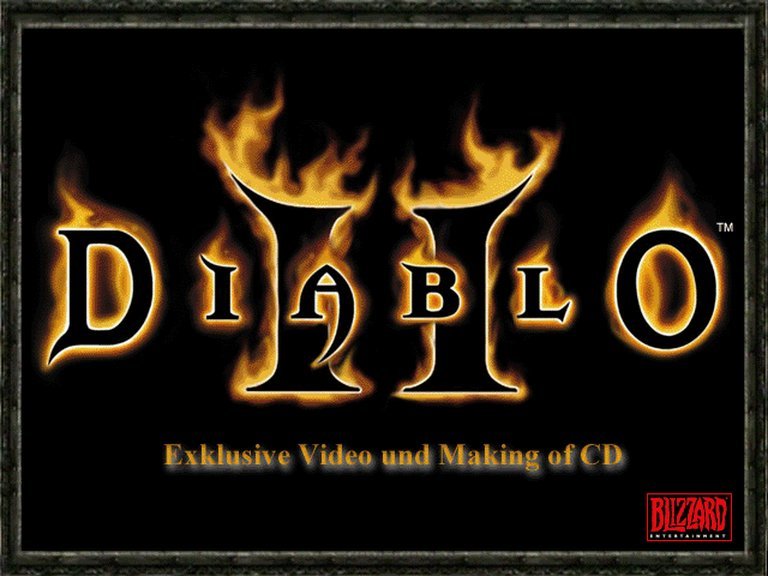
Diablo II (Saturn Spezial-Edition) is a special version of the acclaimed action role-playing game Diablo II, released exclusively at Saturn stores in Germany in late 2000. Set in a dark fantasy world, the game follows heroes battling the demonic forces unleashed by Diablo’s return, offering intense hack-and-slash combat across diverse environments. This edition includes an exclusive ‘Making Of’ CD featuring behind-the-scenes content, trailers, and cinematic ads, providing fans with additional insights into the game’s development. As a definitive RPG experience, it builds on the original’s success with enhanced storytelling and immersive multiplayer via Battle.net.
Diablo II (Saturn Spezial-Edition) Patches & Updates
Diablo II (Saturn Spezial-Edition) Mods
Diablo II (Saturn Spezial-Edition) Guides & Walkthroughs
Diablo II (Saturn Spezial-Edition) Reviews & Reception
ign.com (83/100): In Diablo II, return to a world of dark fantasy as one of five distinct character types and strap on your armor in the quest to defeat the Lord of Terror once and for all.
Diablo II (Saturn Spezial-Edition) Cheats & Codes
PC
Press Enter to open chat, then type codes. For main menu music/sound, use Ctrl+M or Ctrl+S.
| Code | Effect |
|---|---|
| soundchaosdebug | Every sound at once |
| /players x | Sets player count to ‘x’ (1-8), increasing difficulty, experience, and drops |
| /framerate | Shows framerate, cache, and memory information |
| /fps | Shows frames per second |
| /nopickup | Prevents item pickup unless Alt is pressed |
| Ctrl+M | Disable/Enable main menu music |
| Ctrl+S | Disable/Enable main menu sound effects |
PC (TCP/IP/Battle.net)
Use chat commands in game.
| Code | Effect |
|---|---|
| /ignorepersist | Enable/disable spam filter |
| /filtermsg [word] | Add word to filter |
| /unfiltermsg [word] | Remove word from filter |
Diablo II (Saturn Spezial-Edition): Review
Introduction
Twenty-four years after its original release, Diablo II remains a titan of the action-RPG genre—a masterclass in loot-driven gameplay, atmospheric storytelling, and replayability. The Saturn Spezial-Edition, a 2000 Germany-exclusive retail variant, encapsulates Blizzard North’s landmark title in a package designed for collectors, bundling the base game with a trove of behind-the-scenes content. This review interrogates not just the game’s enduring genius but the cultural significance of this rare edition, arguing that while it offers no gameplay innovations, it serves as a fascinating artifact of pre-digital-distribution hype culture and Blizzard’s marketing savvy during PC gaming’s golden age.
Development History & Context
Studio Vision & Technological Constraints
Developed by Blizzard North (formerly Condor Inc.), Diablo II emerged from a three-year crucible led by David Brevik, Erich and Max Schaefer, and Stieg Hedlund. Building on Diablo’s (1996) success, the team sought to rectify its predecessor’s limitations: finite dungeon-crawling, simplistic class design, and vulnerable multiplayer infrastructure. The result was a game engineered for Battle.net dominance, leveraging then-cutting-edge tech like randomized loot tables, TCP/IP support, and 800×600 resolution—pushing 1999-era hardware to its limits.
The Gaming Landscape of 2000
Launched amid Baldur’s Gate II and Deus Ex, Diablo II defied RPG conventions by prioritizing visceral combat over dialogue trees. Its always-online model (for closed Battle.net realms) and ladder seasons pioneered live-service elements years before their ubiquity. The Saturn Spezial-Edition arrived in this milieu—a physical-era “deluxe edition” targeting German Saturn store patrons with exclusive footage, foreshadowing today’s digital “Director’s Cuts.”
Narrative & Thematic Deep Dive
Plot & Characters: A Descent into Gothic Ambiguity
The story follows the Dark Wanderer—the corrupted hero of Diablo I—as he unleashes the Prime Evils (Mephisto, Diablo, Baal) across Sanctuary. Players embody one of five classes (Amazon, Necromancer, Barbarian, Sorceress, Paladin), pursuing him through four acts spanning gothic monasteries, desert tombs, and Kurast’s jungles. The narrative’s genius lies in environmental storytelling: Tristram’s ruins (Act I) whisper of Diablo’s events, while the drugged fatalism of Marius’ cutscene narration frames humanity as pawns in cosmic war.
Themes: Corruption, Power, and Futility
Diablo II subverts heroic fantasy tropes. The Wanderer’s fall mirrors the player’s own addiction to loot—a meta-commentary on power’s corrupting allure. Even victory hollows: destroying Mephisto and Diablo (Acts III–IV) merely delays evil’s resurgence, a nihilistic thread later expanded in Diablo IV. The Saturn Spezial-Edition’s “Making Of” CD likely dissected these themes, though archival details are scarce.
Gameplay Mechanics & Systems
Core Loop: The Skinner Box Perfected
Diablo II’s gameplay orbits three pillars:
1. Combat: Real-time, click-driven skirmishes demanding tactical skill management (e.g., Necromancer’s Corpse Explosion chaining).
2. Progression: Deep skill trees (e.g., Sorceress’ Cold/Lightning/Fire synergies) and attribute分配 customization.
3. Loot Economy: Over 500 unique items, set pieces like Tal Rasha’s Wrappings, and the Horadric Cube crafting system fuel endless grinding.
The Saturn edition includes the base game unmodified, preserving seminal systems like Hardcore mode (permadeath) and PvP “ear” collecting.
UI & Innovation
Blizzard’s UI refinements—shared stash tabs, weapon-swap keys, and party health globes—set industry standards. However, dated flaws persist: limited respec options (pre-Lord of Destruction) and inventory Tetris for gems/runes. Multiplayer, though revolutionary, suffered from duping and chat gem trolling—a community in-joke immortalized in the Saturn edition’s Battle.net documentation.
World-Building, Art & Sound
Visual Direction: From Gothic Decay to Hellish Surrealism
Each act’s aesthetic—a mosaic of hand-drawn 2D sprites and 3D-rendered pre-renders—pioneered isometric art direction:
– Act I: Rain-lashed Rogues’ forests evoke Germanic folklore.
– Act II: Sandy Lut Gholein channels Lawrence of Arabia via Ancient Egyptian motifs.
– Act IV: The River of Flame’s jagged, lava-choked architecture prefigures Doom’s hellscapes.
The Saturn edition’s physical extras (never digitally preserved) reportedly included early concept art—a loss for preservationists.
Sound Design: Matt Uelmen’s Ode to Dread
Uelmen’s score—“Rogue Encampment”’s mournful guitars, “Tristram”’s leitmotif reprise, “Tombs”’ stifling tomb ambiance—melds ambient noise with folk instrumentation. Sound effects (e.g., the Necromancer’s bone spells) remain unnervingly tactile. The Saturn bonus CD’s trailers likely showcased this aural craftsmanship, though specifics are lost to time.
Reception & Legacy
Launch Reception & Sales
Diablo II earned 88/100 on Metacritic and sold 1+ million copies in two weeks—a Guinness World Record. Critics lauded its depth (IGN: “addictive as caffeine”) but noted repetitive endgame grinding (GameSpot: “a treadmill of slaughter”). The Saturn Spezial-Edition, as a regional variant, left minimal critical footprint but exemplifies Blizzard’s mastery of collector psychology—a tradition continues with Diablo IV’s myriad SKUs.
Cultural Impact
The game birthed ARPG staples:
– Loot tiers (Normal/Magic/Rare/Set/Unique).
– Seasonal resets (via ladder rankings).
– Build guides (“Fishymancer,” “Hammerdin”).
Its modding scene (e.g., Median XL) inspired Path of Exile and Last Epoch, while the Saturn edition’s exclusivity fascinates retro collectors.
Conclusion
Diablo II (Saturn Spezial-Edition) is a time capsule: a testament to Blizzard’s pre-Activision ingenuity and physical media’s curated charm. While its bonus content lacks gameplay value, the package symbolizes an era when PC gaming’s rituals—manual updates, LAN parties, and midnight launches—were communal sacraments. Two decades later, Diablo II: Resurrected (2021) has modernized its bones, but the Saturn edition endures as a relic for purists—a must-own for historians, but nonessential for players. In the pantheon of gaming’s greats, Diablo II remains peerless; this edition, a footnote to its legend.
Final Verdict: A vital chapter in ARPG history, elevated by nostalgia. For hardcore collectors only.