
- Release Year: 2015
- Platforms: Windows
- Publisher: rokapublish GmbH
- Genre: Compilation
- Perspective: 1st-person
- Game Mode: Single-player
- Average Score: 60/100
Description
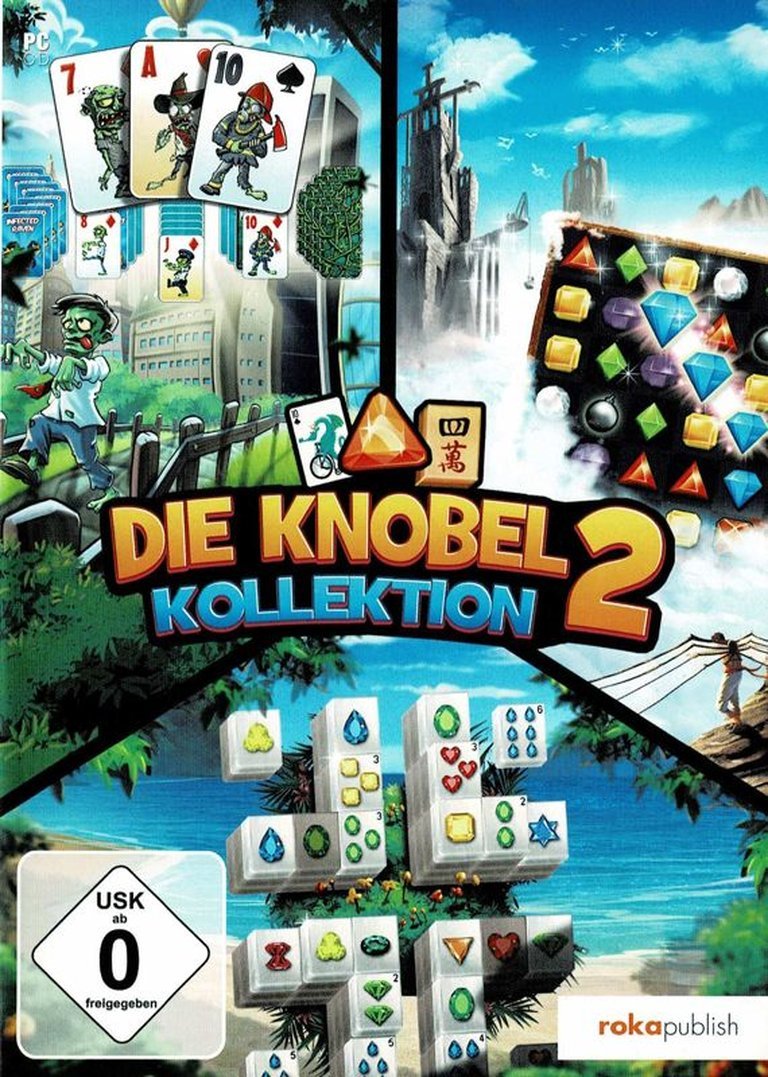
Die Knobel Kollektion 2 is a 2015 commercial PC compilation of casual puzzle games released by rokapublish GmbH. This CD-ROM collection spans multiple genres with three distinct titles: Zombie Solitaire, a card game with a horror twist; Jewel Venture, a gem-matching puzzle adventure; and Summer Majong, a relaxing mahjong variant. Designed for 1st-person play, the compilation offers accessible gameplay across diverse settings, from eerie zombie apocalypses to tranquil summer landscapes. As part of the Knobel Kollektion series, this bundle provides straightforward entertainment for Windows users seeking variety in their puzzle gaming experience.
Die Knobel Kollektion 2 Reviews & Reception
sockscap64.com (60/100): This Game has no review yet, please come back later…
Die Knobel Kollektion 2: Review
Introduction
In the vast expanse of video game history, few genres have endured with such quiet resilience as the casual puzzle compilation. Die Knobel Kollektion 2 (2015), a German-produced anthology of minimalist brain-teasers, epitomizes this niche—a game unburdened by aspirations of grandeur, yet emblematic of a specific era in digital entertainment. Developed and published by rokapublish GmbH, a studio specializing in budget-friendly compilations, this title serves as a time capsule for mid-2010s casual gaming trends. Its thesis is simple: deliver unpretentious, easily digestible puzzles to an audience seeking relaxation over revolution. While not a landmark in innovation, Die Knobel Kollektion 2 offers a lens through which to examine the enduring appeal of accessible gameplay and the commercial ecosystems that sustain such releases.
Development History & Context
Studio and Vision
rokapublish GmbH, a German publisher active throughout the 2010s, carved a niche in repackaging existing casual games into affordable physical compilations. Their catalog—including titles like Die Grosse Klick-Management Kollektion (2012) and thematic bundles like Wildnis Kollektion (2018)—catered to a demographic of casual players, often older or less digitally native, who preferred tangible CD-ROMs over digital storefronts. Die Knobel Kollektion 2 followed the formula of its predecessor (Die Knobel Kollektion, 2015), bundling three standalone puzzle games into a single retail product. The vision was pragmatic: low-risk, high-accessibility entertainment designed for quick sessions.
Technological Constraints
Released in 2015—a year dominated by The Witcher 3, Bloodborne, and the rise of open-world epics—Die Knobel Kollektion 2 existed in a parallel gaming universe. Its technical requirements were minimal: compatible with Windows XP and later, demanding only 512MB RAM and a Pentium processor (per SocksCap64’s specs for similar rokapublish titles). This intentional simplicity ensured compatibility with aging hardware, targeting users who hadn’t upgraded systems in a decade. The CD-ROM format, though archaic by 2015 standards, persisted in Germany’s budget gaming market, appealing to those without reliable broadband or digital store accounts.
Gaming Landscape
The mid-2010s saw casual gaming bifurcate: on one end, mobile titles like Candy Crush Saga dominated app stores; on the other, physical compilations like Die Knobel Kollektion 2 served a residual market resistant to digital shifts. rokapublish’s strategy mirrored companies like Purple Hills or Alawar Entertainment, leveraging nostalgia for tangible media and straightforward gameplay. Against AAA spectacles, these compilations thrived in discount bins and online marketplaces, often retailing for under €10 (e.g., €6.45 on MOLUNA.de).
Narrative & Thematic Deep Dive
Plot and Characters
As a compilation, Die Knobel Kollektion 2 lacks a unifying narrative. Each game operates in isolation:
– Zombie Solitaire: A solitaire variant draped in zombie-apocalypse theming. Cards are “survivors,” and completing a stack “saves” them. No characters exist beyond menu screen vignettes of cartoon undead.
– Jewel Venture: A match-3 puzzler akin to Bejeweled, with gem-swapping mechanics and a vague “treasure hunter” motif. Thematic depth is nonexistent; jewels glimmer, grids reset, and high scores reign supreme.
– Summer Mahjong: A tile-matching game set against a backdrop of beach vistas and palm trees. The “summer” theme is purely aesthetic—no story, no progression, just ambient relaxation.
Themes
The compilation’s themes orbit tension and tranquility. Zombie Solitaire injects urgency into a traditionally meditative genre, framing cardplay as a race against undead hordes. Jewel Venture leans into materialistic fantasy—accumulating jewels as a metaphor for victory. Summer Mahjong embodies escapism, using tropical visuals to evoke a mental vacation. These themes aren’t explored; they’re wallpaper, designed to mildly enhance engagement without demanding emotional investment.
Gameplay Mechanics & Systems
Core Gameplay Loops
Each game exemplifies iterative design:
1. Zombie Solitaire: Standard solitaire rules (Klondike variant) with a zombie skin. Players clear stacks to “rescue” survivors, though mechanically identical to moving cards to foundation piles. The sole innovation: a timer that sporadically accelerates, simulating undead encroachment.
2. Jewel Venture: A grid-based match-3 with cascading combos. Swap adjacent gems to form rows/columns of three or more. A “venture” meter fills with matches, unlocking bonus rounds. No power-ups or narrative progression—pure score chasing.
3. Summer Mahjong: Classic Mahjong Solitaire. Match identical tiles to clear the board. The summer theme adds seasonal tile sets (e.g., seashells, flip-flops), but mechanics remain untouched.
UI and Progression
The UI is functional but dated. Menus are text-heavy, navigated via mouse clicks, with no controller support. Each game tracks high scores locally but lacks cloud saves or online leaderboards. Progression is nonexistent; players reset to zero after each session. The compilation’s hub is a static menu with game icons—no unlockables, no meta-rewards.
Flaws and Innovations
Flaws:
– Repetition: Minimal mechanical variety across games.
– Aging Design: Feels like early-2000s browser games, lacking modern QoL features (e.g., undo buttons in solitaire).
– No Integration: Games feel like disparate .exe files slapped together.
Innovations: None. rokapublish prioritized affordability over creativity.
World-Building, Art & Sound
Visual Direction
Art is serviceable but generic:
– Zombie Solitaire: Pulpy comic-book aesthetics—zombies are cartoony, blood absent. Cards feature stylized survivors (e.g., a scientist, a soldier).
– Jewel Venture: Bright, saturated gem sprites against gradient backgrounds. Visual clarity trumps artistry.
– Summer Mahjong: Pastel beaches, azure waters. Tiles are cleanly rendered but lack cultural authenticity (e.g., Chinese motifs replaced with generic “resort” icons).
Sound Design
Audio is sparse and loop-heavy:
– Zombie Solitaire: Groans and shuffles accentuate card moves. A minor-key synth track amplifies tension.
– Jewel Venture: Crystalline chimes on matches; a chirpy, upbeat loop evokes early mobile games.
– Summer Mahjong: Waves and seagulls underpin tile clicks. A ukulele melody loops ad infinitum.
Atmosphere is consistently low-stakes, prioritizing relaxation over immersion.
Reception & Legacy
Critical and Commercial Reception
No critic reviews exist on MobyGames or OpenCritic—unsurprising given its niche audience. Player reviews are equally absent, suggesting minimal cultural footprint. Commercially, it found modest success in German budget markets, evidenced by its presence on Amazon.de and specialty retailers like Game-and-Fun.de. Its legacy lies not in acclaim but in its role within rokapublish’s business model: a string of similar compilations (Die Knobel Kollektion 3, Ozean Kollektion) followed, targeting the same audience.
Industry Influence
Die Knobel Kollektion 2 exemplifies the “budget compilation” subgenre—a relic of physical media’s twilight. It influenced nothing but underscored a enduring truth: there will always be a market for frictionless, disposable entertainment. Its DNA lives on in mobile ad-supported puzzlers and Steam’s shovelware bundles.
Conclusion
Die Knobel Kollektion 2 is less a game than a commodity—a trio of forgettable puzzles bound by economic pragmatism. It lacks artistry, innovation, and ambition, yet fulfills its narrow purpose: delivering stress-free diversion to an undemanding audience. Historians may value it as evidence of 2010s casual gaming’s stratified markets; players seeking depth should look elsewhere. In the pantheon of video games, it is a footnote—but even footnotes have stories to tell. Its place in history is secured not by greatness, but by its reminder that not all games aspire to art. Some just aspire to be played.
Verdict: A functional, fleeting diversion—worthy of a bargain bin, but not a hall of fame.