
- Release Year: 2012
- Platforms: Windows, Xbox 360
- Publisher: Tricktale
- Developer: Tricktale
- Genre: Action, Roguelike, Shooter
- Perspective: Diagonal-down
- Game Mode: Single-player
- Gameplay: Direct control, Roguelike, Shooter
- Setting: Dungeon
- Average Score: 53/100
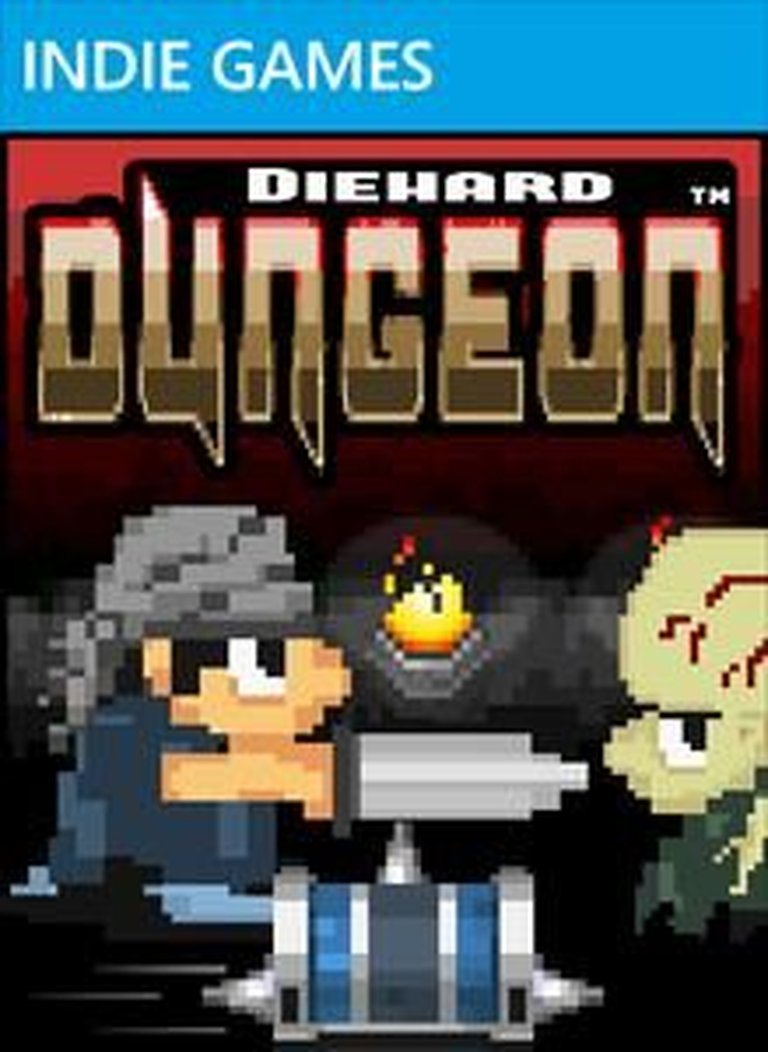
Description
Diehard Dungeon is a fast-paced, roguelike shooter with a diagonal-down perspective, blending intense action with procedurally generated dungeons. Players battle through endless, ever-changing levels filled with quirky enemies, challenging boss fights, and creative combat mechanics. Inspired by games like The Binding of Isaac and Nuclear Throne, it offers a unique mix of real-time gameplay and permadeath, delivering a fresh and engaging experience for fans of the genre.
Where to Buy Diehard Dungeon
PC
Diehard Dungeon Guides & Walkthroughs
Diehard Dungeon Reviews & Reception
metacritic.com (75/100): A nice and immediate dungeon crawler that also proves itself to be a challenging title.
indiegamerchick.com : Diehard Dungeon is all hacking, all slashing.
steambase.io (74/100): Diehard Dungeon has earned a Player Score of 74 / 100.
moddb.com (10/100): Fantastic dungeon crawler. Love the graphics and gameplay.
Diehard Dungeon: A Roguelike Gem with Rough Edges
Introduction
Diehard Dungeon (2012) is a real-time roguelike dungeon crawler that blends the nostalgic charm of 16-bit Zelda with the punishing, procedurally generated design of The Binding of Isaac. Developed by the one-person studio Tricktale, this indie title emerged during the Xbox Live Indie Games (XBLIG) era, a time when small developers could carve out niches with creative, if occasionally unpolished, experiences. While it never achieved mainstream recognition, Diehard Dungeon remains a fascinating artifact of the early 2010s indie boom—a game that, despite its flaws, offers a unique twist on the roguelike formula.
This review will dissect Diehard Dungeon from every angle: its development history, narrative (or lack thereof), gameplay mechanics, artistic direction, and lasting legacy. By the end, we’ll determine whether it’s a hidden gem worth revisiting or a relic best left in the past.
Development History & Context
The Studio and the Vision
Diehard Dungeon was created by Toby Land, the sole developer behind Tricktale, a small indie studio that also worked on titles like At Your Feet and Gibbous: A Cthulhu Adventure. The game was initially released on September 11, 2012, for the Xbox 360 as part of the Indie Games Uprising III, a community-driven event aimed at showcasing the best of XBLIG. It later arrived on Windows via Steam in 2014, where it found a modest but dedicated audience.
Land’s vision was clear: merge the real-time combat of The Legend of Zelda with the procedural generation and permadeath of roguelikes, all wrapped in a 16-bit aesthetic. The result was a game that felt both familiar and fresh, occupying what Edge Online called a “curious middle ground” between two beloved genres.
Technological Constraints and the XBLIG Era
The Xbox 360’s XNA framework imposed strict limitations on indie developers:
– No official leaderboards or achievements (though Diehard Dungeon circumvented this with peer-to-peer leaderboards).
– No save states—a brutal constraint for a roguelike, meaning players had to commit to full runs.
– Limited processing power, which occasionally caused frame skips and pause stutters (a noted issue in early reviews).
Despite these hurdles, Land leveraged XNA’s strengths to create a game with smooth controls, dynamic lighting, and a surprisingly robust physics system (e.g., ricocheting cannonballs).
The Gaming Landscape in 2012
Diehard Dungeon arrived during a golden age for roguelikes:
– The Binding of Isaac (2011) had just redefined the genre.
– FTL: Faster Than Light (2012) proved that procedural storytelling could thrive.
– Spelunky (2012 HD remake) was cementing its status as a modern classic.
Yet, Diehard Dungeon stood out by fusing action-adventure mechanics with roguelike structure, a rarity at the time. While it lacked the narrative depth of Isaac or the metroidvania exploration of Spelunky, it offered fast-paced, skill-based combat that appealed to fans of both genres.
Narrative & Thematic Deep Dive
Plot: Minimalist by Design
Diehard Dungeon has no traditional story. You play as a nameless adventurer who:
1. Gets shot in the back by an arrow (a darkly humorous intro).
2. Awakens in a dungeon with no explanation.
3. Fights through procedurally generated floors to escape.
That’s it. There are no NPCs, no lore scrolls, no cutscenes. The game’s “narrative” is purely mechanical:
– Progression = survival.
– Death = failure, but also a chance to learn.
This minimalism is both a strength and a weakness:
– Strength: It keeps the focus on gameplay purity.
– Weakness: It fails to immerse players in the way Isaac’s biblical horror or Dead Cells’ environmental storytelling does.
Themes: Persistence and Punishment
The game’s themes revolve around:
1. The Illusion of Control
– The dungeon is randomly generated, but the player’s skill determines survival.
– Traps, enemies, and upgrades are unpredictable, reinforcing the roguelike ethos: “Adapt or die.”
-
The Companion Chest: A Silent Partner
- Your treasure-collecting chest is the closest thing to a “character.”
- It evolves as you gather gold, gaining offensive capabilities.
- A clever twist: It’s both a tool and a vulnerability (enemies can destroy it).
-
Champion Mode: The Ghosts of Players Past
- A unique feature where AI-controlled “Champions” (remnants of other players) appear.
- Some help (dropping items), others hinder (attacking you).
- A meta-narrative about shared struggle in a punishing world.
Dialogue and Tone
There is no dialogue, but the game’s tone is established through:
– Sound design: The low-health beeping (a Zelda homage) is annoying by design, heightening tension.
– Enemy designs: Whimsical yet deadly (e.g., the blind swordsman with a pot on his head).
– Death screen: A blunt “YOU DIED”—no fanfare, just respawn and try again.
Gameplay Mechanics & Systems
Core Gameplay Loop
Diehard Dungeon’s structure is simple but addictive:
1. Enter a dungeon floor (procedurally generated).
2. Clear rooms of enemies and traps.
3. Find keys to unlock doors.
4. Collect treasure to upgrade your chest.
5. Defeat a boss (or mini-boss).
6. Rinse and repeat until death or escape.
Combat: A Mix of Zelda and Twin-Stick Shooters
The game’s hybrid combat system is its biggest innovation:
– Sword: Can be tapped for quick slashes or charged for a spin attack.
– Hand Cannon: Fires bouncing cannonballs that explode on impact.
– Unique mechanic: You can swing your sword at a cannonball mid-air to redirect it, dealing bonus damage.
– This encourages creative, skill-based play—a rarity in roguelikes.
Problems with Combat:
– No diagonal slashing (a bizarre omission).
– Enemies ignore environmental hazards, leading to cheap deaths (e.g., arrows firing from unseen traps).
– Hitboxes can feel inconsistent, especially with the zoomed-in camera.
Progression and Upgrades
Progression is twofold:
1. Per-Run Upgrades:
– Random drops (health boosts, weapon enchants, abilities like Dash).
– Slot-machine chests (a controversial mechanic—some love the risk/reward, others hate the RNG frustration).
2. Persistent Upgrades:
– Treasure Chest evolution: The more gold you collect across runs, the stronger it becomes (e.g., fires projectiles at enemies).
– Champion Mode unlocks: Adds replayability but is light on content.
UI and Quality-of-Life Issues
The game’s biggest flaws stem from polish (or lack thereof):
– No in-game explanations: Players must trial-and-error abilities like Luck or Rage.
– No resolution scaling in windowed mode (a common complaint).
– Leaderboard pauses: Early versions had freezes when syncing scores.
– No controller remapping: Forces players into default controls, which can feel clunky.
Minigames: A Mixed Bag
Diehard Dungeon includes three minigames, accessible via special chests:
1. Mayhem: 3-minute score attack mode.
2. Survival: Endless room-clearing with escalating difficulty.
3. Fading Light: A stealth-horror challenge (avoid eyes, kill pyramids).
Verdict on Minigames:
– Mayhem is fun but shallow.
– Survival is repetitive.
– Fading Light is the most interesting but underdeveloped.
World-Building, Art & Sound
Setting and Atmosphere
The dungeon is generic fantasy, but the art style elevates it:
– 16-bit pixel art with detailed animations (e.g., enemies stagger when hit).
– Mood lighting: Torches flicker, blood splatters persist.
– Traps are visually distinct (though camera issues make some hard to see).
Atmosphere:
– Oppressive: The low-health beep, tight corridors, and sudden enemy swarms create tension.
– Whimsical: Enemy designs (blind pot-head swordsmen, bouncing slimes) add dark humor.
Sound Design: Retro with a Punch
- Music: Composed by Markus Heichelbech (Deceased Superior Technician), the chiptune soundtrack is catchy but repetitive.
- Sound Effects:
- Sword slashes feel weighty.
- Cannon explosions are satisfying.
- Treasure collection has a pleasing “clink.”
- Ambient Noise: Wind howling, distant drips—subtle but effective.
Criticism:
– No dynamic music: Boss fights don’t get unique tracks.
– Some effects clip (noted in early trailers).
Reception & Legacy
Critical Reception: “A Diamond in the Rough”
Diehard Dungeon received modest but positive reviews:
– Cubed3 (8/10): Praised its dungeon design and combat creativity, but noted longevity issues.
– GAMINGtruth (7/10): Called it “surprisingly awesome” for an XBLIG title.
– Indie Gamer Chick: “One of the best hack-and-slashers on XBLIG” but criticized cheap deaths and lack of polish.
Steam User Reviews (73% Positive):
– Praise: Addictive gameplay, great value for $2, fun combat mechanics.
– Criticism: Repetitive, unfair difficulty spikes, lack of content.
Commercial Performance
- XBLIG: Sold modestly (no exact numbers, but 31 players tracked on MobyGames).
- Steam: 424 reviews (as of 2026), mostly positive, but not a breakout hit.
Influence and Legacy
Diehard Dungeon didn’t redefine the genre, but it paved the way for later hybrids like:
– Dead Cells (2018) – Metroidvania + Roguelike.
– Hades (2020) – Narrative + Roguelike.
– 20XX (2017) – Mega Man + Roguelike.
Its biggest contribution was proving that real-time action roguelikes could work without deep narrative.
Conclusion: A Flawed but Fascinating Relic
Diehard Dungeon is not a masterpiece, but it’s far from forgettable. It’s a time capsule of the XBLIG era—a game made with passion, creativity, and limited resources. Its combat innovation, charming art style, and punishing-but-fair difficulty make it worth experiencing, especially for roguelike enthusiasts.
Final Verdict:
✅ Play It If: You love fast-paced roguelikes, Zelda-like combat, or indie gems with rough edges.
❌ Skip It If: You need deep storytelling, polished UI, or modern QOL features.
Score: 7/10 – “A Cult Classic in the Making”
Diehard Dungeon may not have changed the world, but it deserves its place in the pantheon of early 2010s indie games—a testament to what one determined developer could achieve in an era of limitations.
Where to Buy:
– Steam ($1.99)
Final Thought:
If you enjoy the struggle, Diehard Dungeon will reward your persistence. If you demand perfection, it’ll frustrate you to death—literally.