
- Release Year: 2011
- Platforms: Browser, Windows
- Publisher: DiggerWorld Ltd.
- Developer: DiggerWorld Ltd.
- Genre: Action
- Perspective: 1st-person
- Game Mode: MMO, Single-player
- Gameplay: Building, Crafting, Open World, Sandbox
- Setting: Fantasy
- Average Score: 49/100
Description
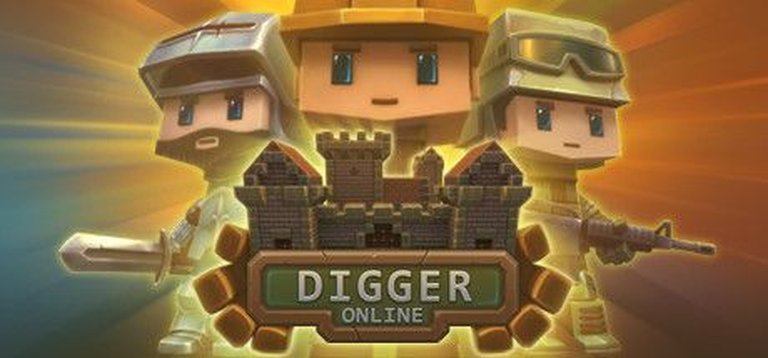
Digger Online is a free-to-play sandbox game set in an open-world fantasy environment, drawing inspiration from Minecraft. Players can dig, place, and build using over 250 types of blocks, customize their world with 100+ scenery items, and choose from 25 characters across eight distinct game modes. Originally a browser-based game, it later expanded to PC, offering both solo and multiplayer experiences where players can collaborate or compete on online servers. The game emphasizes creativity and exploration, blending action, RPG elements, and direct control mechanics in a first-person or behind-view perspective.
Where to Buy Digger Online
PC
Digger Online Guides & Walkthroughs
Digger Online Reviews & Reception
steambase.io (49/100): Digger Online has earned a Player Score of 49 / 100.
Digger Online Cheats & Codes
PC
Enter these at the password screen
| Code | Effect |
|---|---|
| OLIVHZ | Level 01 |
| GEZCYL | Level 02 |
| EUQSVK | Level 03 |
| HMKRIO | Level 04 |
| JMNHFN | Level 05 |
| HUGJNR | Level 06 |
| VILROR | Level 07 |
| JMMJCH | Level 08 |
| JVLIAA | Level 09 |
| BDQDWX | Level 10 |
| IIGAQD | Level 11 |
| XCAWMI | Level 12 |
| HUNJDA | Level 13 |
| HSBVEE | Level 14 |
| CLZQGK | Level 15 |
| ECWCAW | Level 16 |
| ACVQVO | Level 17 |
| ZJGRUJ | Level 18 |
| EQWGMZ | Level 19 |
| BPQFFT | Level 20 |
| QVORPZ | Level 21 |
| IEMVZM | Level 22 |
| DOTSAL | Level 23 |
| ZNTNGA | Level 24 |
| ZTFMKZ | Level 25 |
| AUAEGR | Level 26 |
| DASFCE | Level 27 |
| XCSGIW | Level 28 |
| IRZLWN | Level 29 |
| EIJWAQ | Level 30 |
| TLUIAA | Level 31 |
| BBATLW | Level 32 |
Digger Online: A Forgotten Sandbox Experiment in the Shadow of Minecraft
Introduction: The Unlikely Contender in a Post-Minecraft World
In the annals of gaming history, few titles have cast as long a shadow as Minecraft. Its blocky, procedurally generated worlds redefined sandbox gameplay, inspiring countless imitators—some successful, others forgotten. Digger Online (2011) falls into the latter category: a browser-based, multiplayer sandbox that dared to challenge the titan of voxel-based creativity. Yet, despite its ambitious scope—boasting 250+ block types, 100+ scenery items, and eight distinct game modes—it remains a footnote, a curiosity buried beneath the weight of its own obscurity.
This review seeks to excavate Digger Online from the digital sediment of gaming history, examining its development, mechanics, and legacy. Was it a bold innovator, a shameless clone, or something more nuanced? By dissecting its design, reception, and cultural impact, we’ll determine whether Digger Online deserves rediscovery—or if its obscurity is a mercy.
Development History & Context: A Legacy of Digging
The Original Digger and Its Arcadian Roots
Before Digger Online, there was Digger—a 1983 IBM PC classic by Windmill Software. A spiritual successor to arcade hits like Dig Dug and Mr. Do!, the original Digger tasked players with navigating underground mazes, collecting emeralds, and outsmarting monsters. Its simple yet addictive gameplay, paired with a memorable soundtrack (including Popcorn and William Tell Overture), cemented it as a cult favorite.
The game’s legacy persisted through remakes:
– 1998’s Digger Remastered by Andrew Jenner, a reverse-engineered, open-source revival.
– 2011’s Digger HD by Creat Studios, a PlayStation 3 enhancement.
– 2015’s Digger Online, a radical departure into sandbox multiplayer.
The Rise of Sandbox Games and Digger Online’s Birth
By 2011, Minecraft had already reshaped gaming. Its alpha release in 2009 and full launch in 2011 demonstrated the hunger for open-ended creativity. Digger Online, developed by DiggerWorld Ltd., emerged as a browser-based alternative, leveraging the accessibility of web gaming while attempting to carve its own niche.
Key developmental constraints:
– Technological Limitations: As a browser game, it relied on early HTML5 and JavaScript, limiting graphical fidelity.
– Market Saturation: Competing with Minecraft’s modding community and Terraria’s polished 2D sandbox was a Herculean task.
– Monetization Model: Initially freeware, it later transitioned to a paid Steam release (2015), alienating early adopters.
The Vision: What Was Digger Online Trying to Be?
The developers envisioned a hybrid:
– A social sandbox, emphasizing multiplayer collaboration.
– A creative tool, with extensive block variety (250+ types) and scenery options.
– A flexible experience, offering eight game modes (though details remain scarce).
Yet, its identity crisis was evident. Was it a Minecraft clone? A spiritual successor to the 1983 Digger? A unique experiment? The answer, as we’ll see, is a muddled “all and none.”
Narrative & Thematic Deep Dive: The Absence of Story
A Sandbox Without a Soul
Digger Online is, at its core, a narrative void. Unlike Minecraft’s subtle environmental storytelling (e.g., abandoned mineshafts, the End’s eerie finality) or Terraria’s boss-driven progression, Digger Online offers no lore, no history—just blocks and digging.
This raises a critical question: Is a sandbox game’s lack of narrative a flaw or a feature?
- Proponents of “Pure Sandbox” Design argue that games like Digger Online empower players to create their own stories.
- Critics counter that even Minecraft’s minimalist narrative (e.g., the Ender Dragon’s implied threat) provides direction.
Digger Online’s failure to engage thematically is its greatest weakness. Without even a rudimentary framework (e.g., survival mechanics, quests, or environmental hints), it feels sterile—a digital Lego set without instructions or inspiration.
The Fantasy Setting: A Missed Opportunity
The game’s MobyGames listing describes its setting as “Fantasy”, yet this is never explored. Where are the mythical creatures? The ruined castles? The dungeons? Even Minecraft’s “fantasy” elements (Nether fortresses, End Cities) are more developed.
Comparison to Competitors:
| Game | Narrative Depth | Thematic Cohesion | Player-Driven Storytelling |
|---|---|---|---|
| Minecraft | Minimalist | Strong | Excellent |
| Terraria | Moderate | Strong | Good |
| Digger Online | None | Weak | Poor |
Gameplay Mechanics & Systems: Digging Into the Design
Core Gameplay Loop: Familiar Yet Flawed
Digger Online’s mechanics are straightforward:
1. Dig (left-click) to remove blocks.
2. Place (right-click) to build.
3. Jump and move in a first-person or behind-view perspective.
Strengths:
– Intuitive Controls: The two-button system (dig/place) is accessible.
– Block Variety: 250+ block types suggest depth, though many feel redundant.
Weaknesses:
– Lack of Progression: No crafting trees, tech unlocks, or survival elements.
– Shallow Multiplayer: While servers exist, interactions are limited to basic building.
– Repetitive Game Modes: The eight modes (e.g., creative, survival) lack distinction.
Combat and Character Systems: An Afterthought
Unlike Minecraft’s mobs or Terraria’s boss fights, Digger Online’s combat is nonexistent. The 25 listed “characters” are likely NPCs or cosmetic options, but their role is unclear. Without enemies, threats, or goals, the game feels hollow.
UI and Technical Performance: A Relic of Its Era
As a browser game, Digger Online suffered from:
– Clunky Performance: Early HTML5 limitations caused lag.
– Outdated Aesthetics: Blocky visuals lacked Minecraft’s charm.
– Poor Optimization: The 2015 Steam port did little to improve stability.
World-Building, Art & Sound: A Barren Landscape
Visual Design: Functional but Forgettable
Digger Online’s art style is utilitarian:
– Blocks are colorful but lack texture variation.
– Environments are procedurally generated but feel generic.
– Characters are simplistic, with no animations or personality.
Comparison to Minecraft:
– Minecraft’s pixel art has a handcrafted feel, even in its randomness.
– Digger Online’s world feels algorithmically cold.
Sound Design: The Silence of the Voids
No soundtrack. No ambient noise. No creature sounds. The game is audibly barren, reinforcing its lack of atmosphere.
Reception & Legacy: The Game That Time Forgot
Critical and Commercial Reception: A Mixed Bag
- Steam Reviews (2026): 49/100 (Mixed), with 8,730 positive vs. 9,168 negative reviews.
- Player Retention: PlayTracker estimates ~663K owners but ~0K active players—a ghost town.
- Metacritic: No critic reviews, indicating negligible press coverage.
Why the Backlash?
1. Lack of Innovation: Players saw it as a cheap Minecraft clone.
2. Technical Issues: Bugs and poor optimization plagued the Steam release.
3. No Unique Hook: Without survival mechanics, quests, or modding support, it offered nothing new.
Legacy: A Footnote in Sandbox History
Digger Online’s influence is nonexistent. It didn’t inspire clones, modding communities, or even memes. Its only legacy is as a cautionary tale—proof that even in a post-Minecraft world, creativity (not just block variety) is key.
Conclusion: A Game Buried by Its Own Ambitions
Digger Online is a flawed experiment—a game that understood the mechanics of sandbox design but failed to grasp its soul. Without narrative, progression, or polish, it’s a digital wasteland, a monument to missed potential.
Final Verdict: 4/10 – “A Forgotten Relic”
Who Should Play It?
– Historical curiosity seekers interested in Minecraft’s lesser-known contemporaries.
– Patients of nostalgia who remember the original Digger and want to see its evolution.
Who Should Avoid It?
– Anyone expecting depth, challenge, or innovation.
– Fans of Minecraft or Terraria—this is a pale imitation.
Digger Online is not a bad game—it’s an empty one. In the grand tapestry of gaming history, it’s a loose thread, easily pulled and discarded. Yet, in its obscurity, it serves as a reminder: not all who dig find gold.
Final Thought:
If Minecraft is a masterpiece of emergent storytelling, Digger Online is a blank canvas with no paint. And in gaming, as in art, a blank canvas is just an unfinished work.