
- Release Year: 2007
- Platforms: Macintosh, Windows
- Publisher: Tabula Digita, Inc.
- Developer: Mind Control Software, LLC
- Genre: Action, Educational
- Perspective: 1st-person
- Game Mode: Single-player
- Gameplay: logic, Math, Shooter
- Setting: Futuristic, Sci-fi
- Average Score: 90/100
Description
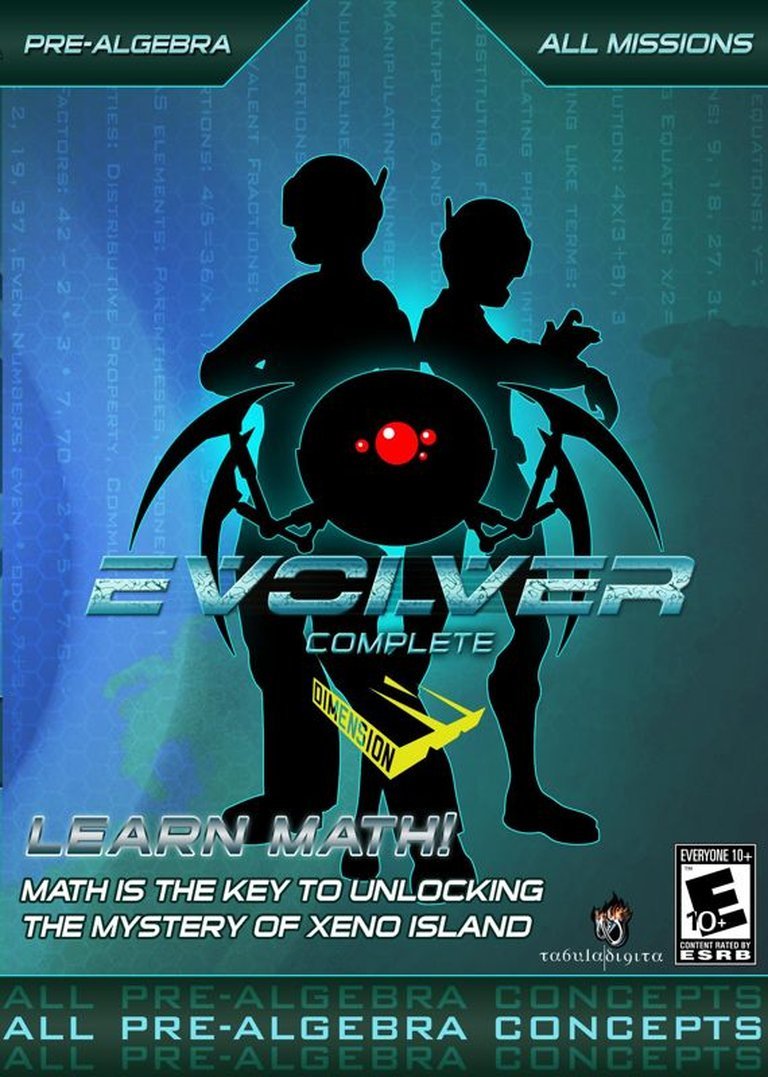
Dimension M: Evolver is an educational first-person shooter set in a sci-fi world where players take on the role of a scientist sent to Xeno Island to rescue the missing daughter of a brilliant researcher. The game blends action-packed combat with pre-algebra learning, tasking players with solving math-based puzzles, using a visor to identify objects with correct values, and battling infected creatures while navigating a futuristic setting. Inspired by classic shooters like DOOM and Unreal, it offers a unique mix of gameplay and educational content designed to engage players in mathematical problem-solving.
Gameplay Videos
Dimension M: Evolver Free Download
Dimension M: Evolver Reviews & Reception
myabandonware.com (90/100): Thank you to whoever preserved this game. Its a really big nostalgia trip being able to play it!
retro-replay.com : Dimension M: Evolver delivers a unique blend of first-person shooter action and educational puzzles, placing you in the shoes of a scientist sent to Xeno Island.
Dimension M: Evolver: A Pioneering Fusion of Education and Action
Introduction
In the annals of video game history, few titles have dared to bridge the chasm between entertainment and education as boldly as Dimension M: Evolver. Released in May 2007 by Tabula Digita and developed by Mind Control Software, this first-person shooter (FPS) defied conventions by embedding pre-algebra concepts into its core gameplay loop. At a time when “edutainment” was often synonymous with dry, uninspired software, Dimension M: Evolver emerged as a rare beast: a game that genuinely attempted to make learning fun—not just palatable, but exhilarating. This review seeks to dissect the game’s ambitious design, its place in the gaming landscape of the mid-2000s, and its lasting impact on the intersection of education and interactive media.
Development History & Context
The Studio and Vision
Dimension M: Evolver was the brainchild of Robert Clegg, who served as both the game’s creator and executive producer. Clegg’s vision was clear: to craft an educational experience that could stand shoulder-to-shoulder with mainstream FPS titles like DOOM and Unreal, while simultaneously teaching mathematical concepts. This was no small feat. The game was developed by Mind Control Software, LLC, a studio that specialized in blending entertainment with educational content. Tabula Digita, the publisher, was equally invested in the project, positioning Dimension M: Evolver as the flagship title in their DimensionU series—a platform aimed at revolutionizing how students engaged with STEM subjects.
The game’s development coincided with a period of rapid evolution in the gaming industry. The mid-2000s saw the rise of immersive, narrative-driven shooters like Half-Life 2 and Halo 2, which set new standards for storytelling and gameplay depth. Meanwhile, the educational gaming sector was dominated by titles that often prioritized pedagogy over playability, resulting in experiences that felt more like digital textbooks than games. Dimension M: Evolver sought to challenge this paradigm by leveraging the Torque Game Engine, a versatile tool that had powered games like Tribes 2 and Marble Blast Ultra. The choice of engine was strategic—it allowed the developers to create a visually appealing and mechanically sound FPS while integrating educational mechanics without sacrificing performance.
Technological Constraints and Innovations
The game’s development was not without its challenges. The Torque engine, while powerful, required careful optimization to ensure that the educational components—such as the visor mode and number line puzzles—did not disrupt the flow of combat. The team also had to contend with the hardware limitations of the era. The minimum system requirements (a Pentium 4 CPU, 128 MB of RAM, and a 32 MB graphics card) reflect the game’s modest technical demands, but these constraints forced the developers to be creative. The result was a game that ran smoothly on mid-range PCs of the time, making it accessible to schools and households alike.
One of the most innovative aspects of Dimension M: Evolver was its dual-release strategy. Initially distributed as shareware, the game allowed players to download mission packs online, with new content rolled out periodically. This approach not only kept the game fresh but also enabled the developers to gather feedback and refine the educational components. Later, all 20 missions were compiled into a single installer and released on CD-ROM, ensuring that the game could reach a wider audience, including those with limited internet access.
Narrative & Thematic Deep Dive
Plot and Setting
Dimension M: Evolver casts players as a scientist dispatched to Xeno Island, a remote research facility where a biotech program has gone catastrophically awry. The primary objective is to locate the missing daughter of Robert Clay, the brilliant but enigmatic scientist overseeing the project. The island, once a hub of cutting-edge research, is now overrun by mutated creatures—failed experiments that have turned hostile. As players explore the island’s diverse environments (from overgrown labs to fungal groves), they uncover audio logs, lab notes, and holographic recordings that piece together the story of Clay’s ambition, the ethical dilemmas of his work, and the fate of his daughter.
The narrative is straightforward but effective, serving as a vehicle for the game’s educational goals. Each clue uncovered not only advances the plot but also introduces a new mathematical challenge. For instance, deciphering a lab note might reveal a coordinate on a number line, which players must then input to unlock a door. This seamless integration of story and gameplay ensures that the educational content never feels tacked-on; instead, it is woven into the fabric of the experience.
Characters and Dialogue
The game’s characters are sparse but memorable. Robert Clay is the central figure, a scientist whose recorded messages convey a mix of desperation and determination. His dialogue, delivered via holograms and audio logs, provides context for the island’s downfall and the whereabouts of his daughter. Other characters, such as surviving lab technicians, appear sporadically, offering additional clues and deepening the mystery. While the voice acting is functional rather than exceptional, it serves its purpose, grounding the player in the game’s world.
The true star of the narrative, however, is the island itself. Xeno Island is a character in its own right—a place of both wonder and danger. The environmental storytelling is particularly strong, with abandoned labs, overgrown research facilities, and eerie experimental chambers all hinting at the catastrophic events that unfolded. The game’s ability to convey its story through both explicit dialogue and implicit environmental cues is one of its greatest strengths.
Themes
At its core, Dimension M: Evolver explores themes of scientific ethics, responsibility, and the consequences of unchecked ambition. Robert Clay’s research, while groundbreaking, ultimately leads to disaster, raising questions about the limits of scientific inquiry. The game also touches on the power of education and problem-solving, framing mathematical literacy as a tool for survival. In a world overrun by mutated creatures, the player’s ability to solve algebra problems is just as crucial as their combat skills—a clever metaphor for the importance of critical thinking in real-world challenges.
Gameplay Mechanics & Systems
Core Gameplay Loop
Dimension M: Evolver is, at its heart, a first-person shooter with a twist: every combat encounter and exploration segment is intertwined with mathematical puzzles. The core gameplay loop can be broken down as follows:
- Exploration: Players navigate Xeno Island, uncovering clues and locating objects that advance the story.
- Puzzle-Solving: Using the visor mode, players scan the environment to identify objects with specific numerical values. These values are then used to solve equations, manipulate number lines, or unlock doors.
- Combat: Armed with an arsenal of futuristic weapons, players engage in firefights with mutated creatures. Combat is fast-paced and reminiscent of classic shooters like DOOM, with a variety of enemy types that require different tactics.
- Progression: Solving puzzles and defeating enemies unlocks new areas, weapons, and story beats, driving the player forward.
This loop is repeated throughout the game’s 20 missions, with each mission introducing new mathematical concepts and combat challenges. The balance between action and education is carefully maintained, ensuring that neither element overshadows the other.
Combat and Weapons
The combat in Dimension M: Evolver is designed to be accessible yet engaging. The game features a modest arsenal of weapons, each with distinct properties:
- Energy Pistol: A basic weapon with unlimited ammo, ideal for early-game encounters.
- Rail Gun: A high-powered weapon that deals significant damage but has a slow rate of fire.
- Analysis Beam: A unique tool that temporarily slows enemies while highlighting algebraic cues in the environment.
Enemy design is varied, with creatures ranging from small, fast-moving mutants to larger, more formidable foes. Each enemy type requires a different approach, encouraging players to switch between weapons and tactics. The combat is fluid and responsive, with controls that will feel familiar to fans of classic FPS games.
Educational Mechanics
The game’s educational components are its most innovative feature. The visor mode is the primary tool for solving mathematical puzzles. When activated, the visor overlays the environment with numerical values, equations, and number lines. Players must use these cues to solve problems, such as:
- Finding Objects with Specific Values: Players scan the environment to locate objects whose numerical values satisfy a given equation.
- Manipulating Number Lines: Players adjust a virtual number line to match a target value, unlocking doors or activating machinery.
- Coordinate-Based Puzzles: Players identify coordinates on a grid to locate hidden items or solve environmental challenges.
These mechanics are introduced gradually, with early missions focusing on basic arithmetic and later missions incorporating more complex algebra concepts. The difficulty is adjustable, allowing players to tailor the experience to their skill level.
Character Progression and UI
Character progression in Dimension M: Evolver is tied to both combat and puzzle-solving. As players complete missions, they unlock new weapons, upgrades, and abilities that enhance their effectiveness in both areas. The game’s UI is designed to be intuitive, with the visor mode providing clear, unobtrusive overlays that guide players through the mathematical challenges. The heads-up display (HUD) is minimal, ensuring that the focus remains on the action and the environment.
World-Building, Art & Sound
Setting and Atmosphere
Xeno Island is a masterclass in environmental design. The game’s setting is divided into several distinct regions, each with its own visual identity and atmospheric tone:
- Overgrown Labs: Abandoned research facilities reclaimed by nature, with vines creeping over broken equipment and flickering lights casting eerie shadows.
- Fungal Groves: Bioluminescent forests where mutated flora pulses with otherworldly energy, creating a surreal and unsettling atmosphere.
- High-Tech Complexes: Pristine, futuristic labs where the remnants of Clay’s research lie scattered, offering glimpses into the island’s past.
The game’s art direction strikes a balance between realism and stylization, with a color palette that shifts from the muted greens of the overgrown areas to the stark whites and blues of the high-tech labs. The result is a world that feels both alien and familiar, a place where science and nature have collided with catastrophic results.
Visual Design and Creatures
The creature design in Dimension M: Evolver is a standout feature. The mutated experiments are visually striking, with bioluminescent veins, distorted limbs, and fluid animations that emphasize their unnatural origins. Each creature type has a distinct appearance and behavior, ensuring that combat encounters remain visually engaging. The environmental hazards, such as crackling energy conduits and toxic bogs, are equally well-designed, providing both visual interest and gameplay challenges.
Sound Design and Music
The game’s sound design complements its visuals, with ambient noises that enhance the atmosphere of each region. The overgrown labs are filled with the creaking of metal and the distant scuttling of creatures, while the fungal groves pulse with eerie, organic sounds. The combat audio is equally effective, with weapon sounds that pack a punch and enemy vocalizations that add to the tension.
The music, composed by Irwin, is understated but effective. The score shifts between tense, ambient tracks during exploration and more rhythmic, action-oriented pieces during combat. While the music may not be as memorable as the visuals, it serves its purpose, reinforcing the game’s mood without overpowering the experience.
Reception & Legacy
Critical and Commercial Reception
Dimension M: Evolver received a mixed but generally positive reception upon its release. The game’s average score of 3.1 out of 5 on MobyGames reflects its niche appeal—it was neither a mainstream hit nor a critical darling, but it found a dedicated audience among educators, parents, and gamers interested in edutainment. The game’s greatest strength—its seamless integration of education and action—was also its greatest limitation. While praised for its innovative approach, some critics felt that the educational components could disrupt the flow of combat, particularly for players more interested in the shooter aspects.
Commercially, the game performed modestly. Its shareware distribution model and later CD-ROM release ensured that it reached a wide audience, but it never achieved the sales figures of mainstream FPS titles. However, its impact was felt more keenly in educational circles, where it was hailed as a groundbreaking tool for teaching mathematics in an engaging, interactive format.
Influence and Evolution
Dimension M: Evolver’s legacy lies in its role as a pioneer in the edutainment genre. The game demonstrated that educational content could be integrated into a compelling, action-packed experience without sacrificing either element. Its success (or lack thereof) in the commercial market highlighted the challenges of marketing educational games to a broader audience, but it also paved the way for future titles that sought to blend learning with entertainment.
The game’s influence can be seen in later educational shooters, such as Dimenxian, another title in the DimensionU series. While Dimenxian is now considered lost media, its existence underscores the impact of Dimension M: Evolver on the genre. The game also inspired a wave of indie developers to explore the potential of educational gaming, leading to titles like Portal (which, while not strictly educational, emphasizes problem-solving and critical thinking) and Kerbal Space Program (which teaches physics and engineering concepts through gameplay).
Conclusion
Dimension M: Evolver is a fascinating artifact of its time—a game that dared to challenge the boundaries of what educational software could be. By blending the adrenaline-pumping action of a first-person shooter with the cerebral challenges of pre-algebra, it created an experience that was both unique and ambitious. While it may not have achieved mainstream success, its impact on the edutainment genre is undeniable.
The game’s greatest achievement is its ability to make learning fun. The mathematical puzzles are not merely tacked onto the gameplay; they are integral to it, driving the story forward and unlocking new areas. The combat is engaging, the world is immersive, and the narrative is compelling, all of which combine to create an experience that is greater than the sum of its parts.
In the grand tapestry of video game history, Dimension M: Evolver occupies a niche but important place. It is a testament to the power of interactive media as a tool for education, and a reminder that games can be both entertaining and enlightening. For educators, parents, and gamers alike, it remains a pioneering example of how to blend learning with play—and a challenge to future developers to push the boundaries even further.
Final Verdict: 7.5/10 – A bold and innovative fusion of education and action that, while not without its flaws, remains a landmark in the edutainment genre.