
- Release Year: 2018
- Platforms: Windows
- Publisher: Grade 9 Games
- Developer: Grade 9 Games
- Genre: Action
- Perspective: Diagonal-down
- Game Mode: Single-player
- Gameplay: Shooter
Description
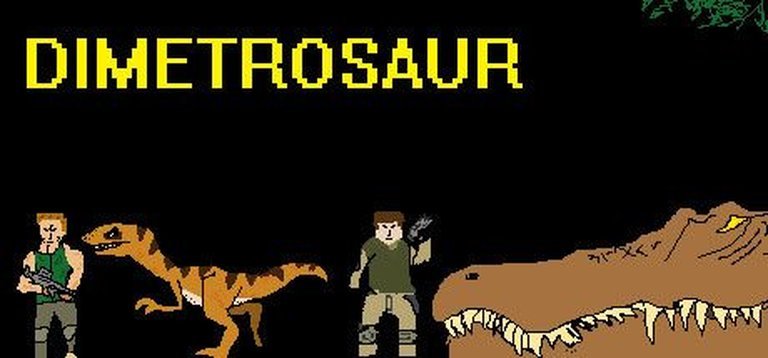
Dimetrosaur is a fast-paced, top-down shooter game released in 2018 for Windows. Developed by Grade 9 Games, it features 2D scrolling action where players navigate through dynamic environments, battling enemies and overcoming challenges in a diagonal-down perspective. The game is part of a series, with a sequel released in 2020, and is available for purchase on Steam.
Where to Buy Dimetrosaur
PC
Dimetrosaur Cracks & Fixes
Dimetrosaur Guides & Walkthroughs
Dimetrosaur: A Prehistoric Shooter Lost in Time
Introduction: The Forgotten Dinosaur of Indie Shooters
In the vast, ever-expanding ecosystem of indie games, Dimetrosaur (2018) is a curious fossil—a relic of a bygone era of simple, arcade-inspired shooters that somehow slipped through the cracks of gaming history. Developed and published by the obscure Grade 9 Games, this diagonal-down 2D shooter is a bizarre, charming, and deeply flawed experiment that defies easy categorization. It’s a game that feels simultaneously nostalgic and out of place, a throwback to the early 2000s flash-game scene yet released in an era dominated by polished roguelikes and battle royales.
At its core, Dimetrosaur is a top-down (or rather, diagonal-down) shooter where players control a diminutive dinosaur armed with an assortment of weapons, battling through waves of enemies in a surreal, pixelated world. But beneath its rudimentary presentation lies a game that is unapologetically weird, blending retro aesthetics with an almost surrealist sense of humor. It’s the kind of game that feels like it was made in a vacuum, untouched by modern design trends, and that’s both its greatest strength and its most glaring weakness.
This review will dissect Dimetrosaur in exhaustive detail—its development, its mechanics, its bizarre narrative (or lack thereof), and its place in gaming history. By the end, we’ll determine whether it’s a hidden gem worth excavating or a prehistoric relic best left buried.
Development History & Context: A One-Person Passion Project
The Studio Behind the Game: Grade 9 Games
Dimetrosaur was developed by Grade 9 Games, a microscopic indie studio with virtually no digital footprint outside of this title and its 2020 sequel, Dimetrosaur 2. The studio’s origins are shrouded in mystery—there are no interviews, no developer diaries, and no post-mortems. What little we know comes from the game’s Steam page and MobyGames entry, which reveal that Dimetrosaur was a solo or small-team passion project, likely created with minimal budget and even less marketing.
This obscurity is both fascinating and telling. In an era where indie developers often rely on Kickstarter campaigns, Early Access hype, and social media presence, Dimetrosaur emerged fully formed in 2018 with no fanfare, priced at a mere $0.99—a deliberate throwback to the days of shareware and bargain-bin PC games. Its existence feels almost anachronistic, as if it were teleported from 2003 into the modern gaming landscape.
Technological Constraints & Design Philosophy
Given its 2D diagonal-down perspective, Dimetrosaur evokes classic arcade shooters like Robotron: 2084 (1982) and Geometry Wars (2003), but with a deliberately lo-fi aesthetic. The game’s visuals are blocky, pixelated, and minimalist, suggesting that it was either:
– A retro homage designed to mimic early 2000s flash games, or
– A technically limited project, possibly built in a simple engine like GameMaker Studio or Construct.
The diagonal-down perspective (a rare choice in modern shooters) adds a unique twist, forcing players to reorient their spatial awareness. This decision may have been purely stylistic, but it also introduces an unintuitive control scheme that feels deliberately disorienting.
The Gaming Landscape in 2018: A Dinosaur in a World of Giants
2018 was a monumental year for indie games, with critically acclaimed titles like:
– Celeste (precision platforming)
– Dead Cells (roguelike Metroidvania)
– Into the Breach (turn-based strategy)
– Return of the Obra Dinn (narrative-driven detective work)
In this environment, Dimetrosaur was completely overshadowed. It lacked:
– Modern QOL features (checkpoints, difficulty options, controller support)
– A strong marketing push (no trailers, no press coverage)
– A clear audience (too simple for hardcore gamers, too niche for casual players)
Yet, in its own way, Dimetrosaur is a time capsule—a game that refuses to conform to contemporary trends, instead embracing the raw, unpolished charm of early indie experimentation.
Narrative & Thematic Deep Dive: A Story Told in Grunts and Bullets
Plot (Or Lack Thereof)
Dimetrosaur has no traditional narrative. There is:
– No dialogue
– No cutscenes
– No lore dumps
Instead, the “story” is conveyed through:
– Environmental storytelling (if you can call it that)
– Enemy design (dinosaurs, robots, and abstract geometric foes)
– A vague sense of progression (you shoot things until you win)
The game’s Steam description offers little clarification:
“Play as a small dinosaur and shoot your way through waves of enemies!”
This minimalist approach is either:
– A bold artistic choice, stripping away distractions to focus on pure gameplay, or
– A sign of underdevelopment, where narrative was an afterthought.
Themes: Absurdity, Survival, and the Indie Spirit
Despite its lack of explicit storytelling, Dimetrosaur radiates themes through its gameplay and aesthetics:
1. Absurdity & Surrealism
– The game’s mashup of dinosaurs, robots, and abstract shapes creates a dreamlike, almost Dadaist experience.
– Enemies spawn unpredictably, weapons behave erratically, and the world lacks logical cohesion—mirroring the chaos of indie development itself.
-
Survival Against Odds
- The player’s tiny dinosaur is constantly outnumbered and outgunned, reinforcing a David vs. Goliath dynamic.
- The lack of health pickups or checkpoints (in some modes) makes every run feel like a desperate struggle for survival.
-
Nostalgia & the Indie Ethos
- The game feels like a lost flash game from Newgrounds or Kongregate, evoking memories of early 2000s browser gaming.
- Its rough edges are a rejection of AAA polish, embracing the “good enough” philosophy of bedroom coders.
Characters & “Dialogue”
There are no named characters, but the player’s dinosaur is the closest thing to a protagonist. Its design is intentionally crude—a small, green, pixelated creature that grunts when hit and fires weapons with no recoil.
Enemies include:
– Other dinosaurs (T-Rexes, raptors)
– Robots (floating drones, turrets)
– Geometric shapes (squares, triangles—possibly placeholders?)
The lack of personality in enemies reinforces the game’s abstract, arcade-like nature—they exist only to be destroyed, with no deeper meaning.
Gameplay Mechanics & Systems: A Shooter Stuck in the Past
Core Gameplay Loop: Shoot, Survive, Repeat
Dimetrosaur is, at its heart, a score-chasing arcade shooter. The loop is simple:
1. Move (WASD or arrow keys)
2. Shoot (mouse click)
3. Avoid enemies (or tank hits if you’re brave)
4. Survive as long as possible
There is no campaign, no levels, and no boss fights—just endless waves in a single arena.
Combat & Weaponry: Chaos by Design
The game features multiple weapons, each with distinct behaviors:
– Basic Gun – Rapid-fire, low damage
– Shotgun – Wide spread, short range
– Laser – Piercing, high damage
– Rocket Launcher – Explosive, slow
However, weapon balance is erratic:
– Some guns feel overpowered (Laser)
– Others feel useless (Basic Gun in later waves)
– No weapon switching mid-combo, forcing players to commit to a playstyle
Character Progression: Nonexistent
Unlike modern shooters (Enter the Gungeon, Nuclear Throne), Dimetrosaur has:
– No permanent upgrades
– No unlockable characters
– No skill trees
The only progression is score-based, with no tangible rewards—a pure arcade experience that punishes mastery with nothing but numbers.
UI & Controls: Functional, But Clunky
The HUD is minimalist:
– Health bar (top-left)
– Score (top-right)
– Weapon icon (bottom-center)
Controls are serviceable but imprecise:
– Movement is floaty, making dodging difficult
– Aiming is mouse-based, but hitboxes feel inconsistent
– No controller support (a major oversight in 2018)
Innovative or Flawed Systems?
Innovative:
✅ Diagonal-down perspective – A rare and disorienting twist on top-down shooters.
✅ Surreal enemy design – The mix of dinosaurs and robots is uniquely bizarre.
✅ No hand-holding – A brutal, old-school approach to difficulty.
Flawed:
❌ No difficulty options – The game is punishingly hard with no adjustments.
❌ Repetitive gameplay – No variety in enemies or environments.
❌ Lack of polish – Buggy hit detection, no save system, and no replay value.
World-Building, Art & Sound: A Pixelated Fever Dream
Setting & Atmosphere: A Dinosaur in a Digital Void
Dimetrosaur takes place in a featureless arena, surrounded by floating platforms and abstract backgrounds. The world lacks detail, but that’s part of its surreal charm—it feels like a glitch in the Matrix, a place where dinosaurs and robots coexist without explanation.
The color palette is limited (mostly greens, blues, and reds), reinforcing its retro aesthetic.
Visual Design: Deliberately Crude
The pixel art is rough, with:
– Blocky sprites
– Minimal animation (enemies often just slide or teleport)
– No lighting effects
This lack of polish could be:
– A stylistic choice (embracing low-fi indie aesthetics)
– A technical limitation (the developer may not have had artistic resources)
Sound Design: Beeps, Boops, and Silence
The audio is just as minimalist as the visuals:
– Gunfire sounds (basic pew-pew effects)
– Enemy death noises (squishes, explosions)
– No music (just ambient silence)
The lack of a soundtrack is jarring—most shooters rely on pulsing electronic beats to drive tension, but Dimetrosaur leans into eerie quiet, making the gunfire and grunts feel isolated and desperate.
Reception & Legacy: The Game That Time Forgot
Critical & Commercial Reception: A Ghost in the Machine
Dimetrosaur received virtually no coverage upon release. As of 2025:
– No major reviews (IGN, GameSpot, PC Gamer ignored it)
– No Steam user reviews (despite being on sale since 2018)
– No Let’s Plays or speedruns (a rarity for even obscure indie games)
Its MobyGames page has no critic or player reviews, and its Steam store page is barebones, with no screenshots beyond the default banner.
Why was it ignored?
– No marketing – Grade 9 Games did not promote it.
– No hook – It didn’t stand out in a crowded market.
– No accessibility – No controller support, no difficulty options, no modern QOL features.
Legacy: A Footnote in Indie History
Dimetrosaur is not influential—it didn’t spawn imitators, nor did it push the shooter genre forward. However, it represents something important:
– The unfiltered creativity of solo indie developers.
– The struggle of obscurity in an oversaturated market.
– The charm of “bad” games that defy conventional design.
Its 2020 sequel, Dimetrosaur 2, suggests that someone cared enough to make another one, but it too faded into obscurity.
Cult Potential? The Case for a Rediscovery
Could Dimetrosaur ever gain a cult following? Possibly, if:
– Retro gaming YouTubers (like MandaloreGaming or Ahoy) covered it.
– Speedrunners found exploits or glitches to optimize.
– Indie preservationists (like The Obscuritory) documented it.
For now, it remains a digital fossil—a game that exists, but is rarely played.
Conclusion: A Flawed, Fascinating Relic
Dimetrosaur is not a good game by modern standards. It is:
– Repetitive
– Unpolished
– Lacking in depth
Yet, it is also fascinating—a time capsule of indie game development at its rawest. It rejects trends, embracing chaos, and exists purely for its own sake.
Final Verdict: 5/10 – A Curio for the Adventurous
Who should play it?
– Retro shooter enthusiasts who love obscure arcade games.
– Indie historians documenting forgotten gems.
– Masochists who enjoy punishing, score-based challenges.
Who should avoid it?
– Casual gamers looking for accessibility or story.
– Modern shooter fans expecting progression or variety.
– Anyone who needs polish—this is rough around every edge.
Dimetrosaur is not a masterpiece, but it is a piece of history—a dinosaur in the gaming ecosystem, waiting to be discovered by those willing to dig.
Final Score: ★★★☆☆ (3/5) – A Flawed, Forgotten Experiment
Would I recommend it? Only to the most curious of gamers. But in a world where every indie game strives for perfection, Dimetrosaur stands as a reminder that sometimes, the weirdest, messiest creations are the most interesting.
Now, if you’ll excuse me, I’m going to fire up the laser and see how long I can survive before the robots inevitably crush me.
Game over. Try again?