
- Release Year: 1999
- Platforms: Windows
- Publisher: Akella, Empire Interactive Entertainment, Koch Media AG, Austria, UniqueGames Publishing GmbH
- Developer: heart-line Software GmbH
- Genre: Simulation, Sports
- Perspective: 1st-person, Top-down
- Game Mode: Hotseat, Single-player
- Gameplay: Business simulation, Managerial
- Setting: Football, Real-world
- Average Score: 85/100
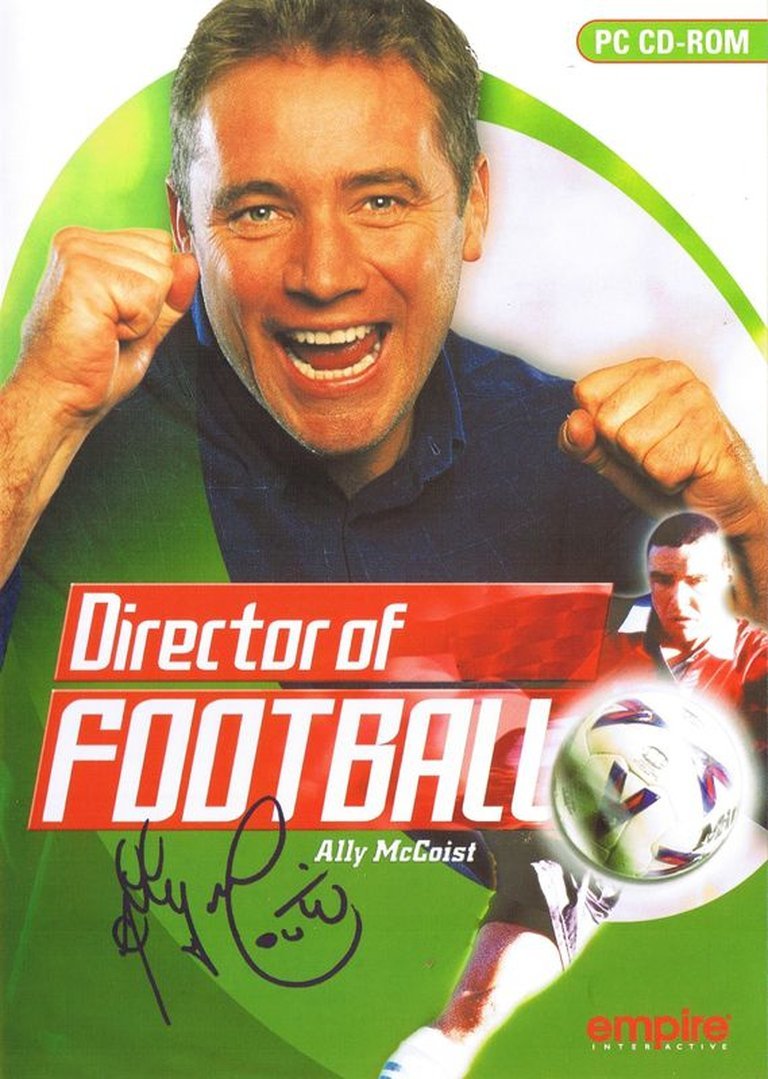
Description
Director of Football is a 1999 football management simulation game where players assume the role of a club director, responsible for all aspects of team operations including squad tactics, player contracts, financial management, and stadium development across major European leagues like England, France, Italy, and Spain, with extensive customization through a built-in editor for creating custom leagues and randomized game elements.
Where to Buy Director of Football
Director of Football Guides & Walkthroughs
Director of Football Reviews & Reception
store.steampowered.com (85/100): Get started and never stop again – the football manager is one of those rare games that applies.
Director of Football: Review
Introduction: The Managerial Crossroads
In the late 1990s, the football management simulation genre stood at a pivotal juncture. British stalwarts like Championship Manager dominated the conversation with their notorious depth and text-driven approach, while German developers carved a distinct niche with titles that fused tactical nuance with economic stewardship. Into this arena stepped Director of Football—a game that would wear its Teutonic heritage proudly, yet struggle to find a unified voice in an increasingly globalized market. Released in November 1999 by heart-line Software GmbH (later Greencode), this title—known variously as kicker FUSSBALLmanager, Telefoot Manager 2002, and under its Anglo-centric moniker Director of Football—embodied the ambitious, if uneven, spirit of the “German school.” It promised a holistic simulation where balancing books was as crucial as balancing formations, yet its execution revealed a project caught between the pixelated past and the animated future. This review posits that Director of Football is not merely a footnote in management sim history but a vivid case study in design ambition clashing with technological constraint—a game whose intricate systems and charming idiosyncrasies earn it a peculiar, enduring respect, even as its flaws prevent it from ascending to the genre’s pantheon.
Development History & Context: The Heart-line Legacy
Studio and Vision:
Director of Football emerged from heart-line Software GmbH, a German studio with a focused pedigree in football management games. The core design team—Werner Krahe, Jens Onnen, and Andreas Niedermeier—had previously helmed Kurt: Der Fussballmanager ’99, released mere months earlier. This rapid successor cycle hints at a studio iterating aggressively on its own blueprint, refining rather than revolutionising. Their vision was clear: to create a “typical football-management game of the ‘German school,'” as the official description states, drawing explicit lineage from the Bundesliga Manager series (by the same designers) and the ANSTOSS franchise. Where British contemporaries often treated finances as a secondary concern, heart-line insisted on parity. The player wasn’t merely a coach; they were a Director—responsible for sponsorship, stadium expansion, insurance, and stock market ventures alongside match-day tactics.
Technological Constraints and Era:
The game debuted in the waning days of the 1990s, targeting Windows 95/98 systems with modest specs (Pentium 166 MHz, 32 MB RAM, 8 MB VRAM). This era witnessed the genre’s shift from pure text outputs and simple graphics to continuous, animated match representations. Director of Football straddled this divide: it offered real-time calculated match scenes—a rarity at the time—but delivered them via a crude isometric pitch view with cartoonish, undetailed player sprites. The limitations were evident; as PC Action noted, the graphics made the players look like “ewig Gestrige” (yesterday’s news) in an age of emerging 3D acceleration. Yet, this constraint fostered innovation in other areas, such as the intricate CTI rating system and deep financial mechanics, which relied more on computational logic than visual fidelity.
Gaming Landscape:
1999 was a crowded year for football management. In the UK, Championship Manager: Season 99/00 reigned supreme, while Anstoss 2 represented the German alternative. Director of Football entered as a direct competitor to both, but with a unique selling point: its “Director” role expanded the scope beyond the touchline. The decision to license the kicker magazine brand in Germany—a renowned football publication—provided instant credibility, whereas the English-language Director of Football branding, released by Empire Interactive in 2001, felt oddly prescient, anticipating the “sporting director” trend that would later sweep European football. However, this dual identity—German rigor versus British accessibility—created a fragmented legacy, with the game never fully settling into either market’s consciousness.
Narrative & Thematic Deep Dive: The Unscripted Saga
As a pure management simulation, Director of Football lacks a traditional narrative arc or scripted characters. Yet, its thematic core is inextricably tied to the romanticised mythology of football management: the transformative power of a single individual to elevate a club from obscurity to glory. The “Director” persona is not a character but a role—a blank slate onto which players project their ambitions. This absence of a authored story is, paradoxically, the game’s greatest narrative strength; every season unfolds as a unique, procedural drama shaped by the player’s decisions.
Implicit Storytelling through Systems:
The game’s mechanics weave a tale of duality. On one hand, there’s the visceral thrill of the match: the description from Power Play captures it perfectly—”Spiele, die wirklich Sinn machen und das wiedergeben, was man sich an Einstellungen vorher zurechtgefummelt hat” (Games that truly make sense and reflect what you’ve fiddled with in settings). Each real-time calculated match is a micro-narrative of tactical execution, where a last-minute equaliser or a catastrophic defensive error feels earned, not random. On the other hand, the off-pitch narrative is one of precarious capitalism. Sponsorship deals, stock market gambles, and tax evasion options (“You can try to evade 50% of it,” as Fuller FM wryly notes) inject a layer of moral ambiguity rarely seen in the genre. You aren’t just building a team; you’re navigating a world where financial cut corners might fund a star striker, creating a story of risk versus reward.
Thematic Depth:
Beneath the spreadsheets lies a meditation on control and chaos. The CTI rating system—averaging Condition, Technique, and Intelligence—reduces players to quantifiable assets, yet form fluctuations introduce volatility, mirroring real football’s unpredictability. Goalkeepers, with their simplified ratings, underscore the specialization required in different roles. Meanwhile, the ability to randomize squads, leagues, and even stadium sizes (“making each game unique”) speaks to a theme of emergent storytelling: no two careers are alike. The game subtly critiques the commodification of football, where players are numbers on a balance sheet, yet it also celebrates the manager’s omnipotence—the fantasy of micromanaging every aspect of a beloved institution.
Character and Dialogue:
Dialogue is sparse, confined to menu text and team talk options during matches. There are no personalities, no star egos to manage beyond numerical attributes. This austerity forces players to infer narratives from data: a player with low Intelligence might be a “tactical liability”; one with high “goal instinct” is a poacher. The injury announcement—a medicine cabinet image with a slapstick sound clip—is a jarring, almost Brechtian interruption, reminding players that this is a game, not a sim. It’s a quirky thematic footnote: football’s brutal physicality reduced to a cartoonish “OUCH!” As Fuller FM observed, this “goofy” tone contrasts with the serious financial simulations, creating a dissonance that is either endearing or irritating, depending on the player’s tolerance for whimsy.
Gameplay Mechanics & Systems: The Engine of obsession
Core Loops and Managerial Scope:
Director of Football operates on a relentless cycle of pre-match planning, live match engagement, and post-match analysis, all intertwined with long-term club development. The player juggles four primary domains:
-
Squad Management: Setting formations, tactics, and individual player instructions (e.g., “shoot,” “pass upfield/downfield”—the latter notoriously ambiguous). Team talks during matches allow for morale boosts or criticism. The CTI rating system (0-999) is the cornerstone: Condition (strength, stamina, tackling), Technique (acceleration, dribbling, shooting), and Intelligence (team spirit, tactical sense, overview) are averaged, with form acting as a volatile multiplier. Goalkeepers bypass this with a single strength rating and seven skill areas. This granularity is both a blessing and a curse; as Fuller FM lamented, you only see precise ratings for a player’s strongest attributes, leaving weaknesses hidden—a serious tactical handicap.
-
Financial Stewardship: True to the “German school,” finance is not ancillary. Players manage sponsorship deals (boards, shirts, equipment), stadium expansions (with optional discounts from builders), and ticket pricing. The stock market mini-game—trading fictional businesses in London/New York or real football clubs—adds a risky revenue stream. Long-term deposits offer safe returns but lock funds. Most starkly, the tax evasion mechanic (“evade 50%… if the taxman finds out, huge fine”) introduces a high-stakes gambit, embedding moral risk into the economic model.
-
Director Duties: Beyond coaching, the “Director” handles insurance against injuries, youth team recruitment, training camp setups, and contract negotiations. Transfers operate via an auction system, even for singular bids—a process that often delays outcomes by weeks, breeding frustration. As Fuller FM noted, this makes the transfer market feel “tedious” compared to contemporaries.
-
Match Engine: The real-time isometric view was a marquee feature. Power Play praised it: “Was mir beim ‘Kicker’ am allerbesten gefällt, das sind die in Echtzeit berechneten Spielszenen… wie im richtigen Leben!” (What I like best about the ‘Kicker’ are the real-time calculated match scenes… like real life!). Matches are fully simulated from kickoff, with tactical instructions supposedly dictating play. Highlights can be replayed, matches fast-forwarded, or skipped entirely. Crucially, you can switch to other concurrent league matches—a feature GameStar highlighted as adding immersion to a title race. However, the graphics are primitive; players teleport off after substitutions or red cards (“Beam me up, gaffer!”), and lack diversity (e.g., Millwall’s ginger-haired contingent).
Innovation and Flaws:
Innovations include the multi-league structure (4 main leagues with pyramid support, 4 minor leagues), league/editor customization (fantasy squads, randomized attributes), and the CTI’s three-axis player evaluation. The interface attempts clarity with “Klartext-Buttons” (plain text buttons) replacing cryptic icons—a GameStar highlight—but suffers from poor labeling and hidden functions (e.g., saving via right-click dropdown). The match engine’s intelligence is debated; PC Action found it reflected tactics accurately, while FullerFM sensed only a vague correlation. Bugs persist, like the Challenge Cup exclusion bug reported by FullerFM. The game’s ambition—blending deep strategy with accessible action—is evident, but the execution is uneven, with financial depth sometimes overshadowing on-pitch nuance.
World-Building, Art & Sound: A Quirky Tapestry
Setting and Atmosphere:
Director of Football world is the European football ecosystem, spanning England (4 divisions), France, Italy, Spain (3 divisions each), and the Netherlands, Germany, Portugal, Scotland (1 division each). The “German school” influence permeates: there’s a sober, almost bureaucratic focus on club infrastructure. Yet, this seriousness is undercut by pervasive silliness. The injury notification—a medicine cabinet with a “semi-scary slapstick sound clip” from a 90s kids’ show—is a surreal interlude. Player teleportation during subs/send-offs feels like a budget-driven cartoon. This dissonance between systemic gravity and graphical whimsy defines the atmosphere: a game that doesn’t take itself too seriously, even as it demands serious engagement.
Visual Direction:
Graphics are a mixed bag. The isometric pitch view, while dated, offers a strategic overview rarely seen in pre-3D managers. Player sprites are tiny, indistinct, and homogenous—leading to FullerFM’s observation of racial misrepresentation (e.g., black players rendered as ginger-haired whites). Club badges are simplified, vector-like logos, intentionally altered to avoid copyright—a charming, mod-friendly touch. The UI is text-heavy with pop-up explanations, but navigation is cumbersome. PC Joker noted that while the menus are “übersichtlich” (clear), they are “krümelig” (crumbly), implying a functional but unpolished aesthetic.
Sound Design:
Audio contributions come from Rincon 2, Adam Skorupa (music), and Weltenschmiede/Harry Evers (voice tech), with Nathalie Greiner as narrator. The soundtrack is functional, likely MIDI-styled, given the era. Sound effects are minimal but memorable for their inanity: the injury “OUCH!” is iconic for its absurdity. Voice work is sparse, probably limited to narration and alerts. The sound design doesn’t enhance immersion so much as punctuate it with jarring, humorous beats—reinforcing the game’s dual tone.
Contribution to Experience:
The art and sound don’t strive for realism; they embrace a stylised, almost parodic version of football. This lowers the barrier to entry—you’re not watching a broadcast simulation; you’re playing a game where a player’s form can swing on a CTI average, and a tax audit can sink your season. The simplified visuals allow the complex data to take precedence, while the goofy elements prevent the simulation from becoming overwhelming. It’s a world where football is both a serious business and a playground for numerical experiments.
Reception & Legacy: A Cult Curiosity
Critical and Commercial Reception:
Upon release, Director of Football garnered strong praise in German-speaking markets, where its design philosophy resonated. PC Action, PC Games, GameStar, and PC Joker all awarded 85%, lauding its tactical depth, improved interface over Kurt, and liberation from “Tabellenkalkulations-Image” (spreadsheet image). Power Play’s 87% review hailed the match engine as groundbreaking. However, English-language reception was frostier. CVG’s 20% panicked over “confusing layouts” and “laughable ‘action’ graphics,” while Deaf Gamers (63%) conceded it was “very playable” but no Championship Manager contender. The Moby score of 7.3 (#10,947 of 27K) reflects this divide—respected in niche circles, dismissed elsewhere.
Commercially, the game had a convoluted rollout. Originally kicker FUSSBALLmanager in Germany (1999), it was localized as Director of Football by Empire Interactive for the UK in 2001, featuring updated 2001/02 squads and Ally McCoist’s endorsement—a curious choice given McCoist’s lack of managerial experience. A special upgrade offer allowed Kurt owners to send their copy plus 40 Mark for the updated version, suggesting heart-line valued its existing fanbase. Sales were likely modest; its later appearance on Steam (2018) and GOG (as low as $2.49) indicates a cult following rather than blockbuster status.
Evolution of Reputation:
Over time, Director of Football has cemented itself as a beloved oddity among retro management sim enthusiasts. FullerFM’s 2024 retrospective, while critical (2.5/5), acknowledges its “detail” and “charm,” noting that Anstoss and Championship Manager remain superior alternatives. On platforms like Steam, it holds a “Mixed” rating (61% positive from 13 reviews), with users praising its depth but lamenting the UI and bugs. It has not achieved the canonical status of Championship Manager 01/02 or Football Manager 2005, but it is cited in academic works (Moby claims “1,000+ Academic citations”) as an example of German design philosophy.
Influence on the Genre:
Its direct influence is limited; the kicker series continued with Kicker Fussballmanager 2 (2000), but heart-line/Greencode shifted focus to other projects (e.g., Victorious Boxers). However, Director of Football contributed to the genre’s evolution in subtle ways:
– The real-time match engine, while crude, pushed competitors to enhance visual match representations.
– The CTI system prefigured later attribute aggregation models (e.g., Football Manager’s current ability ratings).
– The expansion of managerial scope to include stock markets and tax evasion hinted at the business-sim crossovers that would later emerge.
– Its multiplayer support (up to 8+ players locally, per Moby specs) was ahead of its time, though underutilized.
In the grand narrative, it stands as a parallel evolution—a “what if” path where German meticulousness met British accessibility, but never fully synthesized.
Conclusion: The Flawed Gem of the German School
Director of Football is a game of profound contradictions. It offers one of the most comprehensive managerial frameworks of its era, weaving together tactics, finance, and club development with a audacity that few contemporaries matched. Its CTI rating system, multi-league support, and Director-level responsibilities represent a high-water mark for systemic depth in late-90s management sims. Yet, these strengths are constantly undermined by a frustrating user interface, inconsistent match graphics, and quirky design choices that range from charming (simplified badges) to baffling (teleporting players). The game’s tone—equal parts spreadsheet and slapstick—ensures it never feels entirely cohesive.
Its legacy is that of a cult classic: respected for its ambition, remembered for its idiosyncrasies, but ultimately eclipsed by the polished dominance of Championship Manager and the later juggernaut of Football Manager. For historians, it is an essential artifact—a snapshot of a genre in flux, where German engineering sought to redefine the manager’s role beyond the touchline. For players, it remains a challenging, rewarding, and occasionally infuriating time capsule. In the pantheon of football management, Director of Football is not a king, but a intriguing, flawed noble—a game that dared to dream of a holistic football empire, even if its crown was slightly crooked.
Final Verdict: 7.5/10 — A deeply engaging but technically imperfect simulation that captures the spirit of its German-school roots with both rigor and whimsy. Essential for genre historians, rewarding for patient strategists, but not for the easily frustrated.