
- Release Year: 2019
- Platforms: Windows
- Publisher: Nezon Production
- Developer: Nezon Production
- Genre: Action, Strategy, Tactics
- Perspective: Top-down
- Gameplay: Real-time strategy, Shooter
- Setting: Futuristic, Sci-fi
Description
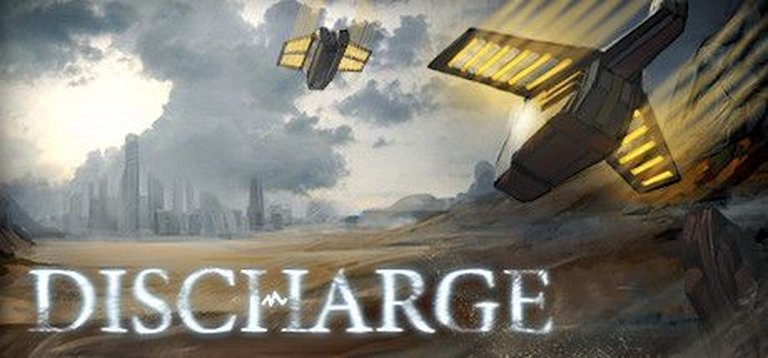
Set in a futuristic sci-fi world, Discharge is a hybrid action-strategy game that blends real-time strategy with shooter elements. Players take direct third-person control of customizable drones and other units, engaging in dynamic, physics-based battles while building bases, managing energy systems, and capturing iridium mines to outmaneuver enemies in the fight for the planet’s final resources.
Where to Buy Discharge
PC
Discharge Cracks & Fixes
Discharge: A Forgotten Fusion of Genres in the Shadows of Steam
Introduction: The Ghost in the Machine
In the vast, overcrowded ecosystem of Steam, thousands of games flicker into existence each year, only to be swallowed by the void of obscurity. Discharge, released on April 19, 2019, by the enigmatic one-person studio Nezon Production, is a prime specimen of such a ghost. It arrives not with a bang, but with a quiet, persistent hum of unfulfilled promise—a game whose very existence is a thesis statement on ambition outpacing execution. This review posits that Discharge is a fascinating, albeit deeply flawed, archaeological artifact from the indie RTS landscape of the late 2010s. It represents a brave but ultimately disjointed attempt to hybridize the cerebral resource management of real-time strategy with the visceral, moment-to-moment tension of a tactical shooter, all within a physics-driven sandbox. Its legacy is not one of influence or acclaim, but of a clear, specific vision that failed to find its audience or secure the ongoing development needed to realize it, leaving behind a curious pixelated fossil for historians to dissect.
Development History & Context: The Solo Developer’s Gambit
Discharge is the product of Nezon Production, an entity that, based on all available metadata (MobyGames, SteamDB), operates as a solo or very small-scale independent studio. There is no credits list beyond the developer/publisher name, no named designers, artists, or programmers in the public record. This context is crucial: the game was born not from the structured pipelines of a AAA studio or even a seasoned indie team, but from the isolated labor of a single developer or a tiny collective.
The technological constraint was Unreal Engine 4, a powerful but complex engine typically associated with high-fidelity 3D experiences. Its use here signals an ambition to create a visually competitive, physics-intensive game, a significant undertaking for a small team. The year 2019 placed Discharge in a specific niche: post-StarCraft II and Company of Heroes 2, but before the resurgence of classic RTS with titles like Homeworld 3 or the continued success of hybrids like They Are Billions. It competed in a crowded “Indie Strategy” bracket on Steam, a category rife with Early Access titles, clones, and experimental projects. The game’s tags—”Strategy,” “Action,” “RTS,” “Shooter,” “Physics,” “Sandbox”—reveal its core identity crisis and ambition: it sought to be a genre chimera. The community discussions from 2019-2025 paint a picture of a small, engaged but ultimately dwindling player base, with threads pinned by the developer (“Bugs & Issues,” “Any Questions”) that saw sporadic activity and a recurring, desperate plea: “UPDATE THIS GAME!!!!!!!!!!!!!!!!!!!!!!!!!!!!!!!!!!!!!!!!!!!!!!” This is the defining context of Discharge: a game launched into a hostile market with minimal marketing, by a tiny team, struggling with the gravitational pull of its own complexity.
Narrative & Thematic Deep Dive: The Story That Wasn’t
Here, the source material provides a stark, telling void. The official store description and all metadata focus exclusively on mechanics: “Lead your drones into an epic battle for the last iridium on the planet.” There is no named plot, no characters, no dialogue, and no setting details beyond the “Sci-fi / futuristic” genre tag and the central MacGuffin, “iridium.” This is not a narrative-driven game; it is a systems-driven sandbox.
The theme, therefore, is implicit in its mechanics: scarcity, logistics, and tactical improvisation. The narrative is whatever the player constructs in their mind while battling for the “last iridium.” It’s a pure wargame, a simulation of conflict stripped of heroism and plot. The thematic weight lies in its title, Discharge—suggesting release, expulsion, or the draining of a resource (both the iridium and, potentially, the player’s mental energy). It presents a world where the only story is the one told by the trajectory of a physics-propelled missile and the collapse of a poorly defended tower. This absence of narrative is its most significant design choice, aligning it with classic, story-light RTS like Total Annihilation or Spring Engine mods, but clashing awkwardly with its “shooter” and “direct control” elements, which typically imply a more personal, character-centric experience.
Gameplay Mechanics & Systems: The Grand (And Broken) Experiment
Discharge’s core loop is its defining, and most problematic, feature: the fusion of traditional RTS macro-management with third-person shooter micro-control.
-
The Dual-Perspective Hybrid: The player operates from a free-camera, top-down/behind-view perspective typical of RTS games. However, a signature mechanic allows taking direct, third-person control of individual units (gunships, bombers). This is not merely a visual toggle; it fundamentally changes the gameplay state. While in direct control, the player is effectively playing a simple, physics-based shooter, dodging fire and aiming manually to destroy key targets like “hostile storages.” The game then expects a seamless switch back to the RTS overview to manage base building, resource gathering (iridium mines), and squad commands. This is a conceptually brilliant merger of scales—theeneral’s map view and the pilot’s cockpit view—but in practice, it creates a jarring cognitive dissonance. The pacing is constantly interrupted by these shifts, and the design challenge of balancing two entirely different control schemes in one game appears to have overwhelmed the solo development effort.
-
Physics-Driven Chaos: A heavily promoted feature is its physics-simulated battles. Units are not static sprites; they have presence, mass, and momentum. This means a well-aimed projectile can send a lighter drone careening into a structure, causing chain reactions. Environmental destruction is possible. The “huge variety of situations” mentioned in the description suggests emergent gameplay—where a clumsy shot triggers a catastrophic pile-up. This is the game’s most innovative and potentially fun aspect, but also its most prone to instability and unpredictability, a common issue in unpolished physics implementations.
-
Base Building & Energy Grid: The RTS layer involves classic base building: towers, walls, energy farms. The twist is the energy supply system, described as a vulnerability: “Consider energy supply system so the enemy could not turn off your guns with only one direct strike.” This implies a connected power grid, where destroying a single generator or power line can disable entire defensive networks. This adds a layer of strategic target prioritization but also creates single points of failure that can lead to frustrating, instant defeats if not properly guarded.
-
Unit Customization & The “Squad”: Players can “customize your drones using diverse weapons and special equipment” and must “find the best squad combination.” The source provides zero detail on what weapons, equipment, or drone types exist. Is this a modular loadout system like in MechWarrior? A simple rock-paper-scissors unit roster? The vagueness here is symptomatic of the game’s poor documentation and lack of a robust tutorial (as begged for in the Steam discussions: “Guys, just make a 5 min tutorial…”).
-
Flawed Systems & Missing Cohesion: The user reviews and forums are a litany of complaints that parse the mechanical failures:
- No Single-Player Campaign: The most glaring omission. The store page and all materials never mention a story campaign. The “Epic battle” is purely skirmish/multiplayer, a major drawback for a solo player.
- Abysmal Tutorial/UI: The repeated call for a tutorial indicates a failure to communicate its complex hybrid systems.
- Unbalanced & Opaque: The “Squad combination” and “energy grid” mechanics suggest depth, but without clear tools or feedback, they become guesswork.
- Multiplayer Desolation: Threads titled “multiplayer?” and “ded?” reflect a dead multiplayer scene, the lifeblood of any RTS. With a peak concurrent player count likely in the single digits, matchmaking is impossible.
- Unfinished & Buggy: The pinned “Bugs & Issues” thread and pleas for updates point to a game that launched in a rough state and was never fully supported.
World-Building, Art & Sound: A Minimalist Canvas
The “world” of Discharge is a barely-realized sci-fi arena. The setting is a generic, desolate planet contested for a generic resource (iridium). There is no lore, no faction backstory (are the drones rebels? corporate security? aliens?), no aesthetic identity beyond “sci-fi.” The visual presentation, powered by Unreal Engine 4, likely aimed for a clean, functional look—perhaps a low-poly, brightly colored style to aid unit recognition in the chaos of physics battles (a common indie aesthetic). However, the complete absence of any in-depth screenshot analysis or video coverage in the sources suggests it was not visually distinctive enough to generate interest.
Sound design is an even deeper mystery. The store page mentions nothing of a soundtrack or sound effects. Given the priority on physics feedback in such a game, audio cues for collisions, weapon fire, and unit destruction would be critical, yet there is no record of their quality or presence. The atmosphere is, therefore, defined by its silence in the historical record. The world-building contributes to the experience by providing a neutral, abstract space—a pure testing ground for mechanics, devoid of any distracting narrative or artistic identity. This may have been a conscious design choice for a pure wargame, but in the context of a game also selling “direct control” and “shooter” elements, it feels empty and unengaging.
Reception & Legacy: The Sound of Silence
Discharge‘s reception is the clearest data point we have, and it is unequivocally mixed-to-negative.
- Commercial & Critical Reception: It has no MobyScore (n/a), no critic reviews listed on MobyGames or Metacritic, and a Steam User Review score of “Mixed” (55% positive from 33 reviews). This is based on a tiny sample size of a very small audience. There is no press coverage, no YouTube feature reviews, no Let’s Plays of note. It existed, and almost no one noticed.
- Community Reception: The Steam forums are not a hub of vibrant discussion but a graveyard of feature requests and frustration. The most-upvoted thread from 2020 is “UPDATE THIS GAME!!!!!!!!!!!!!!!!!!!!!!!!!!!!!!!!!!!!!!!!!!!!!!”. Others ask “Why is no one talking about this game?”, “Campaign?”, and “ded?”. The developer’s own pinned threads are a decade old in internet time, with the last meaningful response seemingly years past. This is a community that has accepted the game’s abandonment.
- Evolution of Reputation: Its reputation has not evolved; it has stagnated and atrophied. It is known only as a obscure, weird, and ultimately failed experiment. It is occasionally mentioned in obscure forum threads about “hidden gem” RTS games or physics-based strategy, but these are momentary sparks that die in the absence of any active player base or developer support.
- Influence on the Industry: There is zero discernible influence. It left no mark on the RTS genre, the indie scene, or game design discourse. Its hybrid concept was, and remains, too niche and too poorly executed to inspire clones or successors. It stands as an isolated node in the network of game history, a “what if” that never materialized.
Conclusion: A Curious, Cautionary Relic
Discharge is not a good game by conventional metrics. It lacks polish, documentation, a single-player mode, a community, and post-launch support. It is, in the strictest sense, a commercial failure and a forgotten title.
However, as a historical artifact, it is profoundly instructive. It exemplifies the perils and possibilities of the solo/small-team indie development model in the UE4 era. Its core idea—merging RTS macro with shooter micro in a physics sandbox—is a brilliant, audacious thought experiment. It asks: “What if every unit in an RTS had full physics simulation and you could be any of them?” The failure to answer that question compellingly is a story of scope, resources, and perhaps, market fit.
Its place in video game history is that of a curio, a footnote. It is not a lost classic to berediscovered, but a cautionary tale about the chasm between a compelling design pitch and a finished, accessible product. It serves as a reminder that for every [insert successful indie hit], there are hundreds of Discharges—games with a spark of ingenuity that flicker out in the dark, known only to the handful of players who stumbled upon them and the developer who poured their vision into a project the world was not ready, or willing, to see. To study Discharge is to study the raw, unrefined ore of game design, before it is smelted by funding, time, and iteration into something that can truly connect. It remains, in the end, a discharge of potential into the void.