
- Release Year: 2023
- Platforms: Nintendo Switch, PlayStation 4, Windows, Xbox One, Xbox Series
- Publisher: Disney Electronic Content, Inc.
- Developer: Empty Clip Studios, LLC
- Genre: Action
- Perspective: Side view
- Game Mode: Single-player
- Gameplay: Platform
- Setting: Fantasy
- Average Score: 58/100
Description
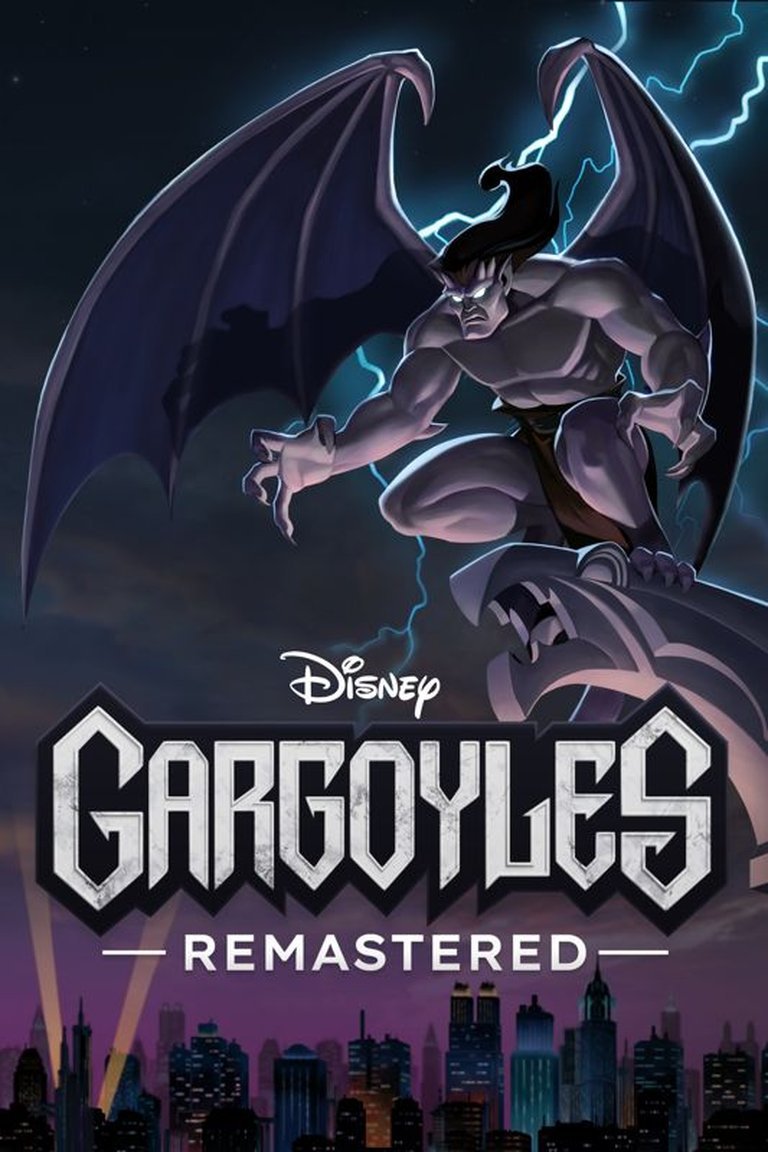
Disney Gargoyles: Remastered is a faithful enhancement of the 1995 Genesis platformer, where players control Goliath and his clan of stone-skinned protectors as they soar through a fantasy-infused 1990s New York City, battling demonic hordes, mutants, robots, and villains from the beloved Disney animated series in intense 2D side-scrolling action.
Gameplay Videos
Where to Buy Disney Gargoyles: Remastered
PC
Disney Gargoyles: Remastered Cracks & Fixes
Disney Gargoyles: Remastered Patches & Updates
Disney Gargoyles: Remastered Mods
Disney Gargoyles: Remastered Guides & Walkthroughs
Disney Gargoyles: Remastered Reviews & Reception
metacritic.com (58/100): For better or worse, Gargoyles Remastered remains a product of its time.
shacknews.com : It’s a good-looking re-packaging of the original with a minty fresh art style, but it’s also a ridiculously difficult relic of a bygone gaming era.
dcanimated.com : With nifty additions like a rewind feature and updated art and music, Gargoyles Remastered makes for a fine showing for the nearly 30-year-old game, but it also showcases this title really hasn’t aged all that well.
waytoomany.games : Gargoyles Remastered is stunningly beautiful. The creation of this remaster is clearly from the ground up.
Disney Gargoyles: Remastered: A Faithful Revival of Stone-Age Frustration
Introduction
Imagine soaring over moonlit Manhattan rooftops as Goliath, the brooding leader of a clan of nocturnal protectors, only to plummet into a pixel-perfect pit of despair due to one mistimed glide. Disney Gargoyles: Remastered (2023), developed by Empty Clip Studios and published by Disney Electronic Content, resurrects the 1995 Sega Genesis cult classic just as fans rediscover the animated series on Disney+. This side-scrolling platformer, originally a North America-exclusive tie-in to the Disney Afternoon’s darkest gem, captures the gargoyles’ gothic allure amid 16-bit constraints. Yet, while its enhanced visuals and quality-of-life tweaks breathe new life into a forgotten relic, the remaster exposes the original’s unforgiving design as a product of its era—rewarding for masochists, maddening for modern players. My thesis: Gargoyles Remastered is a visually stunning preservation project that honors its legacy but fails to evolve beyond dated mechanics, cementing its niche as a nostalgic curiosity rather than a timeless platformer.
Development History & Context
The original Gargoyles (1995) emerged from Disney Interactive’s golden age of 16-bit licensed games, a period when the studio rivaled Sega and Nintendo with titles like Aladdin and The Lion King. Directed by Bob Rademacher, produced by Patrick Gilmore and David Bergantino, designed by Joel Goodsell, programmed by Chris Shrigley, and featuring art by Thom Ang, it was composed by a young Michael Giacchino and Patrick J. Collins—names that would later define cinematic scores. Released in November 1995 (delayed from May) exclusively on Sega Genesis by Buena Vista Interactive, it coincided with the animated series’ peak popularity but faced a crowded 16-bit market dominated by Super Mario World and Sonic 3. A Super NES port was scrapped, limiting its reach, though its source code was released publicly in 2012 for educational purposes.
Technological constraints shaped its identity: Genesis hardware enabled hand-drawn animations for organic foes like Vikings (echoing Virgin’s Aladdin) and CGI models for robots, but demanded precise controls amid sprite limitations. Disney aimed for a “darker” platformer to match the show’s mature themes—betrayal, immortality, urban fantasy—differentiating it from kid-friendly fare. Sales were modest, reviews mixed-to-positive (e.g., GamePro hailed it as “one of the best Genesis games”), but it built a cult following for its challenge and atmosphere.
Nearly three decades later, Gargoyles Remastered arrived on October 19, 2023, across Windows (Steam/GOG), PlayStation 4/5, Xbox One/Series, and Nintendo Switch, timed with D23 Expo hype and a forthcoming live-action series. Empty Clip Studios—a team versed in retro revivals—handled development under Disney producers like Bobby Munguia and Ken Humphries, with 216 credits including VP Luigi G. Priore. Luigi Priore emphasized nostalgia: “a tribute to the classic… enhancing it for a new generation.” Priced at $14.99 digitally (with Limited Run physical collector’s editions featuring NECA figures), it introduced togglable graphics/sound, rewind, achievements, widescreen, and difficulty modes. This “artfully crafted revival” navigated remaster trends post-DuckTales Remastered (2013), prioritizing fidelity over reinvention amid a resurgence of Disney Afternoon ports. Yet, absent extras like galleries or voicework (despite Keith David’s availability), it reflects cautious corporate stewardship in a post-Emulation era.
Narrative & Thematic Deep Dive
Gargoyles Remastered loosely adapts the series’ lore into a brisk, five-level odyssey framed by sparse cinematics, bookended by the Eye of Odin—a corrupted talisman granting transformative power—as the MacGuffin. Players embody Goliath, the noble Wyvern Clan leader, awakening from stony slumber to thwart its misuse. The plot spans a millennium: ancient Scotland’s Viking-sacked Castle Wyvern to modern Manhattan’s steel spires, blending flashbacks with present-day chaos.
Core Plot Breakdown:
– Level 1: Castle Wyvern (Medieval Scotland) – Goliath battles Hakon-led Vikings, reclaiming the Eye from historical betrayers. Cinematics evoke “Awakening,” Goliath’s origin amid clan massacre.
– Level 2: Manhattan Rooftops – Thrust to 1990s NYC, Goliath glides skyscrapers, smashing robotic Steel Clan minions (Xanatos’ doing?).
– Level 3: Subway Depths – Underground hordes of cyber-wolves and mutants test endurance.
– Level 4: Eyrie Building/Industrial Complex – Infiltration reveals Demona’s machinations; she wields the Eye, her immortality-fueled villainy central.
– Level 5: Climax vs. Demona – Pinball-like aerial duel atop gothic spires, destroying the artifact.
Themes mirror the series’ Shakespearean depth: redemption and betrayal (Demona as Goliath’s treacherous ex), guardianship (gargoyles as eternal sentinels), and man vs. machine (organic fury vs. robotic hordes). Dialogue is minimal—textual exposition only—but cinematics nod to serialized intrigue (Xanatos cameo, Eye’s Norse mythology). It’s an “unfaithful adaptation” per critics like Destructoid, truncating Elisa Maza, the clan, and arcs like Puck or the Archmage for linearity. No voice acting (a glaring omission) mutes emotional beats, yet the Eye symbolizes hubris, echoing the show’s anti-imperialism.
Analytically, the narrative excels in atmospheric vignettes—Viking raids evoke tragedy, NYC chases urban isolation—but falters in cohesion. Five levels feel barebones, prioritizing action over character. For historians, it’s a snapshot of 1990s tie-ins: plot as service to gameplay, not vice versa. Remaster enhancements (rewind for “what if” retries) subtly deepen thematic replayability, letting players ponder alternate clan fates.
Gameplay Mechanics & Systems
At its core, Gargoyles Remastered is a 2D side-scrolling platformer with action-adventure loops: traverse non-linear levels, battle foes, boss-rush endpoints. Goliath’s moveset—fists/claws, grapples/throws, double-jump/glide (wing-flap), wall/ceiling climb—innovated for 1995, enabling verticality and fluidity akin to Demon’s Crest.
Core Loops Deconstructed:
– Traversal: Glide extends jumps; claws grip sheer surfaces. Innovative but finicky—momentum halts abruptly, hitboxes obscure grabbables (worse in remaster art).
– Combat: Mash attacks stagger foes; grabs enable throws (instant kills). Mid-air combos add flair, but feedback is poor—no impact sounds/animations confirm hits. Bosses demand patterns (e.g., bait Demona’s charges).
– Progression: No RPG elements; health pickups (gold orbs) scantily restore HP. Checkpoints mitigate deaths, but no continues on Original mode.
– UI/Systems: Clean HUD (health bar, lives). Remaster adds rewind (5-second hold, limited to prevent cheesing), save-anywhere, difficulties (Easy reduces damage, Original masochistic). Toggle graphics/sound mid-game; achievements for completions.
Flaws abound: clunky controls (input lag in remaster visuals per TheSixthAxis), unfair difficulty (pixel-perfect platforms, enemy spam), dull combat (mashfests). Reviews decry “tosa y frustrante” (Hobby Consolas), “janky” (But Why Tho?), with rewind as “necessity” (Shacknews). Innovative for era—ceiling crawls, environmental destroys—but dated: no tutorials, collision woes. Short (2-4 hours) loops frustrate more than engage, echoing Genesis peers’ trial-and-error ethos.
| Mechanic | Strengths | Weaknesses |
|---|---|---|
| Combat | Varied (ground/air/throws) | Poor feedback, spongy foes |
| Platforming | Vertical freedom | Imprecise jumps, obscure interactables |
| Bosses | Pattern-based spectacle | Trial-error reliant, geometry puzzles |
| QoL (Remaster) | Rewind, toggles, saves | No fixes for core jank |
World-Building, Art & Sound
Settings fuse medieval grit with cyberpunk noir: fog-shrouded Wyvern castles yield to neon-lit NYC subways/factories, building a “moody 16-bit” atmosphere (Nintendo Life). Levels feel alive—breakthrough walls reveal secrets—but emptiness reigns (no NPCs, sparse interactivity).
Visuals: Dual-mode genius—toggle remaster (series-inspired HD animations, widescreen) vs. original (crisp 16-bit pixels). Remaster shines: Goliath’s fluid roars, CGI-upscaled robots evoke show cels (TechRaptor: “like watching the animated series”). Critiques: new art obscures hooks/platforms (Shacknews), adds lag (TheSixthAxis). 2D scrolling perspective enhances gothic scale.
Sound: Remastered orchestral Giacchino/Collins tracks swell epically (Way Too Many Games: “magnificent”); originals gritty. SFX punchier in classic (Goliath’s death wail iconic), muted in new. No voicework hollows drama—Keith David trailer tease unmet.
Elements immerse: NYC’s skyline glides capture freedom; Viking horns build dread. Remaster elevates atmosphere, contributing nostalgia over innovation.
Reception & Legacy
Original Gargoyles dazzled 1995 critics (GamePro: “stone-cold blast”; Game Informer: 8.5/10), praised graphics/gameplay amid Genesis twilight. Modest sales, cult status grew via emulation.
Remaster: MobyGames 5.8/10 (54% critics); Metacritic 58/100 (PS4). Highs: TechRaptor (85%, “satisfying formula”); MonsterVine (70%, “brisk retro”). Lows: Niche Gamer/NWR (30%, “relic… sealed away”); averages 50-65% cite “frustrating” platforming/combat, brevity, no extras. Players: 5/5 (sparse). Sales untracked, but 22 MobyGames collectors signal niche.
Influence: Precursor to Disney’s dark platformers (Night Flight handheld); inspired Magicka: Dungeons and Gargoyles. Remaster boosts preservation (Limited Run carts), fuels series revival (live-action rumors). Legacy: Testament to Disney Afternoon’s ambition—gothic IP in kid-game shells—but warns against unvarnished ports.
Conclusion
Disney Gargoyles: Remastered masterfully revives a 1995 artifact, its togglable art/sound and rewind honoring Goliath’s epic while exposing era-specific sins: clunky mechanics, brutal unfairness, narrative sparsity. Exhaustive in fidelity, it thrills show fans and retro diehards (visuals/audio near-perfect), but alienates newcomers with unpolished loops. At $15, it’s a definitive historical piece—play Original mode for authenticity, remaster for beauty—but no industry titan. In video game history, it occupies a stony niche: a guardian of obscurity, awakening briefly to remind us why some legends slumber. Verdict: 6.5/10 – Cult Preservation Win, Gameplay Stone L. Recommended for gargoyle loyalists; skip unless sale-bound. Disney, more remasters like Magical Quest next?