
- Release Year: 2007
- Platforms: PlayStation 2, PlayStation 3, PSP, Wii, Windows
- Publisher: ak tronic Software & Services GmbH, Disney Interactive Studios, Inc., Disney Interactive, Noviy Disk
- Developer: Eurocom Developments Ltd
- Genre: Action
- Perspective: Third-person
- Game Mode: Single-player
- Gameplay: Platform, Quick Time Events (QTEs)
- Setting: Boat, Caribbean, Fantasy, Ship
- Average Score: 69/100
Description
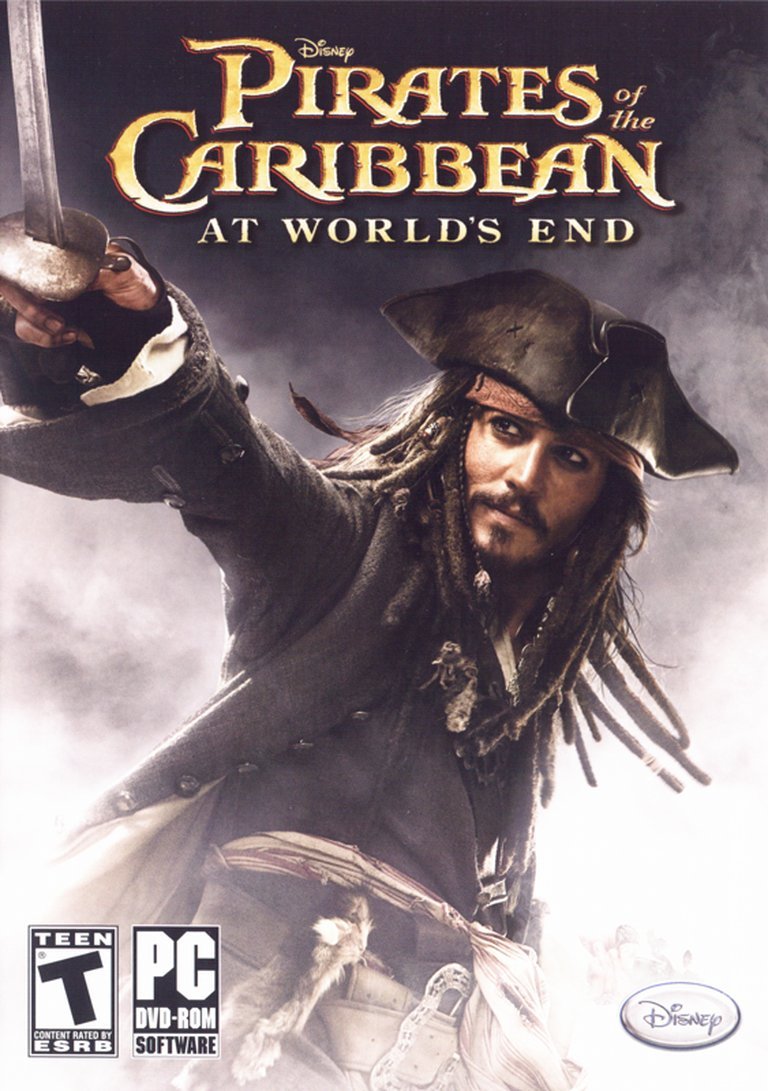
Disney Pirates of the Caribbean: At World’s End is a 3D action-adventure game based on the second and third films of the Pirates of the Caribbean series. Players take on the roles of Captain Jack Sparrow, Will Turner, and Elizabeth Swann as they navigate a free-roaming Caribbean world, battling enemies like Davy Jones, the Kraken, and the East India Trading Company. The game features sword combat, special character abilities, and quick-time events, with motion-based controls on the Wii version.
Gameplay Videos
Where to Buy Disney Pirates of the Caribbean: At World’s End
PC
Disney Pirates of the Caribbean: At World’s End Free Download
PlayStation 2
Disney Pirates of the Caribbean: At World’s End Cracks & Fixes
Disney Pirates of the Caribbean: At World’s End Reviews & Reception
metacritic.com (58/100): A fun romp mimicking the action of the movies; it looks good and captures the essence of the films – but it’s just too easy for seasoned gamers and the lack of co-op multiplayer is a real bummer.
mobygames.com (80/100): Exciting Story Mode filled to the brim with action!
Disney Pirates of the Caribbean: At World’s End Cheats & Codes
PS2 (NTSC-U) – CodeBreaker
Enable the ‘Enable Code (Must Be On)’ first, then apply the desired cheat codes.
| Code | Effect |
|---|---|
| B4336FA9 4DFEFB79 DCE9B426 4C85D483 F58DB67C E6107959 AD851558 2AE4491A |
Enable Code (Must Be On) |
| 4B3619FC 2FBA564D 9DA119C9 638481AE B21489F8 4644A401 |
Infinite Health |
| FE4E96F1 93D348D3 56EF75AC CE526419 F7A82446 B3FD5DB1 B4D7A0BB 44390F79 |
Always Max Items (Change Items) |
| 8CEF03A3 10F36B25 61D763B0 4E69DE76 |
Infinite Item Usage |
| B9B25EBB 59927E86 61D763B0 4E69DE76 |
Extra Item Usage |
Disney Pirates of the Caribbean: At World’s End: A Comprehensive Retrospective
Introduction
In the annals of licensed video games, few franchises have captured the imagination quite like Pirates of the Caribbean. With its swashbuckling charm, memorable characters, and high-seas adventure, the series was ripe for adaptation into interactive entertainment. Disney Pirates of the Caribbean: At World’s End, released in 2007, sought to capitalize on the success of the second and third films, Dead Man’s Chest and At World’s End. Developed by Eurocom and published by Disney Interactive Studios, the game promised players the chance to step into the boots of Captain Jack Sparrow, Will Turner, and Elizabeth Swann. However, as with many movie tie-ins, the game struggled to escape the shadow of its cinematic counterparts, ultimately delivering a mixed experience that left critics and players divided.
This review aims to provide an exhaustive analysis of Disney Pirates of the Caribbean: At World’s End, examining its development, narrative, gameplay mechanics, artistic direction, and lasting legacy. By drawing on a wealth of source material, including reviews, developer insights, and historical context, we will explore what the game achieved, where it faltered, and its place in the broader landscape of licensed video games.
Development History & Context
The Studio and Vision
Eurocom, the developer behind At World’s End, was no stranger to licensed properties. With a portfolio that included games based on James Bond, Harry Potter, and Batman Begins, the studio had a reputation for delivering competent, if not groundbreaking, adaptations. For At World’s End, Eurocom aimed to create an action-adventure experience that would allow players to relive the events of the films while expanding on the lore of the Pirates universe.
The game was developed concurrently for multiple platforms, including the PlayStation 2, PlayStation 3, Xbox 360, Wii, PC, PSP, and Nintendo DS. This multi-platform approach was ambitious but also presented significant challenges. Each version of the game had to be tailored to the strengths and limitations of its respective hardware, leading to variations in graphics, controls, and gameplay mechanics.
Technological Constraints
The year 2007 was a transitional period in gaming. The PlayStation 3 and Xbox 360 were still finding their footing, while the Wii was carving out its niche with motion controls. The PlayStation 2, though nearing the end of its lifecycle, remained a dominant force in the market. These technological disparities meant that At World’s End had to be designed with flexibility in mind.
For the PS3 and Xbox 360 versions, Eurocom leveraged the power of the new consoles to deliver enhanced graphics and smoother frame rates. The Wii version, meanwhile, incorporated motion controls, allowing players to swing their swords with the Wii Remote. The PC version, however, was criticized for its lackluster visuals, which were more in line with the PS2 version than the more advanced console iterations.
The Gaming Landscape
In 2007, the gaming industry was in the midst of a golden age of action-adventure titles. Games like Assassin’s Creed, Uncharted: Drake’s Fortune, and BioShock were redefining the genre with their immersive narratives, innovative gameplay, and stunning visuals. Against this backdrop, At World’s End faced stiff competition. Licensed games, in particular, were often viewed with skepticism, as many were seen as rushed cash-ins rather than genuine artistic endeavors.
Despite these challenges, At World’s End had the potential to stand out. The Pirates of the Caribbean franchise was at the height of its popularity, and the game’s premise—allowing players to explore the Caribbean, engage in sword fights, and interact with beloved characters—was undeniably appealing. However, as we will explore in the following sections, the execution fell short of the vision.
Narrative & Thematic Deep Dive
Plot Overview
Disney Pirates of the Caribbean: At World’s End follows the events of the second and third films, with some additional missions and characters. The game begins with Captain Jack Sparrow imprisoned in a fortress, from which he escapes with the help of his father, Captain Edward Teague. From there, Jack embarks on a quest to find the nine Pirate Lords and convene the Brethren Court to counter the threat posed by Davy Jones and the East India Trading Company.
The narrative takes players through a series of iconic locations, including Port Royal, Tortuga, Singapore, and Davy Jones’ Locker. Along the way, they encounter familiar faces such as Will Turner, Elizabeth Swann, Hector Barbossa, and Tia Dalma, as well as new characters like Sao Feng and the Pirate Lords.
Character Portrayals
One of the game’s strengths is its faithful recreation of the film’s characters. While the original actors did not lend their voices to the game, the voice actors did an admirable job of capturing the essence of Johnny Depp’s Jack Sparrow, Orlando Bloom’s Will Turner, and Keira Knightley’s Elizabeth Swann. Jack’s drunken mannerisms and witty one-liners are particularly well-executed, adding a layer of authenticity to the experience.
However, the game’s narrative is not without its flaws. The story is told through a series of disjointed cutscenes that often feel rushed and lack the depth of the films. The pacing is uneven, with some sections dragging while others feel hurried. Additionally, the game’s attempt to expand on the films’ lore sometimes results in confusing or unnecessary detours.
Themes and Motifs
At its core, At World’s End explores themes of freedom, betrayal, and redemption—central motifs in the Pirates franchise. The game’s narrative emphasizes the struggle between the pirates, who value their independence, and the East India Trading Company, which seeks to impose order and control. This conflict is embodied in the characters of Jack Sparrow, who represents the chaotic spirit of piracy, and Lord Cutler Beckett, who symbolizes the oppressive forces of authority.
The game also delves into the idea of legacy and the passing of the torch. As the Pirate Lords gather to elect a new Pirate King, the narrative raises questions about leadership, responsibility, and the future of piracy. These themes are explored through the interactions between Jack, Will, and Elizabeth, each of whom grapples with their own desires and obligations.
Dialogue and Writing
The dialogue in At World’s End is a mixed bag. While the voice acting is generally strong, the writing often falls short of the films’ sharp wit and clever wordplay. Some lines feel forced or out of character, particularly in the case of Jack Sparrow, whose dialogue occasionally lacks the spontaneity and charm that made him such a beloved figure in the movies.
That said, there are moments of genuine humor and pathos. The interactions between Jack and his father, Edward Teague, are particularly well-written, adding depth to Jack’s character and providing insight into his motivations. Similarly, the banter between Jack, Will, and Elizabeth captures the dynamic of their relationships, even if it doesn’t always reach the heights of the films.
Gameplay Mechanics & Systems
Core Gameplay Loop
At World’s End is, at its heart, an action-adventure game with a strong emphasis on combat. Players spend the majority of their time engaging in sword fights, exploring environments, and completing objectives. The game’s structure is linear, with players progressing through a series of levels that correspond to key events from the films.
The core gameplay loop revolves around combat, exploration, and occasional puzzle-solving. Players are tasked with defeating waves of enemies, collecting items, and navigating through environments to reach their objectives. While this loop is functional, it lacks the depth and variety needed to sustain engagement over the course of the game’s six-to-eight-hour campaign.
Combat System
The combat in At World’s End is simple and accessible but ultimately repetitive. Players have access to a basic attack button, a block button, and a special attack that can be unleashed once a meter is filled. The combat lacks the complexity of contemporary action games, with enemies often posing little challenge and battles devolved into button-mashing affairs.
One of the more interesting mechanics is the “Black Pearls” system, which limits the amount of time players can block before needing to recharge. This adds a layer of strategy to the combat, forcing players to time their blocks carefully. However, the system is underutilized, and most players will find that they can brute-force their way through encounters without relying on it.
The game also features quick-time events (QTEs), dubbed “Jackanisms,” which allow players to perform context-sensitive actions in the style of Captain Jack Sparrow. These sequences are entertaining at first but quickly become tedious, as they often interrupt the flow of gameplay and feel more like scripted moments than organic interactions.
Character Progression
At World’s End offers a limited form of character progression. Players can unlock new weapons and abilities as they progress, but these upgrades are largely superficial. The game does not feature a deep skill tree or meaningful customization options, which limits the sense of growth and development.
Each playable character—Jack, Will, and Elizabeth—has their own unique abilities, but these differences are minimal. Jack is the most agile, Will is the strongest, and Elizabeth is the most balanced, but these distinctions do little to alter the gameplay experience. As a result, playing as different characters often feels like a missed opportunity to introduce variety.
User Interface and Controls
The user interface in At World’s End is functional but unremarkable. The game features a compass that points players toward their objectives, which is helpful given the linear nature of the levels. However, the UI lacks the polish and intuitiveness of contemporary action-adventure games, and some elements, such as the inventory system, feel clunky and outdated.
The controls vary depending on the platform. The PS3 and Xbox 360 versions use standard dual-analog controls, while the Wii version incorporates motion controls for swordplay. The motion controls are a novel addition but are ultimately underwhelming. The lack of precision makes combat feel imprecise and frustrating, particularly in the game’s more challenging sections.
Multiplayer and Replayability
At World’s End includes a split-screen cooperative mode, allowing two players to team up and tackle the game’s challenges together. This mode is a welcome addition, as it adds a layer of camaraderie and strategy to the gameplay. However, the cooperative experience is hampered by the game’s repetitive combat and lack of meaningful progression.
The game also features a competitive multiplayer mode, which allows players to duel against each other in sword fights. While this mode is entertaining in short bursts, it lacks the depth and variety needed to sustain long-term interest. The absence of online multiplayer, particularly on the PS3 and Xbox 360, is a notable omission that limits the game’s replayability.
World-Building, Art & Sound
Setting and Atmosphere
One of the standout aspects of At World’s End is its faithful recreation of the Pirates of the Caribbean universe. The game’s environments are richly detailed, capturing the gritty charm of the films’ settings. From the bustling streets of Port Royal to the eerie depths of Davy Jones’ Locker, each location is rendered with care and attention to detail.
The game’s art direction is particularly strong in its depiction of the ships, which are meticulously designed and animated. The Black Pearl and the Flying Dutchman, in particular, are standout examples of the game’s visual prowess. The rigging, the timber, and the rusty metal bars all contribute to a sense of authenticity that immerses players in the world of the pirates.
Visual Direction
The visual direction of At World’s End is a mixed bag. On the PS3 and Xbox 360, the game benefits from enhanced graphics and smoother frame rates, which help to bring the world to life. The character models are detailed, and the animations are fluid, particularly in the case of Jack Sparrow, whose drunken mannerisms are well-captured.
However, the PC and PS2 versions suffer from dated visuals that fail to match the quality of their console counterparts. The textures are muddy, the lighting is flat, and the character models lack the detail and polish of the more advanced versions. This disparity is particularly noticeable in the case of the PC version, which was criticized for being a straightforward port of the PS2 version rather than a dedicated PC experience.
Sound Design and Music
The sound design in At World’s End is solid, if unspectacular. The game features a mix of original and licensed music, including tracks from the films’ soundtracks. The music is used effectively to punctuate the action, fading in and out depending on the situation. However, the soundtrack lacks the memorability and emotional resonance of the films’ scores.
The voice acting, as mentioned earlier, is a highlight. While the original actors did not reprise their roles, the voice actors do an admirable job of capturing the essence of the characters. The sound effects, meanwhile, are functional but unremarkable. The clanging of swords, the creaking of ships, and the roaring of the sea all contribute to the game’s atmosphere, but they lack the depth and variety needed to truly immerse players.
Reception & Legacy
Critical Reception
Disney Pirates of the Caribbean: At World’s End received mixed reviews from critics. On Metacritic, the game holds scores ranging from 53 to 66 out of 100, depending on the platform. The DS version fared the best, with a score of 66, while the PS2 version received the lowest score, with 54.
Critics praised the game’s faithful recreation of the Pirates universe, its strong voice acting, and its entertaining moments. However, they also criticized its repetitive combat, lackluster visuals (particularly on the PC and PS2), and underwhelming gameplay mechanics. Many reviewers noted that the game felt like a missed opportunity, as it failed to capitalize on the potential of its source material.
Commercial Performance
Despite its mixed reception, At World’s End performed reasonably well commercially. The game benefited from the popularity of the Pirates of the Caribbean franchise, which was at its peak in 2007. While exact sales figures are not readily available, the game’s presence on multiple platforms ensured that it reached a wide audience.
Influence and Legacy
At World’s End is often remembered as a middling entry in the pantheon of licensed video games. While it is not regarded as a classic, it is also not considered a complete failure. The game’s legacy is perhaps best summed up by its Metacritic scores, which reflect a product that is competent but unremarkable.
The game’s influence on subsequent Pirates of the Caribbean titles is minimal. The franchise’s next major video game release, LEGO Pirates of the Caribbean: The Video Game, took a different approach, focusing on humor and accessibility rather than faithful adaptation. At World’s End remains a curiosity—a game that had the potential to be great but ultimately fell short of its ambitions.
Conclusion
Disney Pirates of the Caribbean: At World’s End is a game that is easy to admire but difficult to love. It captures the spirit of the Pirates franchise with its richly detailed environments, strong voice acting, and faithful recreation of the films’ events. However, it is ultimately undone by its repetitive combat, lackluster visuals, and underwhelming gameplay mechanics.
The game’s development history reflects the challenges of creating a multi-platform licensed title in a competitive market. While Eurocom’s vision was ambitious, the execution fell short, resulting in a product that is competent but unremarkable. The narrative, while faithful to the films, lacks the depth and coherence needed to sustain engagement, and the gameplay, while accessible, lacks the complexity and variety of contemporary action-adventure games.
In the end, At World’s End is a game that will appeal primarily to die-hard fans of the Pirates of the Caribbean franchise. For those who are willing to overlook its flaws, it offers a chance to relive the events of the films and explore the world of the pirates. However, for those seeking a deeper, more engaging experience, it is likely to disappoint.
Final Verdict: 6/10 – A competent but unremarkable adaptation that captures the spirit of the films but fails to deliver a truly memorable gaming experience.