
- Release Year: 2009
- Platforms: Wii, Windows
- Publisher: Disney Interactive Studios, Inc.
- Developer: Griptonite, Inc.
- Genre: Action
- Perspective: Third-person
- Game Mode: Co-op, Single-player
- Gameplay: Mini-games, Music, rhythm
- Setting: 1920s, New Orleans, North America
- Average Score: 69/100
Description
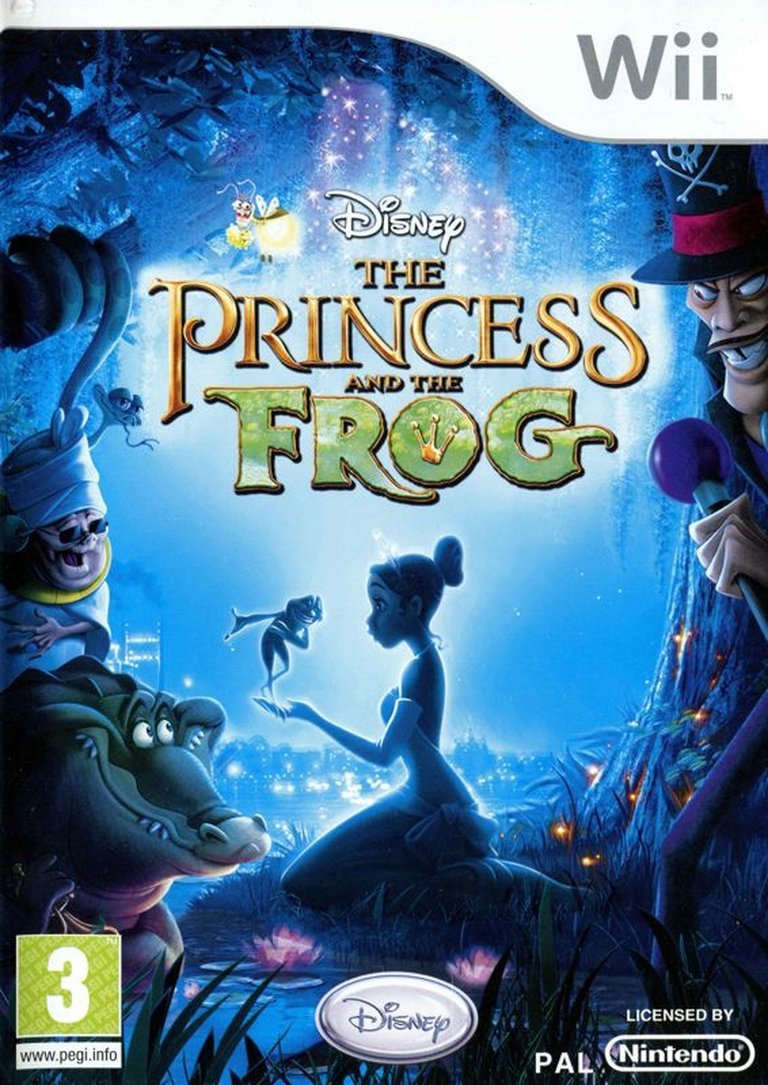
Disney The Princess and the Frog is a mini-game collection based on the Disney film, set in the vibrant 1920s New Orleans. Players participate in over 25 diverse mini-games featuring Princess Tiana and other characters, including rhythm dancing, memory challenges, aerial tricks, and more, designed for fun group play like slumber parties.
Gameplay Videos
Where to Buy Disney The Princess and the Frog
PC
Disney The Princess and the Frog Cracks & Fixes
Disney The Princess and the Frog Reviews & Reception
metacritic.com : The Princess and the Frog isn’t a bad game, but it’s never an exciting one either.
ign.com (69/100): A mini-game collection that lasts as long as the movie’s runtime.
worthplaying.com : Unlike most mini-game compilations, this title is set after the events of the movie and has a story to go along with the activities.
Disney The Princess and the Frog Cheats & Codes
Nintendo DS
Go to Extras, then DGamer Codes. Enter the code.
| Code | Effect |
|---|---|
| X, Up, Down, X | Masquerade Costume for DGamer |
Nintendo DS (Europe)
Action Replay code.
| Code | Effect |
|---|---|
| 12066dc4 000046c0 | Health Never Decreases |
Disney The Princess and the Frog: Review
Introduction
In the glittering haze of 1920s New Orleans, where jazz rhythms pulse through fog-shrouded bayous and voodoo shadows dance under Mardi Gras lights, Disney’s The Princess and the Frog (2009) emerged as a beacon of traditional 2D animation’s revival—a tale of ambition, love, and self-discovery that introduced Tiana, the studio’s first African-American princess. Its video game adaptation, developed by Griptonite Games and released mere weeks before the film on November 17, 2009, for Wii, Windows, and Nintendo DS, promised to extend this magic into interactive form. Yet, as a licensed tie-in in an era dominated by Wii party games and fleeting movie cash-ins, it occupies a curious niche: a delightful, family-oriented mini-game anthology that captures the film’s charm but evaporates like bayou mist after a few play sessions. This review argues that Disney The Princess and the Frog is a heartfelt, if superficial, tribute to Tiana’s journey—exemplary for young fans and slumber-party crowds, but ultimately too ephemeral to claim lasting prominence in gaming history.
Development History & Context
Griptonite Games, a Seattle-based studio known for competent licensed titles like Spider-Man: Friend or Foe and later Toy Story 3, took the reins under Disney Interactive Studios’ publishing umbrella. With over 200 credits listed for the Wii version alone—including lead designer Caleb Doughty, lead programmer David P. Lawson, and a sprawling team of 187 developers—the project reflects a massive but assembly-line effort typical of 2009’s movie tie-in boom. Senior producer Alex Pantelias and producer Brian C. McAuliffe oversaw a vision aligned with Disney’s promotional push: a “slumber party activity” emphasizing multiplayer fun, as pitched in official blurbs. The game draws from the film’s post-credits epilogue, with Tiana transforming her rundown sugar mill into Tiana’s Palace, weaving mini-games around nostalgic flashbacks.
Technological constraints of the Wii era shaped its DNA. Motion controls via Wii Remote (with optional Nunchuk) dominated, prioritizing accessible waggle-fests over precision—middleware like Scaleform GFx SDK for UI and FMOD for audio underscored this. The Windows/PC port mirrored Wii mechanics, while the DS variant pivoted to stylus/mic platforming, leveraging dual screens for cooking and shadow-battling. Released amid Wii’s family-party dominance (Wii Sports Resort, Just Dance precursors), the 2009 landscape brimmed with mini-game collections (Rayman Raving Rabbids, WarioWare), but movie tie-ins often flopped (Bolt, Madagascar sequels). Griptonite innovated modestly with cross-platform unlocks (Wii-DS connectivity for bonuses) and film-faithful assets, yet budget limits yielded short content (2-4 hours core play). Critics noted voice work by film stars like Anika Noni Rose (Tiana) and Keith David (Dr. Facilier), though Oprah Winfrey skipped reprising Eudora (replaced by Debra Wilson). In hindsight, it embodies Disney’s transitional phase: pre-Infinity, post-Kingdom Hearts, chasing Wii’s casual gold rush amid the film’s renaissance-sparking buzz.
Narrative & Thematic Deep Dive
The game’s narrative, a loose post-film epilogue, unfolds in Tiana’s budding Tiana’s Palace, where she reminisces with pals like Naveen, Louis, Ray (pre-tragic fate), Mama Odie, and cameos from Charlotte and Dr. Facilier. Cutscenes—simple but evocative—frame 25+ mini-games as “memory challenges,” retelling movie beats: fleeing Stella the dog post-frog kiss, bayou escapes from hunters Reggie, Darnell, and Two Fingers, gumbo-cooking with Dad’s spirit, and Mardi Gras bead hunts. Dialogue echoes the film’s Creole-infused wit—Naveen’s playboy charm (“ma belle Evangeline”), Tiana’s grit (“Almost there!”)—but feels scripted for brevity, with Facilier’s shadowy mischief as light antagonism.
Thematically, it distills the movie’s core: dreams demand digging deeper beyond wishing. Tiana’s arc—from workaholic waitress to restaurateur—mirrors her film growth, emphasizing community (multiplayer feasts), love (Naveen dances), and New Orleans culture (zydeco rhythms, beignets). Subtle nods to loss (Ray’s “star” fate softened) and voodoo (shadow minions as foes) retain edge, while customization (dresses, recipes) personalizes ambition. Yet, flaws abound: plot’s a thin pretext for mini-games, lacking branching paths or emotional depth; dialogue repetition grates in solos. For kids, it’s empowering—Tiana as protagonist—but adults may miss the film’s nuanced Jim Crow-era optimism critique. Overall, a faithful, kid-safe echo of themes like familial love and perseverance, elevated by film voices but curtailed by format.
Gameplay Mechanics & Systems
At heart a 1-4 player mini-game anthology, the core loop cycles hub exploration (French Quarter, Bayou, five zones total), mini-game gauntlets, and unlocks via Mardi Gras beads (traded for dresses, ingredients). Player 1 embodies Tiana (customizable outfits); others pick Naveen, Charlotte, or bit characters like Buford. Mini-games span genres: rhythm (dance/jump to jazz), memory (cake patterns, firefly spotting), action (beignet toss, frog leaps), cooking (stir/shake Wii Remote), and party staples (bead races). Frog segments evoke platforming lite—tongue-lash shadows, Ray-scout maps—while DS adds stylus jams and mic-blowing cobwebs.
Progression ties to restaurant revamp: win sets to furnish tables, unlock karaoke (lyric-sing-alongs, no scoring), and extras like a “Making of” featurette. UI shines—Scaleform-driven menus gleam with Art Deco flair—but solo play falters; CPUs dominate, controls waggle inconsistently (dance hit-or-miss per reviews). Innovations include family co-op (no single-cart multiplayer penalty beyond cost) and DS-Wii sync for bonuses. Flaws: repetition (memory games recur), brevity (20-30 mins per chapter), arm-fatiguing motion (Guardian called it “Raving Rabbids-lite”). No combat proper—shadows yield via rhythm—but progression feels rewarding for tots. Verdict: accessible loops thrill groups, but lacks depth for replay beyond one weekend.
World-Building, Art & Sound
New Orleans’ 1920s jazz pulse permeates: French Quarter’s neon bustle, bayou’s misty glowers evoke the film’s hand-drawn splendor. Hubs blend 3D models with 2D backdrops—vibrant, cel-shaded characters clip minimally, widescreen pops on Wii. Mini-games’ locales (Fenner Brothers’ boat, Mama Odie’s tree) immerse via reactive environments, beads sparkling like fireflies. Atmosphere builds via progression: sugar mill evolves from derelict to lively, mirroring Tiana’s triumph.
Art direction nails film’s Lady and the Tramp-inspired organic lines, sans CGI bloat—firefly glows, gator grins animate fluidly. Sound design excels: Randy Newman-esque jazz swells (FMOD-powered), film soundtrack renditions (no full lyrics, but evocative), and stellar VO (Rose’s warmth, David’s menace). Effects pop—sizzling gumbo, trumpet blasts—crafting cozy immersion. For families, it conjures movie magic; technically, Wii-era limits (no AA, pop-in) temper polish, but synergy elevates experience.
Reception & Legacy
Launch reception averaged middling: MobyGames’ 59% (5 critics: IGN Wii 69%, Tech with Kids 70%, Common Sense Media 60%, Gamesite.sk Windows 55%, Guardian 40%). Praised for kid-friendly fun—”positive group experience” (Tech with Kids), “best for families” (Common Sense)—but slammed for brevity (“lasts couple hours,” IGN), repetition, and controls (“hit-and-miss dancing”). Commercial? Modest—11 Wii owners tracked on Moby, Steam $19.99 lingering (now ~$5 sales). DS fared similar (70% critics), platforming novel but fetch-quest bland (IGN 55%).
Reputation evolved little: obscure in Disney canon, eclipsed by Epic Mickey, Infinity. Influences minimal—bolstered Wii mini-game trend, prefigured Just Dance Disney editions, DS stylus cooking echoed Cooking Mama. In Princess lineage (Enchanted Journey, My Fairytale Adventure), it’s a charming footnote, tying Tiana to merch empire (parks, Dreamlight Valley). Historian lens: emblematic 2009 tie-in malaise, yet preserves film’s joy for nostalgia plays.
Conclusion
Disney The Princess and the Frog distills a renaissance film’s heart into bite-sized multiplayer joy: vivid New Orleans homage, thematic fidelity, and accessible antics suit young fans chasing Tiana’s dream. Yet, its mini-game shackles—short scope, solo weaknesses, control quirks—confine it to slumber-party ephemera, not enduring classic. In video game history, it earns a warm niche as 2009’s family tie-in bright spot, a frog-kiss fleeting but fond. Verdict: 7/10—Charming for kids, rent for groups; buy if Tiana’s your Evangeline.