
- Release Year: 1999
- Platforms: Macintosh, Windows
- Publisher: Disney Interactive, Inc.
- Developer: Disney Interactive, Inc.
- Genre: Action
- Perspective: 1st-person
- Game Mode: Single-player
- Gameplay: Exploration, Mazes, Puzzle elements
- Setting: Fantasy
- Average Score: 92/100
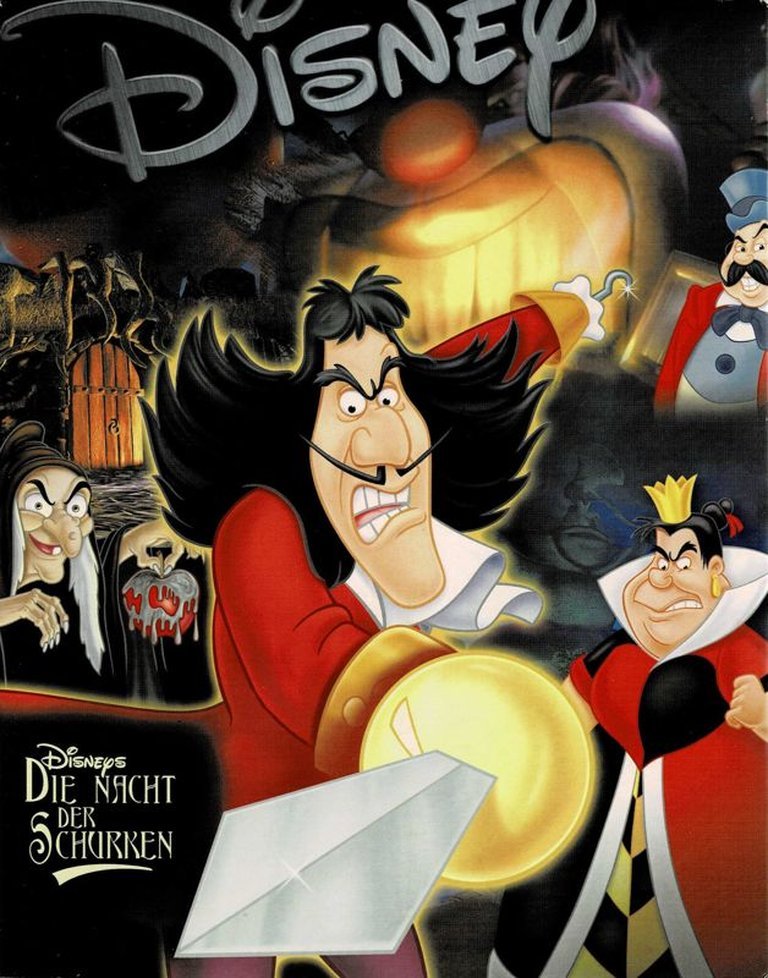
Description
In ‘Disney’s Villains’ Revenge’, players embark on a mission to restore the happy endings of beloved Disney stories before the villains take control forever. Guided by Jiminy Cricket, the game features a mix of first-person action and puzzle-solving, allowing players to explore iconic tales like ‘Peter Pan’, ‘Alice in Wonderland’, ‘Dumbo’, and ‘Snow White’. The gameplay involves navigating mazes, solving puzzles, and engaging in mini-games, all while enjoying special reward video clips of classic Disney animations.
Gameplay Videos
Disney’s Villains’ Revenge Free Download
Disney’s Villains’ Revenge Guides & Walkthroughs
Disney’s Villains’ Revenge Reviews & Reception
myabandonware.com (92/100): A triumphant return to form for the series
Disney’s Villains’ Revenge: A Fractured Fairy Tale Retrospective
Introduction
In 1999, Disney Interactive dared to ask: What if the villains won? The result was Disney’s Villains’ Revenge, a point-and-click adventure that twisted beloved Disney classics into dark, playful remixes. A cult relic of the late-CD-ROM era, the game tasked players with restoring “happily ever afters” to stories hijacked by iconic antagonists like Captain Hook and the Evil Queen. While overshadowed by titles like Kingdom Hearts, Villains’ Revenge remains a fascinating artifact—a bridge between Disney’s animated legacy and early experiments in interactive storytelling. This review explores its flawed ambition, nostalgic charm, and uneasy balance between child-friendly whimsy and surprisingly grim stakes.
Development History & Context
From Virtual Magic Kingdom to Bedroom Portal
Originally conceived as part of Virtual Magic Kingdom—a scrapped 1996 crossover MMO—Villains’ Revenge repurposed assets into a standalone narrative. Under creative director Roger Holzberg, the team pared down the scope to four reimagined Disney worlds, framing the adventure through a child’s bedroom portal. The game leveraged Disney Interactive’s DreamFactory engine, blending FMV cutscenes with traditional animation outsourced to Karen Johnson Productions.
Technological Tightropes
Released amid the transition to 3D gaming, Villains’ Revenge clung to 2D sprite-based characters against CGI backdrops—a choice that aged poorly but preserved the films’ hand-drawn aesthetic. Hardware limitations forced compromises: voice acting was truncated, and animations often looped stiffly. Yet, the CD-ROM format allowed for lush visuals and clips from classic films, enticing fans with nostalgia.
A Pre-Kingdom Hearts Experiment
At a time when Disney licensed games rarely crossed franchises (Hercules, Tarzan), Villains’ Revenge was a bold, if clunky, precursor to Kingdom Hearts. Its villain-centric premise clashed with corporate mandates to protect Disney’s “wholesome” image, per interviews with Holzberg. The game’s muted commercial reception (72% average score) reflected both its niche audience and the industry’s shifting focus toward console 3D epics.
Narrative & Thematic Deep Dive
A Storybook Torn Asunder
The premise is delightfully meta: Jiminy Cricket (voiced by Eddie Carroll) rips the endings from a storybook, unwittingly empowering villains to rewrite history. The Blue Fairy (Rosalyn Landor) recruits the player to fix four corrupted tales:
– Snow White: The Evil Queen poisons Snow White and imprisons the dwarfs, erasing the Prince from existence.
– Peter Pan: Hook ages Peter into a feeble old man, leaving Neverland defenseless.
– Alice in Wonderland: The Queen of Hearts beheads Alice (her still-talking head hidden in a maze).
– Dumbo: The Ringmaster mutilates Dumbo’s ears, trapping him in a humiliating circus act.
Subverting Innocence
The game’s tone wobbles between playful and morbid. Alice’s decapitation—played for dark comedy—contrasts sharply with Snow White’s grim fate. Each villain embodies a thematic foil: Hook embodies fear of aging, the Queen of Hearts symbolizes tyrannical absurdity, and the Ringmaster (a bizarre choice over Pinocchio’s Stromboli) represents exploitation.
Winks and Weaknesses
Dialogue leans on Disney in-jokes (Jiminy quips about Peter Pan’s film adaptation), but the player’s mute protagonist feels disconnected. The moral, repeated ad nauseam by the Blue Fairy, is simplistic: “Happily ever after” requires courage, not vengeance. Yet, the villains’ sheer glee in their victories—Hook’s maniacal laughter, the Queen’s shrill decrees—gives the story unexpected bite.
Gameplay Mechanics & Systems
Point, Click, Sigh, Repeat
The core loop alternates between:
1. Exploration: Click-to-move navigation with inventory puzzles (e.g., brewing potions to revive Snow White’s Prince).
2. Mini-Games: Sword duels with Hook, hedge maze navigation, and a rhythm-based clown dance-off.
3. Boss Battles: A first-person shield defense against villain projectiles.
Innovation vs. Frustration
The sword-fighting mechanic—using mouse movements to parry—was ambitious but imprecise. Similarly, the Alice maze required audio cues to locate her head, a clever idea hamstrung by inconsistent hitboxes. Puzzles often relied on trial-and-error, with Jiminy’s hints feeling either patronizing or insufficient.
A Difficulty Nightmare
Critics noted the jarring difficulty spikes. The “Hard” mode bordered on masochistic, while younger players struggled with unintuitive tasks (e.g., aligning circus contraptions for Dumbo). The final boss battle, a chaotic projectile-reflecting gauntlet, was particularly divisive.
World-Building, Art & Sound
Gothic Disney Aesthetics
Each villain warps their world into a Burton-esque nightmare:
年 Hook’s galleon floats beneath skeletal cliffs.
年 The Evil Queen’s lair resembles a rotting apple.
年 Wonderland’s maze twists with jagged topiaries.
Despite clashing with 2D sprites, the CGI backdrops ooze atmosphere, amplifying the sense of corruption.
Voice Acting: A Mixed Curse
Kathryn Beaumont (Alice) and Corey Burton (Hook) reprised their roles, injecting authenticity. However, recycled voice lines and compressed audio quality undercut performances. The soundtrack, remixing classic film motifs, is a highlight—Bill Brown’s score balances whimsy and menace.
Reception & Legacy
1999 Reviews: Polite Applause
Critics praised its Disney charm but skewered its flaws. FamilyPC (81%) lauded the animation but warned it was “too intense for younger kids.” PC Gaming World (40%) decried repetitive gameplay. Awards, including “PC Children’s Title of the Year” at the 2000 AIAS, couldn’t mask its commercial mediocrity.
A Faded Footprint
Villains’ Revenge never spawned sequels, though its villain-team-up premise influenced Kingdom Hearts (2002). Today, it’s remembered as a flawed but ambitious experiment—a precursor to Disney’s later interactive endeavors.
Conclusion
Disney’s Villains’ Revenge is a paradox: a game bursting with creativity yet hamstrung by technical and design limitations. Its twisted fairy tales and genre-blending gameplay deserve admiration, even as clunky controls and uneven pacing test modern patience. For Disney nostalgists, it’s a treasure trove of Easter eggs and eerie reimaginings. For historians, it’s a snapshot of an era when CD-ROMs dared to ask, What if Mickey’s foes got the last laugh? Flawed, fascinating, and unabashedly weird, Villains’ Revenge remains a footnote worth revisiting—preferably with a walkthrough handy.
Final Verdict: A 6/10 cult classic—more curious than enduring, but a must-play for Disney completists.