
- Release Year: 2021
- Platforms: Windows
- Publisher: Nostalgia Addict Games
- Developer: Nostalgia Addict Games
- Genre: Japanese-style RPG (JRPG), Role-playing (RPG)
- Perspective: Diagonal-down
- Game Mode: Single-player
- Gameplay: Turn-based combat
- Setting: Anime, Manga
- Average Score: 88/100
Description
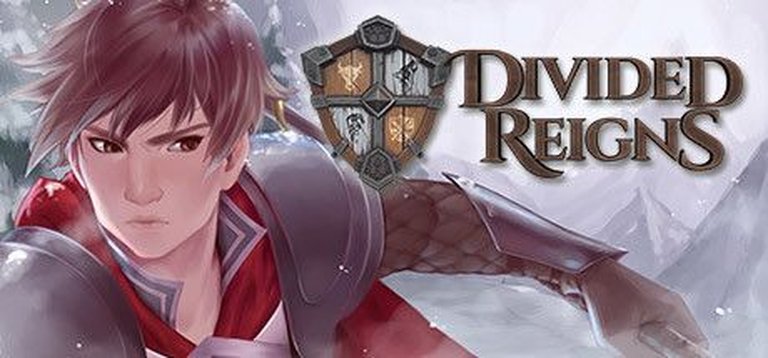
Divided Reigns is a classic turn-based JRPG set in a war-torn world divided among three nations, where Captain Ailfred, a disillusioned officer from a militarized empire, embarks on a quest for peace after his country’s conquest sparks chaos. The game blends nostalgic 2D sprite-based visuals and traditional RPG mechanics with innovative combat systems, featuring weapons with varied attack types and enemies with distinct weaknesses. Beyond its strategic depth, the story explores themes of racism and redemption through a diverse cast, including the persecuted Abeyans, as Ailfred and his allies navigate survival, moral dilemmas, and the struggle to unite a fractured realm.
Gameplay Videos
Where to Buy Divided Reigns
PC
Divided Reigns Mods
Divided Reigns Guides & Walkthroughs
Divided Reigns Reviews & Reception
steamcommunity.com : Divided Reigns delivers a quality Classic RPG experience.
store.steampowered.com (88/100): If this released on the 90’s, this would be the game we compare RPG’s to today
indiegamereviewer.com : Divided Reigns is a classic role-playing adventure game engrained in the most tried and true traditions of the JRPG.
steambase.io (89/100): Divided Reigns has earned a Player Score of 89 / 100.
Divided Reigns: A Modern Love Letter to Classic JRPGs
Introduction: A Nostalgic Yet Innovative Journey
Divided Reigns is a rare gem in the modern gaming landscape—a title that unapologetically embraces the traditions of 1990s Japanese role-playing games (JRPGs) while carving out its own identity through bold storytelling and mechanical innovation. Developed by the small but passionate team at Nostalgia Addict Games, this 2021 release is a labor of love, blending the pixel-art charm of Final Fantasy VI with the strategic depth of Chrono Trigger, all while tackling mature themes of war, racism, and redemption.
At its core, Divided Reigns is a 70+ hour epic that follows Captain Ailfred, a disillusioned soldier from the militaristic Vooresh Empire, as he navigates a world torn apart by conflict. What begins as a familiar tale of rebellion against tyranny quickly evolves into a nuanced exploration of morality, prejudice, and the cost of peace. The game’s greatest strength lies in its ability to balance nostalgia with modernity—its turn-based combat system, for instance, eschews the simplistic “attack until you win” approach of older RPGs in favor of a deeply tactical system where weapon choice and enemy observation are paramount.
This review will dissect Divided Reigns in exhaustive detail, examining its development history, narrative depth, gameplay mechanics, and cultural impact. By the end, it will be clear why this indie title has earned a devoted following and why it deserves a place in the pantheon of great JRPGs.
Development History & Context: A Passion Project Born from Nostalgia
The Studio Behind the Game
Nostalgia Addict Games is a small indie studio founded by Andrew Ryan Henke and Adam Dover, two developers with a profound appreciation for the golden age of JRPGs. Their previous work, Einlanzer, laid the groundwork for Divided Reigns, but it was this 2021 release that truly captured the attention of RPG enthusiasts. The studio’s ethos is rooted in a desire to recapture the magic of 16-bit and 32-bit era RPGs while introducing modern refinements.
The game was developed using RPG Maker MV, a tool often associated with amateur projects but wielded here with remarkable skill. The team’s dedication to authenticity is evident in every aspect of the game, from its handcrafted pixel art to its intricate battle system. Unlike many indie RPGs that rely on asset flips or generic templates, Divided Reigns features custom-crafted sprites, animations, and environments, ensuring a cohesive and immersive world.
The Vision: A Love Letter with a Twist
Henke and Dover’s vision was clear: create a game that feels like a lost SNES or PlayStation classic but plays like a modern experience. This meant:
– Emulating the aesthetic of 90s JRPGs (e.g., Final Fantasy VI, Breath of Fire III) while avoiding outright imitation.
– Reimagining combat to emphasize strategy over grind, a common criticism of older RPGs.
– Tackling mature themes rarely explored in classic JRPGs, such as systemic racism and the psychological toll of war.
The developers’ hands-on approach extended to community engagement. Even after launch, they remained active on Steam forums, addressing bugs, implementing player feedback, and fostering a sense of connection rarely seen in larger studios.
Technological Constraints and Innovations
While Divided Reigns is not a technical powerhouse by modern standards, its constraints (e.g., RPG Maker’s limitations) forced creativity. The game’s 2D diagonal-down perspective and sprite-based visuals are reminiscent of Octopath Traveler’s aesthetic, albeit with a more retro feel. The developers compensated for the engine’s limitations by:
– Designing enemy sprites to convey weaknesses (e.g., armored foes hint at vulnerability to “side” or “trip” attacks).
– Implementing a dynamic weapon system that encourages mid-battle swaps, a rarity in turn-based RPGs.
– Crafting a living world with day/night cycles, calendar events, and NPCs that react to the player’s progress.
The game’s Steam Deck compatibility further highlights its modern sensibilities, ensuring accessibility for players who prefer handheld gaming.
The Gaming Landscape at Launch
Divided Reigns released on April 2, 2021, into a market dominated by both AAA juggernauts (Final Fantasy VII Remake, Persona 5 Strikers) and a resurgence of indie RPGs (Chained Echoes, Sea of Stars). Despite this competition, it found a niche audience thanks to:
– A hunger for “old-school” RPGs among players disillusioned with modern action-RPG trends.
– Word-of-mouth praise for its storytelling and combat depth.
– A Steam community that embraced its challenges and lore.
The game’s $9.99 price point and demo availability also made it an easy sell for hesitant players.
Narrative & Thematic Deep Dive: War, Prejudice, and Redemption
Plot Overview: A World Divided
Divided Reigns unfolds in the war-torn continent of Schism, home to three dominant nations:
1. The Vooresh Empire: A militaristic superpower that has recently conquered the Kingdom of Hess-Erabi.
2. The Kingdom of Kairon: The last remaining rival to Vooresh, teetering on the brink of collapse.
3. Hess-Erabi: A once-proud nation now reduced to a occupied wasteland.
The story begins with Captain Ailfred, a high-ranking Vooresh officer who grows disillusioned with his nation’s warmongering. After a failed attempt to broker peace, he and his loyal lieutenant, Shakar, are exiled and branded as traitors. Their journey leads them to cross paths with Habar and Niomi, a father-daughter duo from the persecuted Abeyan race—a humanoid species subjected to systemic racism and dehumanization.
Themes: More Than Just a War Story
Divided Reigns is not content to be a simple “good vs. evil” tale. Its narrative explores:
– The Cycle of Violence: The game questions whether peace is possible in a world where war is the default state. Ailfred’s idealism is constantly tested, and the story refuses to offer easy answers.
– Systemic Racism: The Abeyan people are treated as subhuman, with many characters (including some party members) initially sharing this prejudice. The game’s portrayal of racism is unflinching, making it one of the few JRPGs to tackle such themes with depth.
– Moral Ambiguity: No faction is purely virtuous. The Vooresh Empire’s actions are reprehensible, but its citizens are not monsters—they are products of a system that glorifies conquest.
– The Cost of Leadership: Ailfred’s arc is one of burdened leadership. His decisions have consequences, and the game forces players to grapple with the weight of command.
Characters: A Diverse and Flawed Cast
The game’s nine playable characters are among its greatest strengths. Each has a distinct personality, backstory, and arc that evolves over the 70+ hour runtime. Key figures include:
– Ailfred: The idealistic protagonist, whose journey from loyal soldier to reluctant revolutionary is compelling. His relationship with Shakar is the emotional core of the story.
– Shakar: A fierce and loyal warrior whose nationalism often clashes with Ailfred’s pacifism. Her arc explores the tension between duty and morality.
– Habar and Niomi: The Abeyan father-daughter duo. Habar is a wise but weary figure, while Niomi’s youthful optimism contrasts with the harsh realities of their world.
– Celeste: A wealthy fencer from Kairon who struggles with her privilege and desire to help the less fortunate.
– Gall: A monk who harbors deep resentment toward Ailfred for his role in Hess-Erabi’s fall. His arc is one of forgiveness and reconciliation.
The writing shines in its character interactions, with party members frequently debating ethics, strategy, and personal grievances. The game’s dialogue is sharp, avoiding the stilted prose that plagues many indie RPGs.
Dialogue and World-Building
The game’s world is richly detailed, with lore scattered across NPCs, books, and environmental storytelling. Cities feel lived-in, with distinct cultures and histories. For example:
– Vooresh is a nation of rigid militarism, where children are indoctrinated into soldiery from a young age.
– Kairon is a land of stark wealth inequality, where the elite live in opulence while the poor suffer.
– Hess-Erabi is a shadow of its former self, its people reduced to resistance fighters and refugees.
The game’s calendar system adds immersion, with festivals, holidays, and dynamic events that change based on the in-game date.
Gameplay Mechanics & Systems: Strategy Over Grind
Combat: A Masterclass in Tactical Depth
Divided Reigns’ combat is its most innovative feature. While it retains the turn-based, menu-driven battles of classic JRPGs, it introduces a weapon-based attack system that rewards observation and adaptability.
The Weapon System
Every weapon in the game grants access to different attack types, such as:
– High (overhead strikes)
– Side (flanking attacks)
– Ranged (bow/crossbow shots)
– Reach (polearm thrusts)
– Low (sweeping attacks)
– Trip (knockdowns)
Enemies have two weaknesses and two resistances, forcing players to:
– Analyze enemy sprites for clues (e.g., armored foes are weak to “side” or “trip” attacks).
– Swap weapons mid-battle to exploit vulnerabilities.
– Balance damage output with flexibility (e.g., a greatsword deals high damage but only allows “high” attacks, while a dagger offers multiple attack types at lower damage).
This system ensures that no two battles feel the same. Players must constantly assess threats and adjust their strategy, making even random encounters engaging.
Magic and the “Rock-Paper-Scissors” System
Magic follows a traditional elemental weakness system (fire > ice > lightning > fire), but with a twist: spells are tied to character-specific abilities, preventing the “one mage fits all” problem of older RPGs.
Difficulty and Pacing
The game is challenging but fair. Unlike many JRPGs where grinding levels trivializes combat, Divided Reigns encourages tactical mastery over brute force. Boss fights, in particular, are puzzle-like, requiring players to identify and exploit weaknesses under pressure.
Character Progression: Depth Without Bloat
Progression is streamlined but meaningful:
– No traditional “job system”—characters have fixed roles but can be customized via equipment.
– Skill trees are minimal, focusing on passive bonuses rather than ability spam.
– Equipment matters more than levels, with rare weapons offering unique attack types.
This design philosophy ensures that every piece of gear feels impactful, and players are constantly experimenting with loadouts.
Exploration and Side Content
The world of Divided Reigns is vast and dense, with:
– Dozens of dungeons, each with unique puzzles and enemy layouts.
– Side quests that feel integral to the world, often tied to character arcs.
– Hidden secrets, from optional bosses to lore-rich artifacts.
The game’s Steam Deck compatibility makes exploration even more enjoyable, as the handheld format suits its pick-up-and-play structure.
UI and Quality of Life
The UI is clean and functional, with:
– Intuitive menus that avoid the clutter of modern RPGs.
– A bestiary that tracks enemy weaknesses (a godsend for completionists).
– Quick-save functionality, a mercy given the game’s length.
World-Building, Art & Sound: A Living, Breathing Schism
Visual Design: Pixel Art Perfection
Divided Reigns’ anime-inspired pixel art is a standout feature. The game’s aesthetic is a love letter to the SNES era, with:
– Detailed character sprites that convey emotion and personality.
– Vibrant environments, from the war-torn streets of Hess-Erabi to the opulent palaces of Kairon.
– Enemy designs that are both creative and functional, with visual cues for weaknesses.
The game’s diagonal-down perspective (similar to Octopath Traveler) gives it a distinct identity, while the animated backgrounds add depth to dungeons and towns.
Soundtrack: A Mixed but Memorable Score
The music, composed by multiple artists, is serviceable but not revolutionary. While it lacks the iconic melodies of Final Fantasy or Chrono Trigger, it excels in atmospheric storytelling:
– Battle themes are pulse-pounding, with dynamic shifts during critical moments.
– Town and dungeon tracks reinforce the game’s tone, from somber war zones to bustling markets.
– Character leitmotifs subtly underscore key emotional beats.
The soundtrack’s Celtic and militaristic influences give it a unique flavor, even if it doesn’t reach the heights of its inspirations.
Atmosphere and Immersion
Divided Reigns’ world feels alive, thanks to:
– NPCs with schedules, who move about towns based on the time of day.
– Dynamic events, such as festivals or military crackdowns, that react to the player’s progress.
– Environmental storytelling, with ruined cities and war camps hinting at the broader conflict.
The game’s writing and art coalesce to create a world that feels lived-in, making the player’s journey all the more impactful.
Reception & Legacy: A Cult Classic in the Making
Critical and Commercial Reception
Divided Reigns launched to overwhelmingly positive reviews on Steam, with an 88% positive rating from over 127 user reviews. Critics praised:
– Its combat system as a refreshing take on turn-based RPGs.
– Its storytelling, particularly its handling of mature themes.
– Its length and depth, with many comparing it favorably to classic Square Enix titles.
However, it remained a niche title, overshadowed by bigger releases. Its lack of mainstream marketing meant that it relied on word-of-mouth and Steam’s algorithm to find an audience.
Evolving Reputation
In the years since its release, Divided Reigns has gained a devoted following, with players citing it as:
– “The JRPG we deserved in the 2020s.”
– “A hidden gem that rivals Chained Echoes in depth.”
– “Proof that indie developers can outdo AAA studios in storytelling.”
Its Steam Deck verification and frequent sales have introduced it to new players, ensuring its longevity.
Influence on the Genre
While Divided Reigns hasn’t (yet) spawned a wave of imitators, its combat system has influenced other indie RPGs, such as:
– Sea of Stars (which also emphasizes tactical turn-based combat).
– Chained Echoes (which shares its focus on weapon-based strategies).
Its success proves that there’s still a market for deep, story-driven RPGs that don’t rely on open-world bloat or action combat.
Conclusion: A Modern Masterpiece of Nostalgia and Innovation
Divided Reigns is more than just a love letter to the JRPGs of yesteryear—it’s a bold reimagining of what the genre can be. By blending classic aesthetics with modern design sensibilities, it delivers an experience that is both comforting and fresh.
The Good:
✅ Deep, tactical combat that rewards observation and strategy.
✅ A rich, morally complex story with well-developed characters.
✅ A vast, immersive world filled with secrets and side content.
✅ A respectful yet innovative take on JRPG traditions.
The Bad:
❌ The soundtrack, while solid, lacks memorable standout tracks.
❌ The RPG Maker engine shows its limits in some animations.
❌ The sheer length (70+ hours) may deter casual players.
Final Verdict: 9/10 – A Must-Play for RPG Fans
Divided Reigns is one of the best indie RPGs of the 2020s, standing shoulder-to-shoulder with titles like Chained Echoes and Sea of Stars. It’s a testament to the power of passion in game development, proving that a small team with a clear vision can craft an experience that rivals the classics it emulates.
For fans of turn-based combat, deep storytelling, and pixel-art aesthetics, Divided Reigns is not just a recommendation—it’s a necessity.
Where to Buy: Steam | Price: $9.99 (frequently on sale)
Divided Reigns isn’t just a game—it’s a reminder of why we fell in love with RPGs in the first place.