
- Release Year: 2009
- Platforms: Windows
- Publisher: dtp entertainment AG
- Genre: Special edition
- Perspective: Third-person
- Game Mode: Single-player
- Setting: Fantasy
- Average Score: 72/100
Description
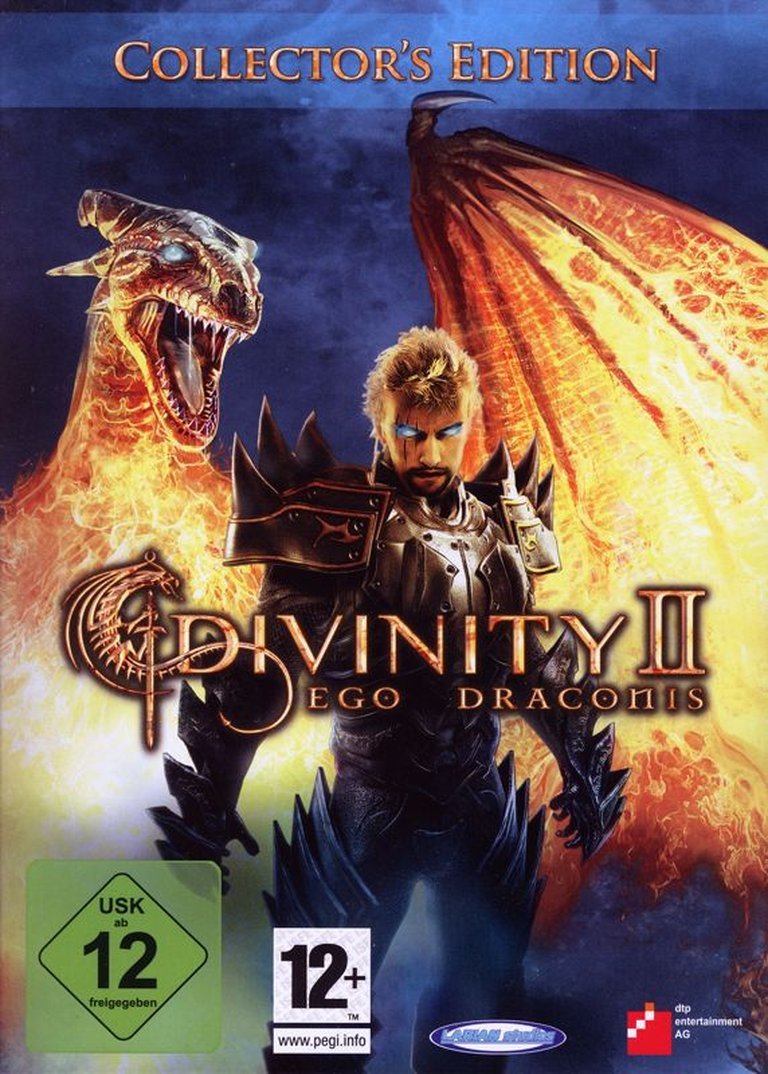
Divinity II: Ego Draconis (Collector’s Edition) is a special edition of the action role-playing game developed by Larian Studios, set in the fantasy world of Rivellon, where players begin as a Dragon Slayer at the end of their training and are bestowed with draconic powers, enabling seamless transformation between human form for quests, exploration, mind-reading, crafting, and third-person combat, and dragon form for thrilling aerial battles, all within a freeform progression system featuring a customizable Battle Tower base.
Divinity II: Ego Draconis (Collector’s Edition) Cracks & Fixes
Divinity II: Ego Draconis (Collector’s Edition) Patches & Updates
Divinity II: Ego Draconis (Collector’s Edition) Mods
Divinity II: Ego Draconis (Collector’s Edition) Guides & Walkthroughs
Divinity II: Ego Draconis (Collector’s Edition) Reviews & Reception
ign.com : The more you play, the better it gets.
metacritic.com (72/100): Mixed or Average
rpgfan.com : Despite its charm, humor, and beautiful world, Divinity II suffers from bugs and glitchiness.
rpgamer.com : A large, complex game which promises many things, but often delivers only halfway.
Divinity II: Ego Draconis (Collector’s Edition): Review
Introduction
In the scorched annals of Rivellon, where dragons once soared unchallenged and the Divine’s light flickered against eternal chaos, Divinity II: Ego Draconis (Collector’s Edition) emerges as a bold metamorphosis for Larian Studios—a third-person action RPG that dares players to transcend humanity and embrace draconic fury. Released on July 24, 2009, for Windows by dtp entertainment AG, this Collector’s Edition elevates the core experience with tactile treasures: an 18cm resin figurine of a dragon knight wielding a metal letter opener, a lavish cloth map of Rivellon, a seven-track soundtrack EP by composer Kirill Pokrovsky, and a temporary tattoo emblazoned with the game’s logo. As the first Divinity title to breach consoles (Xbox 360 alongside PC), it bridges the isometric legacy of Divine Divinity (2002) and Beyond Divinity (2004) with ambitious 3D spectacle. Yet, amid 2009’s RPG renaissance—flanked by Dragon Age: Origins‘ narrative depth and Fallout 3‘s open-world sprawl—Ego Draconis carves a niche as Larian’s imperfect dragon: innovative in form-shifting combat and freeform progression, but grounded by technical turbulence. This review posits that, despite its flaws, the Collector’s Edition stands as a collector’s cornerstone, encapsulating Larian’s audacious pivot toward hybrid RPG innovation that foreshadowed their modern masterpieces.
Development History & Context
Larian Studios, helmed by visionary director Swen Vincke, ignited Divinity II‘s development around 2006, buoyed by financial stability post-Beyond Divinity. From inception, the dragon transformation was non-negotiable—a defining hook to differentiate from isometric forebears. Early concepts brimmed with ambition: a sprawling Rivellon map echoing Divine Divinity, multiplayer co-op, an expansive Battle Tower hub, and a hybrid “third form” bridging human and dragon for ground-based supremacy (its model repurposed for foes). Budgetary and technical realities trimmed these; the final product leveraged the Gamebryo engine—famously powering The Elder Scrolls IV: Oblivion (2006) and Fallout 3 (2008)—demanding hefty 4GB RAM allocations for seamless zone transitions, a tall order amid 2009’s mid-range hardware norms.
Lead designer Farhang Namdar, writer Jan Van Dosselaer, and composer Kirill Pokrovsky shaped a vision blending Diablo-esque loot grinding with classic CRPG branching dialogues. Publishers fragmented regionally: dtp entertainment for EU, cdv Software Entertainment for NA, and 1C Company for CIS. The Collector’s Edition, exclusive to Windows, launched ahead of the base game’s EU (November 20, 2009) and NA (January 5, 2010) retail drops, tantalizing fans with physical swag amid a landscape dominated by Bethesda’s seamless worlds and BioWare’s cinematic epics. Technological constraints shone through: Gamebryo’s quirks fueled bugs and performance dips, especially on Xbox 360, where porting woes amplified frame drops and AI glitches. Post-launch, Larian iterated furiously—Flames of Vengeance (2010) addressed the “unsatisfying” cliffhanger ending, bundling into The Dragon Knight Saga (PC: 82/100 Metacritic; Xbox: 72/100) and culminating in the 2012 Developer’s Cut with dev tools and extras. In 2009’s RPG arena—post-Oblivion‘s freedom, pre-Skyrim‘s polish—Ego Draconis embodied indie ambition clashing with AAA expectations, propelling Larian from cult status toward Original Sin stardom.
Narrative & Thematic Deep Dive
Divinity II unfurls in Rivellon, scarred by apocalyptic wars against the Lord of Chaos and Damian the Damned One—a tragic antihero born from the Demon of Lies’ soul-transfer, adopted yet betrayed by Lucian the Divine. The prologue recaps this lore: Lucian’s mercy spares infant Damian, only for Black Ring seductress Ygerna (daughter of necromancer Kalin) to awaken his chaos heritage. Her execution sparks Damian’s soul-forged bond with her spirit, igniting vengeance. Banished to Nemesis, Damian erupts decades later, allying with treacherous Dragon Knights to slay Lucian amid climactic stalemate. Half a century on, Rivellon enjoys fragile peace—until you, a nascent Dragon Slayer, receive draconic powers (erasing memories) amid a dragon sighting.
The player awakens as an amnesiac knight, thrust into Broken Valley’s goblin-infested wilds. Encounters with Damian reveal his Ygerna obsession and fabricated “reversed soul forge” ruse; tricked into her revival, you’re imprisoned in the Hall of Echoes. Themes probe betrayal’s cycle—Damian’s patricidal rage mirrors Lucian’s mercy-fueled hubris—interwoven with power’s corruption: draconic gifts empower yet ensnare. Branching dialogues, mind-reading (trading XP for secrets, e.g., vendor discounts or quest twists), and choices ripple locally (e.g., marital fidelity dilemmas or philosophical skeleton debates), fostering moral ambiguity sans black-white morality. Quirky NPCs like ZixZax the “Almost Wise” or the lisping necromantic servant inject humor, subverting epic gravitas.
Yet flaws mar the tapestry: predictable twists (e.g., Dragon Knight betrayal), offstage villainy, and an abrupt cliffhanger prioritize side-quests’ pathos—farmers’ porcine rescues (“whisper Rosebud”) or goblin translators—over epic propulsion. Flames of Vengeance redeems via Hypnerotomachia prison, Lucian revelations, and Aleroth’s siege, but the CE’s base game feels truncated. Thematically, it meditates on identity duality (human vs. dragon), echoing Rivellon’s war-torn identity, with player agency illusion—choices flavor, but Damian’s arc inexorably culminates in crystal stasis.
Gameplay Mechanics & Systems
Ego Draconis masterfully hybridizes action-RPG loops: real-time combat (pausable for tactics), freeform progression, and Diablo-inspired loot in a third-person vista. Tutorial packages seed knight, ranger, or mage archetypes, but classless schools—priest (summons), sorcerer (fireballs), knight (melee), ranger (arrows), dragon slayer (hybrids)—permit wild builds. Leveling yields skill/talent points; mind-reading unveils NPC psyches at XP cost (repayable debt), unlocking gear or paths. Crafting diversifies: alchemy brews potions, necromancy assembles customizable undead pets (body-part mixes for mage/melee variants), enchanting sockets gems/charms.
Core loop thrives post-Battle Tower acquisition: teleport hub with illusionist (reskins), collectors (resource foraging, upgradable via gold/armor), alchemist, blacksmith, and necromancer. Send loot remotely, warp freely—mitigating inventory woes. Dragon form revolutionizes: aerial 3D combat (fire breath, skills, equippable armor/claws) in vast zones like Orobas Fjords, siege towers, or dogfights. Yet restrictions grate—no ground-enemy visibility, finite spaces—tempering godhood.
UI shines intuitively (radial menus, waypoint shrines sans hand-holding), but flaws abound: floaty combat (weightless swings, homing spells), AI idiocy (wall-stuck foes exploitable for cheese), uneven scaling (early brutality demands side-quest grinds; bosses heal-spam). No respawns enforce exploration, but inventory bloat (herbs/ore stacks to 50) burdens pre-Tower. Innovative yet flawed, it rewards creativity—charm foes, summon ghosts—over twitch reflexes, echoing Diablo‘s grind with CRPG depth.
World-Building, Art & Sound
Rivellon’s visage—lush Broken Valley meadows, jagged Orobas cliffs, scorched Damian-wastes—exudes handcrafted intimacy over Bethesda vastness. No copy-paste; each dungeon pulses uniquely (puzzles, platforming), vistas breathtaking (waterfalls, fortresses). Dragon flight unveils verticality, transforming fjords into playgrounds. Art direction (Koen Van Mierlo) favors moody Gamebryo realism: star-robed wizards, Dragon Elves, goblin hordes. Character models recycle (six faces dominate), animations jerky (bobbing heads, pinwheeling deaths), but later zones dazzle.
Sound elevates: Pokrovsky’s orchestral swells evoke epic fantasy (EP’s seven tracks a CE gem), Wwise engine delivers clangorous clashes, goblin snarls. Voicework charms—sarcastic dragons, lisping undead—infusing personality. Atmosphere coalesces: mind-read quips (“blacksmith’s stable romp”), philosophical skeletons, pig quests foster lived-in whimsy amid cataclysm, Battle Tower a pulsating hearth amplifying immersion.
Reception & Legacy
Launch reception split: Metacritic PC 72/100 (49% positive), Xbox 360 62/100—praised for “engrossing world” (GameZone 8.4/10), narrative/openness; lambasted for bugs, console clunk (IGN 4.8/10: “unpleasant burning sensation”). No CE-specific scores (MobyGames n/a), but base game’s 7.2/10 MobyScore reflects cult appeal. Patches and Dragon Knight Saga boosted scores (PC 82/100), vindicating Larian.
Commercially modest, it seeded Larian’s ascent: Dragon Commander (2013) expanded dragon RTS, paving Original Sin (2014)’s Kickstarter triumph. Legacy endures as transitional artifact—dragon duality influencing genre hybrids—its flaws (bugs, pacing) lessons fueling Baldur’s Gate 3 polish. In history, a flawed dragon whose roar echoed.
Conclusion
Divinity II: Ego Draconis (Collector’s Edition) roars as Larian’s metamorphic milestone: a 60+ hour odyssey of dual-form innovation, Rivellon lore, and quirky freedom, bundled with artifacts immortalizing its ambition. Technical stumbles—bugs, AI, console woes—clip its wings, yet exhaustive quests, Battle Tower ingenuity, and thematic betrayal cement its niche. Amid 2009’s titans, it forges Larian’s path from cult to colossus, warranting replay for historians. Verdict: Pivotal Cult Classic (8/10)—transformative, if turbulent; the CE a historian’s hoard for Rivellon’s enduring saga.