
- Release Year: 2017
- Platforms: PlayStation 4, Windows Apps, Windows, Xbox One, Xbox Series
- Publisher: Arc System Works Co., Ltd., Neowiz Games Corporation
- Developer: DJMax Sound Lab Team, Rocky Studio
- Genre: Action
- Game Mode: Online PVP, Single-player
- Gameplay: Music, rhythm
- Average Score: 87/100
Description
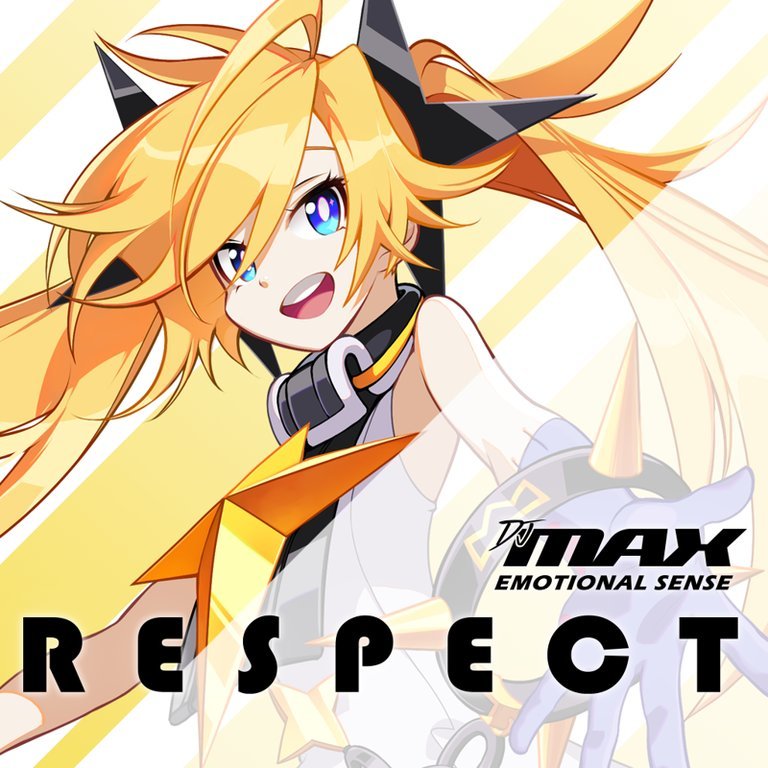
DJMax Respect is a music rhythm action game from the DJMax series, where players engage in note-charting gameplay by hitting falling notes in time with electronic music tracks using a direct control interface. It features a vast and diverse soundtrack, including songs from the core series and numerous collaborative packs with other rhythm game franchises like Chunithm and Cytus, and has been released on PlayStation 4, Windows, and Xbox platforms since 2017 with ongoing content updates.
Gameplay Videos
Where to Buy DJMax Respect
DJMax Respect Reviews & Reception
opencritic.com (90/100): DJMax Respect is an excellent package for rhythm game fans to pick up, regardless of having played the series before or not.
opencritic.com (90/100): DJMax Respect is getting very close to being my favourite rhythm game on PS4 with its eclectic song selection and fantastic design.
opencritic.com (90/100): Although I came in rusty, DJMax Respect beckoned me to keep my fingers dancing and to further one-up myself.
opencritic.com (80/100): DJMax Respect continues in the series’ tradition of offering a challenging rhythm game that is packed with content.
opencritic.com (90/100): With a high spike in difficulty that demands respect and practice to scale over, DJMax Respect is a journey that will take you through the last dozen years of Korean rhythm games with a roster of many of the series’ greatest hits.
opencritic.com (80/100): Press X to pay your respect to one of the greatest, if not the best, rhythm game on PS4.
opencritic.com (90/100): DJMax Respect is easily the hardest music game I’ve ever played but is also the most jam-packed with songs right on the disc and plenty of content to unlock.
opencritic.com (85/100): A really hard and engaging rhythm game that pays homage to whole DJMax series.
metacritic.com (90/100): With a high spike in difficulty that demands respect and practice to scale over, DJMax Respect is a journey that will take you through the last dozen years of Korean rhythm games with a roster of many of the series’ greatest hits.
metacritic.com (90/100): DJMax Respect is easily the hardest music game I’ve ever played but is also the most jam-packed with songs right on the disc and plenty of content to unlock.
metacritic.com (100/100): Doesn’t matter when, but you will be able to play until the end of time, offline as it should be.
metacritic.com (100/100): With the massive and lovely initial library of songs, great difficulty spread, and with the promising updates of songs, this is a real treat for anyone who loves rhythm games.
metacritic.com (90/100): It’s absolutely loaded with tracks and a strong difficulty curve, meaning that players are regularly being challenged to do increasingly difficult tracks.
metacritic.com (85/100): DJMax Respect uses all the same ingredients that made the franchise successful.
metacritic.com (80/100): DJMax Respect is the culmination of over a decade of rhythm action, and deserves a look for series and genre fans.
metacritic.com (80/100): It’s not going to be forgiving on any level for players in their first couple of hours.
metacritic.com (75/100): A fun release with a huge amount of tracks which will entertain franchise fans for a long time to come.
DJMax Respect: The Rhythmic Resurrection That Redefined a Franchise
Introduction: A Homage and a Rebirth
In the landscape of rhythm games, few franchises carry the quiet, passionate legacy of South Korea’s DJMax. Born in the mid-2000s as a PC and PSP-centric challenger to giants like Beatmania and Dance Dance Revolution, the series cultivated a dedicated following with its unique blend of button-based precision, eclectic electronic soundtracks, and a distinct, vibrant anime aesthetic. After a seven-year dormancy following DJMax Portable 3 and the mobile-centric DJMax Ray, the series returned not with a whimper, but with a thunderous, meticulously crafted statement. DJMax Respect, released for PlayStation 4 in 2017 and later expanded into DJMax Respect V for PC and Xbox, is that statement. It is simultaneously a loving best-of compilation, a technical showcase, and a bold reboot that injected new lifeblood into a cherished but stagnant property. This review will argue that DJMax Respect is not merely a nostalgic cash-grab but a pivotal, forward-thinking evolution of the DJMax formula, successfully bridging its arcade roots with modern online engagement while constructing one of the most elaborate and unexpected narrative frameworks in the rhythm game genre.
Development History & Context: From Pentavision’s Ashes to Rocky Studio’s Resolve
The story of DJMax Respect is intrinsically linked to the turbulent history of its creators. The original developer, Pentavision, was a powerhouse in Korean rhythm game development, responsible for the early DJMax titles and the EZ2ON series. However, internal strife and corporate changes led to Pentavision’s dissolution around 2012. Many of its core talents, including key composers like Shinji Hosoe and artists like DumpingLIFE, were absorbed by Neowiz Games, forming the nucleus of what would become Rocky Studio and the DJMAX Sound Lab Team.
Development began in 2016 under director Kim Daeik (juking) and producer Baek Seungcheol (BEXTER), with Li Junseob (DumpingLIFE) as Art Director. Their mission was clear: to revive a beloved franchise for a new generation of consoles and a global audience. The technological shift was significant. Moving from the PSP’s limited hardware to the PlayStation 4’s robust Unity engine allowed for a leap to 1080p resolution and 60 frames per second for all background animations (BGAs), a massive visual upgrade. The team painstakingly remastered hundreds of legacy BGAs while crafting 40 brand-new tracks and animations for the base game. The original release was Asia-centric (July 2017), with a Western launch following in March 2018, published by Arc System Works in Japan—a partnership that signaled the game’s premium, “game-first” positioning.
The gaming landscape of 2017-2020 was defined by the maturation of the rhythm genre on consoles (Hatsune Miku: Project DIVA, Cytus on mobile) and the rise of “live service” models. DJMax Respect masterfully straddled these trends. It was a comprehensive, single-player package at launch but was architected from the ground up for post-launch content expansion. The 2020 PC port, DJMax Respect V, was not a simple port but a substantial rework that introduced new modes (AIR, OPEN, LADDER), cross-platform play, and set the stage for the seasonal Clear Pass system—a battle pass model that would deliver a steady stream of songs, gear, and UI themes for years. This hybrid approach of a robust initial product with a planned multi-year content roadmap was visionary for a niche genre.
Narrative & Thematic Deep Dive: From Simple BGAs to a Multiversal Cosplay Drama
For years, DJMax lore was an esoteric afterthought, glimpsed only in cryptic BGAs and character cameos. DJMax Respect initially continued this tradition, using its BGAs to pay homage to the series’ past. The opening tracks “Glory Day” and “BlackCat” served as a meta-narrative reboot: a player-avatar named Play visits the “Game Graveyard” to resurrect the series’ first mascot, El (E.L./Elle), resulting in two conflicting outcomes—El becomes the sunny, sword-wielding El Clear or the mischievous, demon-eyed El Fail. These two became the series’ new iconic duo, representing the duality of player experience: the triumph of a “Clear” versus the frustration of a “Fail.”
What followed, however, was an unprecedented, years-long serialized story told across DLC expansions, culminating in the V EXTENSION and V LIBERTY seasons. The lore became a dense, multiversal epic exploring themes of creation, abandonment, and the parasitic relationship between game developers (“the Workers/Weavers“), the fictional world, and the players (“the Performers“).
- VERSE.1 & The Diein Saga: The initial conflict between Clear and Fail is catalyzed by the series’ hidden villain, Diein (다인), an androgynous, horned celestial being from 2006’s Portable 2 track “Nightmare.” Diein’s backstory—ostracized for their horns, rescued by the fallen angel Gaya, losing Gaya to a human—was retrofitted as the prime mover. In the climactic “glory MAX” and “DIE IN,” it’s revealed Diein orchestrated El’s flawed resurrection, sealing a monster into Clear’s arm and Fail’s eye, making them unstable “Children of Destiny.”
- The TAPSONIC Crossover: Lena: The story expanded beyond its original cast by incorporating Lena, mascot of Neowiz’s mobile rhythm series TAPSONIC TOP. Her BGA (“Daydream“) was a watershed moment, showing Clear and Fail literally pulling her from her own tragic narrative (a former idol broken by her coach) into the DJMax universe, where she achieves her dream and founds a talent agency. Lena evolved into a powerful, pragmatic force within the DJMax world, even forcing Diein into an “Exclusive idol contract” to pay for property damage.
- The Lirulu Saga & Liberty Arc: A new antagonist, the demonic Lirulu (리룰르), emerged from the “quixotic” BGA. Lirulu is a “divine variable” with the power to manipulate parallel universes, viewing the countless Clear/Fail instances across different BGAs as “Children of Destiny” vying for the player’s (Play’s) love. His goal: to ensure stability by having them eliminate each other (“pruning”). This arc explored meta-textual themes of canon, creator intent, and player influence. The twins Camilla and Preiya, from the ancient 2004 track “Oblivion,” were revealed to be victims of Lirulu’s manipulation—their tragic, murderous sibling rivalry paused by Lirulu’s red thread of fate.
- Climax and The Weavers: The conflict escalated to the cosmic level with the introduction of Jormungandr, the Weaver of Life. She revealed she was the inadvertent “mother” of Clear and Fail, their corruption a side-effect of Diein’s intervention. She represents a cold, systemic force that seeks to enforce “correct” destinies (like Camilla and Preiya’s tragic fate). The final showdown pits Lirulu’s chaotic, protective “fun” against Jormungandr’s ruthless order, with Play (the player) as the ultimate power source whose attention sustains worlds.
The narrative is a stunning, if bewildering, feat of long-form storytelling in a genre not known for it. It transforms gameplay sessions into acts of world-support, where each cleared song reinforces the reality of these characters. The shift from simple visual accompaniments to a complex, serialized mythos (formally structured with a “Story” mode added in later seasons) is DJMax Respect‘s most audacious and defining characteristic.
Gameplay Mechanics & Systems: Precision Personified
At its core, DJMax Respect is a four-to-eight-button vertical scrolling rhythm game. Notes (taps, holds, simultaneous “chord” notes, and analog “laser” fills controlled by sticks) descend toward a judgment line. The objective is to hit them with precise timing (Perfect, Great, Good, Miss) to fill a health gauge, build a combo, and activate the Fever multiplier system for score boosts.
- Scoring & Difficulty: The scoring was overhauled to match Technika 2/3, with a base song score of 300,000 (PS4) or 1,000,000 (Respect V). Difficulty is denoted by a 1-to-15 star rating, with 1-4 being tutorial-like and 12+ featuring extreme note densities, irregular rhythms, and complex overlaps. The series’ signature “infinite combo” mechanic from older titles was removed for online leaderboard balance.
- Modes:
- Arcade (PS4 only): Pick 3 songs from a random unlocked set. The core progression and EXP grind.
- Freestyle: Play any unlocked song freely, with BPM and speed adjustments. The practice sandbox.
- Mission: 60+ pre-set challenges with specific conditions (no misses, score thresholds, special “effectors” like fade-out or chaos). Excellent for targeted skill improvement.
- Collection/Lounge: View stats, unlocked BGAs, artwork, and customize your DJ profile.
- Respect V Exclusives: AIR Mode (radio-style continuous random playlists with social features), OPEN Mode (up to 7-player simultaneous score attack), LADDER Mode (competitive ranked ladder with pick/ban), and Link Disc (a punishing sequence of linked 5B/8B hybrid charts).
- Progression & Customization: The Clear Pass seasonal battle pass (introduced in 2020) became the primary progression loop. Earning “Clear Points” through plays and missions unlocks tiers with new songs, gear (visual themes and note speed modifiers), note skins, and UI themes. DJ CLASS rankings track proficiency per button mode (4B-8B). An achievement system ties into these unlocks. The in-game shop uses Rocky Points (premium currency) for DLC packs and some cosmetics, while Max Coins (earnable daily) cover older shop items.
- Control & Accessibility: The DualShock 4 is the standard, using D-pad and face buttons. PC supports keyboard (default A,S,D,F etc. for 4-6B) and full controller remapping. The SC (Strike) chart for keyboard in Respect V added 8-10 key layouts for hardcore players. Accessibility options include adjustable note speed, auto-play, and (later) simplified note skins and adjustable FAST/SLOW indicators.
The gameplay is brutally honest: it demands precision. There is no “easy mode” handicapping. The satisfaction is intrinsically tied to overcoming its steep curve, a hallmark of the series. The removal of “cheat” gear like Max LP and Auto-Fever penalties was a necessary step for competitive integrity.
World-Building, Art & Sound: A Neon-Drenched Synth Odyssey
DJMax Respect‘s presentation is a masterclass in cohesive, high-energy aesthetics.
* Visual Direction: The game embraces a clean, modern anime-inspired style with a heavy emphasis on neon palettes—blues, pinks, purples. The UI is sleek and readable, a major upgrade from earlier cluttered interfaces. The BGAs are the star: each song has a unique, full HD, 60 FPS music video. They range from abstract geometric patterns to full-blown animated narratives featuring the game’s mascot characters (Clear, Fail, Lena, Diein, etc.). The character designs by DumpingLIFE and the sound lab team are expressive and iconic. The respect for legacy is shown in the meticulous remastering of hundreds of older BGAs, preserving the series’ history in crisp detail.
* Sound Design & Soundtrack: This is the game’s undisputed soul. The base soundtrack of 147 songs is a curated time capsule: 107 tracks from Portable and Portable 2 plus 40 new commissions. The music spans electronic subgenres (trance, house, drum & bass, dubstep), rock, K-pop, hip-hop, and even orchestral pop. The new music holds its own against classics, with standout tracks like “Binary World” (Tsukasa), “Boom!” (BEXTER), and “Bullet, Wanted!” (Mycin.T). The series’ tradition of featuring prominent Korean and international artists continues, with later Respect V DLC adding marquee names like Marshmello (“Alone”), Porter Robinson (“Sad Machine”), K/DA (“POP/STARS”), and crossovers from other rhythm games (Deemo, Cytus, Arcaea). The sound quality is immaculate, and the key-sounding (audible note hits synced to the music) is perfectly implemented, making the gameplay feel like an instrument.
The art and sound don’t just accompany the gameplay; they define the game’s identity. The visual pulse of a BGA synced to a drop, the crisp hit of a Perfect judgment—it’s a total sensory package that arguably surpasses its arcade contemporaries in polish and personality.
Reception & Legacy: A Cult Classic’s Hard-Earned Triumph
DJMax Respect was met with “generally favorable” reviews (Metacritic PS4: 85/100). Critics universally praised:
1. The Exhaustive, Quality Soundtrack: Called a “must-play” for rhythm fans.
2. The Deep, Satisfying Gameplay Loop: The precise controls and escalating difficulty提供 a compelling “one more try” addiction.
3. The Spectacular Presentation: The HD BGAs and clean UI were a huge leap.
4. The Value for Series Fans: The compilation of legacy tracks with new content was seen as the definitive DJMax collection.
Common criticisms were a brutal learning curve for newcomers and the fragmented DLC model. While the base game was rich, the true “complete” experience required purchasing numerous Legacy, V Extension, and Collaboration packs—a financial and organizational hurdle.
Commercially, it was a smash success for a niche franchise. By 2020, the PS4 version sold over 500,000 units. The launch of Respect V on PC (Steam Early Access Dec 2019, full release March 2020) and subsequent Xbox ports (2022), coupled with relentless DLC, pushed total sales over 1.5 million units by 2025. Its post-launch support is legendary. The Clear Pass seasonal model (S1 in 2020 through S17+ in 2025) has provided consistent new content. The DJMax Pattern-Design Challenge (DPC) became a major esports/community event, where players design official charts. The game maintains a vibrant, dedicated community on Reddit, Discord, and YouTube, with active speedrunners, full-combo hunters, and lore theorists.
Its influence is twofold:
1. Genre: It proved a premium, console-based rhythm game with a complex control scheme could thrive in the modern market with a live-service content model. Its success encouraged similar long-term support strategies in other rhythm titles.
2. Franchise Resurrection: It is the textbook example of how to respectfully reboot a dormant series. It honored the past (remastered legacy content), refined the present (improved mechanics, online play), and invested in the future (ongoing DLC, narrative expansion). No other DJMax game has received this level of sustained, high-quality support.
Conclusion: An Indispensable Landmark
DJMax Respect is far more than the sum of its parts. It is a profound act of preservation and ambition. It successfully translated the tight, addictive gameplay of the PSP-era DJMax Portable games to a modern, online-capable platform without sacrifice. It built a beautiful, high-definition stage for a soundtrack that is arguably one of the most consistent and genre-spanning libraries in all of gaming.
Yet, its most remarkable achievement is narrative. By courageously mining its own deep history and weaving it into a sprawling, meta-textual saga about creators, players, and the fragility of fictional worlds, it transformed from a simple rhythm game into a cultural artifact. The lore—with its angels, demons, clones, and weavers—is as dense and debated as any in JRPGs, fostering an unparalleled depth of community engagement.
Its flaws are minor in context: the DLC cost is high for completists, the difficulty is unforgiving, and the story’s anime-trope哲学 can be impenetrable. But these are almost features, not bugs, for its target audience.
Final Verdict: DJMax Respect is a monumental success. It is the definitive DJMax experience, a foundational text for modern rhythm game design, and a stunning example of how to rebuild a legacy franchise with heart, respect, and a clearly defined, expansive vision for its future. It is not just a game to be played; it is a universe to be lived in, one perfectly timed note at a time. For any student of game preservation, live-service design, or simply the power of a killer soundtrack, it is an essential, timeless study.