
- Release Year: 2017
- Platforms: Windows
- Publisher: B52 Development Team
- Developer: B52 Development Team
- Genre: Action, Horror
- Perspective: Diagonal-down
- Game Mode: Single-player
- Gameplay: Shooter
- Setting: Horror
- Average Score: 73/100
Description
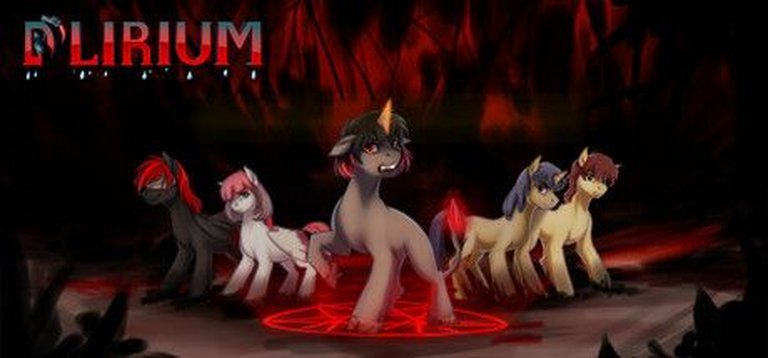
D’lirium is an indie horror-shooter game where Ada, a talking pony, and her friends are invited to a mysterious mansion by its enigmatic curator, Abel. Upon opening a demonic casket, Ada discovers her friends brutally murdered and the mansion transformed into a hellish nightmare. Armed with magic powers, she must navigate the horrors of the mansion to uncover the truth and find her friends, all while facing grotesque enemies and psychological torment. The game features multiple endings, dark themes, and a unique blend of horror and action.
Gameplay Videos
Where to Buy D’lirium
PC
D’lirium Cracks & Fixes
D’lirium Mods
D’lirium Guides & Walkthroughs
D’lirium Reviews & Reception
steambase.io (96/100): A triumphant return to form for the series.
howlongtobeat.com (50/100): The best thing about D’LIRIUM is the gameplay, it’s very smooth and fun to blast your way through the levels but if it wasn’t for these achievements and trading cards, then I probably would have left a negative review and the reason behind this is because it’s very short and has been in early access for a good 4+ years and doesn’t look like it’s moving any further than it has.
D’lirium Cheats & Codes
PC
Press ~ or F3 to open the console panel.
| Code | Effect |
|---|---|
| noclip | Activates wall clipping. |
| idclip | Activates wall clipping. |
| fly | Activates wall clipping. |
| god | Activates god mode. |
| iddqd | Activates god mode. |
| impulse 101 | Gives ammo and weapons. |
| impulse 9 | Gives ammo and weapons. |
| idfa | Gives ammo and weapons. |
| idkfa | Gives ammo and weapons. |
| deathrun add | Gives you one lap in Arcade. |
| notarget | Enemies can no longer see you, AI is disabled. |
| no lost | Removes enemies. |
| no degan | Removes enemies. |
| nodegan | Removes enemies. |
| kill | Kills you. |
| die | Kills you. |
| suicide | Kills you. |
| kill all | Kills everyone except you or your friends. |
| lanterns | Arcade feature only, try it and find out. |
| nuke | Provides you with the nuke powerup capability from Arcade. |
| devroom | Sends you to a map that has portals to multiple chapters in the story game. |
| monstertest | Sends you to a map that has multiple monsters for you to fight against, with all the tools you can get in the game. |
| entity | Sends you to a map that has multiple entities on display. |
| credits | Sends you to the credits! |
| gestas | Sends you to a cut map of what seems to have been Gestas home. |
D’lirium: A Haunting Symphony of Horror and Nostalgia
Introduction: The Unlikely Marriage of Cuteness and Terror
Few games dare to tread the precarious line between saccharine charm and visceral horror as boldly as D’lirium. At first glance, its pastel-colored ponies and festive New Year’s Eve setting evoke the warmth of a children’s cartoon. Yet, beneath this deceptive veneer lies a nightmarish descent into psychological torment, gore, and existential dread. Developed by the Ukrainian indie studio B52 Development Team, D’lirium is a love letter to the horror classics of the ’90s—Silent Hill, Doom, and Clock Tower—while simultaneously subverting expectations with its surreal, pony-populated hellscape. This review will dissect the game’s development, narrative depth, gameplay mechanics, and lasting impact, arguing that D’lirium is not just a niche curiosity but a masterful blend of retro inspiration and innovative horror design.
Development History & Context: A Labor of Love from the Shadows
The Birth of a Nightmare
D’lirium began as a passion project by Ihor Koval, the sole developer behind B52 Development Team. Initially released in Early Access on August 25, 2017, the game spent six years in development before its full release on October 25, 2023. Koval’s vision was clear: to revive the tension and exploration of ’90s horror shooters while infusing them with a uniquely unsettling aesthetic. The choice of ponies as protagonists was deliberate—a jarring contrast meant to amplify the horror. As Koval noted in interviews, the game’s development was a solitary, obsessive endeavor, with updates rolling out monthly despite the lack of a large team or substantial budget.
Technological Constraints and Creative Workarounds
Built on a custom engine, D’lirium embraces the limitations of its 2D top-down perspective to create an atmosphere of claustrophobic dread. The diagonal-down viewpoint, reminiscent of Diablo or Gauntlet, forces players to confront horrors head-on, with no over-the-shoulder camera to soften the blow. The game’s pixel art, while simple, is meticulously crafted to evoke both nostalgia and unease. AI-assisted tools were used sparingly to enhance backgrounds and optimize performance, but the core artistry remains hand-drawn, giving the game a tactile, almost handcrafted feel.
The Gaming Landscape: A Niche Within a Niche
D’lirium emerged during a renaissance of indie horror, yet it carved out a distinct identity. While games like Undertale and Pony Island played with meta-narratives and subversive humor, D’lirium committed fully to its horror premise. Its Steam release was met with curiosity and skepticism—how could a game starring ponies possibly deliver genuine scares? Yet, its “Overwhelmingly Positive” reception (96% positive from over 1,109 reviews) proved that the fusion of cute and grotesque could resonate deeply with players.
Narrative & Thematic Deep Dive: A Descent into Madness
Plot Summary: The Casket’s Curse
The story begins on New Year’s Eve, a holiday imbued with eerie significance in Ukrainian culture (where Christmas traditions were historically suppressed under Soviet rule). Ada, a powerful unicorn mage, and her friends—Claudia, Dismas, and Gestas—are invited to a secluded mansion by its enigmatic curator, Abel. The evening takes a sinister turn when Ada opens a gift: the Demonic Casket. What follows is a rapid unraveling of reality. Her friends are found mutilated, the mansion transforms into a labyrinthine hellscape, and Ada must navigate this nightmare using her magic to uncover the truth.
Themes: Corruption, Guilt, and the Illusion of Control
- The Duality of Innocence and Corruption: The ponies’ cute designs clash violently with the game’s gore and psychological horror, creating a dissonance that heightens the unease. This juxtaposition forces players to question their perceptions—what is truly innocent, and what is monstrous?
- The Sanity Meter as a Narrative Device: Ada’s sanity is not just a gameplay mechanic but a reflection of her moral decay. Killing enemies increases her “shock” level, warping the screen and eventually trapping her in a “Black Bug Room”—a personal hell where she must recover fragments of her personality. This mechanic underscores the game’s central question: Is Ada the hero or the villain?
- The Unreliable Narrator: The game’s multiple endings (three in total) play with the ambiguity of Ada’s journey. In the “bad” endings, she becomes an Evil Overlord, resurrecting her friends as Nightmares and spreading darkness. The “good” ending, unlocked by a pacifist run, suggests that violence itself is the corruption. The narrative’s refusal to provide clear answers mirrors classic psychological horror, leaving players to interpret Ada’s fate.
Character Analysis: Ponies in Peril
- Ada: A tragic figure whose power becomes her undoing. Her resemblance to My Little Pony‘s King Sombra is no accident—she is a dark reflection of the franchise’s usual heroism.
- Abel: The curator’s role is ambiguous. Is he a manipulator, a victim, or a manifestation of Ada’s guilt? His final speech, where he condemns Ada’s violence, frames her as a “Knight Templar,” blurring the lines between justice and cruelty.
- The Blank: The faceless versions of Ada’s friends in the final level are a haunting representation of lost identity, forcing players to confront the consequences of their actions.
Gameplay Mechanics & Systems: Retro Revival with a Twist
Core Gameplay Loop: Exploration and Survival
D’lirium draws heavily from ’90s shooters, emphasizing:
– Non-linear Levels: Players must search for keys, solve puzzles, and backtrack through the mansion’s ever-shifting corridors.
– Resource Management: Ammunition and health are scarce, encouraging strategic combat.
– Enemy Variety: From the flying Howlings to the slow but deadly Wraiths, each foe requires a different approach. The “Lost” enemies, which summon Phantoms, add a layer of tactical depth.
Combat and Progression
- Magic and Melee: Ada’s arsenal includes spells and melee weapons (like the upgradeable Wrench), allowing for varied playstyles.
- Sanity System: The game’s most innovative mechanic. High sanity levels distort the screen, disorienting the player and forcing them to either flee or embrace the madness.
- Multiple Endings: The pacifist run is particularly noteworthy, rewarding restraint with the only truly “good” ending.
UI and Controls: A Love Letter to the Past
The game’s controls are deliberately retro, with optional “shooter mode” for modern players. The UI is minimalist, relying on environmental cues and sound design to guide the player—a design choice that immerses players in the horror.
Flaws and Frustrations
While D’lirium excels in atmosphere, its combat can feel repetitive, and the lack of a map in the mansion’s labyrinthine levels may frustrate some players. The game’s brevity (averaging 2–5 hours per playthrough) also leaves some wanting more, though the multiple endings and hidden secrets encourage replayability.
World-Building, Art & Sound: Crafting a Nightmare
The Mansion as a Character
The mansion is a living entity, shifting from a grand, festive hall to a grotesque hellscape. The juxtaposition of holiday decorations (twinkling lights, presents) with mutilated corpses and blood-soaked walls creates a uniquely unsettling atmosphere. The final level, Pandemonium, is a masterclass in environmental storytelling—a dark, metallic abyss that feels like the bowels of hell.
Visual Design: Pixelated Horror
The game’s pixel art is deceptively simple. The ponies’ wide, innocent eyes contrast with the gaping voids of the enemies’ faces, amplifying the horror. The use of color is equally striking: pastel pinks and blues give way to crimson and black as the game progresses, mirroring Ada’s descent into madness.
Sound and Music: The Soundtrack of Dread
The soundtrack, composed by Koval himself, is a mix of eerie ambient tracks and pulsating, industrial beats. The absence of music in key moments—such as the Blackout Basement—heightens the tension, forcing players to rely on sound cues to navigate. The game’s sound design is minimalist but effective, with distant screams and whispers lingering just beyond the player’s perception.
Reception & Legacy: From Obscurity to Cult Classic
Critical and Commercial Reception
D’lirium flew under the radar for much of its Early Access period, but its full release garnered widespread acclaim. Steam reviews praise its atmosphere, innovation, and emotional depth, with many players highlighting the game’s ability to evoke genuine fear despite its cute aesthetic. The game’s 96% positive rating on Steam is a testament to its resonance with horror fans.
Influence and Future Prospects
While D’lirium has yet to spawn a direct sequel, its success has inspired a wave of indie horror games that experiment with tone and aesthetics. The announced expansion focusing on Dismas and Gestas suggests that Koval is not done with this world, and the game’s modding community (via Steam Workshop) continues to expand its lifespan.
Conclusion: A Masterpiece of Dissonance
D’lirium is more than a gimmick—it is a carefully crafted horror experience that uses its contradictions to unsettle and engage. By blending the innocence of ponies with the brutality of psychological horror, it forces players to confront their expectations and prejudices. Its retro-inspired gameplay, haunting narrative, and meticulous world-building make it a standout title in the indie horror landscape.
Final Verdict: 9/10 – A must-play for horror enthusiasts and fans of surreal storytelling. D’lirium is a testament to the power of indie development, proving that even the most unlikely concepts can yield profound and terrifying experiences.
Post-Script: For those brave enough to dive into its depths, D’lirium offers a rare treat—a game that is as thought-provoking as it is terrifying. Just be warned: once you open the casket, there’s no turning back.