
- Release Year: 2016
- Platforms: Windows
- Publisher: United Independent Entertainment GmbH
- Developer: United Independent Entertainment GmbH
- Genre: Adventure
- Perspective: 1st-person
- Game Mode: Single-player
- Gameplay: Hidden object
- Average Score: 8/100
Description
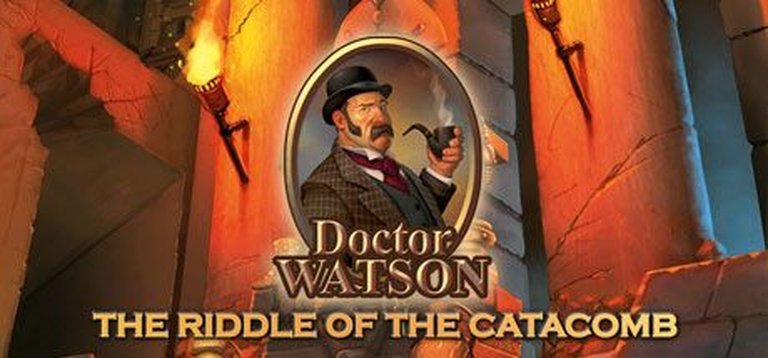
In ‘Doctor Watson: The Riddle of the Catacomb’, players step into the shoes of Dr. Watson in a 3D hidden object adventure game. Navigate through mysterious rooms and magical places in first-person view, solving puzzles and uncovering clues to unravel an intriguing mystery. The game features interactive environments, additional mini-games, and a captivating story filled with twists.
Doctor Watson: The Riddle of the Catacomb Guides & Walkthroughs
Doctor Watson: The Riddle of the Catacomb Reviews & Reception
metacritic.com : If you’re fan of The Room or Myst, then Dr Watson and the Riddle of the Catacombs may look tempting. Sadly, the game just relies on the same series of tedious hidden object quests throughout.
cominggame.org : Embarking on the journey of “Doctor Watson – The Riddle of the Catacombs” pulls players into a whirlwind of intrigue and enigma.
Doctor Watson: The Riddle of the Catacomb: Review
Introduction
Welcome to the shadowy realm of “Doctor Watson: The Riddle of the Catacomb”, a 2016 first-person hidden object adventure that promised to revolutionize the genre but ended up being a forgettable entry in the Doctor Watson series. This review will tackle the game’s development history, narrative, gameplay, world-building, reception, and lasting impact on the industry.
Development History & Context
The game was developed and published by United Independent Entertainment (UIG), a studio known for its earlier works like the Catacomb series and Quick, Watson! The title was part of a larger trend to translate popular hidden object gameplay into a 3D first-person experience. Released in 2016 for Windows, the game attempted to capitalize on the market for atmospheric adventures but ultimately failed to stand out among peers.
Technological constraints of the era, particularly on lower-end systems, might have limited the game’s graphical fidelity. The over-saturated market for similar titles also meant it had to compete against better-developed games in the same category. Despite promising features like interactive environments and mini-games, it struggled to deliver a compelling experience that justified its existence.
Narrative & Thematic Deep Dive
The plot revolves around Dr. Watson investigating a mysterious catacomb filled with hidden objects, clues, and secrets. The narrative attempts to channel Sherlock Holmes’ deductive flair but often falls flat due to formulaic storytelling and stilted dialogue. Characters are underdeveloped, serving as mere plot devices rather than engaging personas.
The game features several Themes:
1. Mystery & suspense: The core around which the game revolves, but often rendered unexciting due to repetitive tasks.
2. Exploration: Encouraging players to probe dark catacombs, but hampered by poor environmental design.
3. Deductive reasoning: Watson’s trademark, but the hidden object mechanics don’t do justice to this concept.
Gameplay Mechanics & Systems
At its core, “The Riddle of the Catacomb” relies heavily on hidden object scenes presented in first-person perspective. While the 3D environments are navigable, the gameplay quickly becomes monotonous. Key issues include:
- Repetitive mechanics: Endless cycles of searching for objects with limited variation in challenge or context.
- Clunky controls: Movement and interaction feel sluggish, detracting from immersion.
- Poorly designed levels: Environments can be disorienting, making navigation a chore.
- Underdeveloped progression: The lack of meaningful upgrades or skill acquisition leads to a sense of stagnation.
World-Building, Art & Sound
Despite efforts to create an atmospheric catacomb setting, the game’s visual and audio design falls short. The 3D graphics are basic and sometimes poor, with low-poly models and textures that fail to evoke a sense of mystery. The color palette is dreary, and environments lack the detail required to create a believable underground world.
The audio, while attempting to create an eerie ambiance with creaks and echoes, often falls flat. Music is generic and fails to enhance the mood. Sound effects are minimal and unremarkable.
Reception & Legacy
The game was met with critical and fan disappointment. Metacritic’s single critic review gave a 20/100, citing “tedious hidden object quests” and a “cheap feel”. Steam reviews are also overwhelmingly negative, with players lamenting the lack of depth, technical issues, and unpolished gameplay.
Despite initial sales as part of bundles, the game failed to generate significant sales or reputation. It’s considered a misstep in the Doctor Watson series and has no direct sequels. The series moved on to other titles like “Treasure Island”, but “Catacomb” remains a cautionary tale in attempting to merge genres without proper execution.
Conclusion
“Doctor Watson: The Riddle of the Catacomb” is a misfire that fails to deliver on its promises. While the premise of a 3D first-person hidden object mystery holds promise, the execution is marred by outdated graphics, repetitive gameplay, and lackluster storytelling. Ultimately, it serves as a reminder that genre hybrids require careful design and technical polish to succeed. For modern players, it’s best left as a curiosity rather than a gaming staple.