
- Release Year: 2010
- Platforms: Android, iPad, iPhone, Nintendo Switch, Windows, Xbox 360
- Publisher: CAVE Co., Ltd., Degica Co., Ltd., GMO GameCenter USA, Inc, Limited Run Games, Inc., Live Wire Inc., Rising Star Games Ltd.
- Developer: CAVE Co., Ltd.
- Genre: Action, Bullet hell, Danmaku, Scrolling shoot ’em up
- Perspective: Top-down
- Game Mode: Single-player
- Gameplay: Bombs, Bullet hell, Hyper mode, Laser, Scoring system, Screen-clearing attacks, Shooter
- Setting: Futuristic, Sci-fi
- Average Score: 69/100
Description
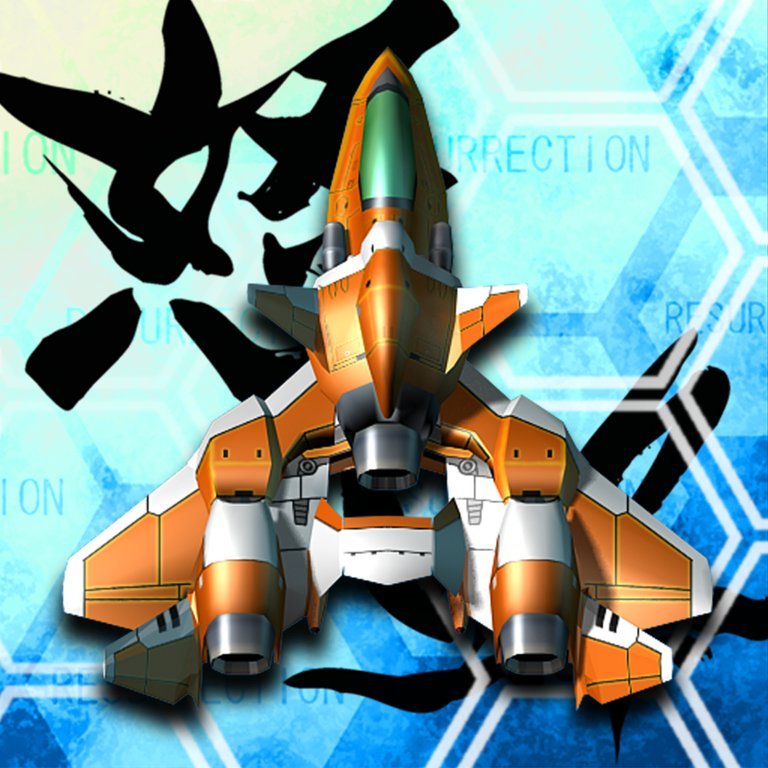
DoDonPachi Resurrection is a bullet hell vertically scrolling shooter and the fifth entry in the DoDonPachi series, originally adapted for mobile platforms with touch controls. Players navigate a ship through intense waves of enemy fire, utilizing precise movement and strategic shooting modes—including wide shots, focused lasers, and screen-clearing bombs—to survive. The game features two modes: a classic arcade experience with three ships and distinct playstyles, and a mobile-exclusive mode with simplified mechanics. Scoring is tied to the SM gauge, which fills through bullet-scraping (near-miss dodging) or rapid enemy destruction, unlocking powerful Hyper attacks and multipliers. With multiple difficulty levels, hidden modes, and a new soundtrack, it blends fast-paced action with deep scoring mechanics in a sci-fi setting.
Gameplay Videos
Where to Buy DoDonPachi Resurrection
PC
DoDonPachi Resurrection Free Download
DoDonPachi Resurrection Guides & Walkthroughs
DoDonPachi Resurrection Reviews & Reception
metacritic.com (89/100): A sensory overload awaits in DoDonPachi Resurrection, a well-to-do arcade port with good controls and variety in spite of its intimidating style.
opencritic.com (86/100): DoDonPachi Resurrection is a monster of an arcade shooter.
steambase.io (96/100): DoDonPachi Resurrection has earned a Player Score of 96 / 100.
ign.com (8/100): This entry in Cave’s long-running top-down shooter series boasts the same classic 2D top-down shooter gameplay, gigantic explosions, massive bosses, and an arcade-style long view.
DoDonPachi Resurrection Cheats & Codes
iPhone/iPad
Enter codes at the ship selection screen for iPhone mode.
| Code | Effect |
|---|---|
| B, A, B, C, A, B, C, B, C, A, B, C, A, C, A, B, C, A, B | Unlocks Hibachi for iPhone Mode |
DoDonPachi Resurrection: A Masterclass in Bullet Hell Evolution
Introduction
In the pantheon of bullet hell shooters, few titles command as much reverence as DoDonPachi Resurrection. Released in 2008 as the fifth entry in CAVE’s legendary DonPachi series, this game is not merely a sequel—it is a refinement, a reinvention, and a testament to the enduring appeal of the genre. With its intricate scoring systems, relentless bullet patterns, and a narrative steeped in time-bending sci-fi, Resurrection stands as a pinnacle of CAVE’s craftsmanship. This review will dissect the game’s development, mechanics, artistic vision, and legacy, arguing that DoDonPachi Resurrection is not just a great shooter—it is a defining moment in the evolution of the bullet hell genre.
Development History & Context
The Studio and Its Legacy
CAVE Co., Ltd., founded in 1995 by former Toaplan employees, emerged as the undisputed king of bullet hell shooters in the late 1990s and early 2000s. The studio’s rise coincided with the decline of arcade culture in the West, but in Japan, CAVE’s games thrived, pushing the boundaries of what a shooter could be. DoDonPachi Resurrection (known as DoDonPachi DaiFukkatsu in Japan) was developed under the direction of Tsuneki Ikeda, a programmer whose work on Batsugun and Grind Stormer at Toaplan had already cemented his legacy in the genre. Ikeda’s vision for Resurrection was to create a game that honored the series’ roots while introducing mechanics that would appeal to both hardcore fans and newcomers.
Technological Constraints and Innovations
Resurrection was built on CAVE’s proprietary CV1000 arcade board, a PC-based system that allowed for high-resolution visuals and complex particle effects. However, the game’s initial arcade release (Version 1.0) was plagued by bugs and exploitable mechanics, leading to a swift recall and the release of Version 1.5, which addressed balance issues and introduced the now-iconic Strong Style. The game’s development was also marked by a shift in CAVE’s approach to accessibility. Recognizing the declining arcade market, CAVE began experimenting with mobile and console ports, culminating in Resurrection’s release on iOS in 2010—a move that would prove pivotal in expanding the game’s reach.
The Gaming Landscape at Release
By 2008, the bullet hell genre was niche even in Japan, overshadowed by the rise of 3D shooters and online multiplayer games. However, Resurrection arrived at a time when indie developers and Western audiences were beginning to rediscover the appeal of arcade-style shooters. Games like Ikaruga and Radiant Silvergun had already garnered cult followings, but Resurrection distinguished itself with its sheer density of bullets, its intricate scoring systems, and its unapologetic difficulty. The game’s release on Xbox 360 (2010) and later on Steam (2016) and Nintendo Switch (2021) ensured that it would find an audience beyond the arcades, cementing its status as a modern classic.
Narrative & Thematic Deep Dive
Plot Summary
DoDonPachi Resurrection is set in a dystopian 2008, six years after the events of DoDonPachi DaiOuJou (the “Blissful Death Wars”). The game’s narrative revolves around the DonPachi Corps, a military faction that has retreated to a space-time fold following the war. When anomalies are detected in the space-time fabric, the Corps discovers that a rogue AI—originating from the Element Dolls, artificial beings created during the previous war—has infiltrated their systems. This AI, driven by a desire for revenge against humanity, seeks to rewrite history by sending materials and data into the past. The player takes on the role of one of three elite pilots, tasked with traveling back to 2008 to prevent the AI’s plan from succeeding.
Characters and Dialogue
The game’s characters are archetypal of the DonPachi series, with each pilot representing a distinct playstyle. The dialogue, while minimal, is delivered in a mix of Japanese and Engrish, adding to the game’s campy charm. The true star of the narrative, however, is the recurring motif of the “bee’s hum,” a symbol of the persistent threat that looms over the DonPachi Corps. This motif is reinforced by the game’s true final boss, Hibachi, a colossal mechanized bee that serves as the ultimate test of the player’s skill.
Themes: Time, Imperfection, and Cyclical Conflict
At its core, DoDonPachi Resurrection explores themes of time manipulation, human imperfection, and the cyclical nature of conflict. The game’s narrative suggests that history is not a linear progression but a series of repeating patterns, with the DonPachi Corps caught in an endless loop of war and rebirth. This theme is mirrored in the game’s mechanics, particularly the Ura Loop, a hidden second loop that offers a more challenging version of the game’s stages. The Ura Loop is not just a test of skill—it is a metaphor for the cyclical nature of the DonPachi Corps’ struggles.
Gameplay Mechanics & Systems
Core Gameplay Loop
DoDonPachi Resurrection is a vertical-scrolling shooter where the player controls a spacecraft navigating through dense enemy formations and bullet patterns. The game’s core mechanics revolve around three key systems: the Hyper Counter, the bee medal system, and the Ura Loop.
-
Hyper Counter System: The Hyper Counter is a temporary power-up that allows the player to cancel enemy bullets and deal massive damage. Activating the Hyper Counter fills the screen with a barrage of bullets, turning enemy projectiles into score items. This system is central to the game’s scoring mechanics, as it allows players to chain together high-value hits.
-
Bee Medal System: Hidden throughout each stage are bee medals, which can be uncovered using the player’s laser. These medals come in three varieties: gold (which award points), green (which fill the Hyper Counter gauge), and white (which combine both effects). Collecting all 45 bee medals across the game’s five stages is required to access the Ura Loop.
-
Ura Loop: The Ura Loop is a hidden second loop that offers a more challenging version of the game’s stages, culminating in a battle against Hibachi. Accessing the Ura Loop requires meeting specific conditions, such as collecting all bee medals and avoiding excessive bomb usage.
Ship Types and Styles
The game offers three ship types (A, B, and C), each with distinct handling and offensive capabilities. These ships can be combined with one of three styles:
- Bomb Style: Emphasizes explosive clears, with up to six bombs in stock.
- Power Style: Toggles between Normal and Boost modes, offering variable firepower.
- Strong Style: Offers bomb recovery on death and robust overall performance, making it ideal for beginners.
Scoring and Replayability
Resurrection’s scoring system is deeply intricate, rewarding players for maintaining continuous enemy destruction chains and collecting bee medals. The game’s replayability is enhanced by its multiple modes, including Novice (for beginners), Black Label (for hardcore players), and Arrange modes (which introduce new mechanics and visuals). The game’s leaderboards and replay system further encourage competition and mastery.
World-Building, Art & Sound
Visual Design
DoDonPachi Resurrection is a visual tour de force, with its dense bullet patterns, vibrant explosions, and intricate boss designs. The game’s art direction, led by Kouji Ogata, blends anime-inspired character designs with futuristic sci-fi aesthetics. The bullet patterns are not just functional—they are works of art, with each stage offering a unique visual spectacle.
Sound Design and Music
The game’s soundtrack, composed by Manabu Namiki, Azusa Chiba, and Yoshimi Kudo, is a masterclass in electronic music. The tracks range from melodic builds to chaotic, high-BPM sequences, perfectly complementing the game’s relentless action. The sound design is equally impressive, with sharp effects for bullet cancellation and medal collection providing immediate feedback on the player’s performance.
Reception & Legacy
Critical and Commercial Reception
DoDonPachi Resurrection received widespread critical acclaim, with praise centered on its intricate bullet patterns, visual spectacle, and depth of content. The game’s iOS version holds a Metascore of 89/100, while the Nintendo Switch port earned an 87/100. Critics lauded the game’s replayability and the sheer density of its bullet hell mechanics, though some noted its steep learning curve.
Influence on the Genre
Resurrection’s influence on the bullet hell genre is profound. Its Hyper Counter system and bee medal mechanics have been emulated in numerous subsequent shooters, and its narrative themes of time manipulation and cyclical conflict have resonated with fans of the genre. The game’s success on mobile and console platforms also demonstrated that bullet hell shooters could thrive outside of arcades, paving the way for future titles like Mushihimesama and Deathsmiles.
Conclusion
DoDonPachi Resurrection is more than just a shooter—it is a masterclass in game design, a testament to CAVE’s craftsmanship, and a defining moment in the evolution of the bullet hell genre. Its intricate mechanics, stunning visuals, and deep narrative themes make it a standout title in the DonPachi series and a must-play for fans of the genre. While its difficulty may be prohibitive for some, those who persevere will find a game that rewards mastery, creativity, and sheer determination. In the pantheon of bullet hell shooters, DoDonPachi Resurrection is a true legend.
Final Verdict: 9.5/10 – A Masterpiece of the Genre