
- Release Year: 2021
- Platforms: Nintendo Switch, PlayStation 4, Windows Apps, Windows, Xbox One, Xbox Series
- Publisher: Bethesda Softworks LLC
- Developer: id Software, Inc.
- Genre: Action
- Perspective: 1st-person
- Game Mode: Single-player
- Gameplay: Shooter
- Setting: Futuristic, Sci-fi
- Average Score: 76/100
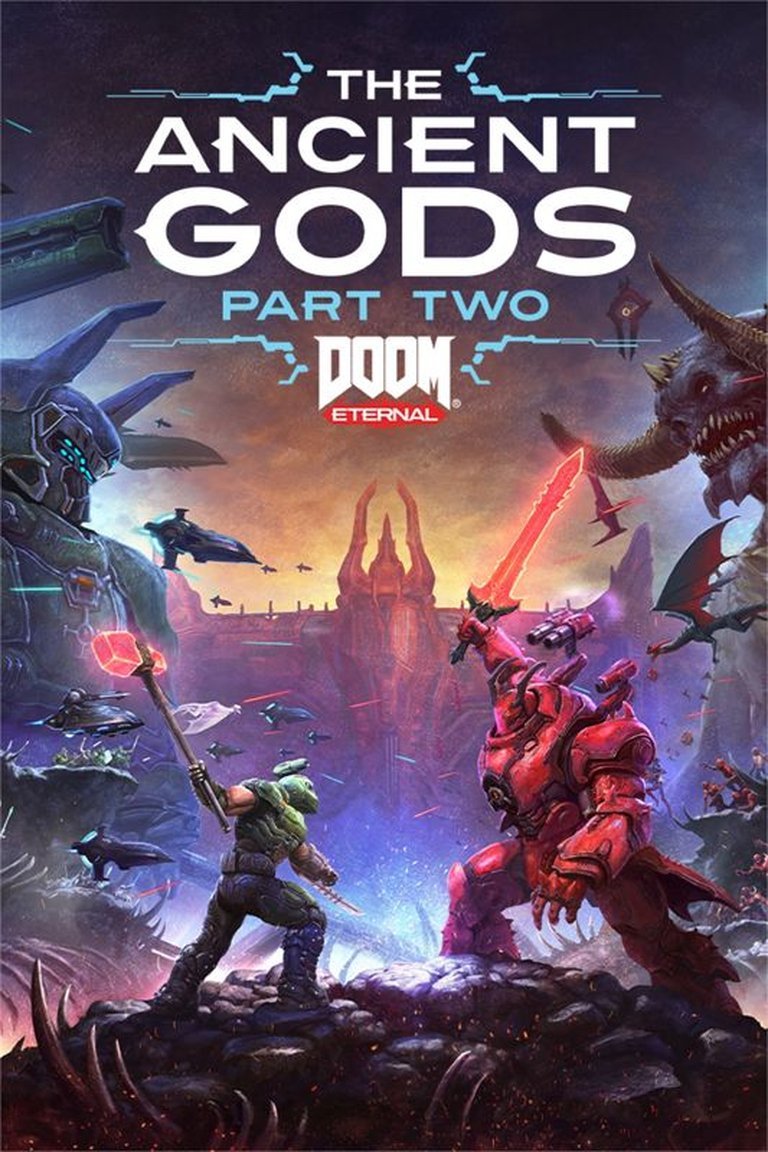
Description
Doom Eternal: The Ancient Gods – Part Two is the explosive finale to the Doom Slayer’s saga, serving as a standalone expansion to Doom Eternal where players unleash relentless first-person shooter action against demonic hordes in a sci-fi futuristic setting infused with ancient godly lore. Developed by id Software and published by Bethesda Softworks, it continues the high-octane campaign from Part One, featuring breathtaking graphics, satisfying platforming, and epic demon-slaying combat across multiple platforms.
Gameplay Videos
Where to Buy Doom Eternal: The Ancient Gods – Part Two
PC
Doom Eternal: The Ancient Gods – Part Two Guides & Walkthroughs
Doom Eternal: The Ancient Gods – Part Two Reviews & Reception
metacritic.com (78/100): The final DLC for Doom Eternal was worth the wait, providing some gorgeous new locations and challenging fights worthy of concluding the Slayer’s saga.
ign.com : Thanks to its continued evolution of Doom Eternal’s already-brilliant formula, I enjoyed The Ancient Gods Part 2 a bit more than Part 1.
entrylevelgames.com : The satisfying build-up of tension until the final confrontation results in a massive payoff.
opencritic.com (75/100): The Ancient Gods Part 2 is a challenging, smart conclusion to Doom Eternal’s story arc.
howlongtobeat.com : A truly worthwhile addition to the base game, outshining its predecessor in every way.
Doom Eternal: The Ancient Gods – Part Two: Review
Introduction
In the crimson-lit throne room of Immora, Hell’s ancient capital, the Doom Slayer stares down the Dark Lord—Davoth, the primeval creator whose resurrection promises cosmic annihilation. With a single, defiant “No,” the Slayer seals the fate of demons across realms, collapsing into a sarcophagus as eternity sighs in relief. This climactic moment crowns Doom Eternal: The Ancient Gods – Part Two (TAG2), the blistering finale to id Software’s modern Doom saga. Born from the pixelated fury of 1993’s groundbreaking shooter, the franchise evolved through Doom (2016) and Doom Eternal into a symphony of mobility, strategy, and metal-fueled catharsis. TAG2, released March 18, 2021, as the second campaign DLC, distills this legacy into 3-5 hours of refined carnage. Thesis: TAG2 is a triumphant, if imperfect, capstone—elevating Doom Eternal‘s combat symphony while delivering a lore-rich payoff that cements the Slayer’s mythos, though its brevity and final boss expose DLC constraints.
Development History & Context
id Software, pioneers of the FPS genre since John Carmack’s Doom engine revolutionized 3D gaming in 1993, returned under Hugo Martin’s game direction to helm TAG2. Announced at Doom Eternal‘s 2020 launch alongside Part One, it was bundled in the Year One Pass for Deluxe Edition owners. Marty Stratton executive-produced, with Timothy Bell as lead producer and key talents like lead gameplay designer Peter Sokal and art director Anthony Garza shaping its vision. Dedicated to id co-founder Robert A. Altman, the credits list 1,174 contributors, reflecting a Frankfurt-expanded team leveraging id Tech 7.
Development occurred amid 2020’s pandemic, post-Eternal‘s March launch, addressing Part One’s criticisms (e.g., punishing difficulty). Technological feats included dynamic skyboxes with dragon flights and wars, optimized for PS4, Xbox One, Switch, and PC—achieving 60FPS on next-gen via backward compatibility. The 2021 gaming landscape pitted it against Resident Evil Village and Outriders, but as a $19.99 DLC (or $29.99 bundle), it targeted Eternal‘s 3+ million sales base. id’s vision: refine Eternal‘s “push-forward combat” with high-fantasy spectacle, new tools like the Sentinel Hammer, and a Slayer-Davoth duel mirroring player mastery. Constraints like standalone DLC scope limited scope, yet it innovated amid Bethesda’s live-service pivot (Battlemode updates).
Narrative & Thematic Deep Dive
TAG2’s plot ignites post-Part One: Slayer blasts Davoth in Urdak’s Luminarium, sparking a ritual duel in Immora. Traversing Argent D’Nur’s beacons (LOTR nod), a dragon ride, Earth’s reclaimed ruins, and Immora’s siege—with Valen’s Night Sentinels portaling in (Avengers: Endgame-esque)—the Slayer confronts Hell’s architect.
Plot Breakdown: Four levels escalate: The World Spear (crystal quest), Reclaimed Earth (portal activation), Immora (siege), The Dark Lord (boss). Codex deepens lore: Davoth, Doom‘s God-figure, created realms, Father, Maykrs—betrayed, twisted Jekkad into Hell. VEGA confirms Slayer’s Primeval ties. Dialogue is sparse, Slayer’s mute rage amplified by Piotr Michael’s beastly Davoth (“Tell me… have you nothing to say to your creator?”). Ending: Slayer stabs Davoth, demons perish outside Hell; weakened, he’s sarcophagused by Maykrs—echoing Doom (2016)‘s awakening, per Corrax 7:17.
Themes: Retribution eternalizes the Slayer—avenging family/rabbit (Hugo Martin reveal), betrayals (Valen redeemed). Creation vs. destruction flips God/Devil: Davoth’s sympathetic fall humanizes evil. High-fantasy (dragons, Sentinels) contrasts sci-fi horror, exploring free will amid manipulation (Maykrs’ lies). Flaws: Codex-heavy delivery risks opacity; Part Two’s brevity rushes twists, yet it satisfyingly arcs Slayer from marine to myth.
Gameplay Mechanics & Systems
TAG2 perfects Eternal‘s glory kill-fueled loop: dash, meathook, chain weapons for ammo/health/armor amid arenas demanding prioritization.
Core Loops & Combat: New foes innovate:
– Fodder: Stone Imp (riot shotgun/hammer), Riot Soldier (flank chaingun shield), Screecher Zombie (last-kill buff).
– Heavy: Cursed Prowler (chase/blood punch).
– Super Heavy: Armored Baron (plasma/precision mace flash).
Ambient Demonic Troopers add flavor. Escalation Encounters (two-wave, hammer upgrades) reward replay. Sentinel Hammer (Crucible swap) stuns heavies, combos with ice bomb/flame belch for resources—ammo via glory kills/precision bolts. Meathook swings on green orbs enhance mobility.
Progression/UI: Hammer upgrades via optionals; UI reticule icons track powerups. Innovative, but flaws: Screecher fragility frustrates, Baron timing punishes. Final boss (Davoth: Marauder-plus with regen, summons) drags—health steal, axe/shield punish errors, phases shift arenas (Earth/Ingmore). Balanced on Nightmare (fair deaths teach), yet shorter arenas feel linear vs. Eternal.
| Mechanic | Innovation | Flaw |
|---|---|---|
| Sentinel Hammer | Resource extraction, stuns | Ammo economy shifts |
| New Enemies | Weapon synergy | Gimmick overload (e.g., Screecher) |
| Boss | Dynamic phases | Tedious regen/RNG eyes |
Peak: Hectic mixes demand mastery; replay via upgrades.
World-Building, Art & Sound
TAG2’s realms immerse: World Spear‘s crystalline shard pierces planets, lush with dragons; Reclaimed Earth‘s flooded graffiti (“Rip and Tear”) evokes abandonment; Immora‘s crimson spires host epic clashes—Sentinels vs. demons in skyboxes.
Visuals: id Tech 7 shines—vibrant greens contrast Hellish crimsons, dynamic lighting (beacon ignites). XSX/PC: 60FPS, quick loads; Switch holds. Art direction (Jonathan Lane concepts) blends fantasy (mechs, portals) with gore.
Sound: Hulshult/Levy’s metal (Hulshult’s boss track nods “BFG Division”) pulses; audio cues (Baron “ding,” spawns) inform chaos. Voicework: Kyle Chapple (Valen), Piotr Michael (Davoth) chills. Meaty impacts, roars heighten immersion—metal choir scales sieges.
Atmosphere: Epic payoff—beacon signals hope amid despair.
Reception & Legacy
Launch critics averaged 83% (MobyGames: 7.7/10; Metacritic PC: 78; OpenCritic: 76th percentile). Praises: Combat evolution (IGN 8/10: “challenging conclusion”), hammer/story (MKAU 95%). Critiques: Short (3-4 hours), boss (PC Games 80%: “zäh”), balance (Power Unlimited 74%). Players: 3.6/5 (Moby), mixed (Metacritic 7.0)—love finale, hate tedium. Sales: ~194k units (est.), boosting Eternal bundle.
Reputation evolved: Initially “rushed,” now hailed as saga closer amid Dark Ages hype. Influenced FPS: Mobility/resource emphasis in Ultrakill, Splitgate. id’s “no-handholding” endures; legacy: Slayer’s rest teases returns, affirming Doom‘s eternal rip-and-tear ethos.
Conclusion
Doom Eternal: The Ancient Gods – Part Two forges a hellfire finale: refined combat, mythic lore, spectacle that honors 28 years. New tools/enemies invigorate, levels dazzle, themes provoke—yet brevity, boss flaws temper perfection. In FPS history, it elevates Doom from genre-definer to symphony-concluder: 9/10. Essential for Slayers; history’s pantheon awaits reactivation. Rip and tear… until next time.