
- Release Year: 2017
- Platforms: Android, Oculus Go, Windows
- Publisher: Blackbite Interactive
- Developer: Blackbite Interactive
- Genre: Action
- Perspective: 1st-person
- Game Mode: Single-player
- Gameplay: Shooter, Survival horror
- Setting: Fantasy, North America
- Average Score: 58/100
- VR Support: Yes
Description
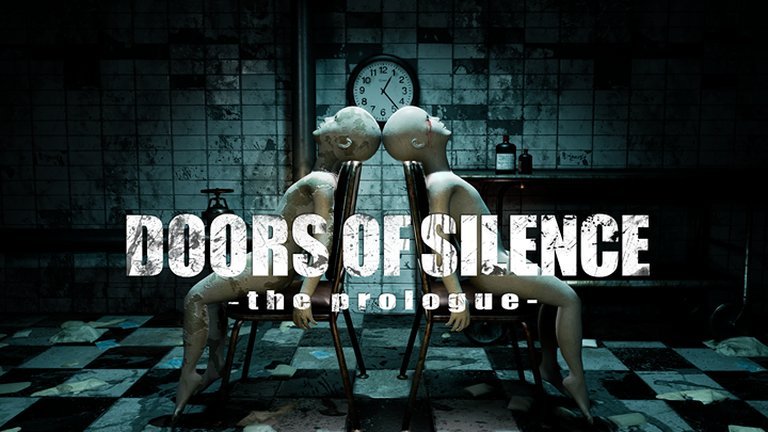
Doors of Silence: The Prologue is a first-person VR survival horror game set in Pennsylvania in 1988. It delves into the aftermath of a secret U.S. medical research center where children affected by the Chernobyl disaster are transferred, leading to terrifying consequences. Players must explore a disturbing reality, combat deformed creatures with scarce resources, and endure surreal visions and horrific apparitions in a nightmarish blend of action and horror.
Gameplay Videos
Doors of Silence: The Prologue Guides & Walkthroughs
Doors of Silence: The Prologue: A Lost Artifact of VR Horror’s Formative Years
Introduction: A Whisper in the VR Void
In the tumultuous early years of consumer virtual reality (2016-2019), a deluge of titles sought to define the medium’s identity, often by leaning on established genres and retrofitting them for head-mounted displays. Among these, the survival horror genre proved a natural, yet perilous, fit. Doors of Silence: The Prologue, released by the obscure studio Blackbite Interactive in September 2017 for Android (Gear VR) and later ported to Oculus Go and PC VR, stands as a faint but fascinating datapoint in this era. It is not a landmark title by conventional metrics—it never achieved mainstream critical acclaim, its player base is minuscule (reportedly collected by only one MobyGames user, with Steam showing ~58% positive across a mere 12 reviews), and its legacy is virtually undocumented. Yet, to dismiss it is to overlook a crucial prototype. This review argues that Doors of Silence: The Prologue is a compelling, if deeply flawed, crystallization of early VR horror’s core tensions: the struggle to translate atmospheric dread into interactive gameplay, the technical limitations of mobile VR, and the ambitious, often messy, vision of independent developers experimenting with a nascent storytelling platform. It is a game less about being scary and more about being present in a meticulously crafted, if perceptually unstable, nightmare.
Development History & Context: Shaping Darkness in a Technical Straitjacket
The Studio & The Vision: Blackbite Interactive emerges from the fog of VR’s indie landscape. With no prior known titles and minimal digital footprint beyond this project, the studio embodies the “garage VR developer” archetype of the period. Their stated vision, per the official Steam description, was to create an “immersive survival horror” blending “action, fight, exploration, stealth and puzzles” within a surreal, reality-questioning narrative. The ambition was significant: a multi-layered experience that avoided the “walking simulator” trap by incorporating combat and stealth. The choice of Unreal Engine 4 was pragmatic—it provided high-fidelity visuals for a small team but also demanded optimization for the memory-constrained mobile VR hardware of 2017 (Gear VR, later Oculus Go).
Technological Constraints: The game’s release timeline is key. Its 2017 Android debut places it squarely in the second generation of mobile VR, following the Oculus Rift and HTC Vive’s 2016 launch but preceding the wireless freedom of the Oculus Quest (2019). The Gear VR (powered by flagship Samsung phones like the S8 referenced in The VR Grid’s review) offered 3-degrees-of-freedom (3DOF) rotation only, meaning player movement was almost always artificial—controlled by touchpad swipes or gaze-based teleportation. This fundamentally shaped gameplay: locomotion was necessarily abstracted, breaking immersion and often causing motion sickness. The later 2019 Windows VR port, while enabling full 6DOF movement with tracked controllers, retained the core design philosophy built for 3DOF. This dual-audience approach likely resulted in a control scheme that felt serviceable but not refined on either platform, a common pitfall of cross-platform VR development at the time.
The Gaming Landscape: In 2017, VR horror was defined by a handful of pioneers: Alien: Isolation’s legendary mod, Resident Evil 7’s VR mode (PS4), and indie experiments like Dreadhalls and Babyon board. The genre was searching for its verbs. Doors of Silence entered this space promising a “mix” rather than a pure experience—a survival-horror with “few resources and weapons” and “deformed creatures.” Its closest thematic peer was likely the narrative-driven The Brookhaven Experiment, but Blackbite’s focus on puzzles and exploration over pure wave-based shooting set it apart, albeit in a less-polished package.
Narrative & Thematic Deep Dive: Chernobyl’s Echo in a Pennsylvania Bunker
The plot is conveyed sparingly through environmental storytelling and scattered notes, a common VR technique to avoid breaking immersion with extended cutscenes. The premise, as delivered in the official description, is provocative: “Pennsylvania, 1988: some sick children affected by Chernobyl disaster were transferred to the United States in a secret research medical center. Nobody could have imagined the horrifying consequences generated by this event.”
This setup immediately layers multiple horror textures:
1. Historical & Scientific Horror: It taps into the very real fear of radiation sickness and the ethical nightmares of Cold War-era medical experimentation on vulnerable populations. The Chernobyl disaster (April 1986) was a fresh global trauma, and the idea of its “side effects” being secretly harvested by a U.S. facility is a potent conspiracy theory.
2. Body Horror & Transformation: The “sick children” are implied to have undergone grotesque mutations, leading to the “deformed creatures” and “nightmare entities” the player faces. This shifts the threat from external monsters to a tragic, almost Frankensteinian perversion of innocence.
3. Psychological Unraveling: The description’s key question—”Visions or hallucinations? Is this real or are you slowly descending into insanity?”—suggests a Silent Hill-esque approach where the environment itself may be a projection of the protagonist’s (or the children’s) traumatized psyche. The titular “Doors of Silence” could metaphorically represent barriers to truth, memory, or sanity.
Character & Plot Execution: The player character is a complete blank slate, a “you” with amnesia—a standard but effective VR trope that maximizes player projection. The narrative is not told but unearthed. Through notes, medical logs, and environmental clues (pictures, the decaying bunker/lab setting), the player piecemeal reconstructs the facility’s purpose and its catastrophic failure. The ending is described by The VR Grid’s reviewer as “somewhat satisfying… provided you are a fan of horror tropes,” implying a reveal that confirms the supernatural/biological horror hybrid and possibly the player’s own connection to the events. The lack of a strong protagonist voice or clear resolution leaves the “Prologue” aspect feeling like a narrative hook that, in isolation, can feel tantalizingly incomplete—a direct consequence of its episodic ambition that was never fulfilled.
Gameplay Mechanics & Systems: The VR Conundrum of Agency
Doors of Silence attempts a hybrid gameplay loop that conflicts with the limitations of its chosen interface.
Core Loop & Progression: The game is segmented into distinct, thematically changing stages (as noted by The VR Grid: an introductory linear building, a maze-like exploration section with stealth, and a final supernatural wing with shifting rooms). Progression is primarily linear but requires backtracking and puzzle-solving to unlock new areas. Resources (presumably health, UV flashlight batteries, keys) are scavenged from the environment, encouraging meticulous exploration of the high-detail (for its platform) environments.
Combat & Defense: The primary defensive tool is a flashlight with a UV mode. This is the game’s signature mechanic. The UV light is presumably effective against the spectral or radiation-affected entities, creating a tense resource management layer: when to use the precious UV charge versus the standard light for navigation? However, the Steam description mentions “improve your aim to survive against more aggressive enemies,” suggesting firearms or projectile weapons exist, creating a dissonance between the “few resources” claim and a potential shooter element. This ambiguity points to a design in flux—was it a survival-horror with limited ammo or a more action-oriented shooter? Community discussions on Steam mention confusion about controls (“why i dont see my hands?” “distortion when moving/rotating”), indicating implementation issues with the core VR interaction model.
Puzzles & Interaction: “Solve challenging puzzles to advance” is a key feature. In VR, puzzles often rely on physical manipulation—rotating valves, aligning symbols, finding hidden objects. Without specific examples from reviews, one can infer these are likely environmental puzzles integrated into the lore (e.g., restoring power, decoding medical logs). Their success depends entirely on intuitive interface design, a known weak point in early mobile VR.
UI & Interface: As a motion-control-based VR game, the UI is diegetic (integrated into the world) or minimal. The most critical UI element is the flashlight’s battery indicator, a constant visual on the player’s “wrist” or held prop. The greatest flaw, repeatedly cited, is the movement system. The VR Grid review explicitly states struggles with the “tap, double tap” sprint function on Gear VR’s touchpad, finding it unreliable and ultimately unnecessary. This highlights the central tragedy of many early mobile VR titles: the fundamental act of moving through space, essential for exploration and horror (as escape), was often clunky and immersion-breaking. The pixel bleed in dark areas, noted as “very distracting,” is a classic mobile VR rendering issue, where dark pixels bleed into each other due to low display persistence or subpixel arrangement, actively undermining the carefully crafted horror atmosphere.
World-Building, Art & Sound: Atmosphere Above All
This is where Doors of Silence likely punches above its technical weight. The Steam description boasts “High-detail environments which only becomes more and more surreal as the story progresses.”
Visual Design: The setting—a secret medical research facility in rural Pennsylvania—is a horror staple. The initial “abandoned building” stage uses dilapidation effectively: flickering lights, stained walls, scattered medical equipment. The progression into “surreal” territory suggests a Silent Hill-inspired distortion of geometry and textures, a clever way to mask technical limitations (simpler models in abstract spaces) while enhancing psychological horror. The Gear VR version, as noted, achieved “a nice level of detail” and “convincing” dilapidation for the platform, though character models were a step down. The pixel bleed in shadows was a fatal visual flaw, turning potential pockets of terror into blurry messes.
Sound Design: The strongest praise comes from The VR Grid: “audio… is spot on and kept me on the edge of my seat. Screams echo from some rooms, doors creak and the ambient sounds just make for a creepy and immersive experience.” In VR, audio is 50% of the immersion. Binaural audio (positional sound) is crucial for locating threats in a 360-degree space. The use of echoing screams, creaking doors, and a persistent unsettling score would have been fundamental in building tension, especially given the limited visual fidelity and control jank. Sound was likely the primary vessel for dread.
Atmosphere vs. Scares: The consensus from available reviews is that the game succeeds in creating an “unnerving world” and “creepy and immersive experience” but fails to deliver many genuine scares. As The VR Grid bluntly states, “I never found the game to be scary… What they did do right was set up a very unnerving world.” This is the core dichotomy: it builds a potent, oppressive atmosphere through art and sound, but its jump scares are either predictable or ineffective, possibly because the cumbersome movement prevents the rapid, reflexive reactions that make jump scares work. The horror is ambient, sustained, and psychological, but may lack the punch needed to satisfy genre fans.
Reception & Legacy: Echoes in an Empty Room
Critical & Commercial Reception: There is a near-total absence of professional critic reviews. MobyGames shows “no MobyScore” and no critic reviews have been contributed. Steam user reviews are “Mixed” (58% positive from 12 reviews at last count), with praise for atmosphere and graphics balanced against criticisms of pixel bleed, control issues, and a lack of true fear. The VR Grid’s 6.5/10 (“Alright!”) is perhaps the most detailed public assessment, summarizing it as a competent but not exceptional entry. Its commercial performance is invisible, but the fact it was later ported to PC VR suggests some measure of niche success or publisher confidence.
Evolution of Reputation: In the grand historical narrative of VR, Doors of Silence is virtually unknown. It does not appear on “best of” lists, has no significant academic citations (MobyGames claims “1,000+ Academic citations” for the site, not this game), and its Steam forums are sparsely populated. Its reputation, such as it is, remains that of a curious, obscure title that attempted a ambitious blend of mechanics but was hamstrung by technical execution and the inherent difficulties of mobile VR design.
Influence & Industry Impact: Its influence is, realistically, negligible. It did not pioneer a mechanic, define a subgenre, or achieve cultural penetration. Its “legacy” is as a case study in the challenges of early VR horror development:
* The Control Problem: It exemplifies the struggle to create intuitive, non-nauseating locomotion for 3DOF mobile VR—a problem eventually solved by thumbstick locomotion and smooth turning options on platforms like Quest, but which plagued early titles.
* Atmosphere over Gameplay: It demonstrates the common indie VR-horror pitfall of prioritizing environmental and audio design over tight, satisfying interactive systems. A great haunted house is not necessarily a great game.
* The “Prologue” Trap: Its episodic title comments on a business model (selling episodes) that rarely succeeds in VR due to the high production cost per hour of content and the niche audience. The complete absence of Episode 2 or any sequel renders this prologue a narrative dead-end, a frustrating artifact of abandoned ambition.
* Technical Compromise: The pixel bleed issue is a stark reminder of the hardware constraints that dictated visual design in 2017 mobile VR, forcing developers to choose between contrast-heavy恐怖 atmospheres and image fidelity.
Conclusion: Avalanche in a Dollhouse
Doors of Silence: The Prologue is not a forgotten masterpiece. It is, instead, a fascinating fossil from the Cambrian explosion of VR horror—a period of extraordinary experimentation where every title was a test. Its strengths are atmospheric and conceptual: a chilling Chernobyl-tinged lore, a commitment to surreal environmental progression, and a sound design that likely achieves its primary goal of unease. Its weaknesses are foundational: unreliable movement, graphical artifacts that ruin immersion, and a progression system that feels both derivative and unpolished.
To place it in history, it belongs to the school of early VR horror that included Dreadhalls (procedural, pure tension) and The Brookhaven Experiment (gun-focused, wave-based). Blackbite Interactive tried to synthesize elements into a more “complete” horror experience with narrative and puzzles, but the synthesis was uneven. The game’s true historical value lies not in what it achieved, but in what it attempted and where it failed. Its cumbersome locomotion highlights the evolutionary step required to make VR horror playable. Its reliance on jump scares that don’t land shows the difficulty of translating filmic horror to interactive media. Its unresolved narrative epitomizes the risk of episodic storytelling in a format with a tiny audience.
Final Verdict: Doors of Silence: The Prologue is a 6/10 artifact—a technically dated, mechanically frustrating, and narratively incomplete curio. Yet, for the historian, it is an essential study. It represents the earnest, over-ambitious, and often technically outmatched indie developer staking a claim in the haunted frontier of VR. It is a game that wanted to be a Silent Hill but had to build its house of horrors with the unstable materials of 2017 mobile VR. Its silence is not golden, but it is instructive. It whispers of what was possible, and of the myriad reasons why so many early VR dreams stay, forever, in the prologue.