
- Release Year: 2019
- Platforms: Android, iPad, iPhone, Linux, Macintosh, Windows
- Publisher: Valve Corporation
- Developer: Valve Corporation
- Genre: Strategy, Tactics
- Perspective: Diagonal-down
- Game Mode: Online PVP
- Gameplay: Auto battler, Turn-based strategy
- Setting: Fantasy
- Average Score: 80/100
Description
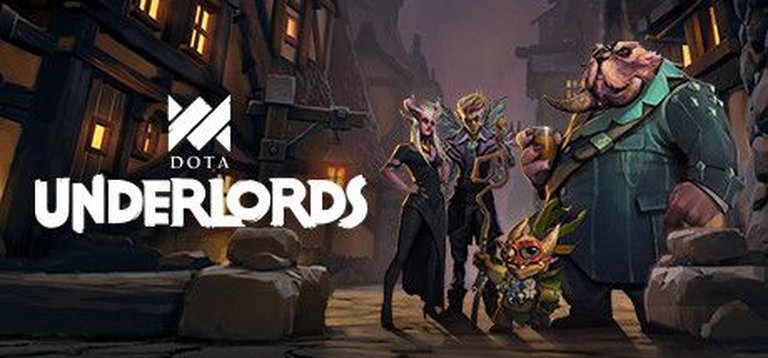
Dota: Underlords is a free-to-play autobattler set in the fantasy universe of Dota 2. Players strategically draft and position teams of iconic heroes who then engage in automated, tactical turn-based battles against up to seven opponents online. With an emphasis on deep strategy and accessibility, it brings the auto chess genre to both PC and mobile platforms.
Gameplay Videos
Dota: Underlords Guides & Walkthroughs
Dota: Underlords Reviews & Reception
peermag.org (80/100): While Underlords presents a fun and exciting strategic challenge, it is difficult to devote that amount of time in one single sitting.
rockpapershotgun.com : That’s Dota Underlords at its best. It’s a shame you often need to put up with it at its worst.
Dota: Underlords: A Critical Autopsy of a Genre Pioneer
Introduction: The Underlord’s Gambit
In the crowded coliseum of video game history, few genres have exploded onto the scene with such force as the “auto-battler.” Born from a Dota 2 custom map in January 2019, the formula—a chess-inspired battleground where players draft, position, and then helplessly watch their units fight—became an overnight phenomenon. Into this frenzy stepped Valve Corporation, the legendary studio behind Half-Life and Steam, with an official standalone adaptation: Dota: Underlords. Released into open beta in June 2019 and fully launched in February 2020, the game was more than a cash-grab; it was a statement of intent, a validation of a community-born genre by one of PC gaming’s titans. Yet, for all its promise, Dota: Underlords presents a fascinating, contradictory case study. It is a game of profound strategic depth and surprising narrative ambition, yet one plagued by a volatile meta, insufficient long-term live-service support, and the immense shadow of its own success. This review argues that Dota: Underlords is a pivotal but flawed cornerstone of the auto-battler genre—a game that perfected the core loop for a mainstream audience but failed to architect a lasting kingdom, leaving behind a rich, under-explored world in White Spire and a cautionary tale about the perils of corporate stewardship in the live-service era.
Development History & Context: From Mod to Megaphone
The genesis of Dota: Underlords is inseparable from the meteoric rise of Dota Auto Chess, a custom game mode created by the Chinese studio Drodo Studio. By April 2019, the mod had amassed over seven million players and significantly boosted Dota 2‘s core player base. This undeniable success forced Valve’s hand. Discussions for a direct collaboration with Drodo failed, with both parties opting to develop separate standalone versions. Valve’s swift action—announcing Underlords in May 2019 and launching open beta just weeks later—demonstrates both the opportunity they saw and the urgency with which they had to act.
The game was built on Valve’s Source 2 engine, a significant technical achievement as it became the first Source 2 title on mobile platforms. This decision cemented a core pillar from the outset: true cross-platform play and shared progression between PC (Windows, macOS, Linux) and mobile (iOS, Android). The development timeline was remarkably compressed, leveraging existing Dota 2 assets, heroes, and lore. This efficiency came at a cost; while the core auto-battler mechanics were faithfully adapted, the game’s identity and long-term content roadmap seemed underbaked at launch. The open beta saw a staggering 200,000+ concurrent Steam players and 1.5 million mobile downloads in its first week, validating the genre’s appeal. However, this peak was reached mere months before the launch of competing titles like Riot’s Teamfight Tactics (TFT), which would soon fragment the player base.
Crucially, Underlords launched in the shadow of another Valve autobattler-adjacent failure: Artifact (2018). The contrast was stark. While Artifact was a complex, monetization-heavy card game that collapsed almost immediately, Underlords launched as a completely free-to-play title with no pay-to-win elements, focusing monetization on cosmetic battle passes. This positioning was a direct response to the backlash against Artifact and a understanding of the genre’s community expectations. The message was clear: Underlords was for the players, a pure strategy experience. Yet, the memory of Artifact‘s swift demise loomed, hinting at Valve’s broader struggles with sustaining live-service ecosystems.
Narrative & Thematic Deep Dive: The Gritty Saga of White Spire
While the gameplay loop is the star, Dota: Underlords distinguishes itself from competitors with an unusually cohesive and gritty narrative framework. The setting is White Spire, a vertically sprawling, lawless metropolis—a “wretched hive” of smugglers, cults, and crime syndicates located beyond the reach of great powers like Stonehall and Revtel. The inciting incident is the murder of Momma Eeb, the city’s respected (and feared) former ruler. Her death triggers a chaotic power vacuum, and players assume the role of one of several Underlords, ambitious mobsters vying to claim the throne.
This narrative is delivered primarily through two channels: the “City Crawl” single-player campaign (which explores each Underlord’s backstory and motivations) and the “Early Bird” in-game newspaper, a fantastic piece of world-building that provides ongoing lore updates, comic strips, and character vignettes. The lore is dense, filled with political intrigue, personal rivalries, and deep cuts from the Dota universe.
- The Underlords Themselves: The initial roster of four playable lords is a masterclass in anti-heroic characterization. Anessix, an earthbound demon from the Court of Ristal, operates a subtle intelligence and magic trade in Little Revtal, her ambition clashing with the hostility of virtually every other power in the city (from Shadow Fiend to Terrorblade). Hobgen, Momma Eeb’s former enforcer, is a pyromaniac with a tragically unrequited love for the fairy noble Mireska Sunbreeze, his slash-and-burn expansionist policies (“The New Tenebrous Development”) irritating druids and beastmasters alike. Jull, the honorable walrus bartender of The Sundered Moon, runs Port Slipshade’s smuggling operations, balancing his self-image as a noble protector with the brutal realities of his loan-sharking and black-market dealings. Enno, the self-styled king of the Warrens slums, is a kleptomaniacal gang leader with a surprisingly protective streak for his people, locking horns with everyone from necromancers to the Dire cult.
- Webs of Intrigue: The lore guide by community member RNA-Escape painstakingly connects these characters. We learn of Anessix’s vendetta against Hobgen, Jull’s complex history with Slark and Dark Reef, Enno’s bitter feud with the Ravenhooks debt collectors (who run the Rookery prison), and the looming threat of external forces like Weeping Rose, the Quorum, the Radiant/Dire cults, and migrating populations like J’Muy’s trolls. Each Underlord’s storyline is a quest for survival and dominance in a city where alliances are temporary and betrayal is currency.
- Thematic Depth: The narrative explores themes of power vacuums, legacy, and the cost of ambition. Momma Eeb’s philosophy—that only the cunning, charismatic, and ruthless deserve to rule—haunts each contender. It’s a cynical, Sin City-esque take on governance, where “order” is maintained only by a balance of terror between criminal factions. The game asks: in a world without gods or kings, what makes a leader? The answer, according to Underlords, is a blend of brute force (Hobgen, Jull), subtle manipulation (Anessix), and populist protectionism (Enno).
Important Caveat: Much of this rich narrative stems from the serialized “Early Bird” releases and in-game flavor text, a commendable live-service approach to storytelling. However, as noted by critics and fans, this lore is highly speculative and subject to change. The Steam guide is explicit about its mix of “facts” and “speculation,” and the eventual departure of key Artifact writers may have altered planned arcs (e.g., J’Muy’s role). This makes White Spire a fascinating but unstable narrative experiment.
Gameplay Mechanics & Systems: The Polished Core
Dota: Underlords presents a tightly refined, accessible take on the auto-battler formula established by Dota Auto Chess. The core loop is now genre-standard: an 8-player, battle-royale style match on an 8×8 grid (each player controls a 4×8 half-board). Players progress through ~40 rounds of alternating Preparation (buy heroes, re-roll shop, buy XP, place units) and Battle (units fight automatically) phases.
- Economy & Progression: The economy is a masterclass in risk-rebalance. Base income scales (2/3/4 gold first three rounds, then 5 flat), with win streaks (+1/2/3/4 gold) and lose streaks (+1/2) providing comeback mechanics. Interest caps at +3 gold for holding 40+ gold, incentivizing saving. Gold is spent on heroes (cost 1-5 gold based on tier), XP (5 gold for 5 XP to increase level), and re-rolls. Leveling is critical, as it increases your unit cap (from 1 to a max of 10) and improves odds of rolling higher-tier heroes.
- Heroes & Synergies: Heroes from the Dota 2 roster belong to Alliances (e.g., Warrior, Mage, Assassin, Scaled, Inventor). Placing 3, 6, or 9 heroes of an alliance unlocks powerful set bonuses (e.g., Warriors gain armor, Mages increase magic damage taken). This “combination attack” system is the game’s strategic heart. Heroes are upgraded by collecting three copies to create a 2-star unit (doubling stats), then three 2-stars for a 3-star (doubling again).
- Items & Underlords: Neutral creep rounds and the shop provide items (stat-boosting gear like Vitality Booster) and contraptions (placeable effects like Healing Ward). At round 10, players choose one of four Underlord personas, each with two possible fighting styles (aggressive, defensive, support). Underlords are powerful hero units with unique abilities and a special Hype resource that powers their ultimates, generated differently for each lord (e.g., by winning streaks, taking damage, or killing enemies).
- Polish & Accessibility: Critics consistently praised Underlords for its exceptional user interface. The information density is high but clearly presented, with tooltips, alliance indicators, and health bars that are markedly superior to the original Dota Auto Chess mod. The tutorial is effective, and the game is widely considered the easiest auto-battler for newcomers to grasp (per IGN). Features like cross-play, offline AI practice, replays, and a battle pass were added during early access, ticking all the live-service boxes.
Flaws in the Machine: Despite its polish, the game suffers from the genre’s inherent Random Number God (RNG) problem. The shared hero pool means competition for key units can be brutal, and a poor shop can sink a match despite perfect play. The AI pathing and targeting logic, while improved, was frequently criticized for irrational behavior (e.g., units not attacking the intended target). Furthermore, the meta at higher levels can feel rigid, as noted by Rock, Paper, Shotgun: “Playing now is about tweaking well-trodden paths rather than forging new ones.” The strategic space, while deep, can narrow into a few dominant compositions, a problem exacerbated by Valve’s slow post-launch update cadence.
World-Building, Art & Sound: A Consistent, Gritty Aesthetic
Dota: Underlords successfully translates the dark fantasy satirical tone of the Dota universe into a cohesive urban setting. White Spire is not a traditional high-fantasy kingdom but a cyberpunk-adjacent, dieselpunk megalopolis built into a sheer cliff face. The art direction emphasizes grimy alleyways, bustling port districts, neon-lit bars, and封建式 apartment blocks. This “low fantasy” urban aesthetic makes the roster of orcs, demons, elves, and imps feel plausibly denizen in a crime-ridden city.
- Character Design: The Underlords are visually distinct and narratively resonant. Anessix’s gothic demonic glamour, Hobgen’s grotesque pyromaniac couture, Jull’s hulking walrus bartender physique, and Enno’s feral, king-likeposturing all immediately communicate their personalities and territorial domains. The hero roster uses existing Dota 2 models, which are high-quality and instantly recognizable to fans, though some may argue they lack the bespoke “gritty underworld” reinterpretation seen in the lords.
- Sound Design & Music: The audio landscape is serviceable but unmemorable. Battle sounds are a cacophony of spells and impacts, and the UI clicks are functional. The background music during the preparation phase is appropriately moody and atmospheric, but the soundtrack does not reach the iconic heights of Valve’s best work (Half-Life 2, Portal 2). Voice lines for Underlords and heroes are limited but effective in reinforcing character during their few spoken moments.
- Atmosphere: The true world-building genius lies in the narrative delivery systems: the Early Bird newspaper’s comic strips and the City Crawl missions. These text-based and illustrated vignettes, often darkly humorous, sell the idea of White Spire as a living, breathing, corrupt city. The feeling of a “wretched hive” is palpable through these details, even if the main battle boards are abstract grids.
Reception & Legacy: A Quick Rise and a Slow Fade
Dota: Underlords debuted to strong critical acclaim, earning an 85% aggregate score from critics on MobyGames. Reviews highlighted its accessibility, strategic depth, and flawless cross-play implementation. GameSpot called it “a wonderfully robust and well-crafted strategy game,” while PC Games (Germany), despite preferring League of Legends, was “positively überrascht” (positively surprised). The contrast with Artifact was a constant subtext: here was a free, fun, fair game from the same studio that had just stumbled.
Commercially, the launch was a massive success, validating the auto-battler genre for the mainstream. However, its long-term legacy is one of rapid decline and niche survival.
- The Competitive Onslaught: Underlords launched into a saturated market almost overnight. Riot’s Teamfight Tactics (June 2019) arrived with the massive marketing push and established player base of League of Legends. Blizzard’s Hearthstone Battlegrounds (November 2019) brought the formula to a totally different audience. Underlords was just one of several major entries, and its Dota branding, while a strength, also limited its appeal compared to the more universally accessible TFT.
- The Content Drought: Despite a promising start with weekly “Early Bird” lore drops, substantial gameplay updates slowed dramatically after early 2020. The “New Blood on the Streets” update (August 2020) was a significant injection of new heroes and alliances, but it was one of the last major patches. By late 2020, updates had ceased. The announced seasonal rotation—a key promise to keep the meta fresh—was implemented only once, with Season 1 officially ending in 2021. The lack of new content, balance patches, or features turned the game into a static museum piece.
- The Player Exodus: The results were catastrophic for engagement. Peak concurrent Steam players crashed from 200,000+ in June 2019 to under 2,000 by 2021. As of late 2025, data indicates an average daily player count hovering around 1,000, ranking it as a statistical footnote. The game is widely regarded as “dead” by the broader community, sustained only by a dedicated core of strategists.
- Genre Pioneer vs. Genre Victim: Underlords’ ultimate legacy is paradoxical. It legitimized the auto-battler as a major genre, proving the model could work as a polished, free-to-play, cross-platform title. It directly influenced TFT and Battlegrounds. Yet, it is rarely cited as the definitive auto-battler experience. That title belongs to either the original Dota Auto Chess mod (for purists) or TFT (for sustained popularity and esports). Underlords is remembered as a brilliantly executed but poorly managed crown jewel—a game that had all the pieces for longevity but was abandoned by its creator at the critical moment.
Conclusion: The Unfulfilled Promise of the White Spire
Dota: Underlords stands as a monument to potential unfulfilled. Mechanically, it is arguably the most polished and accessible auto-battler ever made. The strategic tension between economy, board capacity, and alliance synergies is a consistently engaging brain-teaser. Its commitment to fair free-to-play and cross-platform progression was exemplary. Narratively, its focus on the criminal underworld of White Spire is a stroke of genius, offering a fresh, grounded lens on the Dota universe with a roster of compelling, morally bankrupt protagonists.
However, Valve’s failure to sustain the live-service commitment transforms it from a potential genre-defining titan into a cautionary tale. The game became a victim of its own rapid success and the brutal competitive landscape it helped create. Without the promised seasonal rotations, meaningful balance updates, or narrative progression after 2020, the rich world of White Spire and its intricate tactical gameplay froze in time. The community’s lore speculation, as seen in exhaustive guides, testifies to a hunger for more that was never satisfied.
In the pantheon of game history, Dota: Underlords is not a failure, but it is a squandered opportunity. It is the beautifully engineered chassis of a race car that was left to rust in the garage while others took its design and drove it to victory. For historians, it is an essential case study in genre evolution and corporate stewardship. For players, it remains a deeply satisfying but tragically static strategic experience—a ghost of what could have been the enduring capital of the auto-battler world. The throne of White Spire remains empty, waiting for a ruler who never came.