
- Release Year: 2021
- Platforms: Browser, Linux, Macintosh, Windows
- Genre: Adventure, Visual novel
- Perspective: 3rd-person
- Game Mode: Single-player
- Gameplay: Menu structures, Visual novel
- Setting: Fantasy, Romance
- Average Score: 90/100
- Adult Content: Yes
Description
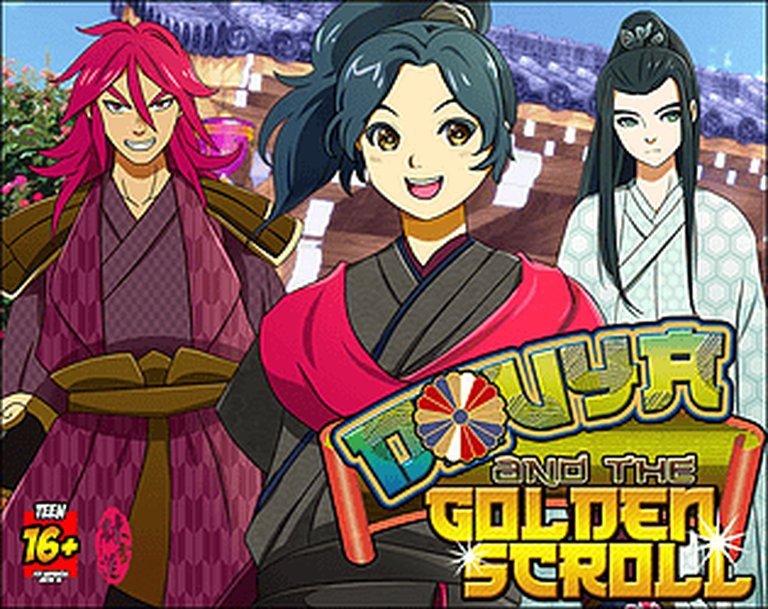
Douya and the Golden Scroll is a fantasy-themed visual novel with a romance narrative, set in an ancient Chinese-inspired world. The game follows the story of Douya as he embarks on a journey involving a mysterious golden scroll, blending adventure, LGBTQ+ themes, and anime/manga-style artwork. Created using Ren’Py, it features a third-person perspective with fixed/flip-screen visuals and a menu-driven interface, offering players an immersive experience filled with emotional depth and cultural richness.
Douya and the Golden Scroll Guides & Walkthroughs
Douya and the Golden Scroll Reviews & Reception
linxuelian.itch.io (90/100): A not-so-family-friendly BL visual novel that’s guaranteed to make you laugh! Or cringe, depending on your mileage.
Douya and the Golden Scroll: A Whimsical, Wuxia-Inspired BL Visual Novel That Defies Expectations
Introduction: A Scroll of Laughter and Love
In the vast, often formulaic landscape of Boys’ Love (BL) visual novels, Douya and the Golden Scroll (2021) emerges as a delightful anomaly—a short, free, and unapologetically absurd romp through a vibrant Wuxia-inspired world. Developed by LinXueLian, a fashion design student turned indie game creator, this Ren’Py-powered visual novel is a love letter to Chinese fantasy tropes, BL humor, and the sheer joy of creative experimentation. With its tongue-in-cheek narrative, intentionally janky monster designs, and a protagonist who oscillates between charming and shameless, Douya carves out a niche that is as refreshing as it is ridiculous.
This review will dissect the game’s development history, narrative and thematic depth, gameplay mechanics, artistic and auditory design, reception, and legacy. By the end, it will be clear that Douya and the Golden Scroll is not just a visual novel—it’s a cultural artifact, a testament to the power of indie creativity, and a bold step toward diversifying the BL gaming landscape.
Development History & Context: From Fashion Sketches to Visual Novels
The Birth of a Passion Project
LinXueLian’s journey into game development is as unconventional as the game itself. A second-year fashion design student in 2021, LinXueLian was deeply embedded in the BL (Boys’ Love) fandom, particularly the Xianxia subgenre—a Chinese fantasy aesthetic blending martial arts, immortality, and romantic intrigue. Inspired by the surge in popularity of BL Xianxia anime like The Untamed (2019) and Tian Guan Ci Fu (2020), LinXueLian sought to contribute to the genre in a medium that was still underrepresented: visual novels.
The catalyst for Douya and the Golden Scroll was a chance encounter on ScribbleHub, a platform for original novels. There, LinXueLian connected with BL writers and developers, including Tsukimii (creator of Scales of Fate) and Summer (developer of Leap of Faith). These interactions sparked a realization: LinXueLian could leverage their rapid sketching skills—honed by fashion design’s demanding deadlines—to create game characters. With a one-week semester break and a burning desire to participate in the Yaoi Game Jam 2021, LinXueLian set out to craft a Xianxia-themed BL visual novel.
A Week of Breakneck Development
The development timeline was nothing short of miraculous:
– July 9, 2021: Initial conception.
– July 17–23, 2021: Demo testing on Discord.
– July 25, 2021: Full release, with final bug fixes.
LinXueLian’s background in fashion design proved invaluable. Trained to produce 30–60 outfit sketches in under a week, they rapidly designed characters and outfits, while monsters were cobbled together from recolored stock images—a decision that would later become one of the game’s most infamous (and beloved) quirks. The game was built using Ren’Py, a user-friendly engine for visual novels, which allowed for quick iteration and deployment.
The Cultural and Gaming Landscape
At the time of Douya’s release, the BL visual novel scene was dominated by either:
1. Serious, drama-heavy narratives (e.g., No, Thank You!!!).
2. Otome games with BL routes (e.g., Obscura: Blind Fate).
3. Western-style romance visual novels with limited cultural specificity.
Douya and the Golden Scroll stood out by embracing:
– Xianxia/Wuxia aesthetics: A rarity in BL games, despite the genre’s popularity in anime and web novels.
– Comedic, self-aware storytelling: A departure from the often melodramatic tone of BL visual novels.
– Indie charm: The game’s rough edges—unrendered monsters, simplistic UI—were not bugs but features, adding to its endearing jank.
The game’s release coincided with the peak of BL Xianxia’s global popularity, yet it remained a niche product. Its free-to-play model and availability on itch.io (a hub for indie and adult games) ensured accessibility, while its inclusion in the Yaoi Game Jam 2021 provided initial visibility.
Narrative & Thematic Deep Dive: A Quest for Love, Laughs, and a Golden Scroll
Plot Overview: The Journey of Ai Douya
The story follows Ai Douya, a mischievous and flirtatious young man tasked with retrieving the titular Golden Scroll from the peak of Dragon Beard Mountain. Along the way, he encounters:
– Love interests: A cast of amusing, often over-the-top romantic options.
– Monsters: Bizarre, censored creatures that defy logic (and rendering).
– The Jianghu: A Wuxia-inspired world filled with martial arts, inns, and supernatural intrigue.
The narrative is divided into five parts, each escalating in absurdity:
1. Opening Story: Douya’s quest begins.
2. Plum Blossom City: A hub of romance and intrigue.
3. Monster of the Night: The infamous inn scene.
4. The Mountain Path: NSFW encounters and battles.
5. Final Boss: A climactic, if ridiculous, showdown.
Characters: From Shameless to Sublime
- Ai Douya: The protagonist is a delightful blend of confidence and absurdity. His name, a pun on “red date” (hóng zǎo), hints at his sweet yet spicy personality. Douya’s shameless flirtation and fourth-wall-breaking humor make him an instant standout in the BL protagonist pantheon.
- Love Interests: Each romantic option is a caricature of BL tropes—doting, tsundere, or mysteriously alluring. Their designs and dialogue lean into humor, making them more endearing than generic.
- Monsters: The true stars of the game. Intentionally unrendered and censored, they exist in a surreal limbo between horror and comedy. Players’ reactions to these creatures—ranging from laughter to bewilderment—are a testament to LinXueLian’s subversive design choices.
Themes: Subversion and Celebration
-
Cultural Representation:
- Douya is one of the few BL visual novels to explicitly embrace Xianxia/Wuxia aesthetics. The setting, character names (all Chinese pinyin), and references to classical Chinese fantasy (e.g., The Handsome Siblings) ground the game in a rich cultural context.
- LinXueLian’s Southeast Asian perspective adds authenticity, avoiding the pitfalls of Orientalism that plague many Western interpretations of Asian fantasy.
-
Humor as a Narrative Tool:
- The game’s comedy is meta, self-aware, and unapologetic. From Douya’s shamelessness to the monsters’ surreal designs, every element is crafted to elicit laughter.
- The inn scene, in particular, is a masterclass in subverting expectations. Players anticipate a typical “sexy encounter,” only to be met with something far more absurd.
-
LGBTQ+ Representation:
- As a BL visual novel, Douya centers queer romance in a genre often marginalized in mainstream gaming. Its lighthearted tone makes it accessible to both BL fans and newcomers.
- The game’s inclusion in the Yaoi Game Jam 2021 and its LGBTQ+ tag on MobyGames highlight its role in diversifying gaming narratives.
-
Indie Spirit:
- Douya embodies the ethos of indie development: limited resources, boundless creativity, and a willingness to embrace imperfection. The “unrendered monsters” are not a flaw but a deliberate choice, adding to the game’s charm.
Dialogue and Writing Style
The writing is snappy, witty, and packed with references to BL tropes and Chinese fantasy. Douya’s internal monologues and fourth-wall breaks create a conversational tone, making the player feel like a co-conspirator in the absurdity. The dialogue’s humor is amplified by its brevity—Douya is a short game (average playtime: 30 minutes), ensuring no joke overstays its welcome.
Gameplay Mechanics & Systems: Simplicity with a Side of Surrealism
Core Gameplay Loop
Douya and the Golden Scroll is a visual novel with light RPG elements:
1. Dialogue Choices: Players navigate Douya’s interactions, influencing romantic outcomes.
2. Battles: Simple, menu-based combat against monsters. The battles are more comedic than challenging, with enemies that are as ridiculous as they are threatening.
3. Exploration: Players move through fixed/flip-screen environments, uncovering secrets and encounters.
Combat and Progression
- Combat System: The battles are intentionally simplistic, with basic attack and defend options. The focus is on humor rather than strategy—monsters often “attack” in ways that defy logic (e.g., censored appendages).
- Character Progression: Minimal. Douya’s growth is narrative rather than statistical, reinforcing the game’s focus on story and comedy.
UI and Navigation
- Menu Structures: The UI is straightforward, with clear options for dialogue, inventory, and combat. The fixed/flip-screen perspective gives the game a retro feel, reminiscent of classic RPG Maker titles.
- Accessibility: The game is keyboard-and-mouse friendly, with no complex inputs required. Its short length and simple mechanics make it accessible to casual players.
Innovations and Flaws
| Innovations | Flaws |
|---|---|
| Surreal Humor: The monsters and their censored designs are a stroke of genius, subverting player expectations. | Limited Depth: The short runtime and simplistic mechanics may leave players wanting more. |
| Cultural Authenticity: A rare BL visual novel that embraces Xianxia without exoticism. | Jank as Aesthetic: Some players may find the unrendered elements off-putting rather than charming. |
| Meta-Narrative: Douya’s fourth-wall breaks and self-aware humor add layers of engagement. | NSFW Caution: The game’s adult content may limit its audience, despite its comedic tone. |
World-Building, Art & Sound: A Feast for the Senses
Setting and Atmosphere
- Wuxia World: The game’s setting is a brightly colored, fantastical interpretation of the Jianghu (the martial arts world of Chinese fiction). Plum Blossom City, Dragon Beard Mountain, and the various inns and paths Douya traverses are steeped in Xianxia aesthetics.
- Tone: The atmosphere oscillates between whimsical and surreal. The vibrant art style contrasts with the absurdity of the monsters, creating a unique dissonance that enhances the comedy.
Visual Design
- Character Art: LinXueLian’s background in fashion design shines through in the character outfits, which are detailed and culturally inspired. Douya’s design, in particular, is a nod to The Handsome Siblings, a classic Wuxia drama.
- Monsters: The intentionally unrendered, censored monsters are the visual highlight. Their surreal, glitchy appearance becomes a running gag, with players often pausing to laugh at their absurdity.
- Backgrounds: A mix of original art and edited stock images. While not as polished as AAA visual novels, the backgrounds effectively convey the game’s fantastical setting.
Sound Design and Music
- Music: The soundtrack, composed by Kevin MacLeod, HookSounds, and others, blends traditional Chinese instruments with electronic beats. The title theme, “Asian Electronica” by HookSounds, sets the tone for the game’s fusion of culture and comedy.
- Sound Effects: The SFX, sourced from Freesound contributors, are simple but effective. Combat sounds and ambient noise enhance immersion without overwhelming the player.
Contribution to the Experience
The art and sound design work in tandem to create a cohesive, immersive world. The visual humor is amplified by the soundtrack’s playful tones, while the surreal monsters are made even more unsettling (and hilarious) by their accompanying sound effects. Together, these elements craft an experience that is greater than the sum of its parts.
Reception & Legacy: From Niche Hit to Cult Classic
Critical and Commercial Reception
- Player Feedback: The game has garnered overwhelmingly positive reactions from players, particularly for its humor and monsters. Comments on itch.io highlight its ability to elicit laughter:
- “I burst out laughing when I got to the inn, I did NOT expect that.” — San Lang
- “The monsters seriously caught me off guard… 10000000/10.” — Joey
- “My brain broke but in the best way.” — Dysfunctional
- Ratings: On itch.io, Douya holds a 4.5/5 rating from 27 reviews, a remarkable achievement for an indie title.
- Downloads and Views: As of 2022, the game had 7,676 views and 996 downloads—modest numbers, but impressive for a free, niche visual novel.
Cultural Impact and Influence
-
BL Xianxia Representation:
- Douya is one of the first BL visual novels to explicitly embrace Xianxia, paving the way for future titles like Scales of Fate and Ertian and the Magical Egg.
- Its success demonstrated a hunger for culturally specific BL narratives, encouraging other indie developers to explore non-Western settings.
-
Indie Game Development:
- The game’s development story—created in a week by a fashion student—has inspired other indie developers to experiment with visual novels. LinXueLian’s transparency about the process (via devlogs) has made Douya a case study in rapid, creative game design.
-
Community Engagement:
- The game’s inclusion in the Yaoi Game Jam 2021 and its feature in Dao of the Salted Fish (a popular BL novel) expanded its reach within the BL fandom.
- LinXueLian’s active engagement with players (responding to comments, sharing development insights) fostered a loyal community.
-
Legacy:
- Douya remains a cult classic, often recommended in BL visual novel circles for its humor and uniqueness.
- It has spawned a “Plum Blossom Edition” on ScribbleHub, a text-based adaptation that retains the game’s charm.
- The game’s monsters, in particular, have become iconic, frequently referenced in discussions about surreal humor in games.
Evolution of Reputation
Initially, Douya was a small, under-the-radar release. Over time, word-of-mouth praise and its inclusion in BL gaming lists (e.g., BoysLoveUniverse) elevated its status. Today, it is celebrated as:
– A pioneer in BL Xianxia visual novels.
– A testament to indie creativity.
– A cult favorite for its absurdity and heart.
Conclusion: A Golden Scroll of Indie Brilliance
Douya and the Golden Scroll is a triumph of indie game development—a short, free, and unapologetically weird visual novel that punches far above its weight. It is:
– A cultural milestone: One of the first BL visual novels to embrace Xianxia, offering authentic representation in a genre often dominated by Western tropes.
– A comedic masterpiece: The surreal monsters, shameless protagonist, and meta-humor create an experience that is as hilarious as it is heartwarming.
– A testament to creativity: Built in a week by a fashion student, the game proves that passion and innovation can overcome limited resources.
Final Verdict: Douya and the Golden Scroll is not just a visual novel—it’s a celebration of indie spirit, cultural pride, and the sheer joy of making something unique. While its janky elements and short runtime may not appeal to everyone, its charm, humor, and heart ensure its place as a cult classic in the BL gaming canon.
Rating: 9/10 – A Must-Play for Fans of BL, Comedy, and Xianxia
For those willing to embrace its absurdity, Douya and the Golden Scroll offers a journey unlike any other—a scroll not of gold, but of laughter, love, and a little bit of madness.