
- Release Year: 2011
- Platforms: Windows
- Publisher: Mastertronic Group Ltd.
- Developer: Waterlily Game Development Studio
- Genre: Adventure
- Game Mode: Single-player
- Gameplay: Hidden object, Puzzle elements
- Setting: Fantasy
Description
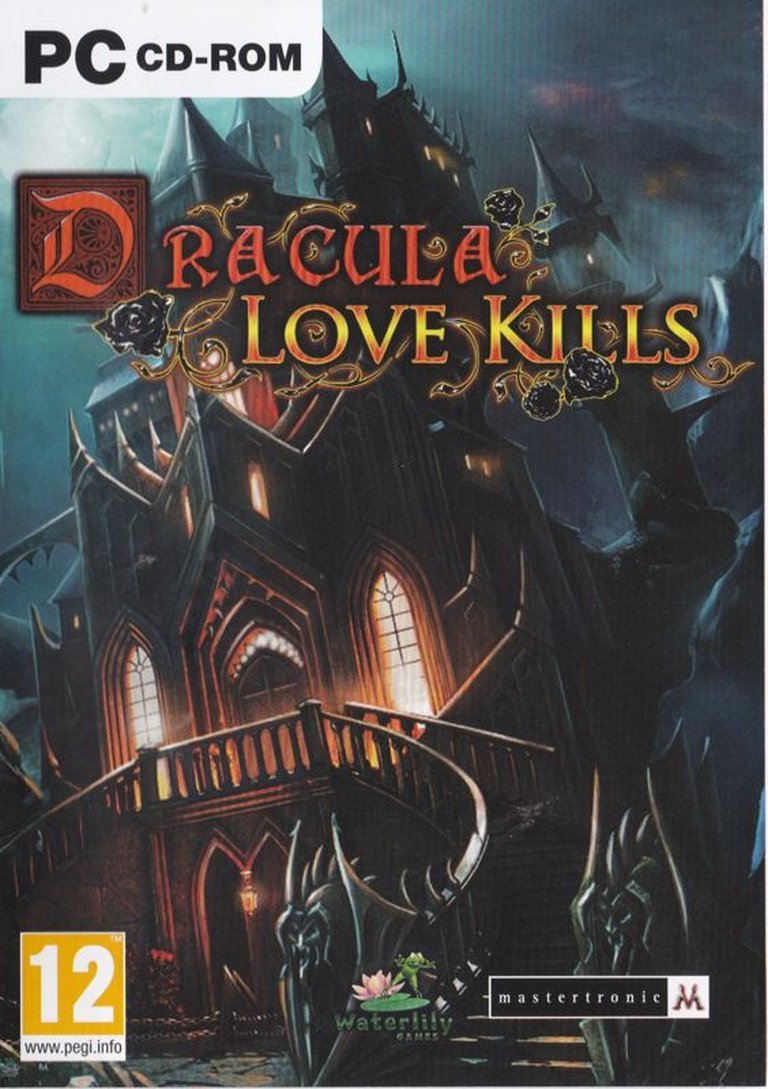
Dracula: Love Kills (Collector’s Edition) is an enhanced adventure game that combines hidden object puzzles with a rich narrative set in a fantastical world. The game follows Count Dracula as he awakens, weakened and stripped of his powers, and must navigate through six original chapters plus a bonus chapter to thwart the Queen of Vampires’ plans to destroy the human world. With two levels of difficulty and 33 awards to collect, this special edition includes an integrated strategy guide, extra wallpapers, and additional content to enhance the gaming experience.
Gameplay Videos
Where to Buy Dracula: Love Kills (Collector’s Edition)
PC
Dracula: Love Kills (Collector’s Edition) Free Download
Dracula: Love Kills (Collector’s Edition) Guides & Walkthroughs
Dracula: Love Kills (Collector’s Edition) Reviews & Reception
flyingomelette.com : If a serious vampire story is what you want, I’d suggest going to a search engine and entering, “Best Vampire Books” or “Best Vampire Movies”, because you won’t find it here.
jayisgames.com : Dracula: Love Kills manages to weave a varied sort of tale that dips and bobs while you play, introducing new twists that keep you honestly interested in what happens.
Dracula: Love Kills (Collector’s Edition): A Gothic Hidden Object Gem Revisited
Introduction
In 2011, amidst a cultural bloodlust for vampire stories fueled by Twilight and True Blood, Dracula: Love Kills (Collector’s Edition) emerged as a dark horse in the casual gaming arena. Developed by Waterlily Games (a studio under Frogwares, renowned for the Sherlock Holmes series), this hidden object puzzle-adventure (HOPA) reimagines Bram Stoker’s mythos with a campy, pulp-horror twist. Pitting an unlikely alliance between Count Dracula and his nemesis Van Helsing against a vampiric usurper, the game blends Gothic aesthetics with player-driven morality. This review argues that Dracula: Love Kills transcends its casual roots through ambitious storytelling, intricate puzzles, and a Collector’s Edition that enriches its replayability—even if its tone occasionally veers into unintentional comedy.
Development History & Context
Waterlily Games, a subsidiary of Frogwares, sought to capitalize on the studio’s expertise in narrative-driven adventures while catering to the booming hidden object market. Released in June 2011, Dracula: Love Kills served as a sequel to Dracula: Origin (2008), albeit stripped of its predecessor’s traditional adventure mechanics in favor of a HOPA framework. The game debuted during a golden age for casual titles, with Big Fish Games and similar platforms dominating digital distribution.
Technologically, the game adhered to early 2010s standards: 2D pre-rendered environments, minimal animation, and mouse-driven interactions. The Collector’s Edition expanded the base game with a bonus chapter, integrated strategy guide, and wallpapers, targeting completionists. Notably, Frogwares leveraged its experience with Victorian-era mysteries (Sherlock Holmes) to infuse Gothic grandeur into a genre often dismissed as simplistic.
Narrative & Thematic Deep Dive
The plot thrusts a weakened Dracula into an uneasy partnership with Van Helsing to thwart the Vampire Queen, a megalomaniacal foe seeking to enslave humanity. Framed as a globetrotting race to recover relics of the “Order of the Dragon,” the story hopscotches from Transylvania to Louisiana, blending Stoker’s lore with over-the-top villainy.
Key Themes & Characters:
- Dracula: Far from a romantic antihero, this Dracula is snarling and vain, yet oddly sympathetic as he grapples with his diminished power.
- Van Helsing: Gruff and pragmatic, his dynamic with Dracula oscillates between mutual disdain and begrudging respect.
- Igor: A comic-relief sidekick whose rat-obsessed antics clash tonally with the Gothic atmosphere.
- Moral Choices: Players decide whether to bite the Queen’s human servants for instant power or abstain (triggering bonus puzzles). These choices affect the ending and bonus chapter outcomes.
While the dialogue leans into B-movie camp—Van Helsing’s voice actor delivers lines like a Shakespearean ham—the branching narrative and lore snippets (via collectible Book of the Order entries) add surprising depth. The Collector’s Edition’s bonus chapter, set in a Parisian catacomb, retroactively reframes the main story’s conclusion, rewarding players who explore both moral paths.
Gameplay Mechanics & Systems
Dracula: Love Kills exemplifies the HOPA hybrid model, blending hidden object scenes, inventory puzzles, and minigames.
Core Loop:
- Exploration: Click through lavishly detailed 2D environments (40+ locations) to gather items.
- Hidden Object Scenes: Find 15 items per scene; objects often repurpose into inventory puzzles.
- Puzzles: Over 30 variants, including gear assemblies, tile-sliding challenges, and the infamous “Eight Queens” chess problem.
- Vampiric Abilities: Unlock powers like telekinesis and x-ray vision by collecting blood vials or biting NPCs.
Standout Features:
- Dual Difficulty Modes: “Easy” offers frequent hints, while “Hard” disables sparkles and extends puzzle timers.
- Achievements: 33 awards incentivize replayability, from speedrunning (“Watch Warden”) to moral purity (“Tarnished Angel”).
- Map Fast-Travel: Reduces backtracking frustration.
Flaws:
- Repetition: Some puzzles (e.g., sliding-tile locks) recur with minimal variation.
- Clunky UI: Dracula’s blood meter and ability icons feel intrusive.
World-Building, Art & Sound
Visual Design:
The game’s hand-drawn backdrops evoke Gothic romance: crumbling castles, fog-drenched cemeteries, and candlelit catacombs drenched in crimson and gold. While character animations are rudimentary, the lavish environments compensate, particularly in the Mayan temple and Mont St. Michel chapters.
Sound Design:
A classical score heavy on pipe organs and strings amplifies the Gothic mood. Voice acting, however, is uneven—Dracula’s growl borders on self-parody, while Igor’s squeals annoy even staunch camp enthusiasts.
Reception & Legacy
Critical Reception:
- Jayisgames (4.4/5): Praised its “puzzle-centric experience” and “story you actually want to take part in.”
- Gamezebo (4/5): Highlighted the “top-notch hidden object searching” but critiqued its tonal inconsistency.
- Adventure Gamers: Called it “worth playing at least twice” for its branching narrative.
The Steam version holds a “Very Positive” rating (80% of 274 reviews), with players lauding its length (~6 hours for the main story). However, GOG users noted the base game’s lack of the Collector’s Edition’s bonus chapter—a major oversight.
Legacy:
Dracula: Love Kills demonstrated that HOPAs could offer meaningful player choice and lore depth, inspiring titles like Dark Parables and Grim Legends. While not a mainstream hit, it remains a cult favorite among Gothic horror fans.
Conclusion
Dracula: Love Kills (Collector’s Edition) is a flawed yet ambitious gem. Its campy tone and repetitive puzzles may deter purists, but its rich environments, clever puzzles, and morally charged narrative elevate it above genre norms. For players seeking a Gothic escapade with bite—both literally and figuratively—this Collector’s Edition is the definitive version. In the pantheon of vampire games, it may not be Castlevania, but it’s a fang above most casual fare.
Final Verdict: A must-play for HOPA enthusiasts and Dracula completists, but approach with a tolerance for hammy theatrics.