
- Release Year: 2018
- Platforms: Nintendo Switch, PlayStation 4, Windows, Xbox One, Xbox Series
- Publisher: Bandai Namco Entertainment America Inc., Bandai Namco Entertainment Inc.
- Developer: Arc System Works Co., Ltd.
- Genre: Action
- Perspective: Side view
- Game Mode: Online PVP, Single-player
- Gameplay: tag-team
- Setting: Dragon Ball
Description
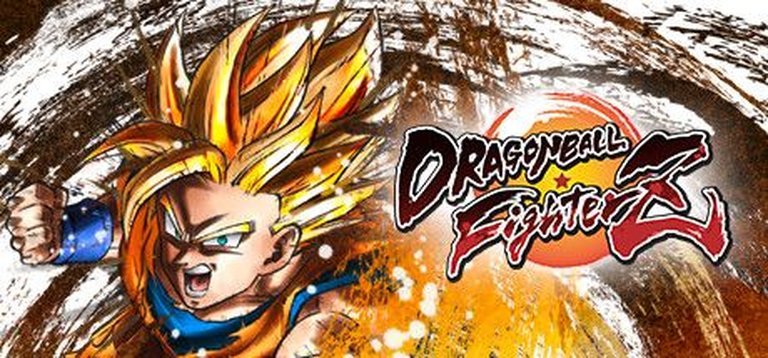
Dragon Ball FighterZ is a 2D fighting game developed by Arc System Works, set in the Dragon Ball universe where players engage in fast-paced, team-based battles using iconic characters from the anime and manga. The game features vibrant, hand-drawn visuals that capture the series’ explosive action, with a focus on strategic gameplay and authentic storytelling.
Gameplay Videos
Where to Buy Dragon Ball FighterZ
PC
Dragon Ball FighterZ Free Download
Dragon Ball FighterZ Cracks & Fixes
Dragon Ball FighterZ Mods
Dragon Ball FighterZ Guides & Walkthroughs
Dragon Ball FighterZ Reviews & Reception
ign.com : The pairing of DBZ and Arc System Works is a match made in fighting game heaven.
polygon.com : FighterZ looks and feels like the most faithful representation of the Dragon Ball universe we’ve seen in video games.
Dragon Ball FighterZ: The Ultimate Anime Fighting Game That Redefined a Genre
Introduction: The Genkidama of Fighting Games
For decades, the Dragon Ball franchise languished in a paradoxical state within the video game sphere. Its fiercely competitive, world-shaking battles were the gold standard for televised action, yet its interactive adaptations consistently failed to capture that lightning in a bottle. From the serviceable but simplistic Budokai series to the chaotic Budokai Tenkaichi arena brawlers and the ambitious yet repetitive Xenoverse RPG-looters, fans were perpetually left wanting a game that felt as precise and skill-based as the anime’s most iconic clashes. Then, in 2017, a whisper became a seismic shockwave: Dragon Ball FighterZ, developed by the legendary Guilty Gear studio Arc System Works, was revealed. The ensuing hype was not merely anticipation; it was the collective yearning of a generation finally coalescing into a single, focused demand. Against astronomical expectations, FighterZ did not merely meet them—it obliterated them. It stands today not just as the greatest Dragon Ball game ever made, but as a watershed moment for anime licensing, a masterclass in accessibility without sacrifice, and the spiritual successor to the vaunted Marvel vs. Capcom 2 that the FGC didn’t know it needed. This review will argue that Dragon Ball FighterZ is a landmark achievement that successfully synthesized the chaotic spectacle of its source material with the deep, cerebral mechanics of competitive fighting, creating a bridge between casual fans and hardcore competitors that few thought possible.
Development History & Context: The Right Hands, The Right Time
The collaboration between Bandai Namco and Arc System Works was not a random pairing but a convergence of perfect timing and proven pedigree. Arc System, a Japanese developer with a two-decade legacy of crafting impeccably detailed 2D fighters like BlazBlue and Guilty Gear, had already demonstrated its unique ability to translate anime aesthetics into staggeringly beautiful, technically precise gameplay with Persona 4 Arena. Their prior foray into the Dragon Ball universe on the Game Boy Advance with Supersonic Warriors was a cult hit, proving their affinity for the license’s speed and team-based dynamics.
The project was formally announced in a prematurely leaked press release on June 9, 2017, before its official unveiling at Microsoft’s E3 2017 conference. The timing was critical. The fighting game genre was in a renaissance, with titles like Street Fighter V, Tekken 7, and Injustice 2 dominating discourse. However, the team-based subgenre spearheaded by Marvel vs. Capcom was at a crossroads; Marvel vs. Capcom: Infinite (2017) had been critically panned for its lackluster visuals and perceived roster missteps. FighterZ arrived as a direct, visual antithesis—a game that looked like a playable anime, developed with a reverence that Infinite seemed to lack.
Technologically, the game was built in Unreal Engine 4, a significant departure from Arc System’s usual proprietary engines. This allowed for a revolutionary cel-shaded aesthetic that mimicked hand-drawn animation with stunning fidelity, using 3D models constrained to a 2D plane. The engine facilitated the game’s signature dramatic camera zooms, explosive particle effects, and seamless transitions that make every match feel like an episode climax. The development team, led by producer Tomoko Hiroki, made a conscious design decision to employ a 3-vs-3 tag system not just for spectacle, but as a narrative and mechanical solution to Dragon Ball’s infamous power disparities. As Hiroki stated, it would “feel a bit odd to see Goku being defeated by Krillin” in a 1v1; a team format allows for strategic substitutions and layers of play that accommodate the series’ tiered power scales.
The game launched on January 26, 2018, for PlayStation 4, Xbox One, and PC. A Nintendo Switch port followed in September 2018, notable for its impressive performance and innovative single-Joy-Con support. Most significantly, in February 2024, a next-gen update added long-awaited rollback netcode to PS5, Xbox Series X/S, and PC versions—a crucial quality-of-life improvement that cemented its competitive longevity.
Narrative & Thematic Deep Dive: A Fresh Wound in a Familiar Universe
FighterZ’s story is its most divisive element, yet also one of its most ambitious. Placed chronologically between the “Universe 6” and “Future Trunks” sagas of Dragon Ball Super, the narrative avoids retelling well-trodden arcs. Instead, it crafts an original “what-if” scenario: a mysterious army of super-powered clones, led by a resurrected Android 16, sweeps the globe, defeating and sealing the powers of Earth’s defenders. The player, embodying a silent protagonist soul, is linked to the warriors to turn the tide.
The plot unfolds across three distinct story arcs (Super Warrior, Enemy Warrior, Android 21 Arc), each reframing the conflict from the perspective of a different core team (Heroes, Villains, Androids). This structure is clever, offering replayability and alternate viewpoints, but it suffers from repetitive mission design—clearing waves of clone grunts between key story beats can drag. The narrative’s true strength lies not in its overarching mystery (which is fairly predictable for anyone acquainted with Dragon Ball tropes) but in its character interactions. The game is packed with optional, context-sensitive pre-fight dialogues that are pure, uncut fan service of the highest order. These interactions, ranging from Gotenks and Ginyu’s pose-offs to Piccolo’s deadpan grandfatherly advice to Gohan, are often hilarious, poignant, and deeply respectful to the source material’s decades of history.
Thematically, the story grapples with identity, redemption, and the nature of power. The central antagonist, Android 21, is a Toriyama-supervised original character—a rarity for a mainline Dragon Ball game. Her backstory as a Red Ribbon Army researcher whose latent “cellular hunger” (a metaphorical extension of Cell’s biology) splits her into benevolent and monstrous personas, provides a surprisingly tragic core. Her struggle to control a devouring power within mirrors the series’ recurring theme of inner demons. However, the execution is uneven; her eventual fate and the resolution of her dual nature can feel rushed compared to the care put into the character interactions. Critically, while the story is lengthy (10-12 hours), many reviewers noted its derivative feel and “slow-moving” pace compared to the blistering combat. It is, in essence, a serviceable vessel for fan service, but its narrative ambitions rarely transcend being a clever framework to justify every conceivable character matchup.
Gameplay Mechanics & Systems: Deceptive Depth, Unmatched Spectacle
This is where FighterZ achieves its legendary status. Its genius lies in a “easy to learn, difficult to master” philosophy executed with surgical precision.
Core Loop & The 3v3 Tag System: Players select a trio of characters. One is active, while the other two wait in reserve. The system is lifted directly from Marvel vs. Capcom, allowing instantaneous switches (tag-outs) or assists—a second character can be called to perform a special move mid-combo. This transforms combat into a fluid, strategic ballet of attribution. Depleting all three enemy fighters is the only way to win, adding layers of resource management and psychological warfare. The Vanish Attack (a Ki-costing teleport behind the opponent) is a universal tool for combo extension, escape, or punishment. The Super Dash is a homing, armor-startup flying tackle that closes distance effortlessly. Dragon Rush is a high-risk, high-reward guard-breaker leading to an aerial juggle or a forced character switch.
Accessibility vs. Depth – The Auto-Combo Conundrum: The single most controversial design choice is the auto-combo system. By mashing the light attack button, players execute a simple, multi-hit, damage-dealing combo. Mashing medium does a more damaging, longer version. This allows complete novices to perform visually impressive, screen-filling sequences almost immediately. Critics (including IGN) argued this encourages low-skill “spam” and trivializes execution. However, this accessibility is a double-edged sword that successfully hooks casual players and Dragon Ball fans who might be intimidated by traditional fighters (e.g., Street Fighter’s motion commands). Crucially, auto-combos are safe but suboptimal. Skilled players quickly move beyond them, utilizing manual combos for greater damage, positioning, and meter building. The system’s true test is that while easy to use, they are easily punished by a well-timed down + heavy attack (a universal overhead) or a Vanish. It creates a gentle on-ramp: mashing feels satisfying and looks cool, but mastery demands precision.
Shared Command List & Character Identity: True to Arc System’s design philosophy in Persona 4 Arena, FighterZ employs a nearly universal command structure. The same “quarter-circle forward + special attack” that launches Goku’s Kamehameha makes Captain Ginyu summon the Ginyu Force, Piccolo stretch his arms, or Nappa plant a Saibamen. This is revolutionary for a roster of 40+ characters. It means if you learn one fighter’s special moves, you instantly know 90% of the moveset for every other fighter. The differentiation comes from frame data, properties, and unique mechanics. Beerus has a “Hakai” super that is a true command grab. Gotenks has a unique “Super Ghost Kamikaze Attack” that creates detonating duplicates. Cell can absorb assists. This design ensures the game is instantly playable with any character while rewarding dedicated practice to unlock their full, often wildly different, potential.
Systems & Progression: The Ki Gauge (super meter) builds through dealing/taking damage and charging. It powers Sparking Blast (level 1 super), Sparking Blast + (enhanced, level 2), and Meteor Attack (cinematic, level 3). The Shenron System is a brilliant fan-service mechanic: landing light auto-combos collects Dragon Balls. Assembling all seven during a match allows the player to summon Shenron for a game-altering wish (instant sparking blast, full health revive, etc.). This adds a thrilling, luck-and-skill hybrid element to every match. The Story Mode incorporates RPG-lite elements—leveling up, unlocking new moves (e.g., “Lost Battle Power” skills)—but as PC Games (Germany) noted, these upgrades feel negligible in actual matches, making the mode’s grinding feel redundant.
Flaws: The online infrastructure, particularly at launch, was notoriously unstable, with frequent disconnects and lag. While rollback netcode eventually fixed this for modern platforms, the Switch version and early PC builds suffered. The character-switching during combat can sometimes feel imprecise or lead to accidental switches. The Arcade Mode’s branching path system based on performance grades is clever but can lead to brutal, seemingly unfair difficulty spikes.
World-Building, Art & Sound: A Playable Episode
FighterZ’s most universally acclaimed aspect is its presentation. Using Unreal Engine 4 with a custom cel-shader, Arc System achieved the impossible: a video game that looks, moves, and feels like a high-budget Dragon Ball episode. The character models are 3D but constrained to 2D planes with intentionally limited animation frames, emulating the hand-drawn, “limited animation” style of the anime. This is not a technical limitation but a profound aesthetic choice that oozes authenticity. Every punch, kick, and teleport is accompanied by a whoosh of wind, a crackle of energy, and a impact frame that snaps with the weight of Toriyama’s lines. The camera dynamically zooms during clashes, and the backgrounds are vibrant, destructible stages lifted directly from the series (The World Tournament, Namek, the Sacred World of the Kai).
The sound design is impeccable. The iconic “Kamehameha!” and “Final Flash!” shouts are present, alongside a thunderous, percussive score that blends classic DBZ music (available via the “Anime Music Pack” DLC) with powerful original compositions. The menu system and lobby—where players control chibi avatars—are charming and brimming with referential emojis and stickers. The Dramatic Moments feature, where signature anime scenes play before or after certain fights (e.g., Goku and Vegeta’s first Super Saiyan clash), is pure, unadulterated fan service that elevates the experience from a mere fighter to a love letter to the franchise.
Reception & Legacy: The Consensus Crown
FighterZ arrived to a tsunami of critical acclaim. It holds an 87/100 on Metacritic across all platforms, with a staggering 44 critic reviews and an 87% aggregate on MobyGames. It won The Game Awards 2018 for Best Fighting Game, and accolades from Golden Joysticks, D.I.C.E., and SXSW. Praise was nearly unanimous on four pillars: 1) Visual Fidelity (“looks and feels like the most faithful representation of the Dragon Ball universe we’ve seen in video games” – Polygon). 2) Accessible yet Deep Gameplay (eSpinner Reviews: “easy to learn, difficult to master”). 3) Roster Diversity (44 total characters via DLC, each feeling distinct). 4) Overall Package (modes including Story, Arcade, Training, and robust online).
Its commercial performance was a revelation. It shipped over 2 million copies in its first week, becoming the fastest-selling Dragon Ball title ever. It broke Steam records for concurrent users for a fighter. By May 2020, it surpassed 5 million copies; by May 2023, 10 million. This success validated both the Dragon Ball brand’s immense power and Arc System’s ability to harness it.
The Fighting Game Community (FGC) embraced it immediately. It was a mainstay at Evolution Championship Series (EVO) from 2018 onward, praised for its spectator-friendliness and high-level strategic depth. Its influence is profound. As noted in The Artifice article, FighterZ “ended an era” for lazy anime adaptations. It set a new, brutal standard: to be taken seriously, an anime fighter must have the mechanical depth, visual polish, and online infrastructure of a premier non-licensed title. Subsequent anime fighters like My Hero Ultra Rumble and JoJo’s Bizarre Adventure: All Star Battle R were measured against FighterZ’s benchmark. It forced giants like Capcom to reckon with why Marvel vs. Capcom: Infinite failed where FighterZ soared.
Controversies did exist. The DLC model, with three “FighterZ Passes” and individual character purchases (like Android 17, Gogeta SS4, etc.), drew criticism for what some saw as a “pay-to-win” or excessive monetization of the roster. More significantly, Android 21’s second, “Lab Coat” variant (and her perceived imbalance in competitive play) caused a rift, with some top players alleging it wielded too much influence over the meta, leading to a perceived decline in high-level investment. Online teething issues, especially on PC and Switch, also marred the initial launch experience.
Conclusion: The Definitive Dragon Ball experience
Dragon Ball FighterZ is a monumental achievement in video game adaptation. It transcends its license, not by ignoring it, but by understanding it with crystalline clarity. It captures the feeling of a Dragon Ball fight—the aerial dizzying combos, the desperate comebacks, the earth-shattering final attacks—and translates it into mechanics that are instantly gratifying yet endlessly deep.
Its legacy is twofold. First, as the definitive Dragon Ball video game, it has no peer. It respects the source material’s history, aesthetics, and power fantasy while offering a competitive framework worthy of the series’ spirit of constant growth and surpassing limits. Second, and more broadly, it redefined what a licensed fighting game can be. It proved that a game built on an IP could be a genre masterpiece in its own right, appealing to purists and newcomers alike. Its “easy to learn” systems did not dumb down the competition; they expanded it, inviting a broader audience into the FGC’s embrace.
Flaws remain: the story mode’s padding, the aggressive DLC schedule, and the initial online woes. But these are blemishes on a masterpiece. Dragon Ball FighterZ is the game 30 years of fans dreamed of—a virtual Dragon Ball arena where you don’t just watch the spectacle, you create it, one perfectly timed Vanish, one Super Dash, one Kamehameha at a time. It is, without hyperbole, one of the most important and exceptional fighting games of the 21st century. Its place in video game history is not just secure; it is enshrined. Grade: A+.