
- Release Year: 2020
- Platforms: PlayStation 4, Windows, Xbox One
- Publisher: Bandai Namco Entertainment America Inc., Bandai Namco Entertainment Europe S.A.S., Bandai Namco Entertainment Inc.
- Genre: Special edition
- Game Mode: Single-player
- Average Score: 72/100
Description
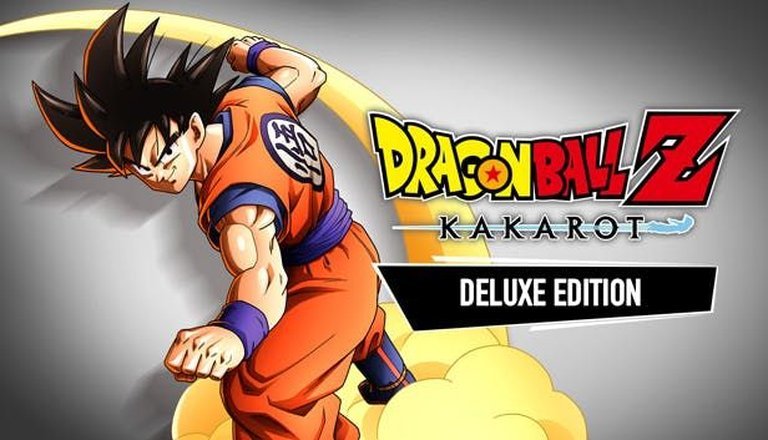
Dragon Ball Z: Kakarot (Deluxe Edition) is an action role-playing game developed by CyberConnect2 and published by Bandai Namco Entertainment, based on the iconic Dragon Ball Z anime series. The game follows the journey of Goku and the Z-Fighters through key story arcs, including the Saiyan, Frieza, Cell, and Buu Sagas, while incorporating anime-original moments and side quests. Players can explore an open world, engage in dynamic battles, and experience additional content through downloadable expansions, including storylines from Dragon Ball Super and other series entries.
Gameplay Videos
Where to Buy Dragon Ball Z: Kakarot (Deluxe Edition)
PC
Dragon Ball Z: Kakarot (Deluxe Edition) Cracks & Fixes
Dragon Ball Z: Kakarot (Deluxe Edition) Mods
Dragon Ball Z: Kakarot (Deluxe Edition) Guides & Walkthroughs
Dragon Ball Z: Kakarot (Deluxe Edition) Reviews & Reception
metacritic.com (73/100): A very few games can compare to Kakarot in terms of sheer love towards the original series and storytelling qualities.
ign.com (70/100): Dragon Ball Z: Kakarot is the most comprehensive and loving recreation of the DBZ canon there’s ever been.
tomsguide.com : Dragon Ball Z: Kakarot delivers a well-crafted, satisfying action/RPG, provided you’re already invested in the DBZ mythos.
opencritic.com (73/100): While its fighting is fun, Dragon Ball Z: Kakarot doesn’t do enough to carry the subpar side content.
Dragon Ball Z: Kakarot (Deluxe Edition) Cheats & Codes
PC
Enter codes using the FLiNG Trainer or WeMod app.
| Code | Effect |
|---|---|
| Num 1 | Infinite Health |
| Num 2 | Infinite Ki |
| Num 3 | Max Tension Gauge |
| Num 4 | Infinite Surge Effect Duration |
| Num 5 | Support Character Instant Cooldown |
| Num 6 | Max Combo |
| Num 7 | Items Don’t Decrease |
| Num 8 | Set Game Speed |
| Num 9 | One Hit Stun |
| Num 0 | Super Damage/One Hit Kill |
| Ctrl+Num 1 | Edit Zeni |
| Ctrl+Num 2 | Edit D Medals |
| Ctrl+Num 3 | Edit Z Orbs (All Types) |
| Ctrl+Num 4 | Infinite Exp |
| Ctrl+Num 5 | Max Community Level |
| Ctrl+Num 6 | Easy Max Friendship |
| Ctrl+Num 7 | Obtain All Recovery Items |
| Ctrl+Num 8 | Obtain All Cooking Items |
| Ctrl+Num 9 | Obtain All Materials |
| Ctrl+Num 0 | Obtain All Gifts |
| Ctrl+Num . | Easy Unlock Skills |
| Num . | Stealth Mode/No Random Encounter |
| Num + | Max Teammate Support Gauge |
| Num – | Infinite Oxygen |
| F1 | Z Orbs Multiplier |
| F2 | Exp Multiplier |
| F3 | Damage Multiplier |
| F4 | Infinite Food Buff Duration |
| F5 | Freeze Racing Timer |
| F6 | Infinite Vehicle Battery |
| F7 | One Hit Destroy Enemy Base |
| F8 | One Hit Kill Large Dinosaurs |
Dragon Ball Z: Kakarot (Deluxe Edition): A Definitive Retrospective
Introduction: The Saga of a Saiyan in Gaming Form
Dragon Ball Z: Kakarot (Deluxe Edition) is more than just another entry in the sprawling Dragon Ball gaming pantheon—it is a love letter to the anime’s legacy, a bold experiment in narrative adaptation, and a flawed yet ambitious fusion of action-RPG mechanics with the bombastic energy of Akira Toriyama’s universe. Released in January 2020 by CyberConnect2 and Bandai Namco Entertainment, Kakarot dared to retell the entire Dragon Ball Z saga—from Raditz’s arrival to the defeat of Kid Buu—through the lens of a semi-open-world RPG, a first for the franchise. The Deluxe Edition, bundling the base game with its first season pass, promised an expanded experience, but did it deliver a definitive Dragon Ball Z adventure, or merely a nostalgic but uneven romp?
This review dissects Kakarot’s ambitions, achievements, and shortcomings, analyzing its narrative fidelity, gameplay innovations, world-building, and lasting impact on both the Dragon Ball franchise and the broader action-RPG genre.
Development History & Context: CyberConnect2’s Saiyan Gambit
The Studio Behind the Legend
CyberConnect2, the Japanese developer behind Kakarot, was no stranger to anime adaptations. Renowned for the Naruto: Ultimate Ninja Storm series and Asura’s Wrath, the studio had honed a reputation for crafting visually stunning, narrative-driven action games. Their collaboration with Bandai Namco on Kakarot marked a pivotal moment: an attempt to transcend the fighting-game formula that had dominated Dragon Ball titles for decades.
A Vision of Immersion
In interviews, producer Ryosuke Hara and director Akihiro Anai emphasized their goal: to immerse players in the Dragon Ball Z world beyond its iconic battles. They sought to capture the “daily life” of the Z Fighters—fishing, training, cooking, and bonding—while retaining the series’ signature combat spectacle. This vision was ambitious, blending the linear storytelling of DBZ with the exploratory freedom of modern RPGs.
Technological Constraints and the Unreal Engine 4
Built on Unreal Engine 4, Kakarot leveraged the engine’s cinematic capabilities to recreate DBZ’s most legendary moments. However, the game’s semi-open-world design—divided into discrete, unlockable hubs—revealed the limitations of its scope. Unlike true open-world RPGs, Kakarot’s environments were fragmented, a compromise between narrative pacing and player freedom.
The Gaming Landscape of 2020
At launch, Kakarot entered a market saturated with both open-world RPGs (The Witcher 3, Red Dead Redemption 2) and fighting games (Dragon Ball FighterZ). Its hybrid approach was risky, appealing to DBZ fans while alienating purists of either genre. The Deluxe Edition, released alongside the base game, aimed to sweeten the deal with DLC expansions, but its reception would hinge on whether the core experience justified its $85 price tag.
Narrative & Thematic Deep Dive: The Story of Goku, Retold
A Faithful Yet Condensed Saga
Kakarot’s greatest strength lies in its narrative fidelity. The game meticulously recreates the Saiyan, Frieza, Cell, and Buu arcs, complete with anime-original filler moments (e.g., Gohan’s driving test) and even obscure lore expansions (e.g., the fate of Raditz’s Saibamen pod). For fans, this was a dream realized—a playable DBZ encyclopedia.
However, the adaptation is not without omissions. Notable absences include:
– Trunks’ Ultra Super Saiyan fight against Cell (a fan-favorite moment).
– Certain character interactions (e.g., Vegeta’s early dynamic with Bulma).
– The Garlic Jr. and Android 13 sagas (non-canon but beloved by some).
These cuts, while understandable for pacing, left gaps in the narrative tapestry.
Character Arcs and Thematic Depth
Kakarot excels in its portrayal of character growth, particularly:
– Vegeta’s Redemption: From ruthless Saiyan prince to reluctant hero, his arc is given emotional weight through optional dialogue and side quests.
– Gohan’s Coming of Age: The game’s intermissions—where players control Gohan during peacetime—highlight his struggle between scholarly aspirations and warrior destiny.
– Piccolo’s Fatherhood: His bond with Gohan is explored in training sequences and subtle interactions, adding depth to their relationship.
The game’s original character, Bonyu (designed by Toriyama), serves as a meta-commentary on DBZ’s lore. A former Ginyu Force member who quit over their infamous pose, Bonyu’s inclusion feels like a playful nod to the franchise’s quirks.
Dialogue and Voice Acting
All dialogue in Kakarot was newly recorded, with the English and Japanese casts reprising their roles. Standout performances include:
– Christopher Sabat’s Vegeta, capturing the prince’s arrogance and vulnerability.
– Sean Schemmel’s Goku, balancing his naive charm with battle-hardened resolve.
– Colleen Clinkenbeard’s Gohan, evolving from a timid child to a confident warrior.
However, repetitive NPC dialogue (e.g., Goku’s incessant “This looks like a great apple!”) and stiff animations in some cutscenes detract from the immersion.
Themes: Power, Legacy, and the Burden of Strength
Kakarot grapples with DBZ’s central themes:
– The Cost of Power: Goku’s absence during the Android Saga leaves Earth vulnerable, forcing Gohan to step up.
– Legacy and Lineage: The game’s DLC (Trunks: The Warrior of Hope, Bardock: Alone Against Fate) explores the cyclical nature of Saiyan destiny.
– Redemption: Vegeta’s arc culminates in his sacrifice against Majin Buu, a moment rendered with surprising emotional gravitas.
Gameplay Mechanics & Systems: The Saiyan’s Toolkit
Combat: A Flashy but Shallow Spectacle
Kakarot’s combat is a hybrid of arena fighter and action-RPG, with mixed results.
Strengths:
– Fluid Movement: The game’s aerial combat, with its lock-on system and dash mechanics, captures the kinetic energy of DBZ battles.
– Ki Management: A well-implemented resource system governing special moves, dodges, and transformations (e.g., Super Saiyan).
– Surge Mode: A tension-based mechanic allowing combo cancellations and “Super Finishes,” adding cinematic flair to climactic moments.
Weaknesses:
– Repetitive Enemies: Random encounters offer little challenge or variety, serving as mere XP fodder.
– Overpowered Bosses: Some fights (e.g., Cell’s Perfect Form) suffer from artificial difficulty spikes, requiring excessive healing item spam.
– Limited Playable Roster: Only seven characters are available in the base game, with others locked behind story progression or DLC.
Progression and Customization
- Skill Tree: A shallow but functional system where players spend Z-Orbs to unlock new moves and stat boosts. However, many skills are gated behind tedious combat challenges.
- Soul Emblems: A unique meta-progression system where players place character emblems on community boards to unlock passive bonuses (e.g., increased EXP gain). This adds a layer of strategy but feels underutilized.
- Cooking and Crafting: A charming but ultimately superfluous mechanic. Chi-Chi’s full-course meals provide stat boosts, but the grind for ingredients is tedious.
Side Quests: A Missed Opportunity
Kakarot’s side content is its most glaring weakness. Most quests fall into three categories:
1. Fetch Quests (e.g., gathering ingredients for Bulma).
2. Combat Challenges (e.g., defeating waves of Red Ribbon Army robots).
3. NPC Escorts (e.g., protecting a chef from wolves).
Few quests offer meaningful storytelling or rewards, making them feel like padding. Exceptions, such as the “Ghost of Yamcha” quest, prove that Kakarot could have been more than a checklist of chores.
The DLC Expansions: A Double-Edged Sword
The Deluxe Edition includes the first season pass, adding three DLC packs:
1. A New Power Awakens (Parts 1 & 2): Adaptations of Battle of Gods and Resurrection ‘F’, introducing Super Saiyan God/Blue forms.
2. Trunks: The Warrior of Hope: A retelling of The History of Trunks, with expanded lore on Future Trunks’ timeline.
While these expansions add value, they suffer from the same flaws as the base game: repetitive combat and underwhelming side content.
World-Building, Art & Sound: A Living Dragon Ball Z
A World Divided
Kakarot’s semi-open world is divided into hubs (e.g., Earth’s East Ravine, Namek’s wastelands), each unlocking as the story progresses. While this design ensures narrative cohesion, it limits exploration. Players cannot, for instance, fly from Earth to Namek at will—a missed opportunity for true open-world freedom.
Key Locations:
– Kame House: A hub for training and side quests.
– Capsule Corporation: Bulma’s tech-filled headquarters, where players craft items.
– Namek’s Villages: A stark contrast to Earth’s lush environments, emphasizing the alien world’s desolation.
Visual Design: Anime Come to Life
Kakarot’s art direction is a triumph, faithfully recreating DBZ’s aesthetic:
– Character Models: Highly detailed, with dynamic facial expressions during cutscenes.
– Environments: From the lush forests of Earth to the neon-lit streets of West City, each area feels distinct.
– Special Effects: Ki blasts, transformations, and destructive finishes (e.g., the Spirit Bomb) are rendered with cinematic grandeur.
However, the game’s draw distance and texture pop-in betray its 2020-era limitations, particularly on base PS4/Xbox One.
Sound Design: A Symphony of Nostalgia
- Music: The game’s score blends original compositions with remixed tracks from Shunsuke Kikuchi’s iconic DBZ soundtrack. The battle themes, in particular, evoke the anime’s intensity.
- Voice Acting: As mentioned, the cast delivers strong performances, though some lines lack the emotional punch of the anime.
- Sound Effects: From the crackle of ki blasts to the thunderous impact of a Kamehameha, the audio design immerses players in the action.
Reception & Legacy: A Mixed but Enduring Impact
Critical Reception: “Mixed or Average”
Kakarot received a Metacritic score of 73/100, with critics praising its narrative ambition but criticizing its repetitive gameplay.
Key Praise:
– IGN (7/10): “A wonderful way to revisit the story of Dragon Ball Z.”
– GameSpot (7/10): “A modern, semi-open approach to telling the saga of DBZ.”
– Famitsu (34/40): Highlighted its faithful adaptation and visuals.
Key Criticisms:
– Destructoid (7/10): “Poorly implemented RPG elements.”
– Slant Magazine: “A bloated serving of more of the same.”
Commercial Success: A Saiyan’s Triumph
Despite mixed reviews, Kakarot was a commercial juggernaut:
– 1.5 million copies sold in its first week.
– 8 million copies sold by July 2024.
– 10 million copies sold by January 2026, joining Dragon Ball FighterZ and Xenoverse 2 in the franchise’s elite sales tier.
Influence on the Franchise
Kakarot’s success paved the way for:
– Expanded DLC Support: Two additional season passes, including Dragon Ball Daima adaptations.
– A Shift in DBZ Game Design: Future titles (e.g., Dragon Ball: Sparking! Zero) incorporated more RPG elements, blending storytelling with combat.
Conclusion: A Flawed but Essential Dragon Ball Z Experience
Dragon Ball Z: Kakarot (Deluxe Edition) is a paradox—a game that soars in its narrative ambition but stumbles in its execution. It is, at its core, a fan service masterpiece, offering an unparalleled opportunity to relive DBZ’s greatest moments while exploring its world in ways no previous game had attempted.
Final Verdict:
✅ For Fans: An essential purchase, warts and all. The Deluxe Edition’s DLC adds meaningful content, but the base game’s repetitive side quests and shallow RPG mechanics may test patience.
❌ For Casual Players: A harder sell. Without nostalgia for DBZ, the game’s flaws—particularly its grind-heavy progression—may outweigh its charms.
Score: 8/10 – “Great, but Not Perfect”
Kakarot is not the definitive Dragon Ball game, but it is a bold step forward—a bridge between the franchise’s fighting-game roots and its RPG future. For those who grew up with Goku’s journey, it is a love letter worth experiencing, flaws and all.
Final Thought:
If Dragon Ball Z is a saga about growth, then Kakarot is its video game equivalent—a flawed but earnest attempt to evolve beyond the confines of its genre. It may not be a Super Saiyan, but it’s a Super Saiyan in training.