
- Release Year: 2012
- Platforms: Android, iPad, iPhone, Linux, Macintosh, Nintendo Switch, Windows Apps, Windows Phone, Windows, Xbox One
- Publisher: Hitcents.com, Inc.
- Developer: Hitcents.com, Inc.
- Genre: Action
- Perspective: 3rd-person (Other)
- Game Mode: Single-player
- Gameplay: Crafting, Drawing, Puzzle
- Average Score: 70/100
Description
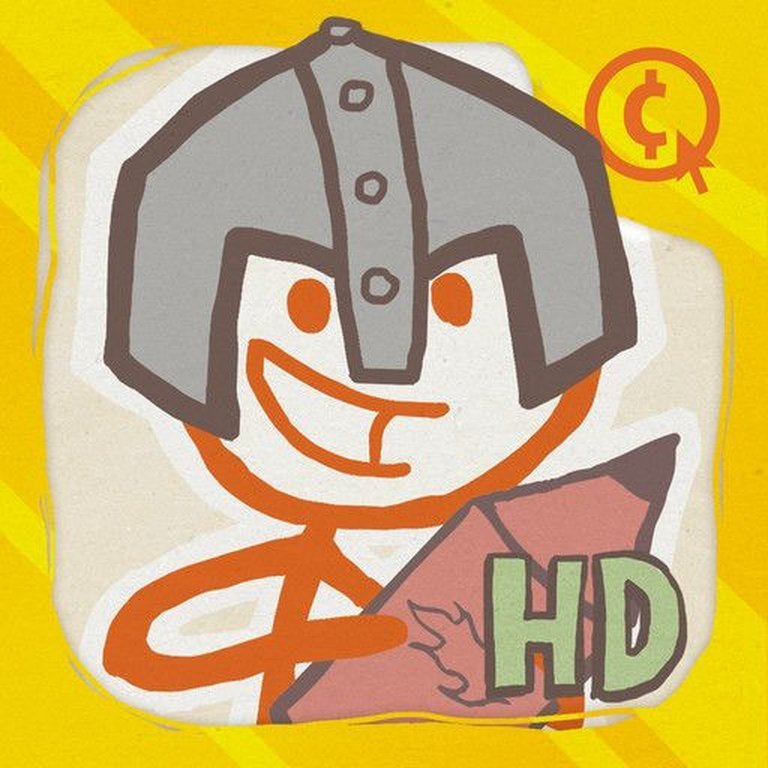
Draw a Stickman: Epic is an action-puzzle adventure where players first create their own stickman character and a friend who is immediately kidnapped, setting the stage for a quest to rescue them. The game features open levels where players use special drawing pencils to solve puzzles and interact with the environment, each pencil having unique abilities like creating keys, axes, fire, snow, or clouds. Players navigate through increasingly challenging levels, collecting hidden items and colors to customize their character, while experimenting with creative drawings to overcome obstacles and progress through the story.
Gameplay Videos
Where to Buy Draw a Stickman: Epic
PC
Draw a Stickman: Epic Free Download
Draw a Stickman: Epic Guides & Walkthroughs
Draw a Stickman: Epic Reviews & Reception
metacritic.com (70/100): Draw a Stickman: Epic is a little rough around the edges, but there’s this constant sense of whimsy that acts as a constant (pardon the pun) draw. That and it’s just silly fun to draw flames on various objects and then watch them burn.
ladiesgamers.com : I have a few niggles about the gameplay, the odd time, it is difficult to know how to proceed in Stickman’s quest; it is not always obvious what you must do and where exactly to draw.
Draw a Stickman: Epic: Review
Introduction
In the pantheon of indie darlings, few titles capture the unbridled joy of creativity quite like Draw a Stickman: Epic. Launched in 2012 by Hitcents, this deceptively simple game transforms the humble act of doodling into an odyssey of imagination. As the third installment in the Draw a Stickman series, it pivoted from its predecessors’ linear, “interactive film” approach into a sprawling, player-driven adventure. Our thesis: Draw a Stickman: Epic is a landmark in accessible, tactile design, where its innovative drawing mechanics and whimsical world-building transcend technical limitations to deliver a uniquely resonant experience—one that celebrates creativity as both gameplay and narrative.
Development History & Context
Conceived by Hitcents—a studio founded by brothers Clinton and Chris Mills—Draw a Stickman: Epic emerged from a blend of ambition and constraint. Its predecessors (2011’s Draw a Stickman and 2012’s Episode 2) were browser-based experiments in player agency, pausing animations for drawing sequences. For Epic, lead designer Phil Williams and project lead Craig Dehut envisioned a more open world, leveraging the tactile potential of mobile touchscreens first. The 2012 release on iOS (October 25) capitalized on the tablet boom, with later ports to Android (November), Windows (December 2013), and Xbox One (2015). Technologically, the game faced hurdles: drawing required robust collision detection for freeform shapes, and its physics engine (handled by programmers Jon Peppers and Matt Bitner) had to interpret scribbles intuitively. In an era dominated by AAA blockbusters, Epic carved its niche by eschewing complex controls in favor of raw, unfiltered creative interaction—a bold move that defined the studio’s identity.
Narrative & Thematic Deep Dive
The plot is a parable of sibling rivalry and redemption. Players begin by drawing a stickman protagonist and a friend, only for the latter to be immediately kidnapped by Zarp—a purple-inked tyrant whose cackling, Vader-esque laugh signals his corruption. Zarp’s motivation is greed: he covets the protagonists’ creative power, twisting it into monstrosities like the lumbering Armakillo (a slow-burning “Mighty Glacier” foe) and the lightning-fast Troll from Trollfoot Grotto. The narrative unfolds through collectible “story pages,” revealing Zarp is the protagonist’s brother, his descent into evil catalyzed by envy. This Cain-and-Abel dynamic underpins the game’s core themes: creativity as a double-edged sword (used to save or destroy) and redemption through collaboration. The absence of spoken dialogue shifts focus to environmental storytelling—charred trees, frozen lakes, and overgrown vines whispering of Zarp’s desecration. Even the damsel-in-distress trope is subverted; the friend’s appearance and fate depend on the player’s initial drawings, making rescue a deeply personal quest.
Gameplay Mechanics & Systems
Epic’s genius lies in its pencil-based puzzle-solving. Each level grants access to “pencils”—tools that translate doodles into interactive objects:
– Key Pencil: Draws keys to unlock doors.
– Axe Pencil: Fells trees or breaks obstacles.
– Fire Pencil: Ignites flammable barriers or fuses.
– Snow Pencil: Freezes enemies or water.
– Cloud Pencil: Generates rain (spiked clouds summon lightning).
Drawing is forgiving—abstract scribbles suffice—but experimentation is rewarded. The non-linear level design (unlocked via a bookmap) encourages exploration, with hidden puzzle pieces and color unlocks (19 total, one per level) incentivizing replay. Combat, however, is rudimentary. Stickmen perish in 2–3 hits, and enemies lack AI depth. The no-checkpoint mechanic exacerbates frustration, forcing full restarts after death. Character progression is minimal, limited to cosmetic color swaps, but the creative freedom to solve puzzles with absurdity (e.g., drawing a key as a squiggle) makes every triumph feel earned. The UI, minimalist on mobile, adapts clumsily to console, where touchscreen reliance can feel limiting.
World-Building, Art & Sound
The game’s book-based world frames the adventure as a story come to life. Levels like Trollfoot Grotto (a vibrant Green Hill Zone) and the Ink Mine (industrial, with dripping-purple Corruption) showcase hand-drawn charm. Textures are flat, but the art direction embraces “stylistic suck”—crude lines and bold colors evoking a child’s sketchbook. Enemies like the Red and Blue Dragons (who fight each other if lured together) inject playful chaos. Sound design, led by composer Matt Bitner, blends whimsical piano melodies with percussive clashes (axe swings, fire crackles). The absence of voice acting amplifies the “show, don’t tell” ethos, with environmental sounds guiding players—rain for growth, static for electrified obstacles.
Reception & Legacy
Upon release, Draw a Stickman: Epic was hailed for its ingenuity. Metacritic lauded its “constant sense of whimsy” (70/100 for iOS), while AppAdvice praised its “silly fun” (90/100). Commercially, it thrived on mobile, later finding a dedicated PC audience (80/100 on Steam, based on 1,297 reviews). Critics noted its rough edges—LadiesGamers lamented “frustrating restarts” and flat visuals—but lauded its accessibility. Its legacy endures in the “drawing game” genre; it prefigured titles like Scribblenauts and Baba Is You by prioritizing emergent creativity over rigid systems. The success of sequels (Epic 2 in 2015, Epic 3 in 2020) cemented Hitcents’ reputation, while TVTropes chronicled its tropes—from the Degraded Boss Armakillo to the Set a Mook to Kill a Mook dragon battles. It remains a touchstone for indie developers, proving that simplicity and imagination can outshine graphical fidelity.
Conclusion
Draw a Stickman: Epic is a testament to the transformative power of player agency. It transcends its technical and narrative limitations by weaving creativity into its very fabric. While its combat feels underbaked and its visuals are functional rather than stunning, its puzzles—a symphony of fire, ice, and lightning—offer unparalleled catharsis. In an industry obsessed with scale, Epic reminds us that the most epic adventures begin with a simple line. For historians, it stands as a cornerstone of mobile innovation and a timeless ode to the joy of making something out of nothing. Verdict: A flawed masterpiece that champions creativity as the ultimate gameplay mechanic.