
- Release Year: 1999
- Platforms: Windows
- Publisher: Top Galaxy
- Developer: Top Galaxy
- Genre: Adventure
- Perspective: 3rd-person
- Game Mode: Single-player
- Gameplay: Puzzle elements
- Setting: City – Chicago, City – Macau, Futuristic, Sci-fi
- Average Score: 77/100
- VR Support: Yes
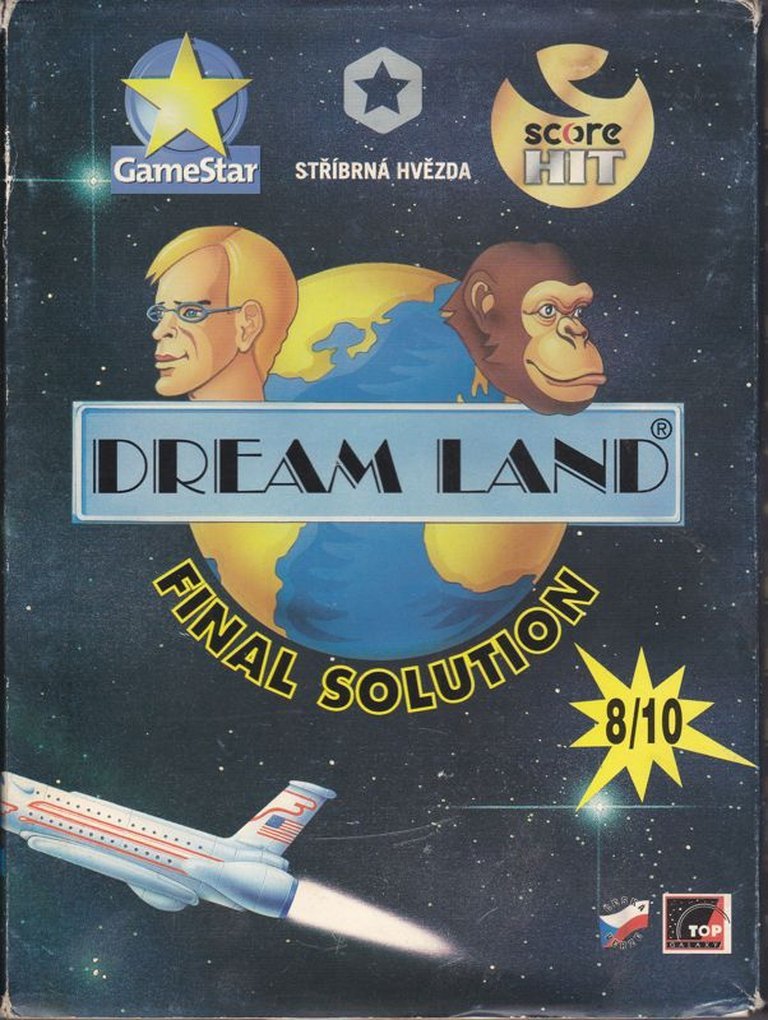
Description
In the year 2020, the orbital station DreamLand offers the ultimate virtual reality experience, but rumors persist of customers returning with shattered minds. Journalist Jim Dix is sent to investigate, uncovering a dark mystery across multiple VR worlds—from 1930s Chicago to pirate-infested Macau—while encountering Frankenstein’s monster and other bizarre entities. This third-person point-and-click adventure, developed by Top Galaxy, blends 3D-rendered environments with a noir-inspired narrative, full voice acting, and puzzle-solving gameplay reminiscent of the Broken Sword series.
DreamLand: Final Solution Reviews & Reception
mobygames.com (61/100): A third-person point and click adventure similar to the first two Broken Sword games.
en.wikipedia.org : One of the least known Czech games, although it is not a bad game.
myabandonware.com (93/100): The game works on Windows 7 64-bit, and probably will work on newer systems too.
DreamLand: Final Solution Cheats & Codes
PC
To activate the cheat mode type ‘CHEAT’ in any moment of the game.
| Code | Effect |
|---|---|
| H | Hint |
| Q | Do what hint shows (click where hint shows) |
| W | Complete mini-game/ open all passages in location |
| E | Get the items necessary to solve the puzzles on the screen |
DreamLand: Final Solution: A Forgotten Gem of Czech Adventure Gaming
Introduction
In the annals of video game history, certain titles emerge as unsung heroes—games that, despite their ambition and innovation, fade into obscurity due to market forces, timing, or sheer bad luck. DreamLand: Final Solution (1999) is one such title. Developed by the Czech studio Top Galaxy, this third-person point-and-click adventure game was a technological marvel for its time, boasting a budget of 10 million crowns (a staggering sum for a Czech game in the late ’90s) and a scope that dwarfed most domestic productions. Yet, despite its grandeur, it remains one of the least-known Czech games, a curious footnote in an era dominated by Western and Japanese giants.
This review aims to resurrect DreamLand: Final Solution from the shadows, examining its development, narrative depth, gameplay mechanics, and the reasons behind its commercial failure. Was it a flawed masterpiece, a victim of its own ambition, or simply ahead of its time? Let’s dive into the orbital station DreamLand and uncover the truth.
Development History & Context
The Studio and the Vision
Top Galaxy, the studio behind DreamLand: Final Solution, was a small but ambitious Czech developer in the late 1990s. The team, led by project managers Petr Lipš and Pavel Samec, sought to create a game that could compete with international adventure titles like Broken Sword and Monkey Island. Their vision was clear: craft a visually stunning, narratively rich adventure that leveraged the burgeoning technology of the era.
The game’s development was a monumental undertaking. With a team of 88 people (85 developers and 3 contributors), DreamLand was the largest and most expensive Czech video game produced up to that point. The budget of 10 million crowns (approximately $400,000 USD at the time) was unprecedented for a Czech studio, reflecting the team’s ambition to push boundaries.
Technological Constraints and Innovations
DreamLand: Final Solution was released in 1999, a time when the gaming industry was transitioning from 2D to 3D graphics. The game’s use of 3D-rendered backgrounds for its virtual reality sequences was a bold move, especially for a Czech studio. The team employed parallax scrolling in three phases, a technique that added depth to the 2D environments, and synchronized voice acting with lip movements—a rarity in adventure games of the era.
The game was spread across three CDs, a testament to its sheer size. The first disc contained the 2D environments and cutscenes, while the third disc housed the 3D virtual reality sequences. This division was necessary due to the limitations of optical media at the time but also created a cumbersome experience for players, who had to swap discs frequently.
The Gaming Landscape of 1999
The late ’90s were a golden age for adventure games, with titles like Grim Fandango, The Longest Journey, and Broken Sword II setting the standard. However, the market was also shifting toward 3D action and first-person shooters, leaving traditional point-and-click adventures in a precarious position.
In the Czech Republic, the gaming industry was still in its infancy. Most Czech games were budget productions with limited scope. DreamLand: Final Solution was an anomaly—a high-budget, high-risk project that aimed to compete with Western titles. Unfortunately, its retail price of 1,300 crowns (roughly $50 USD) was steep for the local market, where players were accustomed to cheaper, smaller games. Out of the 10,000 copies produced, only a fraction sold at full price, making the game a financial disaster for Top Galaxy.
Narrative & Thematic Deep Dive
Plot Overview
DreamLand: Final Solution is set in the year 2020, where virtual reality (VR) has become the ultimate form of entertainment. Due to legal restrictions, the only place where true VR can be experienced is the orbital station DreamLand, a luxurious but sinister resort where the wealthy indulge in their wildest fantasies. However, rumors persist of customers returning to Earth with destroyed minds, their psyche shattered by their experiences.
Players assume the role of Jim Dix, a journalist sent by his boss to investigate these rumors. What begins as a routine assignment quickly spirals into a surreal odyssey through seven distinct virtual worlds, each with its own narrative and aesthetic. From encounters with Frankenstein’s monster to navigating the gangster-ridden streets of 1930s Chicago and the pirate-infested alleys of Macau, Dix’s journey is a meta-narrative about the dangers of escapism and the blurred line between reality and illusion.
Themes and Symbolism
At its core, DreamLand: Final Solution is a critique of consumerism and the commodification of fantasy. The orbital station DreamLand is a microcosm of late-capitalist excess, where the ultra-rich pay exorbitant sums to escape their mundane lives, only to risk losing their sanity in the process. The game’s virtual worlds are not just settings but commentaries on human desire:
– 1930s Chicago represents the allure of power and crime.
– Pirate-infested Macau symbolizes the romanticization of lawlessness.
– Frankenstein’s laboratory explores the ethical boundaries of creation and control.
The inclusion of intelligent, cyborg monkeys as cheap labor on the station adds another layer of social commentary, hinting at themes of exploitation and dehumanization in a futuristic society.
Characters and Dialogue
Jim Dix is a classic everyman protagonist, a journalist thrust into a world far beyond his understanding. His dry wit and sarcastic remarks provide levity, but his character lacks depth compared to the game’s more flamboyant figures. The supporting cast, however, is where DreamLand shines:
– The Station’s Staff: A mix of corporate stooges and sinister figures who embody the game’s themes of deception.
– Virtual World Inhabitants: From gangsters to pirates to mythical creatures, each character is a caricature that reinforces the surreal nature of the VR environments.
– The Monkeys: Perhaps the most intriguing characters, these cyborg simians serve as both comic relief and a tragic reminder of the station’s darker purposes.
The game features full voice acting, a rarity for Czech games at the time. While the delivery is occasionally stiff, the sheer volume of dialogue (over 4,000 lines) is impressive. The synchronization of lip movements with the voice acting was a technical achievement, though the results are sometimes uncanny.
Storytelling Strengths and Weaknesses
The narrative’s greatest strength is its ambition. The game weaves together multiple storylines across its virtual worlds, creating a tapestry of interconnected tales. However, this ambition also leads to inconsistencies. Some virtual worlds feel underdeveloped, while others drag on too long. The transition between the “real world” of the station and the VR sequences can be jarring, disrupting the game’s pacing.
Critics like Petr Ticháček of Bonusweb.cz praised the game’s atmosphere and breadth, noting that it “strives for perfection” despite its flaws. Others, like GameStar (Germany), dismissed it as outdated and poorly executed, citing translation errors and clunky controls. This divide highlights the game’s polarizing nature—it is either a bold experiment or a misguided mess, depending on who you ask.
Gameplay Mechanics & Systems
Core Gameplay Loop
DreamLand: Final Solution is a third-person point-and-click adventure in the vein of Broken Sword and Discworld. Players navigate environments, interact with objects, solve puzzles, and engage in dialogue trees to progress. The game’s structure is divided into two distinct layers:
1. The Orbital Station (2D): The “real world” hub where Dix investigates the station’s secrets. This section is rendered in 2D with parallax scrolling, giving it a comic-book aesthetic.
2. Virtual Reality Worlds (3D): The seven VR environments, each with its own art style and gameplay mechanics. These sequences are 3D-rendered, a technical feat for a Czech game in 1999.
Puzzle Design
The puzzles in DreamLand are a mixed bag. Some are clever and inventive, requiring players to think outside the box. For example, one puzzle involves manipulating a virtual stock market, while another requires deciphering a pirate’s coded message. However, many puzzles suffer from obscure logic or poorly telegraphed solutions, a common pitfall of adventure games of the era.
The game’s inventory system is functional but clunky. Players must press the Spacebar to pause the game and access their inventory, a design choice that feels archaic by modern standards. The teleportation booths on the station, while a clever narrative device, also serve as a fast-travel system, though their implementation is somewhat cumbersome.
Combat and Character Progression
Unlike many adventure games, DreamLand includes limited combat sequences, particularly in the virtual worlds. These segments are simplistic, often boiling down to basic point-and-click interactions rather than real-time action. For example, in the 1930s Chicago sequence, Dix may engage in a shootout with gangsters, but the mechanics are rudimentary, relying more on timing than skill.
There is no traditional character progression—Dix does not gain new abilities or stats. Instead, progression is tied to narrative advancement and puzzle-solving. This design choice keeps the focus on storytelling but may frustrate players expecting more interactive gameplay.
User Interface and Controls
The UI is functional but dated. The game uses a verb-coin system (e.g., “Look,” “Take,” “Use”) similar to Monkey Island, but the implementation is less intuitive. The mouse-controlled navigation is slow, with Dix moving at a glacial pace, a common complaint among players.
One of the game’s most notorious flaws is its disc-swapping mechanism. Players must frequently switch between CDs, as the game requires Disc 1 for the station and cutscenes and Disc 3 for the VR sequences. This was a necessity due to the game’s size but results in a fragmented experience, especially on modern systems where physical disc swapping is impractical.
World-Building, Art & Sound
Setting and Atmosphere
DreamLand: Final Solution excels in world-building, crafting a dystopian yet whimsical vision of the future. The orbital station DreamLand is a neon-lit paradise, a stark contrast to the grimy, surreal virtual worlds. The game’s duality—the sterile, corporate station vs. the chaotic, imaginative VR environments—creates a compelling atmosphere.
The virtual worlds are the game’s highlight:
– 1930s Chicago: A noir-inspired cityscape filled with gangsters, jazz clubs, and back-alley deals.
– Pirate Macau: A vibrant, exotic port teeming with smugglers and treasure hunters.
– Frankenstein’s Laboratory: A gothic horror setting with mad scientists and reanimated monsters.
Each world is visually distinct, thanks to the work of Karel Kopic, an airbrush artist who lent the game its cartoonish yet detailed aesthetic. The 3D-rendered backgrounds were groundbreaking for Czech games, though they haven’t aged gracefully by modern standards.
Visual Direction
The game’s art style is a hybrid of 2D and 3D, with the station rendered in hand-drawn 2D and the VR sequences in pre-rendered 3D. This dichotomy reinforces the game’s themes of reality vs. illusion but also creates a visual disconnect. The 2D sections have a comic-book charm, while the 3D environments feel stiff and dated, a reminder of the technological limitations of the era.
The character designs are expressive, with exaggerated features that fit the game’s satirical tone. The monkeys, in particular, are a standout, blending humor and pathos in their depiction as exploited laborers.
Sound Design and Music
The game features full voice acting, a rarity for Czech adventures at the time. While the performances are serviceable, they occasionally suffer from stiff delivery and poor synchronization. The lip-sync technology, though innovative, often results in uncanny valley moments where characters’ mouths move unnaturally.
The soundtrack, composed of 10 original tracks, is moody and atmospheric, blending synth-heavy sci-fi tones with jazz and orchestral pieces for the virtual worlds. The music enhances the game’s dreamlike quality, though it is not as memorable as the scores of contemporaneous Western adventures.
Reception & Legacy
Critical Reception
DreamLand: Final Solution received mixed reviews upon release. Czech critics were generally positive, praising its ambition and atmosphere, while international reviewers were harsher, citing technical flaws and outdated design.
- Bonusweb (Czech Republic): 80% – “DreamLand surprised me pleasantly. I was swept away by the game’s story and atmosphere and spent an incredible 10 days in front of my PC, enjoying perfect entertainment.”
- Hrej! (Czech Republic): 80% – “An incredible 110 backgrounds, 250 NPCs, 4,000 lines of dialogue, and 27,000 animation frames. Such a colossal work has never been seen in Czech gaming before.”
- GameStar (Germany): 23% – “The story is as stale as the technology. Graphic, control, and translation errors kill any fun.”
The divide in reception highlights the game’s cultural context. Czech critics appreciated it as a landmark achievement for their nascent industry, while international reviewers judged it against established Western standards.
Commercial Performance
Despite its critical acclaim in the Czech Republic, DreamLand: Final Solution was a commercial failure. Priced at 1,300 crowns (about $50 USD), it was too expensive for the local market, where players were accustomed to cheaper, smaller games. Out of 10,000 copies produced, only a fraction sold at full price, leading to financial ruin for Top Galaxy.
The game’s three-CD format also hurt its accessibility. In an era where single-disc games were becoming the norm, DreamLand’s requirement for frequent disc swapping was a turnoff for many players.
Legacy and Influence
Today, DreamLand: Final Solution is remembered as a cult classic in Czech gaming circles. It is frequently cited as one of the most ambitious Czech games ever made, despite its flaws. Its legacy lies in its technological innovations:
– First use of 3D-rendered backgrounds in a Czech adventure game.
– Synchronized voice acting and lip movements, a rarity at the time.
– Parallax scrolling in three phases, adding depth to 2D environments.
While it did not spawn a franchise or directly influence later games, DreamLand remains a testament to the creativity and ambition of Czech developers in the late ’90s. It is a game that dared to dream big, even if those dreams ultimately led to financial disaster.
Conclusion: A Flawed Masterpiece
DreamLand: Final Solution is a game of contradictions. It is ambitious yet flawed, innovative yet dated, brilliant yet broken. It represents the height of Czech adventure gaming in the late ’90s, a time when small studios like Top Galaxy were pushing the boundaries of what was possible with limited resources.
What Works:
– Rich, layered narrative with compelling themes.
– Innovative use of 3D and 2D graphics for its time.
– Ambitious scope, with seven distinct virtual worlds.
– Atmospheric soundtrack and full voice acting.
What Doesn’t:
– Clunky controls and slow movement.
– Obscure puzzle design and poor pacing.
– Frequent disc swapping, a relic of its era.
– Uneven voice acting and uncanny animations.
Final Verdict:
DreamLand: Final Solution is not a perfect game, but it is a fascinating one. It is a time capsule of late-’90s adventure gaming, a love letter to surreal storytelling, and a cautionary tale about ambition. For those willing to overlook its flaws, it offers a unique, immersive experience that few games of its era can match.
Score: 7.5/10 – A Bold Experiment That Deserves Rediscovery
While it may never achieve the mainstream recognition it deserves, DreamLand: Final Solution remains a hidden gem—a game that dared to dream when others played it safe. In the end, that might be its greatest legacy.