
- Release Year: 2023
- Platforms: Windows
- Publisher: Stoked Sloth Interactive
- Developer: Stoked Sloth Interactive
- Genre: Driving, Racing, Sports
- Perspective: Behind view
- Setting: Fantasy
- Average Score: 96/100
Description
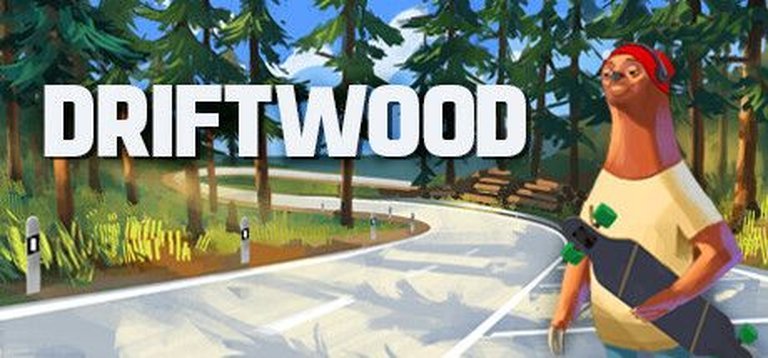
Driftwood is a fantasy racing game set in a whimsical world where players take control of a sloth character to experience the thrill of downhill longboarding. Developed by Stoked Sloth Interactive, the game combines the excitement of high-speed racing with the fluidity of skateboarding tricks, offering a unique and immersive gaming experience. Players navigate through beautifully designed environments, performing tricks and maneuvers to achieve the fastest times and most stylish runs.
Gameplay Videos
Where to Buy Driftwood
PC
Driftwood Free Download
Driftwood Patches & Updates
Driftwood Mods
Driftwood Guides & Walkthroughs
Driftwood Reviews & Reception
higherplaingames.com : Driftwood is a lovely gem to play that understands how to get in a flow state.
beforeyoubuy.games : Charming action-adventure longboarding game with smooth physics but frequent bugs and glitches.
hitpointreviews.com (96/100): Driftwood is a charming take on the downhill racing genre, where whimsical drifting and an enchanting atmosphere blend seamlessly together.
Driftwood: A Surreal Sloth’s Symphony of Speed in Indie Sports Gaming
Introduction
In an industry dominated by hyper-realistic simulations and bombastic AAA spectacles, Driftwood emerges as an unlikely subversive: a downhill longboarding game starring Eddy, a sloth whose languid demeanor belies an obsession with tooth-rattling velocity. Developed by Berlin-based duo Stoked Sloth Interactive, this 2023 early access title defies genre conventions by marrying SSX’s arcade adrenaline with Journey’s meditative flow. This review argues that Driftwood isn’t just a novelty act but a revelatory reimagining of extreme sports mechanics, using its absurdist premise to explore the fragile equilibrium between control and chaos.
Development History & Context
The Two-Person Alchemy of Stoked Sloth Interactive
Founded in 2021 by programmer Leonard “Leo” Schölch and artist Jason Mann, Stoked Sloth Interactive materialized from a shared fascination with YouTube downhill longboarding culture and a failed 2018 skate prototype. Studying game design at HTW Berlin, the duo embraced indie development’s creative freedoms, risking financial instability to avoid publisher compromises—a decision mirroring Eddy’s own dangerous dalliance with speed.
Technical Constraints as Creative Catalysts
Working in Unity with supplemental tools like Blender and Substance 3D Painter, Leo engineered a bespoke physics engine prioritizing “flow over realism.” The challenge? Simulating longboard drifts (or “slides”) that felt weighty yet responsive—a three-year iteration process balancing centrifugal force algorithms against player intuition. Jason’s low-poly art style, inspired by German forests and plein-air painting, emerged from technical necessity: optimizing draw distances for procedural mountain roads built with the Easy Roads plugin.
A Skeptical Gaming Landscape
At release, Tony Hawk’s Pro Skater 1 + 2 (2020) dominated skate nostalgia, while Riders Republic (2021) offered Ubisoft’s maximalist extreme sports buffet. Driftwood courted neither audience, instead targeting a niche between “chill games” aficionados and precision sports devotees—a gamble mitigated by grassroots Discord/Twitch marketing during Steam Next Fest 2023.
Narrative & Thematic Deep Dive
The Myth of Eddy: Sloth as Existential Archetype
Driftwood’s “narrative” is intentionally skeletal: players guide Eddy through alpine vistas with no explicit backstory. Yet environmental storytelling whispers a parable of rebellion. Traditional sloth lethargy here symbolizes societal complacency; Eddy’s velocity becomes an act of defiance against biological determinism. Radio-filtered lo-fi tracks (e.g., Ghostrifter’s “Distant”) evoke a solitary road trip, framing Eddy as a Zen punk rejecting static existence.
Mechanics as Metaphor
Every systems choice reinforces thematic duality:
– Drift Mechanics: Mastering slides mirrors life’s balance between reckless abandon and cautious restraint.
– Crash Physics: Ragdoll tumbles parody ambition’s consequences—Eddy’s flailing limbs a slapstick memento mori.
– Van Exploration: The Overcooked-style overworld map, while lightweight, symbolizes the journey’s solitude versus leaderboard rivalry.
Gameplay Mechanics & Systems
The Flow-State Calculus
At its zenith, Driftwood delivers transcendent kinaesthetic feedback loops:
1. Acceleration Phase: Hold RT to push off, then tilt forward for gravity-fueled momentum.
2. Drift Execution: Tap LB/RB to initiate slides, modulating stick pressure to avoid spinouts.
3. Trick Chaining: Timed jumps off rocks and guardrails fuel score multipliers, though aerial tricks remain rudimentary.
Progression & Customization
Unlockable boards and wheels alter gameplay meaningfully:
– “Spruce Slider” Deck: High grip aids beginners on hairpins.
– “Pinecone Cruiser” Wheels: Reduced friction enables longer slides ideal for score attacks.
Missions (e.g., “Honk 5 Cars”) gate customization options, though objectives occasionally feel repetitive.
UI Friction & Control Quirks
Critics rightly cite flaws:
– Font Readability: Bold, kern-free typography strains comprehension in menus.
– Oversteer Sensitivity: Default stick dead zones demand calibration—community fix mods abound.
– Camera Jank: Sudden angle shifts during sharp turns disrupt immersion.
World-Building, Art & Sound
Alpine Surrealism & Environmental Psychology
Jason’s artistry transforms Black Forest inspirations into liminal dreamscapes:
– Golden Hour Gorge: Sun-dappled roads where butterflies cluster like living score pickups.
– Misty Peaks Run: Fog-obscured declines demanding audio reliance on wheel-grind cues.
Polygonal minimalism eschews realism for a nostalgic PS2-era charm, though texture pop-in plagues Steam Deck playthroughs.
Sound Design as Emotional Carrier
Justin Andree’s curated soundtrack layers lo-fi beats with diegetic brilliance:
– Dynamic Wind: Gain intensity proportional to velocity, peaking at 50+ mph.
– Board Audio: Wheel bearings hum distinctively per terrain—asphalt growls versus dirt-path crunches.
Critics note the 45-minute track rotation grows repetitive, though Spotify integration mitigates this via community guides.
Reception & Legacy
Early Access Growing Pains
Launch reviews (70% avg.) praised core mechanics while flagging issues:
– Performance: Framerate dips during complex drifts, partially resolved in Patch 1.2.
– Content Breadth: Four tracks felt sparse despite route variations—a concern addressed with 2025’s “Fjords Update.”
Reddit threads lauded the $14.99 value proposition, contrasting Skate’s $70 price.
Emergent Community & Speedrunning
Despite no official competitive mode, players forged meta-challenges:
– “Drunk Sloth%”: Beat “Castle Descent” with inverted controls.
– No-Drifts Tier Lists: Leaderboard purists self-ban sliding.
Stoked Sloth’s Discord-driven transparency (e.g., livestreaming bug fixes) fostered rare dev-player symbiosis.
Industry Ripples
Driftwood’s “vibe-first” design influenced 2024 indies like Surf Club Simulator and Snowy Peaks: Relax Edition. Ubisoft’s Riders Republic even added a sloth cosmetic pack—flattering homage or corporate co-option, depending on perspective.
Conclusion
Driftwood is imperfect yet indispensable—a testament to indie gaming’s capacity for reinvention. Its friction lies in Early Access jank and restrained content, but its genius radiates through every gravity-kissed turn. By transforming a sloth into the ultimate antihero of velocity, Stoked Sloth Interactive didn’t just craft a game; they authored a meditation on risk, rhythm, and the ecstasy of controlled descent. As an emergent cult classic, Driftwood secures its legacy where few indies dare: not as a “sports sim,” but as a therapeutic instrument for those craving speed without savagery.
Final Verdict: A flawed masterpiece in motion—Skate 4 for stoics, SSX for surrealists.