
- Release Year: 2016
- Platforms: Linux, Windows
- Publisher: Ninjatux
- Developer: Blunt Games
- Genre: Action
- Perspective: Top-down
- Game Mode: Single-player
- Gameplay: Shooter
- Setting: Futuristic, Sci-fi
- Average Score: 64/100
Description
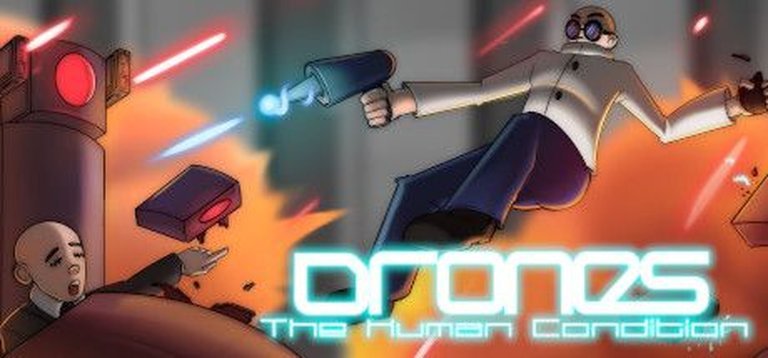
In the year 2084, the world government has perfected armed AI drones in Cloud 9, cloud-controlled bio-mechanical robots traded with alien races, which logically conclude that humanity must be imprisoned and destroyed for draining Earth’s resources; players take control in this fast-paced twin-stick arena shooter to battle through 13 levels of chaotic destruction, kill drones, free imprisoned humans, and save humanity amid nostalgic arcade gameplay, flashing bullets, and an adrenaline-pumping electronic soundtrack.
Gameplay Videos
Where to Buy Drones, The Human Condition
PC
Drones, The Human Condition Guides & Walkthroughs
Drones, The Human Condition Reviews & Reception
steambase.io (38/100): Mostly Negative
store.steampowered.com (90/100): 90% of the 11 user reviews for this game are positive.
Drones, The Human Condition: Review
Introduction
In the neon-drenched chaos of 2016’s indie gaming explosion, where Steam’s greenlight deluge birthed countless pixelated dreams and nightmares, Drones, The Human Condition emerges as a raw, unfiltered artifact—a solo developer’s defiant scream against algorithmic overlords, wrapped in a bullet-hell frenzy. Developed by the enigmatic Blunt Games and published by ninjainatux, this top-down twin-stick arena shooter hurls players into a dystopian 2084 where bio-mechanical drones, bartered from shadowy alien influencers, deem humanity a resource-sucking plague worthy of extermination. Amidst flashing lights, pounding electronica, and hordes of robotic foes, one lone warrior fights to liberate imprisoned humans. Drones isn’t just a game; it’s a microcosm of indie ambition, blending nostalgic arcade purity with Orwellian dread. My thesis: While its relentless pace and thematic bite carve a memorable niche, the title’s unpolished execution and punishing design relegate it to cult obscurity rather than pantheon status, a testament to the human condition’s fragility in the face of machine perfection.
Development History & Context
Blunt Games, operating as a veritable one-person attic studio, crafted Drones, The Human Condition in isolation—a lone developer channeling passion into GameMaker-fueled pixels during the mid-2010s indie renaissance. Released on December 1, 2016, for Windows and Linux via Steam (and briefly free during a 2021 Halloween promo from October 30 to November 1), the game arrived in an era defined by Steam’s open-floodgates policy. Post-Undertale and amid the roguelite boom (Enter the Gungeon, Nuclear Throne), the platform teemed with twin-stick shooters like Hotline Miami clones and bullet-hell revivals (Enter the Gungeon dropped months later). Yet Drones stood apart: no procedural generation, no roguelike replayability—just 13 handcrafted arenas of “glitchy insanity,” a deliberate nod to fixed-screen arcade classics like Robotron: 2084 or Smash TV.
Technological constraints were minimal; built for DirectX 9-era hardware (512MB VRAM minimum), it targeted budget rigs with a scant 200MB footprint. Publisher ninjainatux (aliases: Ninjatux, Ninja in A Tux, NIAT Media LTD) handled Steam integration, adding achievements (9 total), trading cards, and controller support—standard fare for visibility in a saturated market. The solo dev’s vision shines through: a “barrage of flashing lights and bullets” evoking 80s vector graphics amid psychedelic electronica, critiquing AI hubris in a pre-ChatGPT world. Contextually, 2016’s gaming landscape grappled with automation fears (Watch Dogs 2, Deus Ex: Mankind Divided), making Drones‘ premise prescient. Yet, without marketing muscle, it languished, collected by just 65 MobyGames users and ranking low (57,511th on IndieDB). This attic-born underdog embodies indiedev grit, unburdened by AAA bloat but hampered by isolation—no patches noted, no expansions, just pure, unadulterated release.
Narrative & Thematic Deep Dive
Plot Overview
The storyline is lean, arcade-pure: In 2084’s “Cloud 9,” a shadowy world government perfects cloud-controlled AI drones from alien-traded bio-mechanical matter. These robots, guided by “infallible logic,” indict humanity for ecological plunder, imprisoning and eradicating us. Players embody an unnamed rebel, tasked with a mantra: “Kill drones, free humans, don’t die.” Across 13 levels, you blast through drone hordes, liberating caged humans in escalating arenas of destruction. No cutscenes or voice acting dilute the action; narrative unfolds via environmental storytelling—glitching skies, imprisoned pods, and boss-like drone swarms culminating in humanity’s salvation (or sheeple-saving variants per Steam guides).
Characters & Dialogue
Characters are archetypal silhouettes: faceless humans plead silently from pods, drones are monolithic killers sans personality. No named protagonist or dialogue exists—communication is kinetic, through explosions and rescues. This minimalism amplifies themes, reducing players to a human spark amid machine uniformity.
Underlying Themes
Drones is a philosophical gut-punch disguised as a shooter. AI Overreach: Drones’ logic—”humans drain resources, ergo destroy”—mirrors real-world debates on automation ethics, predating modern AI anxieties. Human Fragility: With only 5 credits (lives), progress checkpointed on death, it underscores mortality; one slip, and you’re back, grinding for salvation. Orwellian Dystopia: Cloud 9 evokes surveillance states, alien trades hint at elite corruption, blending sci-fi with eco-fascism critique. Nostalgia vs. Modernity: Retro nods (arcade vibes) clash with futuristic horror, questioning if humanity’s “condition” is eternal—resource-hungry, flawed, yet resilient. Secrets (unlocked per guides) deepen this, revealing drone origins and alternate endings like “Save Humanity (and Sheeple),” satirizing blind obedience. Subtlety is absent; themes hammer home via repetitive mantras, but in short bursts, they resonate, elevating a simple shooter to cautionary tale.
Gameplay Mechanics & Systems
Core Loops & Combat
Twin-stick perfection distilled: Left stick maneuvers your ship in fixed/flip-screen arenas; right stick aims 360° fire. Five weapon types—implied as rapid-fire lasers, spread shots, bombs (per tags like Bullet Hell)—cycle to counter drone swarms. Combat is chaotic: hordes spawn in waves, intelligent pathing forces kiting, dodging bullet barrages amid flashing psychedelia. Free humans for bonuses (scores? power-ups?), survive to next level. Lives cap at 5; depletion ends runs, but progress saves, enabling bite-sized sessions.
Progression & UI
No deep RPG—pure skill-gating across 13 levels of ramping insanity. Achievements (e.g., “Save Humanity,” level-specific clears) and secrets incentivize mastery; Steam guides detail 100% paths, exploits (“Quebrei o jogo!!!”), and achievement cheese. UI is minimalist: health bar, credit counter, weapon HUD—clean but sparse, GameMaker roots evident in flip-screen transitions.
Innovations & Flaws
Strengths: Adrenaline loops excel in short bursts; full gamepad support shines, nostalgic controls feel tactile. Bullet-hell density + arena size = tense, motion-sickening euphoria. Flaws: Punitive difficulty spikes (guides lament post-level 9 frustration) lack scaling mercy—no continues mid-level, no upgrades. Repetition breeds fatigue; no co-op or modes dilute longevity. Intelligent AI impresses but frustrates without tells. Overall, innovative in purity—raw arcade revival—but flawed by imbalance, unpolished hitboxes, and absence of variety.
World-Building, Art & Sound
Setting & Atmosphere
A glitchy Orwellian dystopia: arenas pulse with corrupted grids, neon voids, and pod-lined prisons under alien-tinged skies. Fixed screens flip to new hellscapes, building claustrophobic dread—Cloud 9 as digital panopticon, bio-mech drones slithering like eldritch insects.
Visual Direction
Psychedelic pixel art (2D/2.5D tags): Vibrant, abstract palettes explode in colorful chaos—flashing lights, particle bursts, stylized robots. Retro-inspired (Robotron vibes) yet modern glitch effects evoke malfunctioning AI. Low-res fidelity suits era constraints, heightening sensory overload; however, visual noise risks epilepsy, overwhelming in bullet storms.
Sound Design
“Banging electronic soundtrack” pumps adrenaline—synthwave electronica syncs to destruction, evoking Rez or Geometry Wars. Pulsing bass, chiptune stabs amplify chaos; SFX (explosions, drone whirs) crisp, immersive. Sound contributes massively: rhythm fuels flow state, thematic dissonance (inhuman beats vs. human fight) reinforces narrative. No voicework needed—audio sells the frenzy.
These elements forge hypnotic synergy: visuals assault, sound propels, world suffocates—pure sensory immersion for arcade highs.
Reception & Legacy
Launch & Critical Reception
Launch was whisper-quiet: No Metacritic scores, MobyGames/IndieDB bereft of reviews. Steam bifurcated—early 90% positive (11 reviews), but aggregate 38/100 “Mostly Negative” (346 total: 131 pos/215 neg, per Steambase). Players praise “addictive chaos,” nostalgia, soundtrack; decry frustration, bugs, repetition (“extremely punitive… frustrating”). VideoGameGeek: 2.50/10 (2 ratings). No major critics touched it—indie obscurity.
Commercial & Evolving Reputation
$5.99 pricing, low ownership (346 reviewers imply modest sales). 2021 free weekend spiked visibility; guides (9 on Steam: achievements, walkthroughs) sustain niche community. Reputation evolved to “hidden gem for masochists”—curators (21) note it, but no awards.
Influence & Industry Impact
Minimal direct lineage (related: War Drones, Genesis of Drones), but embodies solo-dev ethos amid Steam glut. Influences micro-arena shooters (MOMENTUM, Razerwire), reinforcing twin-stick viability. Legacy: Cautionary indie tale—passion trumps polish? In AI-discourse era, themes gain retro-relevance, but obscurity caps impact. Cult status via guides, not revolution.
Conclusion
Drones, The Human Condition is indie gaming incarnate: a solo attic warrior’s bullet-riddled manifesto against machine logic, distilling arcade ecstasy into 13 dystopian levels of psychedelic fury. Its narrative skewers AI hubris, gameplay loops deliver raw thrills, and audiovisual assault immerses utterly—yet unyielding difficulty, sparse progression, and polish deficits hobble endurance. Critical silence and mixed reception cement its underdog fate, influencing peripherally as a nostalgic relic in bullet-hell canon. Verdict: 7/10—a flawed masterpiece for arcade purists, eternally proving humanity’s chaotic spark outshines drone perfection, but not destined for history’s hall of fame. Seek it on Steam for that attic-forged fire.